← Back to Blog
Market Trends
New Haven, Connecticut real estate market guide: prices, neighborhoods and timing
By Pierre Fitzenberger
Yellow Brick LLc
September 11, 2026 · 11 min read
This New Haven, Connecticut real estate market guide covers everything buyers, sellers, and relocating households need to understand the local housing landscape right now, in September 2026. From median prices and inventory levels to the physical character of different neighborhoods and what the data says about timing a purchase or listing, this article gives you the full picture without the filler.
1. How the New Haven Market Is Positioned Right Now
New Haven is a seller's market with moderating momentum. Demand has remained firm through 2026 because the city's employment base, anchored by Yale University and Yale New Haven Health, keeps a steady stream of buyers entering the market regardless of broader national conditions. Supply, however, has not kept pace, and that gap continues to put upward pressure on prices even as national headlines describe a cooling trend.
Where Prices Stand in September 2026
The median sale price for single-family homes in New Haven currently sits in the low-to-mid $300,000s, though that figure masks a wide range depending on neighborhood, condition, and lot size. Condominiums and multi-family two- and three-family properties, which make up a substantial share of New Haven's housing stock, trade at different price points: condos often start below $200,000 for smaller units near downtown, while well-maintained two-families in Westville or Edgewood can push past $500,000. For a detailed breakdown of what buyers are paying right now, see the companion article What Is the Average Home Price in New Haven Connecticut Right Now in September 2026.
For broader context on how New Haven compares to other metro areas nationally, the NAR Metropolitan Median Area Prices and Affordability report tracks quarterly median prices by metro, which helps buyers and sellers understand where New Haven sits relative to Hartford, Bridgeport, and other Connecticut markets.
Inventory and Competition
Active listings in New Haven have ticked up compared to September 2025, but the city still carries fewer than three months of supply across most price bands. That means well-priced homes in move-in condition are still receiving multiple offers within the first week. Properties that need significant work, or that are priced above the comparable sales, are sitting longer and generating fewer showings, which is a shift from the frenzied pace of 2022 and 2023.
Days on market currently average around 25 to 35 days for single-family homes citywide, though that number drops to under 15 days in the most active price range of $275,000 to $375,000. Above $500,000, homes are averaging closer to 45 to 60 days before going under contract.
2. New Haven Neighborhood Housing Stock: What You Will Actually Find
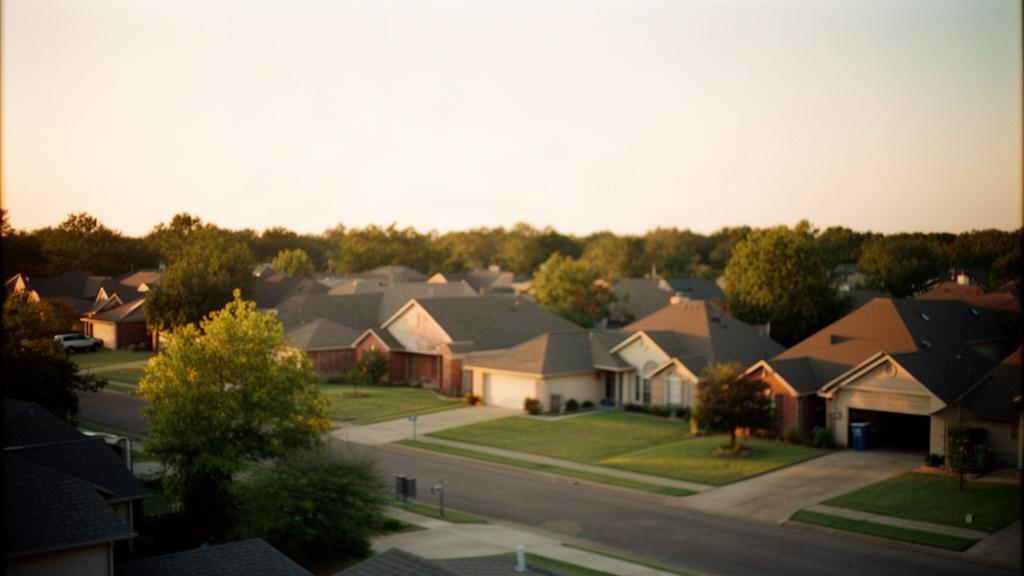
New Haven's neighborhoods each have a distinct physical character. The city covers about 20 square miles and contains a mix of Victorian-era triple-deckers, early-20th-century colonials and Craftsman bungalows, mid-century cape cods, and newer infill construction. Understanding what each area actually looks like on the ground helps buyers set realistic expectations before they start touring.
Wooster Square and the Hill
Wooster Square sits just east of downtown and is known for its historic district designation, brick sidewalks, and a central park that hosts New Haven's famous cherry blossom festival each spring. The housing stock here leans toward 19th-century Italianate and Federal-style single-families and rowhouses, many of which have been carefully restored. Prices in Wooster Square for single-family homes generally range from the mid-$300,000s to well over $600,000 for fully renovated properties on larger lots.
The Hill neighborhood, directly west of downtown and close to Yale New Haven Hospital, contains a dense mix of multi-family properties and older single-families on smaller lots. Entry-level prices here can be among the lowest in the city, with some two-families available in the $250,000 to $350,000 range, making it an area that investors and owner-occupants who want multi-family income frequently target.
Westville and Edgewood
Westville occupies the western edge of New Haven and borders Woodbridge. The housing stock here is predominantly single-family colonials, Tudors, and cape cods built between the 1920s and 1960s, sitting on lots that range from 5,000 to 12,000 square feet. Whalley Avenue runs through the area and connects to Westville Village, a walkable commercial strip with independent restaurants, a farmers market, and the Westville Music Bowl outdoor venue.
Edgewood, adjacent to Westville, contains similar architecture but tends to have smaller lot sizes and a higher concentration of two-family homes. Edgewood Park, a 120-acre Frederick Law Olmsted-designed green space, borders the neighborhood and provides direct access to walking trails, a duck pond, and athletic fields. Home prices in Westville and Edgewood combined span roughly $300,000 to $650,000 depending on size, condition, and proximity to the park.
Fair Haven and the Annex
Fair Haven sits northeast of downtown along the Quinnipiac River and contains some of New Haven's oldest housing, including late-Victorian triple-deckers and wood-frame single-families on narrow urban lots. The neighborhood is roughly 1.5 miles from the Wooster Square area and about 2.5 miles from Yale's central campus. Prices here tend to run below the city median, with single-families often listed in the $200,000 to $320,000 range.
The Annex, bordering East Haven to the east, offers more suburban-feeling lots and a mix of cape cods and ranches built in the 1940s through 1970s. Buyers who want more outdoor space without leaving city limits often look here, and prices reflect that relative affordability, typically ranging from the low $200,000s to around $350,000.
Downtown and Upper State Street
Downtown New Haven is primarily a condo and apartment market. The Yale campus, the New Haven Green, Shubert Theatre, and the Omni Hotel anchor the core, and residential options here skew toward converted lofts, newer condominium buildings, and Yale-owned housing. Owner-occupied condos downtown range from around $175,000 for a studio to $450,000 or more for a two-bedroom in a full-service building with parking.
Upper State Street, running northeast from the Green toward East Rock, contains a walkable strip of coffee shops, restaurants, and independent retailers alongside a mix of single-families and smaller multi-families. Buyers who want walkability without the density of downtown often focus on this corridor, where prices for single-families generally fall between $350,000 and $550,000.
3. What Drives New Haven Home Prices
Three forces consistently shape home values in New Haven more than any other factors: the university and medical employment base, access to commute corridors, and the physical condition and architecture of individual properties.
Yale University and the Medical District
Yale University employs roughly 14,000 people directly, and Yale New Haven Health System employs another 20,000-plus across its campuses. That combined employment base creates consistent demand from faculty, researchers, physicians, and administrative staff who want to own within a reasonable commute of the medical district on Howard Avenue or the main campus on College Street. Properties within a mile or two of those anchors tend to hold value and sell faster than those farther out.
Commute Corridors and Transit Access
New Haven's Union Station sits on the Metro-North New Haven Line and Amtrak's Northeast Corridor, making it possible to reach Stamford in about 45 minutes and Grand Central Terminal in New York City in roughly 90 minutes by train. That connectivity draws buyers who work in Fairfield County or New York but want significantly lower housing costs than Westport or Greenwich offer.
By car, Interstate 91 and Interstate 95 intersect in New Haven, giving direct highway access north toward Hartford (about 40 miles) and south toward Bridgeport (about 20 miles). Homes within a 10-minute drive of Union Station or a major on-ramp consistently attract buyers who are commuting out of the city, and that demand keeps prices in those pockets relatively firm.
Lot Size, Architecture, and Condition
Within any given New Haven neighborhood, two houses on the same block can differ by $100,000 or more based on updates, square footage, and outdoor space. A 1,400-square-foot cape cod with an original 1950s kitchen and a detached one-car garage will not compete at the same price as a 1,800-square-foot colonial with a renovated kitchen, a finished basement, and a two-car attached garage, even if they are 200 feet apart. Buyers reviewing comparable sales should pay close attention to these physical differences rather than relying on neighborhood averages alone.
4. Timing the New Haven Market: When to Buy and When to List
Timing matters in New Haven, but it is not the only variable. The city's market follows recognizable seasonal patterns, but local employment cycles, mortgage rate movements, and the specific supply in a given price band can override those patterns in any given month.
Reading Seasonal Patterns
Spring, from March through June, is historically the busiest listing season in New Haven. Sellers who list in April and May benefit from peak buyer traffic, longer daylight hours for showings, and the academic calendar: faculty and staff who receive spring appointments often need to be settled before the fall semester. This surge in demand typically pushes sale prices above the annual average during those months.
Fall, specifically September and October, produces a secondary wave of activity as buyers who paused over summer return to the market. Right now, in September 2026, that fall wave is underway. Inventory is slightly higher than it was in July, giving buyers a bit more selection, while sellers who price correctly are still seeing strong interest. Winter months, November through February, see fewer listings and fewer buyers, but motivated sellers who list in January often face less competition from other listings.
For a detailed comparison of fall versus spring buying conditions specific to New Haven, the article Fall 2026 vs. Spring: When to Buy a House in New Haven, CT breaks down the tradeoffs season by season.
What Mortgage Rate Shifts Mean Locally
When 30-year fixed mortgage rates move by even half a percentage point, it changes the monthly payment on a $350,000 loan by roughly $100 to $115. In a market where many buyers are stretching to reach the $300,000 to $375,000 price band, that difference is material. Rate drops in 2026 have pulled some buyers back off the sidelines who had paused in late 2025, which is part of why the fall 2026 season is showing more activity than the same period last year.
Sellers should note that rate sensitivity cuts both ways. A rate increase of even 0.5% between when a buyer gets pre-approved and when they close can affect their purchasing power, which is why sellers benefit from working with buyers who have solid pre-approval letters from lenders who have already verified income and assets rather than soft pre-qualifications.
5. Practical Steps for Buyers and Sellers in New Haven
Knowing the market conditions is only useful if you can act on them. Here is what buyers and sellers should be doing right now to position themselves well in the New Haven market.
Steps for Buyers Entering the Market
Get a full pre-approval before touring. In New Haven's competitive price bands, listing agents will not take an offer seriously without a lender letter that confirms verified income, credit, and assets. A soft pre-qualification from an online tool is not sufficient in this market.
Study the physical stock before you commit to a price range. A $300,000 budget in the Annex gets you something very different from a $300,000 budget in Wooster Square. Touring a range of neighborhoods before narrowing your search saves time and prevents the frustration of losing multiple offers in one area when another area would meet your needs at the same price.
Budget for closing costs and inspections. Connecticut buyers typically pay closing costs of 2% to 4% of the purchase price, which on a $350,000 home means $7,000 to $14,000 in addition to the down payment. Factor in a home inspection ($400 to $600), a radon test ($150 to $200), and potentially a sewer scope ($200 to $300) for older New Haven properties, many of which were built before 1950.
For a full walkthrough of the buying process in New Haven, the Homes for Sale in New Haven: Buyer's Guide covers each step from search to closing.
Steps for Sellers Preparing to List
Price from the comparable sales, not from what you need. The New Haven market is still competitive, but overpriced listings are sitting. Buyers in 2026 are doing their own research and are quick to move on when a home is priced above what the data supports. A correctly priced home in New Haven will generate more net proceeds than one that sits for 60 days and requires a price reduction.
Address deferred maintenance before listing. Buyers in this market are requesting inspections and using findings to negotiate credits or price reductions. A leaking roof, aging electrical panel, or failing HVAC system will come up in the inspection and will cost you more in negotiated concessions than it would have to address before listing. Focus on systems first, cosmetics second.
Invest in professional photography. The majority of New Haven buyers begin their search online, and the first impression of your home is almost always a photograph. Listings with professional photos receive significantly more showings than those with phone photos, and more showings translate directly into more offers and stronger sale prices.
6. Frequently Asked Questions About the New Haven Real Estate Market
FAQ
Is New Haven, Connecticut a buyer's market or a seller's market right now?
As of September 2026, New Haven is still a seller's market in most price ranges, though conditions have moderated compared to 2022 and 2023. Active inventory has increased slightly from September 2025 levels, but the city still carries fewer than three months of supply in the most active price bands. Well-priced, move-in-ready homes are receiving multiple offers within the first week, while overpriced or dated properties are sitting longer. Buyers have a bit more negotiating room than they did two years ago, but they should not expect the leverage they would have in a balanced or buyer-favoring market.
What types of homes are most common in New Haven?
New Haven's housing stock is dominated by multi-family properties, particularly two- and three-family homes built between 1880 and 1940, which are common across most neighborhoods outside of Westville and the Annex. Single-family colonials, Craftsman bungalows, and cape cods are concentrated in the western and eastern edges of the city. Condominiums are most prevalent downtown and near the medical district. Historic district designations in areas like Wooster Square mean that exterior renovations require approval, which buyers of those properties should factor into their plans.
How long does it take to buy a home in New Haven from offer to closing?
In New Haven, the typical timeline from accepted offer to closing runs 45 to 60 days when financing is involved. Cash purchases can close in as few as 20 to 30 days. The inspection period in Connecticut is typically negotiated as part of the offer and usually runs 7 to 10 days. Attorney review is standard in Connecticut real estate transactions, and both buyer and seller are represented by attorneys at closing, which is different from many other states. Delays most commonly arise from title issues on older properties, appraisal disputes, or lender processing times.