← Back to Blog
Neighborhoods
The Westville Neighborhood of New Haven Real Estate Market Guide: Prices, Neighborhoods and Timing
By Pierre Fitzenberger
Yellow Brick LLc
September 11, 2026 · 10 min read
If you are researching the Westville neighborhood of New Haven real estate market, you are looking at one of the city's most architecturally distinctive corners, where Tudor revivals and Craftsman bungalows line streets that back up to West Rock Ridge State Park. This guide covers current prices, what the housing stock looks like, how Westville fits into the broader New Haven market, and how to think about timing your move.
1. What Makes Westville Different from the Rest of New Haven
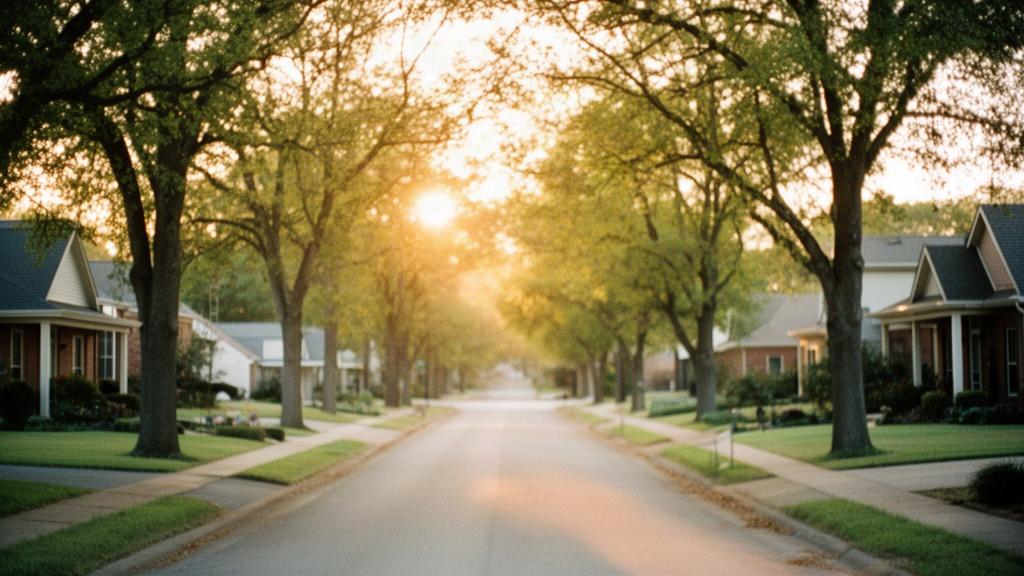
Westville sits in the western portion of New Haven, roughly two miles from the Yale campus and about three miles from Union Station. The neighborhood is physically bounded by West Rock Ridge State Park to the north and west, Edgewood Park to the east, and the Amity Street corridor to the south. That park boundary is not incidental. It shapes everything from lot sizes to street patterns to the way morning light hits the older homes on Fountain Street.
Geography and Street Layout
Unlike the grid-heavy blocks of Wooster Square or the numbered streets of Fair Haven, Westville was developed in a more organic pattern during the late 19th and early 20th centuries. Streets curve around the topography of West Rock, which means many lots are irregular and driveways are short. Whalley Avenue is the main commercial artery, running northeast from the Westville Village strip toward Dixwell Avenue. Commuting from Westville to downtown New Haven takes roughly 10 to 15 minutes by car depending on traffic, and about 25 to 35 minutes on foot to the Green.
Architectural Character
Westville's housing stock skews older, with a large share of homes built between 1900 and 1950. Tudor revivals with stucco exteriors and steeply pitched rooflines are common on the blocks closest to Edgewood Park. Craftsman bungalows with wide front porches and exposed rafter tails appear frequently on the side streets off Blake Street. Colonial revivals and American Foursquares fill out much of the middle inventory. The result is a neighborhood where almost every block has genuine architectural variety, which is part of why buyers who have looked at newer suburban construction in Hamden or Orange often circle back to Westville.
2. Westville Real Estate Prices in September 2026
Westville currently trades at a meaningful premium to the New Haven city median, driven by lot sizes, architectural appeal, and proximity to Edgewood Park and West Rock. Buyers should expect to compete for move-in-ready single-family homes in this neighborhood, where well-priced listings rarely sit for more than two to three weeks.
What Buyers Are Actually Paying
As of September 2026, single-family homes in Westville are selling in a range of approximately $380,000 to $650,000, with the sweet spot for a three-bedroom Colonial or Tudor revival landing between $430,000 and $520,000. Larger homes on deeper lots, particularly those with four or more bedrooms and a garage, are pushing $575,000 to $650,000 when updated. Homes that need significant work, meaning roofs, mechanicals, or kitchens that have not been touched since the 1980s, are still finding buyers in the $320,000 to $380,000 range from people who want to renovate.
Multi-family properties in Westville, which are predominantly two-family homes, are trading between $420,000 and $550,000 depending on unit size, condition, and whether rents are at market. Condos and smaller attached units along the Whalley Avenue corridor are generally in the $200,000 to $320,000 range, making them the most accessible entry point into the neighborhood.
How Westville Compares to the City Median
The broader New Haven market has seen consistent price appreciation through 2026, with the citywide median for single-family homes sitting in the low-to-mid $300,000s as of this month. Westville's median for single-family sales runs roughly 25 to 35 percent above that figure, reflecting the neighborhood's larger average lot sizes and the condition of the housing stock relative to other parts of the city. For more context on citywide pricing, the average home price in New Haven right now post on this site breaks down the numbers across different property types.
Connecticut's housing market as a whole has remained tight through 2026, with inventory well below historical norms across most of the state. According to Forbes Advisor's Connecticut housing market analysis, median home prices across Connecticut have continued to rise year over year, and New Haven County has been one of the more active markets in the state. Westville reflects that pressure acutely because supply in the neighborhood is structurally limited: there is simply no undeveloped land to build on.
3. The Westville Housing Stock: What You Will Find
Westville's inventory is dominated by pre-war single-family homes, with a meaningful secondary supply of two-family properties. New construction is essentially absent, which means buyers are always evaluating older homes and need to budget accordingly for maintenance and updates.
Single-Family Homes
A typical single-family home in Westville has two to four bedrooms, one to two bathrooms, a detached or attached garage, and a lot between 5,000 and 9,000 square feet. Finished square footage generally runs from 1,200 to 2,200 square feet for the core inventory, with larger homes on the park perimeter reaching 2,500 to 3,000 square feet. Basements are common and often unfinished, representing either deferred maintenance or an opportunity depending on your perspective. Original hardwood floors, plaster walls, and wood-framed windows are standard features in homes built before 1950, and buyers should have a clear plan for those windows in particular, since replacing them in a Tudor or Craftsman without disrupting the character requires some research.
Multi-Family and Condos
Two-family homes in Westville are often owner-occupied on one floor with a rental unit above or below. These properties tend to have separate entrances, separate utilities, and shared driveways. For buyers who want to offset their mortgage with rental income, a Westville two-family is one of the more practical options in New Haven, since the neighborhood draws consistent rental interest from people who work at Yale, Yale New Haven Hospital, and the various institutions along the Whalley Avenue corridor.
Condo inventory in Westville is thinner than in some other parts of the city. Most of what exists was converted from older apartment buildings rather than purpose-built, so buyers should review HOA documents carefully for deferred maintenance reserves and any special assessments on the horizon. If you are comparing Westville condos to new construction options elsewhere in New Haven, the new residential developments guide for 2026 covers what is being built and where.
4. Westville Micro-Neighborhoods and Street-Level Distinctions
Westville is not monolithic. Within the neighborhood's roughly one-square-mile footprint, there are distinct pockets that differ in price, lot size, and proximity to amenities. Knowing these distinctions helps buyers set realistic expectations and helps sellers price accurately.
The Blake Street and Whalley Avenue Corridor
The blocks immediately surrounding Westville Village, the small commercial strip centered on Whalley Avenue near Blake Street, are the most walkable part of the neighborhood. Shops, restaurants, the Westville Farmers Market (which runs seasonally on Fountain Street), and the Creative Arts Workshop are all within a short walk. Homes on the streets closest to the village, such as Fountain Street, Ellsworth Avenue, and Pendleton Street, tend to command a slight premium over comparable homes deeper in the neighborhood, because walkability is a concrete, measurable feature here rather than a marketing claim.
Edgewood and the Park Perimeter
The streets that border Edgewood Park on the eastern edge of Westville, including Edgewood Avenue itself and the blocks between it and Whalley, contain some of the largest and most architecturally elaborate homes in the neighborhood. Edgewood Park spans roughly 100 acres and includes a duck pond, a restored carousel, tennis courts, and walking paths. Homes with direct park views or park-facing lots are the most sought-after in Westville and price accordingly, often reaching the upper end of the $550,000 to $650,000 range for well-maintained properties.
Upper Westville and West Rock
As you move north and west toward West Rock Ridge State Park, the lots get larger, the streets get quieter, and the prices moderate slightly relative to the village core. West Rock Ridge State Park covers more than 1,500 acres and offers hiking trails, a hawk watch, and trailheads accessible directly from streets like Wintergreen Avenue and Fitch Street. Homes in this upper section tend to have more land, sometimes a quarter acre or more, which is unusual for a New Haven neighborhood. The tradeoff is that these streets are less walkable and require a car for most errands.
5. Timing the Westville Market: When to Buy and When to Sell
In the Westville neighborhood of New Haven, timing matters, but it rarely matters as much as buyers and sellers think it does. The neighborhood's limited inventory means that waiting for the perfect moment often means missing the right home.
Seasonal Patterns
Spring, specifically March through June, is when the largest number of Westville listings hit the market. Sellers who want maximum buyer competition and the broadest pool of offers typically list in April or May. Buyers who list in spring face the most competition but also have the most options to choose from.
Fall, from September through November, is the second-strongest window. Right now in September 2026, Westville is in the early part of that fall window. Buyers who did not find a home in the spring often re-enter the market in September with renewed urgency, wanting to close before the holidays and winter. Sellers listing in September and October still benefit from motivated buyers, and the competition among listings is lower than it was in May. For a deeper look at how fall compares to spring in New Haven, the fall vs. spring buying guide on this site covers the tradeoffs in detail.
Current Market Conditions in September 2026
Westville is currently a seller's market, though the pace has moderated compared to the frenzied conditions of 2022 and 2023. Days on market for move-in-ready single-family homes in Westville are running roughly 14 to 21 days as of September 2026, and multiple-offer situations are still common for well-priced properties under $500,000. Homes that are overpriced or have deferred maintenance are sitting longer, sometimes 45 to 60 days, which reflects buyers being more selective than they were two or three years ago.
Interest rates have stabilized relative to their 2023 peaks, which has brought some buyers back off the sidelines. Westville's price floor has held firm through 2026 because new supply is structurally impossible to add. Every lot that can be built on in this neighborhood was built on decades ago.
6. What Buyers and Sellers Need to Know Before Acting
The Westville neighborhood of New Haven has specific considerations that differ from other parts of the city. Understanding them before you make an offer or set a list price will save you time and money.
Due Diligence Specific to Westville
Because the housing stock is old, buyers should budget for a thorough home inspection and should specifically ask about knob-and-tube wiring, cast-iron drain lines, and the age of the boiler or furnace. Many Westville homes were built before modern insulation standards, so heating costs in winter can be significant. A pre-purchase energy audit is worth considering, especially for homes with original windows and minimal attic insulation.
Lots near West Rock Ridge have some topographic variation, which means drainage and grading matter more than they would on a flat suburban lot. Ask your inspector to specifically evaluate the grading around the foundation, particularly on the uphill side of any home that sits on a slope. Water intrusion in basements is a known issue in some parts of upper Westville, and it is far better to know before closing than after.
Property Taxes and Carrying Costs
New Haven's property tax rate is one of the highest in Connecticut, which is a material consideration for buyers comparing Westville to similar homes in neighboring Hamden or Woodbridge. A home assessed at $450,000 in New Haven carries a significantly higher annual tax bill than a comparable home in a surrounding town, which affects your total monthly carrying cost. The full breakdown of how New Haven property taxes compare to surrounding towns is covered in the property tax comparison guide on this site, which is worth reading before you finalize your budget.
Sellers in Westville should also be aware that buyers are increasingly sophisticated about tax implications. Pricing your home without accounting for the tax burden a buyer will carry can result in a longer time on market, even in a strong neighborhood like Westville. Working with an agent who knows the local numbers, not just the comparable sales, makes a real difference in how you price and how quickly you close.
FAQ
How much does a house cost in the Westville neighborhood of New Haven right now?
As of September 2026, single-family homes in Westville are selling in a range of roughly $380,000 to $650,000, with the median for a three-bedroom home landing between $430,000 and $520,000 depending on condition and location within the neighborhood. Homes near Edgewood Park or in move-in-ready condition push toward the upper end of that range, while properties needing significant updates can be found closer to $320,000 to $380,000. Multi-family two-family homes trade between $420,000 and $550,000, and condos along the Whalley Avenue corridor start around $200,000. These figures reflect Westville's premium over the broader New Haven city median, which sits in the low-to-mid $300,000s for single-family homes.
Is Westville a good place to buy a home compared to other New Haven neighborhoods?
Westville offers a distinct combination of pre-war architectural character, proximity to Edgewood Park and West Rock Ridge State Park, a walkable village commercial strip, and structurally limited new supply, which has supported consistent price stability over time. Whether it is the right fit for a specific buyer depends entirely on individual priorities: budget, commute needs, property type, and personal preferences about older homes and their maintenance requirements. Buyers who are also considering East Rock, another of New Haven's architecturally distinctive neighborhoods, can compare the two by reading the East Rock real estate market guide on this site. Researching both neighborhoods directly, including visiting the streets and speaking with a local agent, is the most reliable way to determine which area suits your situation.
How long do homes stay on the market in Westville, and how competitive is it?
In September 2026, move-in-ready single-family homes in Westville are spending roughly 14 to 21 days on the market before going under contract, and multiple-offer situations remain common for well-priced listings under $500,000. Homes with deferred maintenance or aggressive pricing are sitting longer, sometimes 45 to 60 days, as buyers have become more selective than they were during the peak market years. The fall window from September through November is the second-busiest selling season in Westville after spring, which means buyers re-entering the market this month will find motivated sellers but also active competition from other buyers who did not find a home in the spring. Getting pre-approved and working with a local agent who tracks Westville listings closely is the most effective way to move quickly when the right home appears.