← Back to Blog
Buying
Investment Property Guide for Portland, Oregon
By MELISSA YOUNG
Portland Real Estate Consulting
September 11, 2026 · 10 min read
If you are searching for an investment property guide for Portland, Oregon, you are asking the right question at an interesting moment in the market. Portland's rental housing stock is deep and varied, spanning everything from Craftsman duplexes in Sellwood to newer mixed-use buildings in the Pearl District, and the rules governing landlord-tenant relationships here are among the most detailed in the country. This guide covers property types, price ranges, financing, Oregon landlord law, and what the local rental market looks like right now in September 2026.
1. Why Portland Attracts Real Estate Investors in 2026
Portland remains one of the larger rental markets on the West Coast. The city's population of roughly 650,000 within city limits, and over 2.5 million across the greater metro area, sustains consistent demand for rental housing across a wide range of price points. Portland's rental rate, meaning the share of households that rent rather than own, has historically hovered near 50 percent, which is high relative to most mid-sized American cities.
Rental Demand and Vacancy Context
As of September 2026, Portland's apartment vacancy rate sits in the mid-to-high single digits, reflecting a period of elevated multifamily construction that added significant supply between 2022 and 2025. That supply pressure has moderated rent growth compared to the sharp increases seen in 2021 and 2022, which is worth understanding if you are underwriting a deal today. Single-family rentals and smaller two-to-four-unit properties have held occupancy better than large apartment complexes, because they compete in a different sub-market.
For a broader view of current conditions, this overview of Portland real estate investing from a local property management perspective covers vacancy trends and rent benchmarks that are useful when stress-testing your projections.
How Portland Compares to Other Oregon Markets
Portland entry prices are higher than Medford or Eugene, but the rental income potential is also higher. A two-bedroom unit in Portland's inner eastside might rent for $1,600 to $2,000 per month, while a comparable unit in Salem might fetch $1,200 to $1,500. The trade-off is that Portland's regulatory environment is more complex, which we cover in detail below. Investors who want to understand how Portland stacks up against other Oregon cities can review this comparison of Oregon investment markets for additional context.
If you want current Portland price and market data before going further, the Portland, Oregon Real Estate Market Guide on this site covers median prices, days on market, and inventory levels updated through fall 2026.
2. Investment Property Types Available in Portland
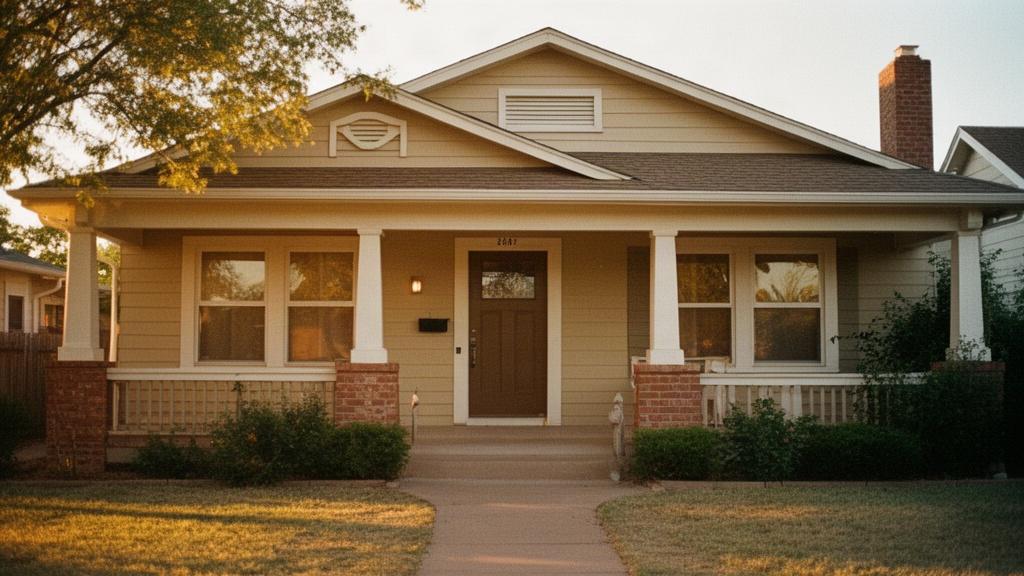
Portland offers a wider variety of investable property types than most cities its size. The housing stock ranges from early-1900s Craftsman bungalows and Victorian-era homes in neighborhoods like Irvington and Ladd's Addition, to mid-century ranch homes in outer Southeast and outer Northeast, to purpose-built multifamily buildings concentrated along transit corridors like Division Street, Mississippi Avenue, and the inner Burnside corridor.
Single-Family Rentals
A detached single-family home rented to one household is the simplest structure for a first-time investor. In outer Northeast Portland, neighborhoods like Cully and Woodlawn have median home prices in the $380,000 to $480,000 range as of September 2026, and three-bedroom homes in those areas typically rent for $1,800 to $2,200 per month. In inner Southeast, prices climb toward $550,000 to $700,000 for comparable square footage, and rents do not always scale proportionally, which compresses gross yields.
Duplexes, Triplexes, and ADUs
Portland's 2021 Residential Infill Project rezoning opened the door to more missing-middle housing. That policy change means many single-family lots in the city can now legally support a duplex, triplex, or fourplex, which has expanded the supply of small multifamily properties available for purchase. Existing duplexes in areas like St. Johns, Lents, and Montavilla are actively traded, with prices typically ranging from $500,000 to $750,000 depending on condition and unit mix.
Accessory dwelling units, or ADUs, are another avenue. Portland has one of the highest concentrations of permitted ADUs in the country. Buying a home with an existing detached ADU, or purchasing a property where one can be added, lets an owner-occupant offset their mortgage with rental income from the secondary unit. ADU rents in inner Portland neighborhoods range from $1,100 to $1,800 per month for a studio or one-bedroom configuration.
Small Multifamily and Mixed-Use Buildings
Five-to-twenty-unit apartment buildings represent a step up in complexity and capital requirement, but also in income potential. These properties are typically priced based on their net operating income and local cap rates rather than comparable sales, which means underwriting them requires a different skill set than buying a single-family home. Cap rates in Portland for this asset class have been running in the 4.5 to 6 percent range as of mid-2026, depending on location, building age, and tenant profile.
3. Price Ranges and What Your Budget Gets You
Your budget determines not just which neighborhoods you can access, but which property types and strategies are realistic. Here is a practical breakdown of what different price points typically look like in the Portland investment property market as of September 2026.
Under $500K
At this price point, you are primarily looking at single-family homes in outer Portland neighborhoods. Areas like Lents in outer Southeast, Centennial near the Gresham border, and parts of outer Northeast like Argay Terrace have inventory in the $350,000 to $490,000 range. These homes tend to be postwar construction, often 1,000 to 1,400 square feet, with smaller lots. Rents for three-bedroom homes in these corridors range from $1,700 to $2,100 per month, which can produce workable cash flow if you put 25 percent down and secure a rate under 7.5 percent.
$500K to $800K
This range opens up duplexes, homes with existing ADUs, and inner-ring single-family rentals. A duplex in St. Johns or Montavilla with two two-bedroom units might list in the $580,000 to $720,000 range. Combined rents of $3,200 to $3,800 per month are achievable on a well-maintained property in those locations. This is where many investors find the most interesting opportunities, because the property type diversity is greatest and competition from owner-occupant buyers is lower than in the sub-$500K range.
$800K and Above
Above $800,000 you are looking at larger multifamily properties, premium inner-city single-family homes, or mixed-use buildings. A four-plex in inner Northeast or inner Southeast Portland might trade in the $900,000 to $1.3 million range. At these prices, cash-on-cash returns are often modest in year one, and investors are typically underwriting for rent growth and equity appreciation over a five-to-ten-year hold. The Luxury Home Market in Portland, Oregon guide covers the upper end of Portland's residential market in more detail.
4. Oregon Landlord-Tenant Law: What Every Portland Investor Must Understand
Oregon's landlord-tenant laws are among the most tenant-protective in the United States, and Portland adds additional layers on top of state law. Understanding these rules before you close is not optional. They directly affect your ability to set rents, terminate tenancies, and manage turnover costs, all of which feed into your actual returns.
Rent Control and Rent Stabilization
Oregon's statewide rent stabilization law, in place since 2019, caps annual rent increases at 7 percent plus the consumer price index, with an overall ceiling of 10 percent per year. This cap applies to units that are more than 15 years old. Buildings constructed after 2009 are currently exempt, but that exemption window moves forward each year, so a property built in 2010 will eventually fall under the cap. New construction exemptions are important to factor in if you are evaluating a newer building.
Relocation Assistance and Just Cause Eviction
Oregon requires landlords to provide just cause for terminating a month-to-month tenancy after the first year of occupancy. Qualifying reasons include nonpayment of rent, lease violations, and owner move-in, but a no-cause termination is generally not permitted after that first year. When a landlord terminates a tenancy for certain no-fault reasons, such as demolition or owner occupancy, Oregon law requires the landlord to pay the tenant relocation assistance equal to one month's rent. Portland's city ordinance extends these requirements further in some cases, so you need to review both state and city rules.
City-Specific Portland Rules
Portland has its own rental housing registration requirement. Landlords must register rental units with the city and pay an annual registration fee. The city also has a Rental Services Office that provides landlord and tenant resources and administers some local rental regulations. Reviewing the Portland Rental Services Office website directly is the right starting point for understanding current city-level obligations.
Short-term rental regulations also apply if you are considering platforms like Airbnb or Vrbo. Portland requires a short-term rental permit, limits rentals to the owner's primary residence in most cases, and restricts the number of nights a non-owner-occupied unit can be rented. This effectively rules out pure short-term rental investment strategies for most properties in the city.
5. Financing an Investment Property in Portland
Financing a rental property is structurally different from financing a primary residence, and lenders treat the two very differently. Understanding your options before you make an offer helps you write a realistic offer and avoid surprises during underwriting.
Conventional Investment Loans
Most investors financing a one-to-four-unit rental property use a conventional loan with a 25 percent down payment. Rates on investment property loans typically run 0.5 to 0.75 percentage points higher than owner-occupied rates, and lenders scrutinize debt-to-income ratios carefully. As of September 2026, conventional investment property rates in Oregon are generally in the 7 to 8 percent range depending on credit score, loan amount, and lender. Your closing costs will also include a loan-level price adjustment specific to investment properties, which adds to the upfront cost. The closing costs guide for Portland buyers breaks down what to expect at the closing table.
House Hacking and Owner-Occupied Financing
If you plan to live in one unit of a duplex, triplex, or fourplex, you can finance the property as an owner-occupied purchase. This unlocks FHA financing with as little as 3.5 percent down on a two-to-four-unit property, and conventional owner-occupied rates rather than investment rates. The trade-off is that you must actually occupy one unit as your primary residence. For buyers who are flexible on living arrangements, this strategy significantly reduces the capital required to get started. The First-Time Home Buyer Guide for Portland covers FHA loan basics in more detail.
DSCR Loans and Portfolio Lenders
Debt service coverage ratio loans, or DSCR loans, qualify you based on the property's rental income rather than your personal income. A DSCR of 1.0 means the property's gross rent exactly covers the mortgage payment. Lenders typically want a DSCR of 1.1 to 1.25 or higher. These products are offered by portfolio lenders and non-QM lenders, not traditional banks, and they carry higher rates, often 8 to 9.5 percent as of September 2026. They are most useful for investors who are self-employed, have complex tax returns, or are building a larger portfolio where conventional loan limits become a constraint.
6. Evaluating a Portland Rental Property: Key Numbers to Run
Every investment property decision should be grounded in a few core financial metrics. These numbers help you compare properties objectively and avoid overpaying based on emotion or seller representations.
Gross Rent Multiplier
The gross rent multiplier, or GRM, is the purchase price divided by the annual gross rent. A property listed at $600,000 that generates $36,000 per year in gross rent has a GRM of 16.7. In Portland, GRMs on small residential rental properties currently range from roughly 14 to 20, with inner-city properties at the higher end of that range. A lower GRM generally signals better income relative to price, but it does not account for expenses, so it is a screening tool, not a final answer.
Cap Rate in the Portland Context
The capitalization rate is net operating income divided by purchase price, expressed as a percentage. Net operating income is gross rent minus vacancy allowance, property management, maintenance, insurance, and property taxes, but before debt service. In Portland's current market, single-family and small multifamily cap rates typically fall between 4 and 6 percent. A cap rate below 4 percent suggests the price is high relative to income, and a rate above 6 percent on a well-located property is worth investigating carefully because there may be deferred maintenance or tenant issues priced in.
Cash-on-Cash Return
Cash-on-cash return measures your annual pre-tax cash flow as a percentage of the cash you actually invested, including down payment and closing costs. In Portland's current rate environment, many properties produce cash-on-cash returns in the 3 to 6 percent range in year one when financed with a conventional investment loan. That is tighter than it was in 2019 and 2020, largely because both prices and interest rates are higher. Investors who are patient about finding the right property, or who can negotiate a seller concession to buy down the rate, can improve that number meaningfully.
For a broader view of how Portland's market conditions affect these numbers right now, see the article on how long homes are sitting on the market in Portland before going under contract, which gives a real-time read on competition and pricing dynamics.
FAQ
Is Portland, Oregon a good city to invest in rental property right now?
Portland has meaningful rental demand, a large renter population, and a diverse housing stock that includes everything from Craftsman bungalows to newer multifamily buildings. The regulatory environment is more complex than most U.S. cities, with statewide rent stabilization, just cause eviction requirements, and city-level landlord registration rules that add management overhead. Investors who understand those rules and underwrite their deals conservatively, using realistic vacancy rates of 5 to 8 percent and factoring in relocation assistance costs, can find properties that generate solid long-term returns. The market as of September 2026 favors buyers who are patient and analytical rather than those chasing quick appreciation. Working with a local agent who knows which neighborhoods have the strongest rental fundamentals is a practical advantage.
What is the minimum down payment required to buy an investment property in Portland?
For a conventional investment property loan on a single-family home or a two-to-four-unit building that you will not occupy, most lenders require 25 percent down. If you plan to live in one unit of a two-to-four-unit property, you can use FHA financing with as little as 3.5 percent down, or conventional owner-occupied financing with 5 to 10 percent down depending on the loan program. DSCR loans from portfolio lenders typically require 20 to 25 percent down but have more flexible income qualification standards. Your total upfront cash also needs to cover closing costs, which in Oregon typically run 2 to 3 percent of the purchase price on top of the down payment.
Does Portland's rent control law apply to all rental properties?
Oregon's statewide rent stabilization law applies to residential rental units that are more than 15 years old, which means buildings constructed before 2011 are currently subject to the annual rent increase cap of 7 percent plus CPI, up to a maximum of 10 percent per year. Buildings constructed in 2011 or later are currently exempt, but that exemption window advances by one year each calendar year, so the exemption is temporary for any given property. Single-family homes rented to tenants are also subject to the law in most cases. Portland's city ordinance adds additional tenant protections beyond state law, including specific relocation assistance requirements and rental unit registration. Investors should review both ORS Chapter 90 and the Portland City Code before purchasing any rental property here.