
← Back to Blog
Neighborhoods
What Is the Dunson Hills Area of LaGrange Georgia Like and What Kind of Homes Are Typically Available There
By Regenia Andrews
LoKation Real Estate, LLC & A Southern Group Realty
September 26, 2026 · 11 min read
If you have been asking what the Dunson Hills area of LaGrange Georgia is like and what kind of homes are typically available there, you are not alone. This established part of LaGrange carries a distinct character rooted in the city's textile manufacturing past, and it offers a housing inventory that looks quite different from the newer subdivisions sprouting up on LaGrange's outskirts. This guide covers the area's history, street-level character, home styles, price ranges, and what the current market looks like for buyers and sellers in September 2026.
1. The History Behind Dunson Hills and Its Connection to LaGrange's Textile Past
Dunson Hills is rooted in one of the most significant chapters of LaGrange's economic history. The Dunson name traces directly to the Dunson Mills textile operation, which was part of the broader network of cotton mills that defined Troup County's industrial identity through much of the twentieth century. LaGrange, situated roughly 65 miles southwest of Atlanta along Interstate 85, built much of its residential fabric around the mill industry, and Dunson Hills reflects that legacy in its layout, its housing stock, and its relationship to the surrounding city.
From Mill Village to Established Neighborhood
Mill villages in the American South followed a predictable pattern: the company built modest worker housing close to the plant, and over decades those clusters evolved into genuine neighborhoods with their own identity. Dunson Hills followed that arc. As the textile industry declined through the latter half of the twentieth century and mill-owned properties transferred to private hands, residents purchased and improved their homes, and the area transitioned from company housing into an owner-occupied community.
The West Georgia Textile Heritage Trail documents this history in detail. The West Georgia Textile Heritage Trail profiles LaGrange's mill culture, including the Dunson Mills story, and is worth reading if you want to understand why certain streets, building styles, and community patterns in this part of the city look the way they do. That context matters when you are evaluating a home purchase, because it helps explain construction methods, lot configurations, and the density of the neighborhood relative to newer parts of LaGrange.
How the Dunson Name Fits Into LaGrange History
The Dunson family was among the prominent mill-owning families in Troup County, and their name appears in several LaGrange landmarks and institutions beyond just the residential area. Understanding that the neighborhood grew organically around an industrial anchor explains a lot about its current form: the streets tend to follow practical rather than curvilinear subdivision logic, the lots are typically smaller than what you find in postwar subdivisions, and the homes were built to house working families rather than to maximize square footage.
2. What the Dunson Hills Area of LaGrange Georgia Looks and Feels Like Today
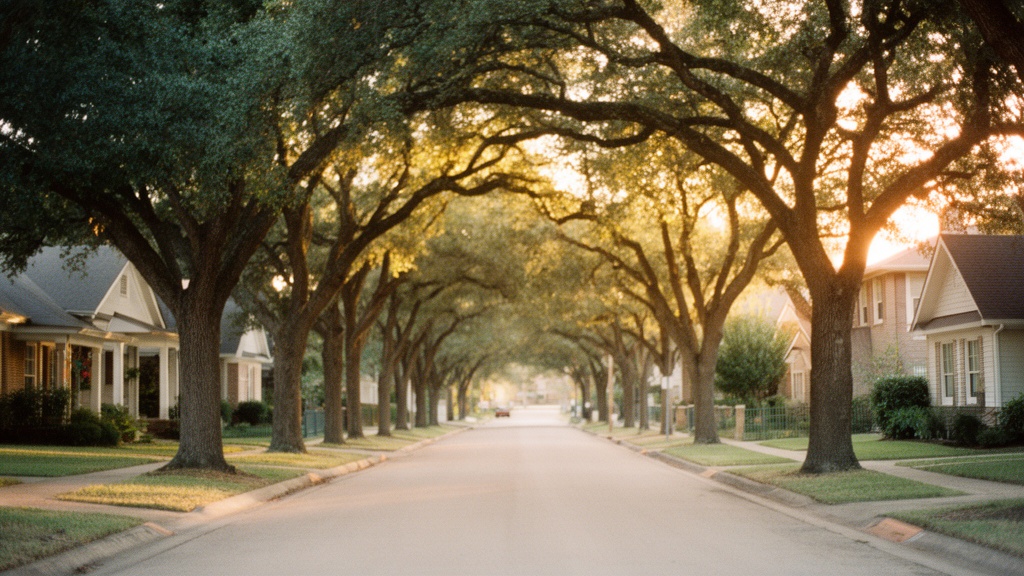
The Dunson Hills area today is an established, tree-lined part of LaGrange with mature hardwoods, older sidewalks, and a settled, quiet character. It sits on the western side of the city, within a few miles of downtown LaGrange's Lafayette Square and the commercial corridors along Whitesville Road and New Franklin Road. Homes here are generally not new construction, and that shows in the landscape: yards are well established, trees provide genuine shade canopy, and the streetscape has a lived-in quality that newer subdivisions take decades to develop.
Street Layout, Lot Sizes, and Mature Landscaping
Streets in this part of LaGrange tend to be narrower than what you find in newer planned communities, reflecting the era in which they were laid out. Lot sizes typically run from roughly 6,000 to 10,000 square feet, which is smaller than the half-acre and larger lots common in LaGrange's outer residential areas, but the mature tree coverage makes the lots feel more substantial than the raw numbers suggest. Driveways are often short, front porches are common, and homes sit relatively close to the street, giving the area a connected, pedestrian-scaled feel.
Proximity to Downtown LaGrange and Key Landmarks
Distance to downtown LaGrange from Dunson Hills is roughly two to three miles, which translates to about five to eight minutes by car under normal conditions. That puts residents within easy reach of Lafayette Square, the Troup County Courthouse, and the local dining and retail that have expanded in downtown LaGrange over the past several years. West Point Lake, one of the area's most significant recreational assets, is approximately 12 miles to the southwest, making it a realistic destination for weekend use. Callaway Gardens in Pine Mountain is about 20 miles to the north.
Parks, Green Space, and Daily Conveniences Nearby
LaGrange's Granger Park and the broader Troup County park system are accessible from this part of the city. Grocery options, pharmacies, and medical offices along the Whitesville Road and New Franklin Road corridors are within a short drive. The LaGrange-Callaway Airport is a few miles to the east, which is worth knowing for noise considerations depending on the specific street you are evaluating. WellStar West Georgia Medical Center, the area's primary hospital, is also within a five-to-ten-minute drive from most of Dunson Hills.
3. What Kind of Homes Are Typically Available in Dunson Hills
The housing inventory in the Dunson Hills area is predominantly older single-family homes, with most of the stock dating from the 1940s through the 1970s. You will not find large-format new construction here. What you will find is a mix of cottage-style homes, ranch-style layouts, and some two-story houses, most of them built from brick, wood frame, or a combination of both. The area answers the question of what kind of homes are typically available in Dunson Hills with a consistent answer: modest to mid-sized homes with character, renovation potential, and prices that generally sit below LaGrange's newer suburban subdivisions.
Architectural Styles and Construction Eras
The most common architectural forms in this area are the Southern cottage and the ranch house. Cottages from the 1940s and 1950s typically feature gabled rooflines, covered front porches, hardwood floors, and smaller room counts by today's standards, usually two to three bedrooms and one to two bathrooms. Ranch homes from the 1960s and 1970s tend to be single-story, wider on the lot, and often include carports rather than enclosed garages. Brick exteriors are common across both eras and hold up well in the Georgia climate.
Some homes have been updated substantially, with renovated kitchens, new roofs, and updated electrical and plumbing systems. Others remain largely original and represent genuine renovation opportunities. The variation is wide, which means inspection thoroughness matters significantly in this area. Buyers should budget for the possibility of older wiring systems, cast-iron or galvanized plumbing, and HVAC units that may be past their useful life.
Typical Square Footage and Lot Characteristics
Square footage in Dunson Hills homes generally runs from about 900 to 1,800 square feet, with the smaller end representing the original mill-era cottages and the upper end representing larger ranch homes or homes that have had additions built over the years. Three-bedroom, one-bath homes are common at the smaller end of the spectrum. Three-bedroom, two-bath layouts in the 1,200 to 1,500 square foot range represent the most frequently listed configuration.
Lot depths are often shallower than in newer subdivisions, but many properties include detached garages or outbuildings that add functional space. Fenced backyards are common, and mature oak, pecan, and dogwood trees are frequent features that add both aesthetic value and summer shade.
Price Ranges in September 2026
Homes in the Dunson Hills area currently list in a range that reflects both the age of the housing stock and LaGrange's broader market conditions. Entry-level properties in need of updating are available in the $80,000 to $120,000 range as of September 2026. Move-in-ready homes that have been renovated or well-maintained typically list between $130,000 and $185,000. Fully updated homes with modern kitchens, baths, and mechanical systems can reach the low $200,000s, though that represents the top of the range for this specific area.
For broader context on how LaGrange's overall market is performing right now, Redfin's LaGrange housing market data tracks median sale prices, days on market, and sale-to-list price ratios across the city. Dunson Hills homes tend to sell at or slightly below the citywide median, reflecting the older stock and the renovation factor that buyers weigh in their offers.
4. What Buyers Should Know Before Shopping in Dunson Hills
Buying an older home in an established LaGrange neighborhood requires a different mindset than buying new construction, and Dunson Hills is no exception. The value proposition here is real: you typically get more land, more character, and a lower price per square foot than you would in a comparable new-build subdivision. But you also take on more responsibility for understanding the home's condition before you close. A thorough inspection is not optional; it is the most important step in any Dunson Hills purchase.
Renovation Potential and What to Inspect
Homes built in the 1940s through 1970s carry specific inspection priorities. Electrical panels in homes from this era may still use fuse boxes or older breaker systems that do not meet current code and can be difficult to insure. Plumbing may include galvanized steel pipes, which corrode from the inside and restrict water flow over time. Crawl spaces, which are common in this area's construction style, should be checked carefully for moisture intrusion, wood rot, and pest damage.
On the positive side, homes from this era were often built with old-growth lumber that is denser and more durable than modern dimensional lumber. Solid hardwood floors under carpet are a common discovery during renovations, and brick exteriors from this period have proven extremely durable in the Georgia climate. Buyers who approach Dunson Hills with a clear renovation budget and a realistic inspection process often find strong long-term value.
If you are buying your first home and want a full picture of the process and costs involved, the First-Time Home Buyer Guide for LaGrange, Georgia covers everything from pre-approval to closing day in detail.
School District Information for This Part of LaGrange
The Dunson Hills area is served by the Troup County School System, which administers public schools throughout the county including the city of LaGrange. Because school assignments can vary by address and are subject to change, buyers with school-age children should verify current attendance zones directly with the Troup County School System using their specific property address. For a full overview of how the district is organized and what public school options exist across different parts of LaGrange, the public school options guide for LaGrange, Georgia is a helpful starting point.
How Dunson Hills Compares to Other Established LaGrange Areas
LaGrange has several established residential areas with older housing stock, including neighborhoods near Hillside Drive, the areas around Forrest Avenue, and pockets near the downtown historic district. Dunson Hills occupies a particular position in that landscape: it is more cohesive in its mill-village origins than some of the mixed-era neighborhoods near downtown, and it tends to offer lower entry prices than the historic district homes closer to Lafayette Square, which can command premiums for their architectural detail and location.
Buyers considering Dunson Hills alongside newer subdivisions should understand that the trade-offs are real in both directions. Newer subdivisions in LaGrange offer modern floor plans, builder warranties, and updated systems, but they typically come at higher price points and lack the mature landscaping and lot character of established areas. For a look at what is being built new in the LaGrange market right now, the new housing developments and subdivisions guide for 2026 provides current detail on active projects.
5. Selling a Home in Dunson Hills: What Owners Should Expect
Sellers in Dunson Hills are working with a buyer pool that skews toward value-conscious purchasers, investors, and buyers who specifically want an established neighborhood with character over a cookie-cutter subdivision. That pool is real and active in the LaGrange market, but pricing strategy matters more here than in newer neighborhoods where comparable sales are more uniform.
Demand Patterns for Established LaGrange Neighborhoods
Investor interest in older LaGrange neighborhoods has been consistent through 2026, driven partly by the rental demand that comes with Kia Georgia's manufacturing presence in West Point and the broader employment base in Troup County. Dunson Hills homes in the $80,000 to $130,000 range attract both investors looking for rental properties and owner-occupants who want an affordable entry point into homeownership. Homes that have been updated and are priced in the $150,000 to $185,000 range tend to attract a broader buyer pool that includes relocating buyers and move-up buyers from other parts of the city.
Days on market for homes in this price range in LaGrange have varied based on condition and pricing accuracy. Well-priced, well-presented homes in established neighborhoods have been moving in 30 to 60 days in the current market. Overpriced or under-prepared listings in older neighborhoods tend to sit longer, which can create a perception problem that drives further price reductions.
Pricing Strategy for Older Homes in This Market
Pricing a Dunson Hills home accurately requires a comparative market analysis that accounts for condition, updates, and the specific micro-location within the area. A home with a new roof, updated electrical, and renovated kitchen will not appraise or sell the same as an original-condition home next door, even if the square footage is identical. Sellers who invest in targeted pre-listing improvements, particularly mechanical updates and fresh paint, tend to recover those costs in both price and time on market.
For a fuller picture of the selling process in LaGrange, including how to set a list price and what to expect during negotiation, the guide on selling a home in LaGrange, Georgia walks through the full timeline and key decision points.
FAQ
Is Dunson Hills a good area to buy a home in LaGrange, Georgia?
Dunson Hills offers a specific kind of value that appeals to buyers who want an established neighborhood with mature trees, lower price points, and homes with character that newer subdivisions cannot replicate. The area's homes are older, which means buyers need to budget for potential updates to mechanical systems, plumbing, and electrical. For buyers who approach the process with a thorough inspection and a clear renovation budget, the area represents an accessible entry point into LaGrange homeownership. Whether it fits your specific needs depends on your priorities, budget, and tolerance for older construction, which is a conversation worth having with a local agent who knows the area well.
What are the typical home prices in Dunson Hills as of September 2026?
As of September 2026, homes in the Dunson Hills area of LaGrange typically list from approximately $80,000 for original-condition properties needing significant work, up to the low $200,000s for fully updated homes with modern kitchens, baths, and mechanical systems. The most common price range for move-in-ready properties falls between $130,000 and $185,000. Prices vary considerably based on condition, square footage, and what updates have been completed, so two homes on the same street can differ by $40,000 or more depending on their respective states of renovation.
What style of homes are most common in the Dunson Hills area of LaGrange?
The most common home styles in Dunson Hills are Southern cottages from the 1940s and 1950s and ranch-style homes from the 1960s and 1970s. Cottages tend to run from 900 to 1,200 square feet with covered front porches, gabled rooflines, and hardwood floors. Ranch homes are typically single-story, wider on the lot, and range from about 1,100 to 1,800 square feet. Brick exteriors are common across both eras. Carports are more common than enclosed garages, particularly in the older homes, though some properties have had detached garages added over the years.