← Back to Blog
Local Living
Relocating to LaGrange, Georgia: neighborhoods, costs and timelines
By Regenia Andrews
LoKation Real Estate, LLC & A Southern Group Realty
September 11, 2026 · 11 min read
Relocating to LaGrange, Georgia puts you in one of Troup County's most established small cities, roughly 65 miles southwest of Atlanta along I-85. This guide covers what you actually need to know before you move: which parts of town offer what kind of housing stock, what things cost right now in September 2026, and how long a realistic relocation timeline runs from first search to closing day.
1. What LaGrange Looks Like on the Ground
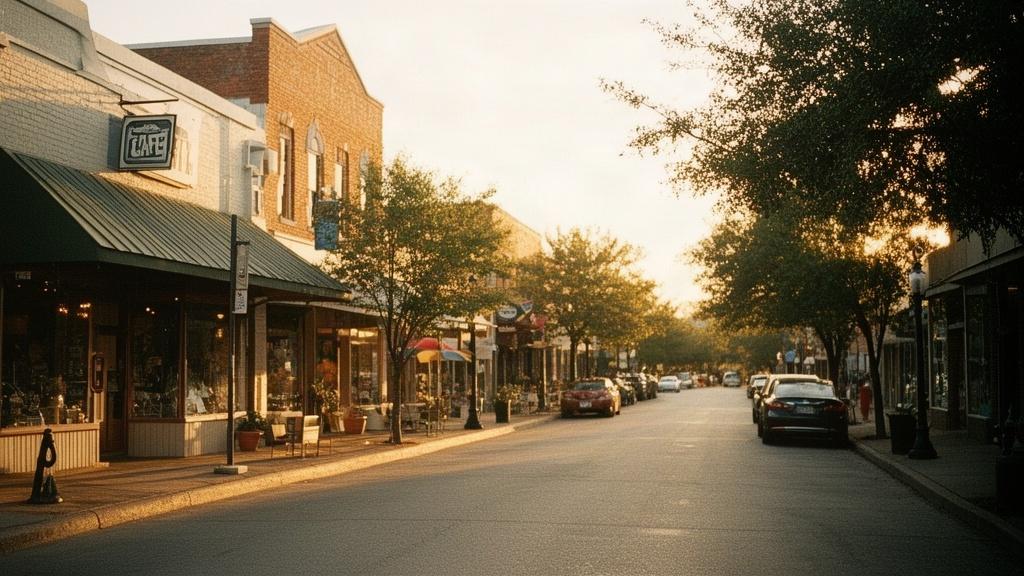
LaGrange sits at the heart of Troup County in west-central Georgia. The city proper has a population of roughly 30,000 people, with the broader Troup County area closer to 75,000. It is not a suburb of Atlanta in any practical sense: the drive from downtown LaGrange to Midtown Atlanta runs about 65 to 70 miles depending on your route, and traffic on I-85 North during peak hours can push that to 90 minutes or more. Most people who relocate here are coming for local employment, lower housing costs, or a slower pace, not for a daily Atlanta commute.
The City's Layout and Scale
LaGrange is compact and navigable. The downtown square anchors the city's center, with Broad Street and Greenville Street serving as the main commercial corridors. Lafayette Square and Harmon Field give the downtown area genuine green space within walking distance of restaurants, shops, and the Troup County Courthouse. The Chattahoochee Valley Art Museum and the Hills and Dales Estate, a 19th-century formal garden estate listed on the National Register of Historic Places, sit within a few minutes of the square. West Point Lake, a 26,000-acre reservoir straddling the Georgia-Alabama line, is about 12 miles from the center of the city.
Getting Around LaGrange and Beyond
Most errands in LaGrange require a car. The city has a local transit system, LaGrange Colquitt Regional Transit, but the service area and frequency are limited. For groceries, medical care, and retail, nearly everything you need is within a 10-minute drive of any residential neighborhood. Newnan is about 35 miles northeast on I-85, Columbus is roughly 40 miles south on US-27, and the Hartsfield-Jackson Atlanta International Airport is approximately 70 miles from downtown LaGrange, making it accessible for occasional travel without being a daily factor.
2. Neighborhoods and Housing Stock in LaGrange
LaGrange has distinct residential areas with meaningfully different housing types, lot sizes, and price points. Understanding what each part of town offers helps you narrow your search before you ever schedule a showing. For a broader look at what is currently listed across the city, the Homes for Sale in LaGrange, Georgia Guide covers active inventory in more detail.
Historic Downtown and the Squares District
The blocks immediately surrounding downtown LaGrange contain some of the city's oldest residential architecture. You will find Victorian-era cottages, bungalows from the early 1900s, and larger two-story homes on lots that typically run between 0.1 and 0.4 acres. Many of these properties have been renovated but retain original hardwood floors, front porches, and period millwork. Prices in this corridor in September 2026 generally range from the high $100,000s for smaller homes needing work to the mid-$300,000s for fully updated properties on larger lots. Walkability to the square, the museum, and local dining is a practical advantage of this location.
Hillside and College Street Corridor
The Hillside area and the College Street corridor extend south and southwest from downtown toward LaGrange College. LaGrange College, founded in 1831, is one of Georgia's oldest private liberal arts institutions, and the residential streets near campus include a mix of craftsman bungalows, mid-century ranch homes, and some larger historic properties. Lot sizes here tend to be modest, generally under a quarter acre, and the tree canopy on many blocks is mature and dense. Prices in this area in September 2026 run roughly $150,000 to $280,000 for most single-family homes, with occasional outliers above that range for fully renovated historic properties.
North LaGrange and the Northlake Area
North LaGrange holds a large share of the city's newer construction. Subdivisions in this part of town were built primarily from the 1980s through the 2010s, with some newer phases still being completed in 2026. You will find brick ranch homes, two-story traditional builds, and newer craftsman-style houses on lots ranging from 0.2 to over an acre. The Northlake area in particular has a concentration of homes in the $220,000 to $380,000 range, with larger properties on bigger lots pushing higher. This corridor is close to LaGrange Mall, Walmart, and the medical facilities along Vernon Road, which reduces errand distance for most residents.
South LaGrange and Troup County's Rural Fringe
South LaGrange transitions quickly into the broader Troup County landscape. If you want more land, a detached workshop, or a property with pasture, this is where the inventory exists. Homes on 2 to 10-acre parcels are common in unincorporated Troup County, and prices per square foot drop noticeably compared to in-city addresses. A 1,600-square-foot home on 3 acres in this area might be priced in the $180,000 to $240,000 range in September 2026, depending on condition and road access. The trade-off is distance from city services: some areas are 15 to 20 minutes from the nearest grocery store.
3. What It Costs to Live and Buy in LaGrange
LaGrange's cost of living runs below the national average on most measures. That is one of the consistent draws for people relocating here from higher-cost metros. According to U.S. News Best Places data on LaGrange, housing costs in the city are substantially below the national median, which makes homeownership accessible at income levels that would not qualify for comparable space in Atlanta or Savannah.
Home Prices in September 2026
The median home price in LaGrange currently sits in the low-to-mid $200,000s, though the range is wide. Entry-level homes, typically smaller ranches or older bungalows needing updates, are available in the $130,000 to $170,000 range. Move-in-ready homes with three bedrooms, two bathrooms, and a two-car garage tend to fall between $190,000 and $280,000. Larger homes, those over 2,500 square feet with updated kitchens and finished basements or bonus rooms, generally price between $300,000 and $450,000. Properties above $450,000 exist in LaGrange but represent a small share of overall inventory; most of those are custom builds on acreage or extensively renovated historic homes.
Cost of Living Beyond the Mortgage
Georgia has no state income tax on wages and a relatively modest overall tax burden. Grocery prices, utility costs, and healthcare in LaGrange all track below national averages. Electricity is provided primarily by LaGrange Utilities and is generally competitive with Georgia averages. Natural gas service is available through Atlanta Gas Light. Internet options include fiber service from local and regional providers, with gigabit service available in most established neighborhoods. For a broader picture of what Georgia costs relative to other states, Bankrate's cost of living guide for Georgia provides useful context before you finalize your relocation budget.
Property Taxes and Homestead Exemptions
Troup County property taxes are assessed at 40% of fair market value, which is standard across Georgia. The millage rate varies depending on whether your property is inside the city limits of LaGrange or in unincorporated Troup County, and whether you are in a special service district. On a $230,000 home inside the city, annual property taxes typically run between $1,800 and $2,600 before exemptions. Georgia's standard homestead exemption reduces your assessed value by $2,000 for state taxes, and Troup County offers additional local exemptions for primary residences. You must apply for the homestead exemption by April 1 of the year following your purchase; your closing attorney or Regenia Andrews can walk you through the process.
4. Your Relocation Timeline: From Decision to Move-In
A realistic relocation to LaGrange takes 10 to 16 weeks from serious decision to closing day, assuming you are financing. Cash buyers can compress that to 6 to 8 weeks. The timeline below assumes a conventional or FHA purchase with a standard 30-day close. For a more detailed breakdown of the purchase process itself, the guide on buying a home in LaGrange, Georgia covers each step from offer through closing.
Weeks 1 Through 4: Research and Pre-Approval
Start with your mortgage pre-approval before you tour a single home. In the current LaGrange market, sellers expect buyers to have a pre-approval letter in hand before accepting an offer. Getting pre-approved typically takes 3 to 7 business days once you submit your documents. While that is processing, use the time to research neighborhoods, drive the streets on Google Street View or in person if you can make a visit, and clarify your must-have list. Commute time to your employer, lot size preference, and minimum bedroom count are the three criteria that most efficiently narrow your search in LaGrange's inventory.
Weeks 5 Through 10: Active Search and Offer
Once you are pre-approved, your agent can set up automated alerts for new listings that match your criteria. In September 2026, LaGrange's market has more balanced conditions than the frenzied pace of 2021 and 2022, which means most buyers have a few days to consider a listing before needing to act. That said, well-priced move-in-ready homes in the $200,000 to $280,000 range still move within one to two weeks of listing. Plan to schedule in-person tours within 24 to 48 hours of a property hitting your radar. If you are relocating from out of state, a dedicated two or three-day visit to tour six to ten homes is a practical approach that most buyers in this situation use successfully.
Negotiation in LaGrange currently tends to be more measured than in peak seller's market conditions. Sellers are generally open to reasonable inspection contingencies and standard closing cost assistance requests, especially on homes that have been on the market for more than 21 days. Your offer strategy should be informed by recent comparable sales, which your agent can pull from the Troup County MLS data.
Weeks 11 Through 16: Contract to Closing
Once you are under contract, the clock runs on several parallel tracks. Your home inspection should be scheduled within the first 5 to 7 days of the contract period. In LaGrange, inspectors typically charge $300 to $450 for a standard single-family home, depending on size. Your lender will order an appraisal shortly after the inspection period closes; appraisals in Troup County currently take 7 to 14 days to complete. Final underwriting, title search, and closing document preparation fill out the remainder of the timeline. Most closings in LaGrange happen at a local title company or real estate attorney's office, and Georgia is an attorney-closing state, so you will have an attorney present at the table.
5. Practical Things to Know Before You Arrive
Relocating to LaGrange, Georgia involves more than finding the right house. A few practical details can save you significant time and frustration once you arrive. This section covers the logistical pieces that often catch out-of-state buyers off guard.
Utilities, Internet and Services
Utility setup in LaGrange is straightforward but requires separate contacts for each service. Electricity inside city limits is handled by the City of LaGrange Utilities department. Properties in unincorporated Troup County are typically served by Diverse Power, the local electric cooperative. Water and sewer inside the city are also managed by the city utilities department; rural properties may have private wells and septic systems, which should be inspected before closing. Trash pickup schedules vary by location. For internet, Spectrum and local fiber providers serve most of the city; coverage maps are worth checking for your specific address before you commit to a property if reliable high-speed internet is a priority.
Schools and Education Resources
Public schools in LaGrange are operated by Troup County School System. The district serves both city and county residents. Private school options also exist in the area, including Callaway Day School and LaGrange Academy. Because school enrollment decisions depend on your child's individual needs, we recommend researching directly through the Georgia Department of Education's website and the Troup County School System's own site, where you can find enrollment information, school boundaries, and performance data. Every family's priorities are different, and those sources give you the unfiltered numbers to make your own assessment.
What the Market Is Doing Right Now
LaGrange's housing market in September 2026 is more balanced than it was two years ago. Inventory has gradually increased since early 2025, giving buyers more options and slightly more negotiating room than was available during the tight-supply period of 2022 and 2023. Days on market for the average LaGrange listing currently runs between 25 and 45 days, compared to under 14 days at the peak. Mortgage rates remain a factor for buyers, but the relative affordability of LaGrange homes compared to Atlanta-area suburbs means monthly payments are still manageable for buyers with solid pre-approvals in the mid-to-upper income range for Troup County.
Georgia's broader housing market continues to show variation between metros and smaller cities. For context on how LaGrange fits into Georgia's statewide picture, the LaGrange, Georgia Real Estate Market Guide goes deeper on pricing trends and timing considerations specific to this market.
One pattern worth noting is that LaGrange's market does not move in perfect lockstep with Atlanta. When Atlanta inventory tightens sharply, LaGrange sometimes sees a lag. When Atlanta cools, LaGrange often holds steadier because local demand is driven by local employment, particularly Kia Georgia's manufacturing plant in West Point, WestPoint Home's operations, and the medical sector anchored by WellStar West Georgia Medical Center, rather than by speculative investment or remote-work migration patterns.
FAQ
How long does it realistically take to relocate to LaGrange, Georgia from out of state?
Most out-of-state buyers who are financing their purchase should plan for a 12 to 16-week process from the time they make a firm decision to the day they get keys. The first four weeks typically go toward mortgage pre-approval, neighborhood research, and scheduling an in-person visit. Weeks five through ten cover active home touring, offer submission, and negotiation. The final phase, contract to closing, runs 30 to 45 days depending on the lender and any inspection-related negotiations. Cash buyers can compress this to six to eight weeks. Working with a local agent like Regenia Andrews from the start shortens the research phase considerably because you get direct answers about specific streets and price points rather than spending weeks piecing together information from online sources.
What is the typical price range for homes in LaGrange, Georgia right now?
As of September 2026, most single-family homes in LaGrange sell between $130,000 and $380,000, with the median sitting in the low-to-mid $200,000s. Entry-level homes, typically older ranches or bungalows needing cosmetic updates, start in the $130,000 to $170,000 range. Move-in-ready three-bedroom homes with two bathrooms and a garage generally fall between $190,000 and $280,000. Larger or updated homes on more land push into the $300,000 to $450,000 range. Properties above $450,000 exist but are a small fraction of overall inventory, mostly custom builds on acreage or fully renovated historic properties near downtown. Prices in unincorporated Troup County, outside the city limits, tend to run lower per square foot but often come with more land.
Is LaGrange, Georgia a good place to buy rather than rent when relocating?
That depends on your timeline and financial situation, but LaGrange's affordability makes the math work in favor of buying for most people who plan to stay at least three to five years. Rental inventory in LaGrange is more limited than purchase inventory, and monthly rents for a three-bedroom house typically run $1,200 to $1,700, which is often close to or higher than a mortgage payment on a similarly sized home at current prices. The homestead exemption, the relative stability of local employment anchored by Kia Georgia and WellStar West Georgia Medical Center, and the lower price points compared to Georgia's larger metros all support buying over renting for long-term residents. If your relocation is temporary or your timeline is uncertain, renting first to learn the city before committing to a specific neighborhood is a reasonable approach.