
← Back to Blog
Market Trends
Johns Island, South Carolina Real Estate Market Guide: Prices, Neighborhoods and Timing
By Robert McCallum
September 20, 2026 · 11 min read
Johns Island, South Carolina sits just southwest of downtown Charleston and has become one of the most closely watched real estate markets in the entire Lowcountry. This Johns Island real estate market guide covers current prices, what the land and housing stock actually look like across different parts of the island, how the market has shifted in 2026, and how to think about timing whether you are buying, selling, or relocating to the Charleston area.
1. What Does the Johns Island Housing Market Look Like Right Now
The Johns Island real estate market in September 2026 is active but more measured than the frenzied pace of 2021 and 2022. Inventory has risen compared to the historic lows of a few years ago, giving buyers more choices, while sellers who price accurately are still moving homes at a reasonable pace. The island continues to attract buyers from across the country who want acreage, newer construction, or proximity to Kiawah Island, all within 30 minutes of downtown Charleston.
Median Prices and Price Ranges in September 2026
Median sold prices on Johns Island currently sit in the low-to-mid $600,000s for single-family homes, though that number spans an enormous range depending on lot size, age of construction, and water access. Entry-level townhomes and attached villas in planned communities start in the mid-$300,000s. Newer detached single-family homes on standard lots in established subdivisions typically fall between $500,000 and $750,000. Custom homes on larger parcels, particularly those with marsh or river frontage, regularly exceed $1 million and push well past $2 million in the luxury tier.
Days on market have stretched modestly in 2026, averaging around 45 to 60 days for most price points, compared to under 20 days during the peak seller's market. That shift gives buyers more time to conduct due diligence, which matters especially on Johns Island where flood zone classification, well and septic systems on rural lots, and HOA structures vary significantly from one community to the next. For context on broader Charleston County pricing trends, see what home prices are doing in the Charleston SC market right now in September 2026.
How Johns Island Compares Within Charleston County
Johns Island tends to offer more land per dollar than Mount Pleasant or James Island. A budget that gets you a quarter-acre lot in Mount Pleasant can often get you a half-acre or more on Johns Island, sometimes with mature live oaks and a longer driveway. The tradeoff is that Johns Island has fewer walkable commercial areas and a more rural feel, which is a meaningful lifestyle consideration rather than a quality judgment.
The island's luxury segment has shown particular resilience. A report from Charleston Daily notes that the Johns Island luxury real estate market has demonstrated continued strength into 2026, driven by demand for estate-sized lots, deepwater access, and proximity to Kiawah Island's private amenities. That demand has kept the upper end of the market relatively insulated from the broader cooling seen in mid-range price points.
2. Neighborhoods and Areas Within Johns Island
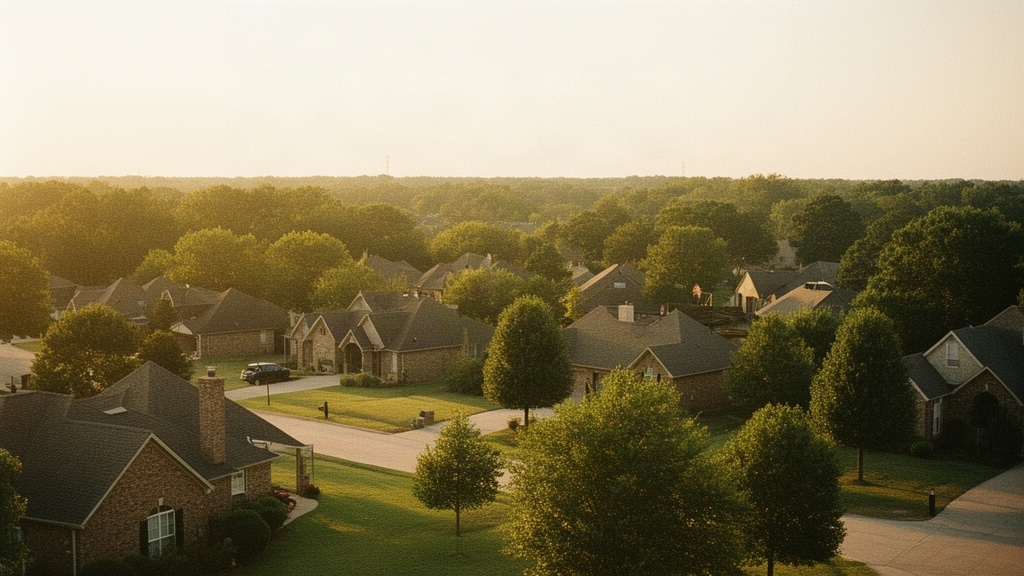
Johns Island is not a single neighborhood. It is a large, mostly rural barrier island roughly 84 square miles in size, making it one of the largest islands on the East Coast. The housing stock ranges from 1970s brick ranches on large lots to brand-new master-planned communities with resort-style amenities. Understanding which part of the island you are looking at makes a significant difference in price, commute, and day-to-day lifestyle.
Kiawah River and the New Development Corridor
Kiawah River is one of the most prominent new communities on Johns Island, developed along the Kiawah River on the island's southern end. The community features a mix of cottages, single-family homes, and larger estate lots, with a working farm, boat launch, and a deep-water dock as shared amenities. Homes in Kiawah River currently range from the upper $500,000s for smaller cottages to well over $1.5 million for custom builds on larger parcels. The architecture follows a coastal vernacular style, with raised foundations, metal roofs, and wide porches.
This southern corridor of Johns Island, along Betsy Kerrison Parkway and River Road, has seen the bulk of new construction activity in recent years. For a detailed look at what is currently under construction on this side of the island, the article on new housing developments in the West Ashley and Johns Island area covers active projects with builder names and estimated delivery timelines.
Stonoview, Rushland Landing, and the Stono River Side
The northeastern portion of Johns Island, closer to the Stono River and the connections to James Island and West Ashley, contains a mix of established subdivisions and waterfront communities. Stonoview is a planned community along the Stono River with a community dock, pool, and boat storage. Homes there are mostly built from the mid-2010s onward, with prices currently ranging from the low $600,000s to around $900,000 depending on lot orientation and square footage. Rushland Landing is a smaller, quieter enclave with a boat ramp and a more informal feel, where homes tend to sit on larger lots and prices vary widely based on water access.
This side of the island has the shortest commute times to West Ashley and downtown Charleston, which is a practical factor worth weighing against the longer drive from the Betsy Kerrison Parkway end.
Rural Acreage and Older Subdivisions
Much of Johns Island's interior is still agricultural land, horse farms, and rural residential parcels. Buyers looking for two to ten acres with an existing home or room to build will find options here that simply do not exist closer to downtown Charleston. Prices for rural parcels with older homes start around $400,000 for modest structures on a few acres and climb quickly with land size and road frontage. Raw land listings on Johns Island range from around $80,000 per acre for inland parcels to several hundred thousand per acre for deepwater or marsh-front tracts.
Older subdivisions from the 1980s and 1990s, such as Brownswood, offer brick and frame homes on half-acre to full-acre lots at price points that are more accessible than newer construction, typically in the $400,000 to $550,000 range. These homes often need updating but offer larger lots and established tree canopy that newer communities cannot replicate.
3. What You Can Actually Buy for Your Budget on Johns Island
Budget shapes your options on Johns Island more dramatically than on other parts of the Charleston peninsula, because the price gap between entry-level and luxury is exceptionally wide. Here is a realistic breakdown of what each price tier delivers as of September 2026.
Under $500,000
In the sub-$500,000 range, buyers are mostly looking at townhomes, attached villas, or older single-family homes that need some level of renovation. Communities like Whitney Lake and The Preserve at Brownswood have produced townhomes in this range, typically 1,500 to 2,000 square feet with small private yards or shared green space. Detached homes under $500,000 do exist but are increasingly rare and often require updating to kitchens, bathrooms, or mechanical systems. Buyers in this range should budget for potential repairs and factor in HOA fees, which in some communities run $200 to $400 per month.
$500,000 to $800,000
This is the most active price band on Johns Island right now, and it covers the widest variety of homes. Buyers in this range can find newer construction from builders like Pulte, Toll Brothers, and David Weekley in communities such as St. Johns Lake and Oakfield, typically on lots between a quarter and half an acre. Homes in this tier run 2,200 to 3,500 square feet, often with open-plan layouts, two-car garages, and community pools or trails. This range also captures some of the smaller Stonoview homes and select parcels in Kiawah River's cottage collection.
Property taxes on a home in this price range are a meaningful line item to understand before you close. The article on property taxes on a $500,000 home in Charleston County in 2026 breaks down the actual numbers including the 4% primary residence assessment ratio and the difference between owner-occupied and investor rates.
Above $800,000 and Into the Luxury Tier
Above $800,000, Johns Island begins to separate itself from most other Charleston submarkets by offering something genuinely rare: significant acreage, deepwater or marsh-front lots, and custom construction, all within the Charleston metro. Buyers in this tier can find custom homes on one to five acres with private docks, pools, and detached guest cottages. The Kiawah River community's larger estate lots and custom builds fall here, as do properties along River Road and Bohicket Road with direct water access. At the very top of the market, above $2 million, Johns Island competes with Kiawah Island and Daniel Island for buyers seeking a private, land-rich compound within a short drive of Charleston's restaurants and cultural institutions.
4. Commute Times and Practical Logistics from Johns Island
Commute time is one of the most practical questions buyers ask about Johns Island, and the honest answer is that it depends significantly on which part of the island you live in. The island has two primary access points: the Main Road and Maybank Highway corridors connecting to James Island and West Ashley, and Betsy Kerrison Parkway on the southern end connecting toward Kiawah Island. Both routes funnel traffic across bridges, which creates bottlenecks during morning and afternoon rush hours.
Getting to Downtown Charleston
From the northern end of Johns Island near the Stono River communities, downtown Charleston is approximately 18 to 22 miles by road. During off-peak hours, that drive takes 30 to 35 minutes via Maybank Highway across the James Island Connector. During morning rush hour, plan for 45 to 60 minutes, particularly if you are crossing into downtown between 7:30 and 8:45 a.m. From the southern end of the island near Kiawah River or Bohicket Road, add another 10 to 15 minutes to those estimates, putting the peak commute at 60 to 75 minutes on congested mornings.
There is no public transit route that meaningfully serves Johns Island for commuters. Driving is the practical reality for most residents.
Getting to West Ashley and Other Employment Centers
West Ashley, which includes major employers and the Citadel Mall corridor along Sam Rittenberg Boulevard, is considerably closer for most Johns Island residents. From the northern end of Johns Island, West Ashley is a 15 to 20 minute drive under normal conditions. The Medical University of South Carolina (MUSC) and the VA Medical Center, two of Charleston's largest employment anchors, are roughly 25 to 35 minutes from most Johns Island addresses during off-peak hours. Boeing's North Charleston facility is about 35 to 45 minutes via I-526 and I-26.
5. Timing the Johns Island Market as a Buyer or Seller
Timing in real estate is never perfectly predictable, but Johns Island does follow some seasonal and structural patterns that are worth understanding before you decide when to list or make an offer.
Seasonal Patterns on Johns Island
Like most of the Charleston market, Johns Island sees its strongest buyer activity in spring, roughly March through June, when relocating buyers arrive ahead of the school year and the weather draws out weekend lookers. Sellers who list in late February or early March tend to see the most showings and the strongest offers. Summer activity remains solid through July, then slows through August and September as the heat and hurricane season dampen enthusiasm. Fall, particularly October and November, brings a secondary wave of buyers who missed the spring window and are motivated to close before year-end.
Right now in September 2026, the market is in its typical late-summer lull, which can actually work in a buyer's favor. Sellers who have been sitting on the market since spring are more likely to negotiate on price or terms, and competition among buyers is lower than it was in April and May.
What the 2026 Market Means for Your Strategy
Mortgage rates in 2026 remain elevated compared to the historic lows of 2020 and 2021, which has slowed the pace of transactions across all of Charleston County, including Johns Island. For buyers, this means more negotiating room on price and the ability to ask for seller concessions toward closing costs or rate buydowns, something that was nearly impossible during the peak market. For sellers, accurate pricing from the start is critical. Overpriced homes on Johns Island are sitting, sometimes for 90 days or more, while correctly priced homes are still moving within 30 to 45 days.
The island's growth trajectory also matters for long-term buyers. The piece on what is developing on Johns Island right now covers the infrastructure investments, commercial projects, and residential pipeline that will shape the island's character and values over the next several years. Understanding that context helps buyers evaluate whether a given location on the island is likely to feel more or less connected to services and amenities as time goes on.
Flood zone classification is a specific factor that can move the needle significantly on both purchase price and carrying costs. A home in an AE flood zone on Johns Island can carry annual flood insurance premiums of $2,000 to $6,000 or more depending on the structure's elevation relative to base flood elevation. That cost affects your effective monthly payment and should be factored into any offer calculation. The full breakdown of flood risk and insurance costs in Charleston is covered in a separate article on this site.
For a broader view of how the Johns Island real estate market fits into the wider Charleston metro, the Charleston, South Carolina real estate market guide covers all major submarkets including Mount Pleasant, West Ashley, James Island, and North Charleston with the same level of detail.
FAQ
Is Johns Island a good place to buy real estate in 2026?
Johns Island offers a wide range of housing options, from townhomes in the mid-$300,000s to custom waterfront estates above $2 million, within 30 to 45 minutes of downtown Charleston. The market has moderated from its 2021 and 2022 peak, meaning buyers have more inventory to choose from and more room to negotiate than they did a few years ago. The island's ongoing infrastructure investment and continued residential development suggest long-term demand will remain. Whether it is the right fit depends on your commute tolerance, preference for a more rural setting, and how flood zone classification affects your specific target properties. Reviewing current listings alongside a local agent who knows the island's micro-markets is the most practical starting point.
What are the biggest differences between the northern and southern ends of Johns Island?
The northern end of Johns Island, near the Stono River communities and the Maybank Highway corridor, is closer to West Ashley and downtown Charleston, making commutes shorter and day-to-day errands more convenient. The southern end, along Betsy Kerrison Parkway toward Kiawah River and Bohicket Road, is more rural, more removed from commercial services, and carries longer commute times, but it also has some of the island's newest master-planned communities and the most direct access to Kiawah Island's beaches and the Freshfields Village shopping area. Prices do not follow a simple north-south gradient; water access and community amenities matter more than geography alone. Buyers should drive both corridors at rush hour before committing to a specific area.
Do I need flood insurance on Johns Island, and how much does it cost?
Many properties on Johns Island fall within FEMA-designated Special Flood Hazard Areas, particularly those near the Stono River, Kiawah River, and tidal marsh areas. If your lender requires flood insurance, and most will for homes in AE or VE flood zones, annual premiums through the National Flood Insurance Program (NFIP) can range from around $1,200 for lower-risk properties to $6,000 or more for homes with ground-floor living space at or below base flood elevation. Elevation certificates, which document how high a structure sits relative to the base flood elevation, are the key document that determines your premium. Asking for the elevation certificate early in the due diligence process, and getting a flood insurance quote before making an offer, is a standard practice for informed buyers on Johns Island.