← Back to Blog
Market Trends
Orlando FL Homes for Sale: 2026 Market Guide
By Rose Reid
August 23, 2026 · 5 min read
If you are searching Orlando FL homes for sale right now, you are entering a market that looks noticeably different from the frenzied pace of the past few years. Inventory has grown, prices have adjusted in many segments, and buyers finally have more room to negotiate. This guide breaks down what is actually happening in Orlando in August 2026, what to expect across the city's distinct communities, and how to position yourself to make a smart move.
1. What the Orlando Market Looks Like Right Now
The Orlando metro has been through a meaningful reset. After years of low inventory and rapid price appreciation, the market has shifted toward more balance. Active listings are up compared to 2024 and 2025, homes are sitting longer before going under contract, and sellers are more willing to negotiate on price and concessions than they were even twelve months ago.
Inventory and Price Trends
As of August 2026, median home prices in the greater Orlando area sit in the low-to-mid $400,000s for single-family homes, depending on the submarket. That represents a stabilization rather than a sharp decline. Condos and townhomes remain available in the $250,000 to $350,000 range in many parts of the city, giving first-time buyers and downsizers more options than they had in 2022 or 2023. According to HousingWire's reporting on the Orlando metro, homes have been sitting longer despite lower prices, which signals that buyers now hold real leverage in negotiations.
How Orlando Compares to the Broader Florida Picture
Florida as a whole is experiencing a period of stabilization, and Orlando is no exception. Florida Realtors has noted that buyer demand is beginning to build again across the state as interest rates ease slightly and more households decide to stop waiting. Orlando benefits from strong in-migration from the Northeast and Midwest, a diversified economy anchored by tourism, healthcare, and a growing tech sector near the University of Central Florida corridor, and no state income tax.
2. Orlando's Housing Stock: What You Will Actually Find
One of the things that surprises people relocating to Orlando is the variety of housing types available across a relatively compact metro area. The city is not a monolith, and the homes for sale in different pockets of Orlando reflect very different architectural styles, lot sizes, and price points.
Single-Family Homes and Established Subdivisions
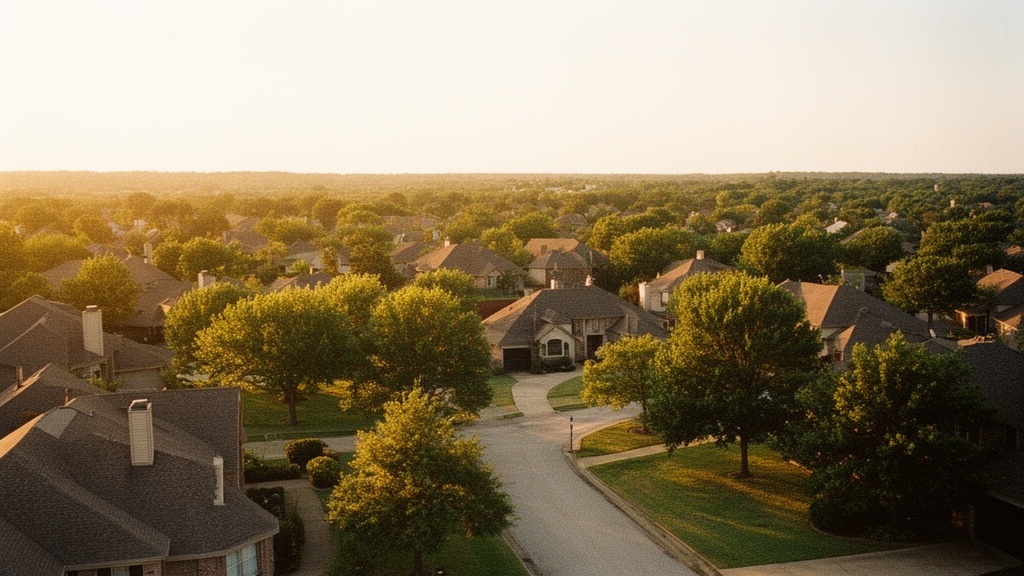
Much of Orlando's residential landscape is built around planned subdivisions and master-planned communities. You will find homes built between the 1980s and early 2000s in areas like Metrowest, Hunters Creek, and Dr. Phillips, typically ranging from 1,500 to 3,000 square feet on quarter-acre lots. Many of these communities include HOA-maintained common areas, community pools, and access to walking trails around the area's many lakes. Lot sizes and setbacks vary, but the general feel is suburban, with tree-lined streets and mature landscaping.
Condos, Townhomes, and Newer Construction
Newer construction has expanded significantly in areas like Horizon West in western Orange County, where townhomes and single-family homes in the $380,000 to $550,000 range are common. Builders have been offering rate buydowns and closing cost assistance in 2026 to move inventory, which is worth factoring into your search if new construction is on your list. Condos are concentrated closer to downtown Orlando, along International Drive, and near the theme park corridor in southwest Orlando, with prices that can start below $200,000 for smaller units.
3. Key Areas to Explore When Searching Orlando FL Homes for Sale
Orlando's expressway system shapes how people experience the city, and understanding the major corridors helps you narrow your search quickly. The SR-408, SR-417, and I-4 create the framework around which most communities are organized.
Inside the 408 and 417 Corridors
Communities inside the 408 and 417 loops tend to offer shorter commute times to downtown Orlando and the major employment centers. Areas like Conway, Curry Ford West, and Belle Isle sit just south and east of downtown, with ranch-style homes from the 1960s through 1980s, larger lots compared to newer subdivisions, and price points that can still come in under $400,000 for a move-in-ready property. These areas are within 10 to 20 minutes of downtown Orlando without expressway tolls.
Lake Nona and the Southeast Growth Zone
Lake Nona has transformed from a rural outpost into one of the most talked-about planned communities in the Southeast over the past decade. Located roughly 20 miles southeast of downtown Orlando near Orlando International Airport, Lake Nona is home to a major medical city cluster, the USTA National Campus, and a mix of single-family homes, townhomes, and luxury properties. Prices here range widely, from the mid-$400,000s for townhomes to well over $1 million for larger homes on the waterfront. The area's infrastructure is modern, with multi-use trails, town center retail, and direct access to the 417.
College Park, Audubon Park, and the Urban Core
For buyers drawn to walkable streets, bungalows, and proximity to Edgewater Drive's local restaurants and shops, College Park and Audubon Park offer a different texture entirely. Homes here are often Craftsman or Mediterranean-style builds from the 1920s through 1950s, sitting on smaller lots but with character and detail that newer construction rarely matches. Prices in these neighborhoods typically start in the low $400,000s and climb well above $700,000 for larger or extensively renovated properties. Audubon Park is adjacent to the Baldwin Park community, which features a town center, lake access, and a mix of new and older homes.
4. Practical Steps for Buyers and Sellers in 2026
Whether you are looking at Orlando FL homes for sale as a buyer or preparing to list your property, the current market rewards preparation. The days of skipping inspections or waiving contingencies out of desperation are largely behind us in this market.
What Buyers Should Do First
Get pre-approved before you start touring homes in person. In a market where sellers are negotiating but still expect qualified buyers, a pre-approval letter from a reputable lender signals that you are serious. Next, define your commute tolerance: Orlando's expressway system can make a 20-mile commute take 25 minutes or 55 minutes depending on the time of day and the route. Test your likely commute during peak hours before committing to a specific area.
Research HOA fees carefully. Many Orlando communities carry monthly HOA fees between $100 and $400, and some master-planned communities layer community development district (CDD) fees on top of that, which appear as a line item on your annual property tax bill. These costs affect your true monthly payment and should factor into your budget from the start.
What Sellers Need to Know
Pricing accurately from day one is more important than it has been in years. With more Orlando FL homes for sale competing for buyer attention, overpriced listings sit and accumulate days on market, which buyers and their agents notice. A well-priced home with strong photos and a clean inspection history will still move efficiently. Consider offering a home warranty or addressing deferred maintenance before listing, as buyers are conducting thorough inspections and negotiating credits more often in the current climate.
FAQ
What is the current price range for Orlando FL homes for sale in August 2026?
Single-family home prices in the greater Orlando metro currently cluster in the low-to-mid $400,000s at the median, though prices vary significantly by submarket. You can find condos and townhomes starting below $250,000 in some areas, while newer construction communities like Lake Nona and Horizon West push well above $500,000 for larger homes. Older established neighborhoods closer to downtown, such as College Park and Conway, offer a wide spread depending on the size and condition of the home. Working with a local agent who tracks active listings and recent sales in specific zip codes will give you the most accurate picture for your target area.
How long are homes sitting on the market in Orlando right now?
Days on market have increased compared to 2022 and 2023, when well-priced homes often went under contract within days of listing. As of August 2026, many Orlando homes are sitting for three to six weeks before going under contract, depending on the price point and area. Homes priced above $600,000 tend to sit longer than entry-level properties, which still attract strong interest from first-time buyers and relocating households. This extended timeline gives buyers more opportunity to conduct due diligence, schedule inspections, and negotiate terms that were difficult to secure during the peak seller's market years.
What should I know about CDD fees when buying in Orlando?
Community Development District fees are a common feature of many master-planned communities in the Orlando area, including parts of Lake Nona, Horizon West, Celebration, and other large developments. These fees are used to repay the bonds issued to fund infrastructure like roads, utilities, and community amenities, and they appear as a separate line on your annual property tax bill rather than as a monthly HOA charge. CDD fees can range from a few hundred dollars per year to several thousand dollars annually depending on the community and how recently it was developed. When evaluating a home's true carrying cost, always ask your agent or check the Orange County Property Appraiser's website to confirm whether a CDD applies and what the current annual amount is.