← Back to Blog
Buying
Relocating to Mason, OH: Neighborhoods, Costs and Timelines
By Sarah Mitch
Luxury Properties
September 11, 2026 · 10 min read
Relocating to Mason, OH involves more moving pieces than most people expect, from choosing the right neighborhood and budgeting for closing costs to lining up movers and syncing your purchase timeline with your current lease or home sale. This guide covers the real numbers, the local details, and the practical sequence you need to make your move to Mason as smooth as possible.
1. What Mason, OH Looks Like on the Ground
Mason is a city of roughly 35,000 people in Warren County, situated about 22 miles northeast of downtown Cincinnati. It sits at the crossroads of I-71 and OH-741, which puts it within a reasonable drive of both Cincinnati and Dayton without requiring you to live inside either metro core.
The City at a Glance
Mason covers about 21 square miles. The city has its own municipal services, a downtown district centered on Church Street, and a parks system that includes the 180-acre Corwin M. Nixon Park. Kings Island, the regional amusement park, sits just south of the city limits near Kings Mills Road, which gives Mason a recognizable landmark for anyone coming from outside the area.
The city also has a growing restaurant and retail corridor along Western Row Road and Mason-Montgomery Road, with national chains alongside locally owned spots. The Mason Community Center on Reading Road offers an indoor aquatic center, fitness facilities, and programming that draws residents from across the city.
What the Housing Stock Actually Looks Like
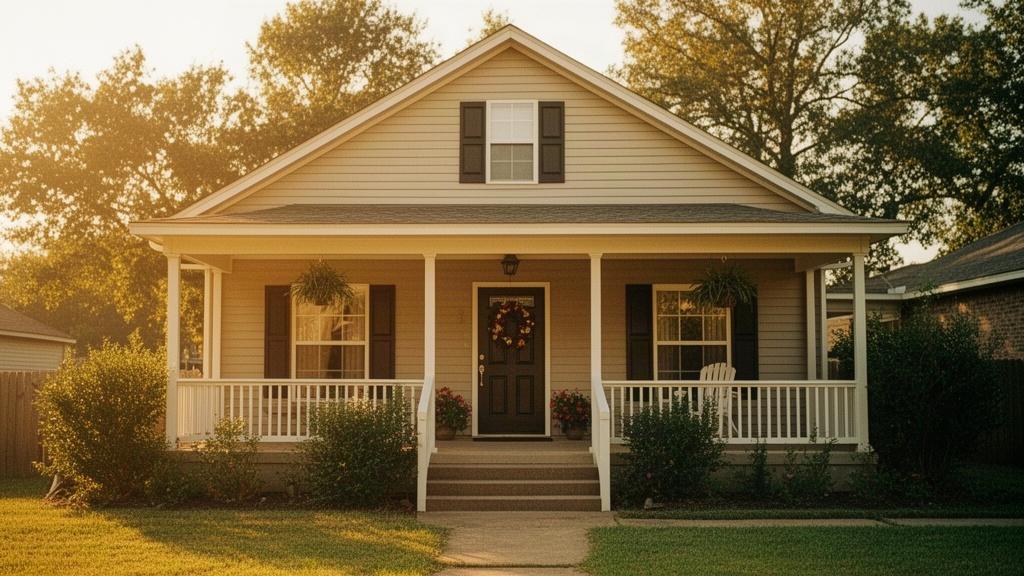
Most of Mason's housing was built between the late 1970s and the mid-2010s. You will find a mix of traditional two-story colonials, ranch homes, and newer craftsman-style builds depending on which part of the city you look at. Lot sizes vary considerably: older subdivisions closer to downtown Mason tend to have quarter-acre to half-acre lots, while newer developments on the western and northern edges can run smaller. Condo and townhome inventory exists but is more limited than detached single-family homes.
For a deeper look at how the broader Mason market is performing right now, including days on market and list-to-sale ratios, the Mason, OH real estate market guide on this site covers current conditions in detail.
2. Neighborhood Features and Price Ranges
Mason's neighborhoods vary noticeably in age, architecture, lot size, and price. Understanding what each area offers physically helps you narrow your search before you ever schedule a showing.
Central Mason and Kings Mills Road Corridor
The area closest to downtown Mason and running south toward Kings Mills Road contains some of the city's older established subdivisions. Homes here were often built in the 1980s and 1990s on larger lots, with mature trees and brick or vinyl-sided colonials as the dominant style. Prices in this corridor generally range from the mid-$300,000s for smaller or dated homes up to the mid-$500,000s for updated properties with four or more bedrooms.
This part of Mason is walkable to Corwin M. Nixon Park and within a short drive of the Kings Island entertainment complex. The Church Street downtown district, with its seasonal farmers market and local dining, is also close by.
Landen and the Eastern Side of Mason
Landen sits on the eastern edge of Mason, straddling the border with Deerfield Township. The area is characterized by planned subdivisions from the 1980s and early 1990s, with a mix of colonial and split-level homes on lots that typically run between a quarter and a third of an acre. Landen has its own recreation association, the Landen Deerfield Park, which includes athletic fields, tennis courts, and a community pool.
Median prices in the Landen area currently hover in the low-to-mid $400,000s as of September 2026, though updated homes with finished basements and newer kitchens can reach the $500,000s. For a detailed breakdown of this specific area, the Landen area real estate market guide covers pricing trends, inventory levels, and what buyers are competing against right now.
Western Mason and Deerfield Township Border
The western portion of Mason, near the Deerfield Township line along Western Row Road, contains newer construction and some of the city's larger homes. Subdivisions in this area were developed primarily in the 2000s and 2010s, with four- and five-bedroom homes on lots ranging from a third to half an acre. Architectural styles lean toward craftsman and transitional designs with stone or brick accents. Prices here typically start around $450,000 and extend well above $700,000 for larger or more recently built homes.
This area has quick access to the Fields Ertel interchange at I-71, which makes the commute into Cincinnati's northern suburbs and downtown particularly direct. Several large retail centers along Mason-Montgomery Road are also within a few minutes' drive.
New Construction Pockets
Mason still has active new construction, particularly on its northern and western fringes. Builder communities in 2026 are offering homes priced from roughly $550,000 to over $900,000 depending on lot size, elevation, and finish level. Lead times from contract to close on new builds are currently running six to twelve months for to-be-built homes, though some builders have quick-move-in inventory available with shorter timelines.
The new construction guide for Mason in 2026 outlines which builders are active, what communities are selling, and what buyers should watch for in new-build contracts.
3. The Real Costs of Relocating to Mason, OH
Relocating to Mason, OH involves several overlapping cost categories. Most buyers underestimate at least one of them, which creates budget pressure at closing or in the first months of ownership.
Purchase Costs to Budget For
The median sale price in Mason currently sits around $430,000 to $460,000 as of September 2026, though the range is wide depending on size and location. On a $450,000 purchase, here is what the major cost categories look like:
- Down payment: 3.5% to 20% of purchase price depending on loan type; on $450,000 that is $15,750 (FHA minimum) to $90,000 (conventional 20%).
- Closing costs: Typically 2% to 3% of the loan amount in Ohio, covering lender fees, title insurance, recording fees, and prepaid items; budget $8,000 to $13,000 on a $450,000 purchase.
- Home inspection: $350 to $550 for a standard single-family inspection in the Mason area; radon testing adds $100 to $150.
- Appraisal: $500 to $700 for a conventional appraisal in Warren County; paid out of pocket before closing.
- Property taxes: Warren County effective property tax rates run approximately 1.3% to 1.6% of assessed value annually; on a $450,000 home that is roughly $5,850 to $7,200 per year, often escrowed monthly.
- HOA fees: Many Mason subdivisions have HOAs; annual fees range from $200 to $1,200 depending on the community and amenities included.
Moving and Setup Costs
Moving costs are one of the most variable expenses in any relocation budget, and they deserve careful attention. A local move within the Cincinnati metro area from a three-bedroom home typically runs $1,200 to $2,500 with a licensed moving company. A long-distance move from another state can range from $4,000 to $12,000 or more depending on distance and volume.
It is worth noting that moving fraud is a documented problem nationally. NAR's Realtor Magazine has covered how moving cost scams and lowball estimates create real financial harm for relocating buyers. Always get at least three written estimates and verify that any mover is licensed with the FMCSA before signing anything.
Beyond the truck, budget for window treatments, additional furniture to fill a larger space, and any immediate repairs or updates you identify during inspection. A realistic first-year setup budget for a home in Mason is $3,000 to $8,000 on top of moving costs.
Ongoing Ownership Costs
Ohio does not have a state income tax exemption for mortgage interest, but Warren County's property tax rates are relatively moderate compared to neighboring Hamilton County. Homeowners insurance in Mason typically runs $1,200 to $2,000 annually for a standard single-family home, depending on the age of the roof, the home's replacement cost, and the coverage level you choose. Utility costs for a 2,500-square-foot home average roughly $180 to $260 per month for gas and electric combined, with higher bills in January and February.
4. Commute Times and Getting Around
Where you work has a direct impact on which part of Mason makes the most practical sense for you. Commute times from Mason vary depending on your destination and which neighborhood you choose.
Driving to Cincinnati and Dayton
- Downtown Cincinnati via I-71 South: Approximately 30 to 40 minutes in normal traffic; 45 to 55 minutes during peak morning rush.
- Blue Ash / Kenwood corridor: 15 to 20 minutes via I-71 or Ronald Reagan Highway; one of the most common Mason commutes given the concentration of corporate offices in that area.
- Dayton via I-75 North: Approximately 35 to 50 minutes from Mason depending on traffic; the connection to I-75 runs through West Chester, adding 10 minutes to the trip.
- Sharonville and Evendale: 20 to 30 minutes south via I-71 or OH-741; this corridor includes several large manufacturing and distribution employers.
- Loveland and Milford to the east: 25 to 35 minutes via OH-28 or OH-126; these routes are surface roads with traffic signals, so timing matters.
Local Errands and Day-to-Day Access
Mason has strong retail and grocery access without requiring highway travel for most daily needs. There are multiple grocery options within the city, including a Kroger Marketplace on Mason-Montgomery Road and a Meijer on Western Row Road. The Mason Road and Fields Ertel commercial areas add restaurants, urgent care clinics, and specialty retail. For hospital access, Atrium Medical Center in Middletown is about 20 minutes northwest, and TriHealth's Bethesda North Hospital in Montgomery is roughly 20 minutes south.
Mason does not have a commuter rail option, so a car is essential. The Southwest Ohio Regional Transit Authority does not extend regular fixed-route service into Mason, which is a practical consideration for anyone planning a car-free lifestyle.
5. A Realistic Relocation Timeline
One of the most common mistakes people make when relocating to Mason, OH is underestimating how long the process takes from decision to move-in. A realistic timeline, working backward from your target move date, looks like this:
Months 3 to 4 Out: Research and Pre-Approval
Start your lender conversations and get a full pre-approval letter, not just a pre-qualification. A pre-approval requires income documentation, tax returns, and a credit pull, and it gives you a firm budget ceiling. At the same time, research Mason's neighborhoods online, look at active listings to calibrate your expectations, and identify which areas match your commute, price range, and space requirements. This is also the time to research school districts if that is relevant to your household; the school districts guide for Mason explains which districts serve which parts of the city and links to official district resources.
If you are selling a home in another market, list it before you start making offers in Mason whenever possible. Contingent offers are harder to win in a competitive market, and Mason's inventory has remained tight through most of 2026.
Months 1 to 2 Out: Active Search and Contract
With your pre-approval in hand, begin scheduling showings and attending open houses. In Mason's current market, well-priced homes in the $380,000 to $550,000 range are moving within one to three weeks of listing. You need to be ready to move quickly when the right home appears, which means having your decision criteria clear before you start touring. For context on how fast homes are currently moving, the days on market data for Mason this fall gives a current snapshot.
Once you are under contract, the standard Ohio purchase timeline runs 30 to 45 days to closing. During that window you will complete your inspection, negotiate any repairs, finalize your mortgage, and clear underwriting. Order your inspection within the first five business days of going under contract, as the inspection contingency period is typically short.
The Final Month: Closing, Moving, and Settling In
Book your moving company as soon as you have a firm closing date, ideally the moment you go under contract. Reputable movers in the Cincinnati area book out two to four weeks in advance, especially during summer and early fall. If you are moving from out of state, add extra lead time.
In the week before closing, do a final walk-through of the home to confirm its condition. At closing you will sign loan documents, pay your down payment and closing costs via wire transfer, and receive keys. Ohio closings typically take 60 to 90 minutes. After closing, update your address with the USPS, Ohio BMV, and Warren County voter registration, and set up utilities with Duke Energy and the City of Mason water department before your move-in date.
For additional context on what the full neighborhood landscape looks like across Mason, the neighborhoods guide for Mason, OH covers each area's physical characteristics, price ranges, and proximity to amenities in more detail.
FAQ
How much does it cost to buy a home in Mason, OH right now?
As of September 2026, the median sale price in Mason sits in the $430,000 to $460,000 range, though the spread is wide. Smaller or older homes in the city's established subdivisions can be found in the mid-to-upper $300,000s, while newer or larger homes in western Mason and active builder communities start around $550,000 and extend well above $700,000. On top of the purchase price, buyers should budget 2% to 3% of the loan amount for closing costs, plus inspection, appraisal, and first-year setup expenses. Warren County property taxes run roughly 1.3% to 1.6% of assessed value annually, which is a meaningful ongoing cost to factor into your monthly budget.
How long does it take to relocate to Mason, OH from out of state?
A realistic out-of-state relocation to Mason takes three to five months from the time you make the decision to the day you move in. The first month or two should be spent on financial preparation, lender conversations, and neighborhood research. Once you are actively searching, you may find a home quickly or it may take several weeks depending on inventory and your specific criteria. The purchase itself takes 30 to 45 days to close after going under contract. If you are building new construction, add six to twelve months to that timeline. Booking movers early is critical; long-distance moving companies often have limited availability and prices can spike on short notice.
Which neighborhoods in Mason, OH are closest to I-71 for commuters?
The western side of Mason, including subdivisions near Western Row Road and the Deerfield Township border, offers the most direct access to the Fields Ertel interchange on I-71, which connects to both Cincinnati to the south and Dayton to the north. From that interchange, Blue Ash is roughly 15 to 20 minutes south and downtown Cincinnati is 30 to 40 minutes in normal traffic. The Landen area on the eastern side of Mason connects more naturally to OH-28 and surface roads heading toward Loveland or Milford, making it a better fit for commutes in that direction. Your specific work location should drive which part of Mason you prioritize in your search.