← Back to Blog
Market Trends
Is Right Now a Good Time to Buy a Home in Chicago?
By Sarah Smith
Compass Real Estate · DRE# 02187453
August 29, 2026 · 6 min read
If you have been asking yourself whether right now is a good time to buy a home in Chicago, Illinois or if you should wait, you are not alone. August 2026 has brought a mix of signals that make this one of the more nuanced markets Chicago buyers have navigated in years. This post breaks down what is actually happening with prices, inventory, and mortgage rates so you can make a clear-headed decision.
1. What the Chicago Housing Market Looks Like Right Now
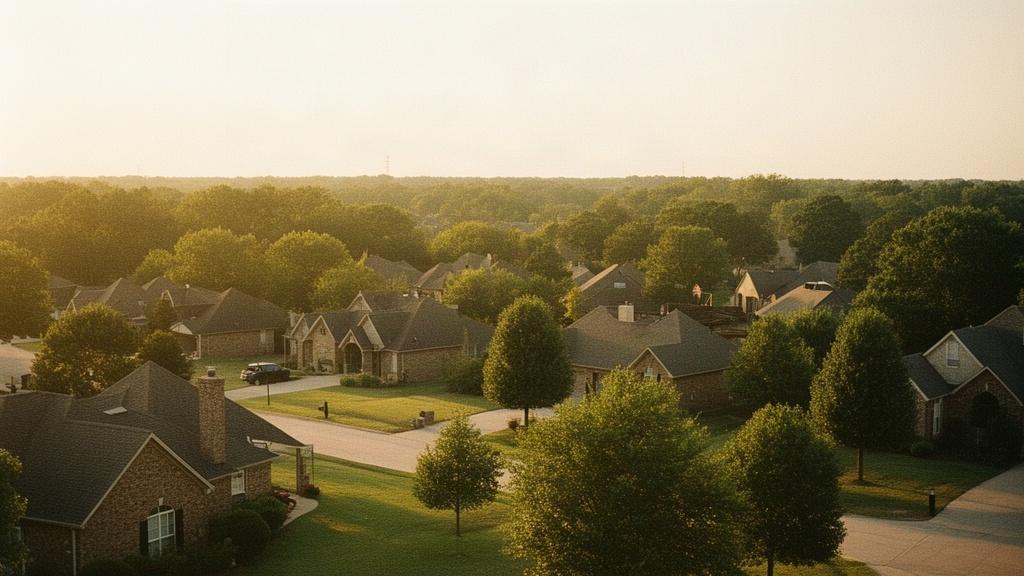
Chicago's housing market in August 2026 is not a buyer's market, but it is not a runaway seller's market either. Median home prices across the city have continued to climb year over year, with many attached and detached single-family homes in neighborhoods like Lincoln Square, Bridgeport, and Pilsen holding firm or appreciating modestly. The pace of appreciation has slowed compared to the sharp run-up of prior years, but prices have not retreated in any meaningful way citywide.
Prices Are Climbing, But Not Uniformly
According to recent reporting on Chicago home price trends, sellers in the Chicago metro are benefiting from continued price growth even as national markets soften. That said, the picture varies considerably by property type and price band. Condos in the Loop and River North have seen slower movement than single-family homes in neighborhoods like Beverly, Avondale, or Jefferson Park, where lot sizes and school proximity drive consistent demand.
Entry-level homes priced below $350,000 continue to attract multiple offers in many parts of the city. Mid-range properties between $400,000 and $700,000 are moving at a more measured pace, and the luxury segment above $1 million has seen longer days on market. Knowing which segment you are shopping in matters enormously when deciding whether right now is the right moment to act.
Inventory Is Still Tight Across Most Price Points
Active listings in Chicago remain well below historical norms. Many homeowners who locked in sub-4% mortgage rates in prior years are choosing not to sell, which keeps supply constrained. That dynamic is not unique to Chicago, but it is especially pronounced here given the city's large stock of two-flats and greystones, many of which are owner-occupied and rarely turn over. Buyers who are ready to act when the right property appears are well-positioned in this constrained inventory environment.
2. The Case for Buying in Chicago Right Now
There are genuine reasons why August 2026 could be the right time for many Chicago buyers to move forward, even with rates elevated and prices holding steady.
Equity Builds Whether You Feel Ready or Not
Every month you rent in Chicago, you have the opportunity to work with an agent to find a home where you can start building equity for yourself. Average rents for a two-bedroom apartment in neighborhoods like Wicker Park, Logan Square, and Lakeview currently sit well above $2,200 per month. At that level, the gap between renting and owning a similarly sized home narrows considerably, especially when you factor in the long-term appreciation Chicago real estate has historically delivered.
Buyers who purchased in Chicago three to five years ago have seen meaningful equity gains despite the rate environment. If you plan to stay in the city for at least five to seven years, the math tends to favor buying over continuing to rent, even at today's rates.
Chicago Offers More Price Range Than Most Major Cities
Compared to coastal metros, Chicago remains a city where you can buy a substantial home without stretching your budget to the breaking point. A detached single-family home with a yard and a two-car garage is still attainable in the $350,000 to $500,000 range in neighborhoods like Portage Park, Norwood Park, and Clearing. Those same dollars would not come close to a comparable property in Boston, Denver, or Seattle. That relative affordability is a meaningful factor when weighing whether right now is a good time to buy a home in Chicago, Illinois.
3. The Case for Waiting: What the Broader Data Says
Waiting is not always the wrong answer, and it is worth understanding what the broader data suggests before committing.
Mortgage Rates Remain a Real Factor
Thirty-year fixed mortgage rates have not returned to the lows many buyers hoped for heading into 2026. On a $450,000 purchase with 10% down, the difference between a 6.5% and a 5.5% rate translates to roughly $270 per month. That is real money, and buyers who can genuinely wait and have strong reason to believe rates will fall meaningfully in the next twelve to eighteen months may find it worth holding off. The challenge is that no one can predict rate movements with certainty.
What a National Slowdown Means for Chicago Buyers
Nationally, the picture is more cautious. A recent S&P report noted that hopes for a broad 2026 housing rebound have not materialized, with transaction volume remaining subdued in many markets. Chicago has not been immune to that trend, and buyers who need to sell a current home before purchasing may find the timing more complicated than in prior years.
Taking time to strengthen your down payment, credit score, or debt-to-income ratio before purchasing is a legitimate and smart move that sets you up for long-term success. Buying once you are financially prepared, in any market including Chicago's, puts you in the strongest possible position from day one.
4. How to Think Through This Decision for Your Situation
The question of whether right now is a good time to buy a home in Chicago, Illinois or whether you should wait ultimately comes down to your personal financial picture and your timeline, not the market alone.
Run the Numbers on Your Specific Budget
Start with a clear picture of what you can comfortably afford at today's rates, not what you could afford if rates dropped. Get pre-approved with a Chicago-area lender who understands the city's condo assessment structures, two-flat financing rules, and the nuances of purchasing in a planned unit development. Those factors affect your buying power in ways a generic online calculator will not capture.
If the monthly payment at current rates fits your budget without strain, and you plan to stay put for at least five years, the timing argument for waiting weakens considerably. Chicago prices have historically held steady and appreciated over time, meaning buyers who act when they are ready benefit from both equity growth and avoided rental costs.
Factor in Chicago's Unique Cost Structure
Illinois property taxes are a significant line item that buyers from out of state often underestimate. In Chicago proper, effective tax rates can run between 1.5% and 2.5% of assessed value depending on the property classification and any applicable exemptions. On a $500,000 home, that could mean $7,500 to $12,500 annually in property taxes alone. Build that number into your monthly budget calculation before deciding whether now or later makes more sense.
Buyers relocating to Chicago from out of state should also account for the city's transfer taxes, which apply at closing and vary depending on purchase price thresholds. These are real costs that affect your net position on day one, and they factor into whether buying right now pencils out versus waiting another six to twelve months.
FAQ
Will Chicago home prices drop in late 2026 or early 2027?
No credible forecast currently points to a meaningful price decline in the Chicago market in the near term. Supply remains constrained, and demand at the entry and mid-range price levels continues to outpace available inventory in many parts of the city. That said, the luxury segment above $1 million has seen slower movement and longer days on market, which could create some negotiating room for buyers in that range. If you are watching a specific neighborhood or property type, a local agent can give you a much more precise read on where prices are heading than any broad city-level forecast. The safest assumption is that prices hold or appreciate modestly, not that a significant correction is coming.
Is it better to buy a condo or a single-family home in Chicago right now?
The answer depends heavily on your budget, lifestyle, and how long you plan to stay. Single-family homes in Chicago have generally appreciated more consistently than condos over the past several years, and they avoid the monthly HOA and special assessment exposure that condo buyers carry. Condos, however, offer lower entry prices in many high-demand neighborhoods close to the lakefront, the Loop, and transit corridors, making them accessible at price points where detached homes are not available. Buyers should review condo association financials carefully before purchasing, as underfunded reserves can lead to unexpected special assessments. A Chicago-based agent can walk you through the due diligence process for either property type.
How do mortgage rates affect whether I should buy a home in Chicago now or wait?
Mortgage rates directly affect your monthly payment and how much home you can qualify for, so they are a real factor in your decision. At current rates, a $450,000 loan carries a meaningfully higher monthly payment than it would have at the rates available in 2021 or 2022. However, waiting for rates to fall carries its own risk: if prices continue to rise while you wait, any savings from a lower rate could be offset by a higher purchase price. Many buyers in Chicago are choosing to buy now and refinance if rates drop, a strategy that makes sense if you can comfortably afford the payment at today's rate without stretching your budget. Speaking with a lender about your specific numbers is the most useful first step.