← Back to Blog
Market Trends
What New Residential Developments Are Currently Being Built in Fort Worth Texas in 2026
By Shai Johnson
September 18, 2026 · 10 min read
If you are wondering what new residential developments are currently being built in Fort Worth Texas in 2026, the short answer is: a lot. From master-planned communities on the far west side to infill townhome projects near the Cultural District, Fort Worth's building pipeline is one of the most active in the entire country right now. This article breaks down the major residential projects underway, where they are located, what price points they are targeting, and what buyers and relocating households need to know before making a move.
1. Why Fort Worth Is Seeing So Much New Construction Right Now
Fort Worth is one of the fastest-growing large cities in the United States, and that growth is directly driving an extraordinary volume of new residential construction. The city added more than 20,000 new residents in a single recent year, and the demand for housing has not slowed. Builders have responded by pushing construction into every quadrant of the city, from the booming Westside near Walsh Ranch to the north Fort Worth corridor approaching Haslet and Rhome.
A City Growing Faster Than Its Housing Stock
Fort Worth covers over 350 square miles, which gives builders room to work that most Texas metros cannot offer. That land supply, combined with relatively builder-friendly permitting timelines in Tarrant County, has kept cranes active even as construction slowed in other parts of the country. The city's extraterritorial jurisdiction also means that several large master-planned communities technically sit just outside city limits but feed directly into Fort Worth's employment base, retail corridors, and infrastructure.
What the Building Numbers Actually Show
The scale of Fort Worth's construction activity is not limited to homes. According to the Fort Worth Report, Fort Worth reached $5.72 billion in commercial building projects last year, and residential permitting has tracked alongside that commercial surge. When employers and retailers build, rooftops follow. That pattern is playing out across the Chisholm Trail Parkway corridor, the Alliance area in the north, and the Walsh development on the west side.
For buyers, this matters because it means new construction options are genuinely plentiful right now, not just in one pocket of the city but across multiple price points and neighborhoods. Understanding which projects are active and where they stand in their build-out phases can make a real difference in what you pay and how long you wait.
2. Major Master-Planned Communities Currently Under Construction
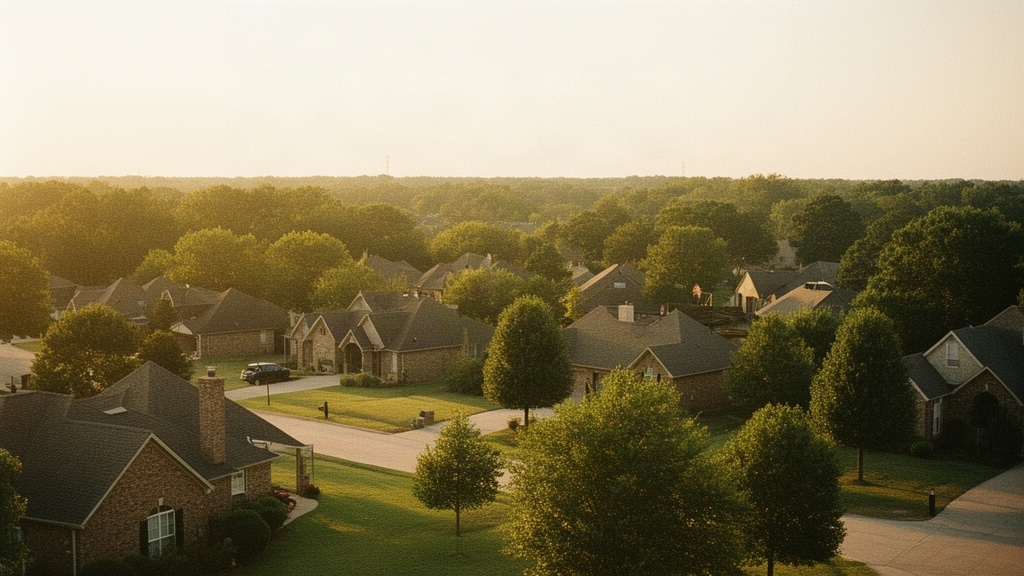
Fort Worth's largest active residential developments are master-planned communities, most of them spanning hundreds or even thousands of acres with multiple builder partners, phased infrastructure, and amenity packages built in from the ground up. These are not small subdivisions. They are essentially new towns being constructed inside Fort Worth's growth boundary, and they account for the majority of new home starts in the metro right now.
Walsh Ranch: The Westside's Largest Active Development
Walsh Ranch sits on roughly 7,200 acres in far west Fort Worth, straddling the Aledo Independent School District boundary. The development is planned for approximately 14,000 homes at full build-out, and construction is actively underway across multiple phases right now in September 2026. Builders currently active in Walsh include Ashton Woods, Taylor Morrison, Perry Homes, and Coventry Homes, among others, with base prices generally running from the low $400,000s for smaller attached products up to the $700,000s and above for larger single-family homes on premium lots.
Walsh is notable for its on-site amenity infrastructure. The community already has a clubhouse, resort-style pool, fitness center, miles of trails connecting to the Trinity Trails system, and a town center with retail. Fiber internet is built into the infrastructure. The drive to downtown Fort Worth via Interstate 30 or the Chisholm Trail Parkway is roughly 20 to 25 minutes under normal traffic conditions, depending on where in the development you are starting from.
Presidio West and the Aledo Corridor
Just west of Walsh, smaller communities along the Aledo corridor including Presidio West are adding new phases in 2026. These developments tend to sit on larger lots than Walsh, with half-acre and one-acre parcels available in some sections. Home sizes in this corridor frequently run 2,400 to 3,800 square feet, and price points generally start in the upper $400,000s and climb through the $600,000s. Buyers who want more land and a quieter setting while still being within 30 to 35 minutes of the Fort Worth central business district often find this corridor appealing.
Sendera Ranch and North Fort Worth Expansion
North Fort Worth, particularly the area around Haslet and the Highway 287 corridor, is seeing significant new construction activity in 2026. Sendera Ranch, one of the largest master-planned communities in the north Fort Worth area, continues to add phases. The development spans portions of both Fort Worth and Haslet and features a range of builders including D.R. Horton, Lennar, and Beazer Homes. Base prices in Sendera Ranch currently start in the high $290,000s for smaller floor plans and move into the $400,000s for larger homes. The community has multiple pools, a splash pad, miles of walking trails, and a dedicated elementary school site within the development.
The Alliance corridor just north of Sendera Ranch is also seeing new residential development tied directly to the industrial and logistics employment base around Alliance Airport. Builders are actively delivering new product in this corridor, with commute times to the Alliance employment hub of roughly 10 to 15 minutes and to downtown Fort Worth of approximately 30 to 40 minutes via I-35W.
Chisholm Trail Ranch and the Southwest Corridor
The Chisholm Trail Parkway, which runs from downtown Fort Worth southwest toward Cleburne, has become one of the most active residential construction corridors in the entire metroplex. Chisholm Trail Ranch is a large master-planned community in the Crowley and southwest Fort Worth area with multiple active builder phases in 2026. Builders including Highland Homes, Impression Homes, and Trophy Signature Homes are delivering product here. Base prices generally start in the mid $300,000s and extend into the $500,000s. The parkway itself provides a direct, limited-access route to downtown Fort Worth in roughly 20 to 30 minutes from most sections of the development.
3. Infill and Urban New Construction Inside the Loop
Not all of Fort Worth's new residential construction is happening on the suburban fringe. Inside Loop 820 and closer to the urban core, infill development is adding new townhomes, attached product, and small-lot single-family homes in established neighborhoods. This type of construction is smaller in scale than the master-planned communities, but it is significant for buyers who want walkability, proximity to employment, and access to Fort Worth's established amenity base.
Near Southside and the Medical District Edge
The Near Southside neighborhood, anchored by the Medical District along Pennsylvania Avenue and Rosedale Street, has seen consistent infill townhome construction over the past several years, and that activity continues in 2026. New townhomes in this area typically run 1,600 to 2,400 square feet on narrow lots, with prices currently ranging from the low $400,000s to the mid $500,000s depending on finishes and proximity to the Medical District employment hub. The Near Southside is also home to the Magnolia Avenue retail and dining corridor, Fairmount Historic District, and the Foundry District, all within walking distance or a short drive.
Cultural District Townhomes and Attached Product
The area surrounding the Cultural District, which includes the Kimbell Art Museum, the Modern Art Museum of Fort Worth, and Amon Carter Museum of American Art, has attracted infill townhome development along Camp Bowie Boulevard and side streets to the south and east. New attached product here tends to be priced from the upper $400,000s into the $600,000s, reflecting the premium location. Lot sizes are small, typically 2,500 to 4,000 square feet, but homes are designed to maximize interior square footage and often include rooftop terraces or private courtyards. The Trinity Trails system is accessible within a short walk from many of these sites.
4. What New Construction Buyers Should Know Before They Sign
Buying a new construction home in Fort Worth in 2026 is a fundamentally different process than buying a resale property, and most of the differences favor the builder rather than the buyer unless you come prepared. Understanding the contract structure, the current incentive environment, and realistic timelines before you walk into a model home will protect your interests and your budget.
Builder Contracts Are Not Like Resale Contracts
Builder contracts are written by the builder's legal team and are designed to protect the builder first. They typically include limited inspection rights, specific deadlines for financing, and change order processes that can add cost quickly. Many builders in Fort Worth's active communities will also push buyers toward their in-house lender. That lender may offer competitive rates, but buyers should always compare options independently before committing. Having a buyer's agent who knows the local builder landscape, including which builders in Walsh, Sendera Ranch, or Chisholm Trail Ranch have a track record of delivering on time and on spec, is one of the most practical advantages a buyer can have.
Price Ranges and What You Get at Each Tier
Fort Worth's new construction market in 2026 covers a wide price spectrum, and understanding what each tier delivers helps buyers set realistic expectations. In the high $200,000s to low $300,000s, buyers are typically looking at production homes from D.R. Horton or Lennar in the north Fort Worth and Haslet corridors, usually 1,400 to 1,800 square feet with standard finishes. The mid $300,000s to mid $400,000s opens up larger floor plans, more upgrade options, and communities with stronger amenity packages. Above $500,000, buyers gain access to semi-custom builders, larger lots, and more architectural variety, particularly in the Walsh Ranch and Aledo corridor communities.
For a broader picture of where new construction prices sit relative to the overall Fort Worth market, it helps to understand current resale pricing as well. You can find a detailed breakdown in the average home price in Fort Worth Texas right now in September 2026 article, which covers median prices by area and housing type.
Timelines and What Can Shift Them
Build times for new construction in Fort Worth currently range from about five months for a production spec home that is already framed to twelve to fourteen months for a fully custom build on a lot in an early-phase community. Material delays, subcontractor scheduling, and inspection backlogs can all push those timelines. Buyers who need to be in a home by a specific date, such as a school enrollment deadline or a job start date, should build buffer into their planning and discuss contingency options with their agent before signing a contract.
5. How New Construction Compares to the Resale Market in Fort Worth Right Now
The relationship between new construction and resale inventory in Fort Worth is shifting in September 2026, and it matters for both buyers and sellers. Understanding that relationship helps buyers decide which path makes more sense for their situation, and helps sellers understand how builder competition affects their pricing strategy.
Inventory Differences
Fort Worth's resale inventory has grown compared to the extremely tight conditions of 2022 and 2023, but it remains below historical norms in many price brackets. New construction is filling part of that gap, particularly in the $300,000 to $500,000 range where resale supply is thinnest. Buyers in that price range who are flexible on location, specifically willing to consider the southwest, west, or north Fort Worth corridors, will find the most new construction options. Buyers anchored to established inner-loop neighborhoods will find fewer new builds and will largely be competing in the resale market.
As HousingWire has reported on Fort Worth's westside growth, the city's expansion is reshaping the entire Dallas-Fort Worth housing map, with Fort Worth absorbing a growing share of the metro's new home demand as buyers seek more space and newer product at competitive price points.
Incentives Builders Are Currently Offering
In September 2026, many Fort Worth builders are still offering meaningful incentives to move inventory, particularly on spec homes that are complete or near completion. Common incentive structures include mortgage rate buydowns through the builder's preferred lender, design center credits ranging from $10,000 to $30,000 on select plans, and closing cost contributions. These incentives are negotiable in many cases, and a buyer's agent who works regularly in these communities will know which builders have the most flexibility and when in a sales phase that flexibility tends to peak.
If you are weighing whether to buy new construction or a resale home in Fort Worth, the Fort Worth homes for sale buyers and sellers guide covers both sides of that decision in detail and is worth reading before you start touring model homes or attending open houses.
FAQ
Which part of Fort Worth has the most new residential construction in 2026?
The far west side of Fort Worth, anchored by the Walsh Ranch development, currently has the highest concentration of active new home construction in the city. The Chisholm Trail Parkway corridor to the southwest and the Highway 287 corridor to the north, including the Haslet and Alliance areas, are close behind. These three corridors account for the majority of new residential permits being pulled in Fort Worth right now in September 2026. Buyers who are open to any of these three directions will have the widest selection of builders, floor plans, and price points.
Do I need a buyer's agent to buy a new construction home in Fort Worth?
You are not legally required to have a buyer's agent, but working without one in a builder transaction puts you at a significant disadvantage. Builder sales representatives work for the builder, not for you, and builder contracts are drafted to protect the builder's interests first. A buyer's agent who knows Fort Worth's active communities, including which builders in Walsh, Sendera Ranch, and Chisholm Trail Ranch have strong track records, can help you negotiate incentives, flag contract terms that need attention, and coordinate independent inspections. In most cases, the builder pays the buyer's agent commission, so the representation costs you nothing out of pocket.
How long does it take to build a new home in Fort Worth right now?
Build times in Fort Worth's active communities currently range from approximately five months for a nearly complete spec home to twelve to fourteen months for a dirt-start custom or semi-custom build. Production builders like D.R. Horton and Lennar, who operate in the north Fort Worth and Haslet corridors, tend to have the fastest timelines because they build the same floor plans repeatedly and maintain established subcontractor relationships. Semi-custom builders in Walsh Ranch or the Aledo corridor typically run eight to twelve months from contract to closing. Weather delays, inspection scheduling, and material lead times can all extend those estimates, so buyers with hard move-in deadlines should discuss contingency planning with their agent before signing.