
← Back to Blog
Buying
Homes for Sale in Raleigh, NC: A Complete Buyer's Guide to the Market
By Shalon Leonard
September 9, 2026 · 12 min read
If you are searching for homes for sale in Raleigh, North Carolina, you are looking at one of the most active real estate markets in the Southeast. This guide covers what the market looks like right now in September 2026, what different parts of the city offer in terms of housing stock and commute access, and what you need to know before you make an offer.
1. What the Raleigh Housing Market Looks Like Right Now
The Raleigh market is active and moderately competitive in September 2026. Inventory has loosened compared to the record lows of 2022 and 2023, but well-priced homes in desirable zip codes still move quickly. Buyers have more options than they did two years ago, and sellers are pricing more carefully to attract offers.
Current Prices and Inventory
As of September 2026, the median home price in Raleigh sits around $430,000, with significant variation by area. Condos and townhomes inside the Beltline (I-440) start closer to $310,000 for smaller units, while single-family homes in established North Raleigh neighborhoods regularly list in the $500,000 to $750,000 range. New construction in the outer suburbs, including areas like Wendell Falls and Knightdale, tends to start in the low $300,000s for entry-level floor plans.
Active listings across Wake County are running roughly 30 to 40 percent higher than the same period in 2024, which gives buyers more time to compare options without the extreme pressure of the pandemic-era market. Days on market for the broader Raleigh metro average around 28 to 35 days, though that number drops sharply for homes priced correctly under $450,000.
What National Context Means for Local Buyers
North Carolina continues to attract attention from national housing analysts. According to reporting from HousingWire, North Carolina home prices remain roughly 20 percent below the national average, which helps explain why the state, and Raleigh in particular, keeps drawing buyers from higher-cost metros like New York, Boston, and the Bay Area. That in-migration pressure is real and ongoing in September 2026.
The National Association of Realtors noted in its 2026 forecast that regional affordability hurdles remain a factor in many Sun Belt markets, and Raleigh is not immune. Still, compared to Charlotte, Austin, or Nashville, Raleigh buyers are getting more square footage per dollar, especially in areas 10 to 20 miles outside the urban core. Buyers relocating from higher-cost markets often find that their budget goes considerably further here than they expected.
2. Raleigh Neighborhoods and What Their Housing Stock Looks Like
Homes for sale in Raleigh span an enormous range of styles, lot sizes, and price points depending on which part of the city you focus on. Understanding what each area physically offers helps you narrow your search before you start scheduling showings.
Inside the Beltline
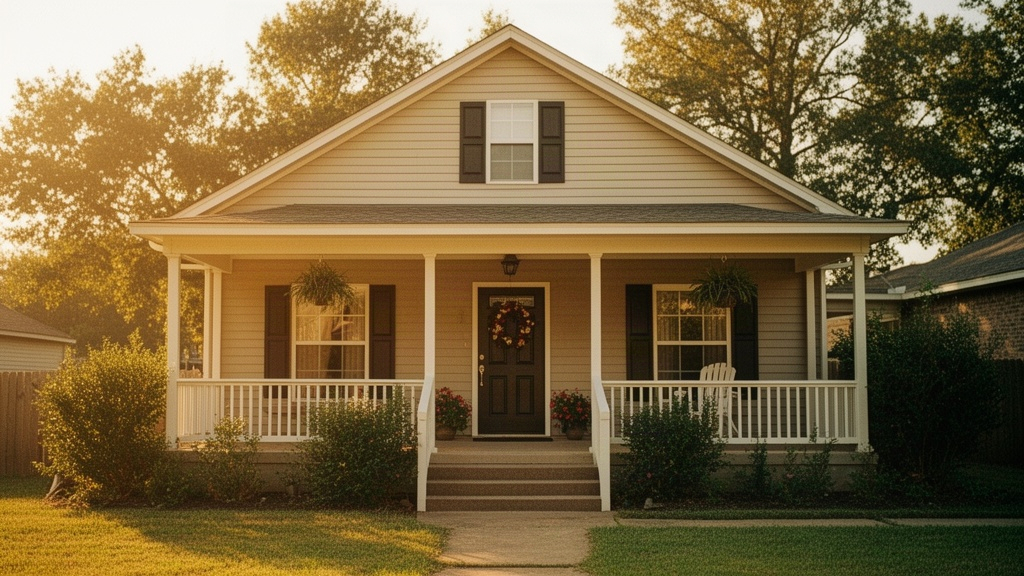
The area inside I-440, commonly called ITB, contains Raleigh's oldest and most architecturally varied housing stock. Neighborhoods like Hayes Barton, Budleigh, and Five Points feature Craftsman bungalows, Colonial Revivals, and mid-century ranches on lots ranging from 0.1 to 0.4 acres. These homes were built primarily between the 1920s and 1960s, so buyers should expect older systems, original hardwood floors, and in many cases, recent renovations that command premium prices.
Median prices inside the Beltline for single-family homes currently run from about $500,000 on the lower end in areas like Mordecai and Oakwood up to $900,000 or more in Hayes Barton and Cameron Village-adjacent streets. Walkability is a genuine feature here: the Village District, Morgan Street Food Hall, and Moore Square are all reachable without getting on a highway.
North Raleigh
North Raleigh, roughly defined as the area north of I-540 along the US-1 and Falls of Neuse Road corridors, is dominated by planned subdivisions built from the 1980s through the 2010s. Homes here are typically brick-front or full-brick construction, ranging from 1,800 to 4,500 square feet on lots between 0.2 and 0.6 acres. Subdivisions like Wakefield Plantation, Stonehenge, and Olde Raleigh offer mature tree canopy, established HOA amenities such as pools and tennis courts, and proximity to Falls Lake State Recreation Area.
Prices in North Raleigh currently range from about $450,000 for a 2,000-square-foot home in an older section of Stonehenge up to $900,000 or more in Wakefield Plantation's larger floor plans with golf course views. New construction is still available in pockets north of I-540, with builders like Toll Brothers and Lennar active in communities along Strickland and Durant Roads.
West Raleigh and Cary-Adjacent Areas
West Raleigh, including areas around Lake Johnson and the Avent Ferry corridor, offers a mix of 1970s and 1980s ranches alongside newer infill construction. Lot sizes here tend to be generous, often 0.3 to 0.7 acres, and the area borders Cary, which means buyers looking at West Raleigh zip codes like 27606 are often cross-shopping with Cary's Research Triangle Park-adjacent neighborhoods. Prices in this corridor typically run from $380,000 for a 3-bedroom ranch up to $650,000 for a renovated or newer-built home.
East Raleigh and the Knightdale Corridor
East Raleigh and the towns directly east, including Knightdale and Wendell, represent the most affordable entry points into the broader Raleigh market. New construction subdivisions along US-64 and NC-97 offer 3- and 4-bedroom homes starting in the low $300,000s, with builders including Smith Douglas Homes and D.R. Horton active in communities like Wendell Falls and Flowers Plantation. These are master-planned communities with on-site amenities including pools, walking trails, and in some cases, town centers with retail.
The tradeoff is commute distance. Knightdale sits about 12 miles east of downtown Raleigh, and Wendell is roughly 20 miles out. Both towns are connected to Raleigh via US-64, which carries heavy traffic during peak hours. Buyers who work in RTP or downtown Raleigh should factor in 30 to 50 minutes each way depending on departure time.
3. Commute Times and Access Around Raleigh
Commute access is one of the most practical factors when evaluating homes for sale in Raleigh, and it varies considerably by location. Raleigh does not have a light rail system as of September 2026, though the Wake County Transit Plan continues to develop bus rapid transit corridors. Most residents commute by car.
Getting Around by Car
From North Raleigh to downtown, expect 20 to 35 minutes on I-440 during morning rush hour. The I-540 outer loop connects North Raleigh to Research Triangle Park in roughly 25 to 40 minutes depending on the specific RTP campus location. West Raleigh to downtown is typically 15 to 20 minutes via Western Boulevard or Wade Avenue. The Knightdale and Wendell corridor adds 30 to 50 minutes to a downtown commute via US-64.
Buyers targeting RTP employers like Cisco, Lenovo, or SAS should note that the park is most directly accessed from Cary, Morrisville, and West Raleigh rather than from North or East Raleigh. The difference in daily drive time between a home in Cary and one in Knightdale for an RTP-based worker can be 30 minutes or more each way.
GoRaleigh Bus and GoTriangle Regional Transit
GoRaleigh operates fixed bus routes throughout the city, with the most frequent service concentrated inside the Beltline and along major corridors like New Bern Avenue, Western Boulevard, and Capital Boulevard. GoTriangle connects Raleigh to Durham and Chapel Hill, with express routes serving the RTP area. For buyers who want to minimize car dependence, proximity to a GoRaleigh or GoTriangle stop is worth checking on the city's transit map before narrowing your home search.
4. What to Expect When Making an Offer on a Raleigh Home
The offer process in North Carolina has specific features that differ from other states, and understanding them before you write an offer protects you. North Carolina uses a due diligence fee and earnest money deposit structure that is unlike what buyers in many other states are used to.
Offer Strategy in a Competitive Market
In September 2026, homes priced under $450,000 in Raleigh are still drawing multiple offers in many cases, particularly in North Raleigh and inside the Beltline. Buyers who are pre-approved rather than just pre-qualified, and who can demonstrate proof of funds for the due diligence fee upfront, are taken more seriously by listing agents. An escalation clause can help in a multiple-offer situation, but it needs to be written carefully so you do not overpay relative to appraisal.
Above $600,000, the market is more balanced and buyers have more negotiating room. In this price range, sellers are more willing to negotiate on price, closing cost contributions, and repair requests following the inspection.
Inspection and Due Diligence Period in North Carolina
North Carolina's standard Offer to Purchase includes a due diligence period, during which the buyer pays the seller a negotiated due diligence fee to take the home off the market. This fee is non-refundable if the buyer walks away, but it is credited toward the purchase price at closing. Due diligence fees in the Raleigh market currently range from $1,000 to $10,000 or more depending on price point and competition. During the due diligence period, the buyer can order inspections, negotiate repairs, and back out for any reason and still get their earnest money back.
A standard home inspection in Raleigh costs between $350 and $550 for a typical single-family home. Buyers should also budget for a radon test ($150 to $200) and a crawl space or HVAC inspection if the home's systems are older. Raleigh has a mix of slab and crawl space foundations, and crawl spaces in older homes can have moisture issues that are worth checking.
5. Costs Beyond the Purchase Price
Budgeting for a home in Raleigh means accounting for more than the list price. Property taxes, HOA fees, and closing costs all affect your true monthly cost and total cash needed at closing.
Property Taxes and HOA Fees
Wake County's combined property tax rate for Raleigh city residents in 2026 is approximately $0.81 per $100 of assessed value, combining the county rate of roughly $0.53 and the city rate of around $0.28. On a $430,000 home, that works out to roughly $3,483 per year, or about $290 per month added to your housing cost. Homes in Knightdale or Wendell carry Wake County rates but different municipal rates, so the total can vary slightly.
HOA fees vary widely. Older subdivisions in North Raleigh like Stonehenge charge $300 to $600 per year for common area maintenance. Newer master-planned communities with pools, clubhouses, and trails, such as Wendell Falls, charge $100 to $180 per month. High-rise or mid-rise condos inside the Beltline can run $400 to $600 per month, which covers exterior maintenance, amenities, and sometimes water.
Closing Costs in North Carolina
Buyers in North Carolina typically pay 2 to 3 percent of the purchase price in closing costs, covering lender fees, title insurance, attorney fees (North Carolina requires a real estate attorney at closing), prepaid insurance, and prepaid property tax escrow. On a $430,000 purchase, that is roughly $8,600 to $12,900 in closing costs on top of your down payment. Some buyers negotiate a seller concession to cover part of these costs, which is more achievable in the $600,000-and-above price range where seller negotiating room is wider.
North Carolina also charges a deed transfer tax, called excise tax, of $1 per $500 of purchase price, which is paid by the seller. Buyers are not responsible for this cost, but it is worth knowing when you are comparing your net sheet to estimates from other states.
6. Parks, Amenities, and What Makes Raleigh Worth Living In
Buyers relocating to Raleigh often ask what the city offers beyond the job market, and the answer is considerable. Raleigh operates over 200 parks and greenways through its Parks, Recreation and Cultural Resources department, totaling more than 11,000 acres of parkland within the city limits.
Umstead State Park sits on the western edge of Raleigh near the I-40 and Aviation Parkway interchange, offering 5,600 acres of trails, fishing, and picnic areas accessible from West Raleigh and Cary. Falls Lake State Recreation Area, about 15 miles north of downtown, provides boating, swimming, and 26,000 acres of water and surrounding forest. The Neuse River Greenway Trail runs 28 miles from north to east Raleigh and connects several neighborhoods to each other without using a road.
Downtown Raleigh anchors the city's cultural and dining scene. The North Carolina Museum of Natural Sciences, the largest natural history museum in the Southeast, is free and sits on Bicentennial Plaza alongside the NC Museum of History. The Warehouse District along South West Street has become a hub for restaurants, breweries, and live music venues. Fayetteville Street connects City Plaza to the Convention Center and hosts regular outdoor events.
For buyers who want to check school information before deciding on a location, the North Carolina Department of Public Instruction publishes school performance data at ncpublicschools.gov, and Wake County Public School System maintains its own zone lookup tool at wcpss.net. These are the most direct sources for accurate, current information, and Shalon Leonard encourages every buyer to review them independently as part of their research.
7. How to Start Your Home Search in Raleigh
Starting a search for homes for sale in Raleigh without a clear plan leads to wasted time and missed opportunities. The steps below reflect what actually works in this specific market, not generic advice that applies anywhere.
Get a full pre-approval, not a pre-qualification, before you tour homes. In Raleigh's sub-$450,000 market, listing agents and sellers pay attention to the strength of your financing letter. A pre-approval from a local lender who knows Wake County carries more weight than a letter from an online lender in some competitive situations.
Define your commute constraints first, then let that narrow your geographic search. Raleigh is a large city and the difference between a home in Wakefield and one in Knightdale can be 45 minutes of daily driving for someone working in RTP. Map your workplace to each target area during morning rush hour before you fall in love with a house.
Visit target neighborhoods at different times of day. A street that feels quiet on a Saturday afternoon can be a cut-through route during weekday rush hour. Raleigh's grid in some areas is interrupted by greenways and cul-de-sacs, which affects both traffic patterns and walkability in ways that are not obvious from a map.
Budget for the due diligence fee as liquid cash, separate from your down payment and closing costs. In competitive offers, a meaningful due diligence fee signals commitment to the seller. Having $3,000 to $7,000 available beyond your down payment and closing costs gives you flexibility in negotiations.
Work with an agent who has active transaction experience in your target price range and zip code. Raleigh's submarkets behave differently from each other. An agent who primarily works inside the Beltline and one who primarily works in Wakefield Plantation will give you very different perspectives on pricing, competition, and what to offer.
The NAR has noted in its research on housing markets poised for new buyer opportunities that markets with growing inventory and sustained in-migration, a description that fits Raleigh in September 2026, tend to reward buyers who are prepared and move decisively when the right property appears. Preparation matters more than speed alone.
FAQ
What is the average price of homes for sale in Raleigh, NC right now?
As of September 2026, the median home price in Raleigh is approximately $430,000, though that number varies significantly by area. Condos inside the Beltline can be found starting around $310,000, while single-family homes in North Raleigh neighborhoods like Wakefield Plantation often list between $500,000 and $900,000. New construction in east Raleigh suburbs like Knightdale and Wendell starts in the low $300,000s. Your budget and commute needs together will determine which part of the market makes the most sense for your situation.
Is Raleigh a buyer's market or a seller's market in 2026?
In September 2026, Raleigh is closer to a balanced market than it was in 2022 or 2023, but it is not a pure buyer's market. Inventory is up roughly 30 to 40 percent compared to 2024, which gives buyers more choices and more time. However, well-priced homes under $450,000 still attract multiple offers in many cases, particularly in North Raleigh and inside the Beltline. Above $600,000, buyers have considerably more negotiating room on price and terms. The right strategy depends on which price range and neighborhood you are targeting.
How long does it take to buy a home in Raleigh from offer to closing?
A typical Raleigh home purchase takes 30 to 45 days from accepted offer to closing, assuming a conventional loan and no major issues discovered during the due diligence period. The due diligence period itself is negotiated between buyer and seller and usually runs 14 to 21 days, during which inspections and any repair negotiations happen. Cash purchases can close in as few as 10 to 14 days. Delays most often occur when inspection findings require additional contractor estimates or when appraisals come in below the purchase price and require renegotiation.