
← Back to Blog
Neighborhoods
Oakwood, Raleigh, North Carolina Land Real Estate Market Guide: Prices, Neighborhoods and Timing
By Shalon Leonard
BIC, SFR®, RENE, ABR, NACA, P&C Insurance, Notary Public
September 26, 2026 · 9 min read
Oakwood is one of Raleigh's most historically significant neighborhoods, and understanding how land and real estate move here requires knowing what makes this pocket of the city genuinely different from the rest of the market. This guide covers current prices, lot availability, the character of the surrounding streets, and the timing factors that matter most whether you are buying, selling, or relocating to Oakwood in Raleigh, North Carolina.
1. What Is Oakwood and Where Does It Sit in Raleigh?
Oakwood is Raleigh's oldest intact residential neighborhood, sitting just northeast of downtown and bounded roughly by Person Street to the west, Bloodworth Street to the east, Edenton Street to the south, and Oakwood Avenue to the north.
The neighborhood sits less than one mile from the State Capitol building and the Moore Square Arts District, which puts it within a short walk or bike ride of downtown Raleigh's restaurants, breweries, and cultural venues. Commuters heading into the Research Triangle Park corridor typically drive about 25 to 30 minutes via I-40 West during morning rush hour, depending on conditions.
Location and Boundaries
Oakwood's street grid was platted in the 1870s, and many of the original lots remain intact today. The neighborhood connects directly to the Mordecai Historic Park to the north, where the birthplace of President Andrew Johnson is preserved, and to Oakwood Cemetery to the northeast, one of the oldest municipal cemeteries in North Carolina. These anchors give Oakwood a physical context unlike any other Raleigh neighborhood.
Historic District Designation and What It Means for Land
Oakwood carries both a National Register of Historic Places listing and a City of Raleigh Historic Overlay District designation. That second designation is the one that affects what you can build, demolish, or alter on any parcel within the boundaries. The Raleigh Historic Development Commission reviews proposed changes to structures and new construction on vacant lots, and applicants must demonstrate that new work is compatible with the neighborhood's historic character.
This is not a minor administrative step. If you are purchasing vacant land in Oakwood with the intent to build, you need to factor the Commission's review timeline and design standards into your project schedule before you close on the lot. Working with an agent who understands this process is essential, not optional.
2. Oakwood Land and Real Estate Prices Right Now
In September 2026, Oakwood's real estate prices reflect both its proximity to downtown Raleigh and the scarcity premium that comes with a tightly bounded historic district where very few lots ever become available.
Current Price Ranges for Homes and Lots
Restored Victorian and Queen Anne homes in Oakwood currently list in a range from the mid $600,000s to well over $1.2 million, depending on square footage, the extent of restoration, and lot depth. Smaller cottages and bungalows on narrower lots typically enter the market in the $500,000 to $650,000 range. Homes that have been carefully restored with period-appropriate materials and finishes tend to command the upper end of that range.
Vacant land in Oakwood is genuinely rare. When infill lots do appear, they generally range from $175,000 to $350,000 depending on lot dimensions and whether any prior structure existed on the parcel. Buyers should expect that the cost of constructing a new home compatible with the historic overlay will add substantially to total project costs compared to building in an unrestricted Raleigh subdivision.
How Oakwood Compares to the Broader Raleigh Market
The broader Raleigh market currently sits at a median home price in the low-to-mid $400,000s, according to Norada Real Estate's 2026 Raleigh market analysis. Oakwood prices run meaningfully higher than that citywide median, which is consistent with what you see in other close-in Raleigh neighborhoods where lot supply is constrained and walkability to downtown is a real feature rather than a marketing claim.
Price per square foot in Oakwood typically runs between $280 and $420 for finished, restored homes. That range reflects condition, lot size, and how recently the home was updated. A home with original heart pine floors, a restored wraparound porch, and a deep rear yard will price differently than one with a similar footprint but deferred maintenance.
If you want a broader view of how Oakwood fits into Raleigh's overall pricing picture, the Raleigh, North Carolina Real Estate Market Guide on this site covers citywide trends in detail.
3. The Neighborhood Landscape: Streets, Housing Stock, and Lot Characteristics
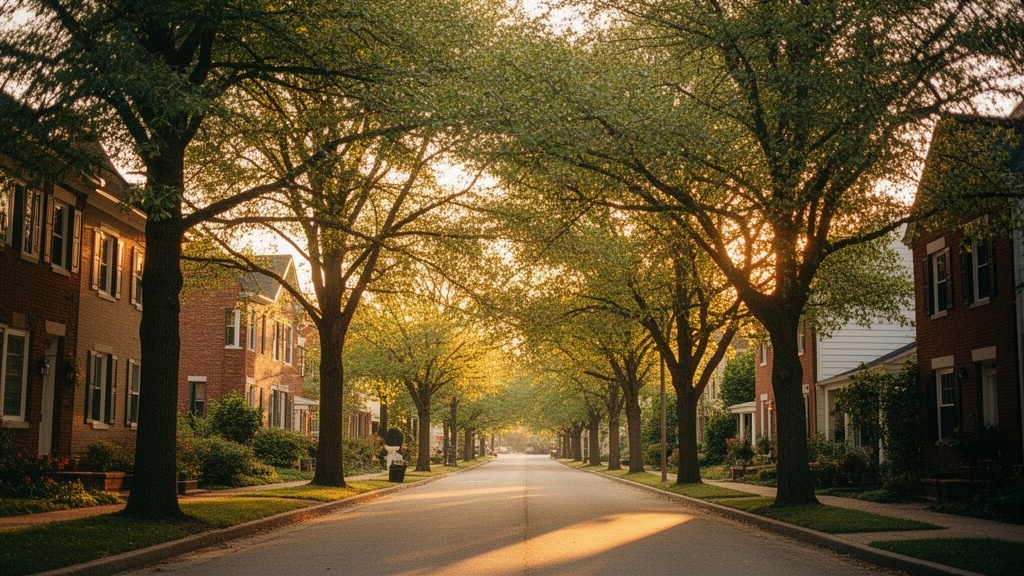
Oakwood's physical character is defined by its tree canopy, narrow sidewalked streets, and a housing stock that spans roughly 1870 through the 1930s. Walking the neighborhood gives you a clear sense of the architectural variety: Victorian Italianate homes with ornate bracketing sit alongside simpler Folk Victorian cottages and early Craftsman bungalows.
Architecture and Lot Sizes
Lot sizes in Oakwood tend to run between 5,000 and 10,000 square feet, with some of the larger parcels on Oakwood Avenue and Linden Avenue exceeding that. Homes themselves range from roughly 1,200 square feet for the smaller cottages to over 3,500 square feet for the larger Victorian-era residences. Many properties have detached carriage houses or rear outbuildings that were converted to garages or accessory structures over the decades.
The Historic Overlay District rules govern not just new construction but also exterior alterations to existing homes. Replacing windows, adding a rear addition, or changing roofing materials all require review if the change is visible from a public street. Buyers who plan significant renovations should request a pre-application meeting with the Raleigh Historic Development Commission before making an offer, so there are no surprises after closing.
Proximity to Parks, Amenities, and Downtown Raleigh
Oakwood sits within a short walk of Chavis Park, a 56-acre Raleigh Parks and Recreation property that includes an aquatic center, athletic fields, a restored carousel, and greenway trail access. The Raleigh Farmers Market on Lake Wheeler Road is about a 10-minute drive south. The North Carolina Museum of Natural Sciences and the North Carolina State Museum of History are both within a mile.
Person Street, which forms part of Oakwood's western edge, has developed into one of Raleigh's more active neighborhood commercial corridors. Coffee shops, local restaurants, a wine bar, and independent retail occupy the storefronts along the stretch between Oakwood and Peace Street. Residents can reach these on foot without crossing a major arterial.
For those considering the commute picture more broadly, the Garner and Knightdale commute guide on this site provides useful context on how travel times into downtown Raleigh vary across Wake County.
4. Market Timing: When to Buy or Sell Land and Homes in Oakwood
Timing in Oakwood follows some of the same seasonal rhythms as the broader Raleigh market, but the scarcity of available inventory means that waiting for a perfect season matters less here than in a high-turnover subdivision. When a property comes available in Oakwood, buyers who are prepared tend to move quickly.
Seasonal Patterns in the Oakwood Market
Spring, specifically March through May, brings the highest listing activity across Raleigh, and Oakwood is no exception. Sellers who list in April and May tend to see more competing offers because buyer demand peaks around that time as relocating professionals and local move-up buyers enter the market simultaneously.
Fall listings, particularly September and October, attract serious buyers who want to be settled before the holidays. In Oakwood, fall can actually be a strong window for sellers because the tree canopy is at its most dramatic and the neighborhood's streetscape photographs particularly well in that light. Buyer pools are smaller than in spring, but the buyers who are active in September tend to be motivated.
What the September 2026 Market Looks Like for Buyers and Sellers
Right now in September 2026, the Raleigh market broadly has seen some moderation in the pace of sales compared to the peak years of 2021 and 2022, but close-in historic neighborhoods like Oakwood have held their value more firmly than outer suburban areas. Inventory remains tight in Oakwood specifically, which continues to support seller pricing power even as broader market conditions have become more balanced.
Buyers currently have slightly more time to conduct due diligence than they did in 2022, when multiple-offer situations sometimes compressed inspection timelines. That additional time matters in Oakwood, where the historic overlay, older mechanical systems, and the potential for deferred maintenance on century-old structures all require careful review.
For a current read on whether the Raleigh market overall is favoring buyers or sellers this month, the September 2026 Raleigh market conditions article on this site breaks that down in detail.
According to SoFi's 2026 Raleigh housing market overview, Raleigh continues to attract significant in-migration from higher-cost metros, which sustains demand for well-located urban properties even as mortgage rates remain elevated relative to 2020 and 2021 levels.
5. What Buyers and Sellers Need to Know Before Transacting in Oakwood
Buying or selling in Oakwood involves a set of considerations that simply do not apply in most other Raleigh neighborhoods. The historic overlay, the age of the housing stock, and the relatively low turnover rate all make local expertise more valuable here than in a standard transaction.
Due Diligence on Historic District Rules
Buyers considering land or a home in Oakwood should review the City of Raleigh's Historic Overlay District design guidelines before making an offer. These guidelines are publicly available through the City of Raleigh Planning and Development department and detail what is permissible for new construction, additions, window replacements, siding, roofing, fencing, and landscaping features visible from the street.
Buyers planning to finance should also confirm with their lender that the loan product they are using is compatible with older construction. Some loan programs have property condition requirements that can create friction when the home has original knob-and-tube wiring, galvanized plumbing, or a foundation that predates modern standards. Getting a lender who has financed historic properties in Raleigh before reduces the risk of surprises late in the transaction.
Sellers in Oakwood benefit from understanding what buyers will scrutinize. A pre-listing inspection that flags foundation, roof, electrical, and plumbing conditions allows a seller to price accurately and avoid renegotiation after the buyer's inspection. For a full breakdown of what selling costs to expect, the fees and costs guide for selling a home in Raleigh on this site is a practical starting point.
Working with the Right Agent
Oakwood transactions reward agents who understand historic district processes, can read the condition of older construction, and know how to price a property where comparables are thin. Because turnover in Oakwood is low, sometimes only a handful of homes sell in a given year, pricing requires judgment rather than a simple algorithm.
Shalon Leonard holds designations including ABR (Accredited Buyer's Representative) and RENE (Real Estate Negotiation Expert), and has worked with buyers and sellers across Raleigh's close-in neighborhoods, including situations that involve historic properties, land transactions, and complex due diligence timelines. Her background in property and casualty insurance also gives her a practical lens on older construction that most agents simply do not have.
If you are weighing how to price a home in Oakwood for maximum return, the guide to what gets sellers the highest sale price in Raleigh is worth reading before you list.
FAQ
Is there vacant land available to buy in Oakwood, Raleigh right now?
Vacant land in Oakwood is genuinely rare in September 2026. The neighborhood was largely built out by the 1930s, and the City of Raleigh's Historic Overlay District designation limits demolition of existing structures, which further constrains lot supply. When infill lots do appear, they are typically the result of a structure being deemed beyond repair and removed after a lengthy review process. Buyers interested in land in Oakwood should work with an agent who monitors the neighborhood closely and can identify off-market opportunities, because listed vacant lots in this area can move before many buyers are even aware they exist.
What does the Raleigh Historic Overlay District mean for someone buying a home in Oakwood?
The Historic Overlay District means that exterior changes to your home, including window replacements, roofing material changes, additions, and fence installations, require review and approval by the Raleigh Historic Development Commission if they are visible from a public street. This applies to both new construction on vacant lots and renovations to existing homes. The review process adds time to renovation projects, and the design standards require that new work be compatible with the neighborhood's historic character, which can affect material choices and costs. Buyers planning significant work should request a pre-application meeting with the Commission before closing so they understand the scope of what is permitted.
How does Oakwood's real estate market behave differently from the rest of Raleigh?
Oakwood operates with much lower inventory turnover than most Raleigh neighborhoods, which means that when a property comes available, it often attracts attention quickly from a pool of buyers who have been watching the neighborhood for some time. Prices in Oakwood run above the Raleigh citywide median because of the neighborhood's proximity to downtown, its walkable street grid, and the relative scarcity of homes within the historic district boundaries. The market here is also less sensitive to broad suburban supply increases, because Oakwood's lot count is essentially fixed. Sellers in Oakwood tend to retain pricing leverage even during periods when the broader Raleigh market moderates, though condition and presentation still matter significantly given the price points involved.