← Back to Blog
Market Trends
Magnolia Texas Real Estate Market Guide: Prices, Neighborhoods, Timing
By Shanna Holt
September 2, 2026 · 11 min read
If you are researching the Magnolia, Texas real estate market, you need current numbers, honest neighborhood breakdowns, and a clear read on timing. This guide covers all three, with September 2026 data, local context, and practical takeaways for buyers, sellers, and anyone relocating to this part of Montgomery County.
1. What the Magnolia, Texas Real Estate Market Looks Like Right Now
The Magnolia, Texas real estate market has stabilized into a moderate seller's market as of September 2026. Inventory has loosened compared to the tight conditions of 2022 and 2023, but well-priced homes in established communities still move within two to three weeks. Buyers have more choices than they did two years ago, and sellers who price accurately are still seeing strong results.
Median Prices and Inventory
The median home price in Magnolia currently sits in the low-to-mid $300,000s for resale homes, with new construction in master-planned communities pushing the median closer to $380,000 to $420,000 depending on the subdivision and builder. Entry-level resale homes on smaller lots start around $240,000 to $270,000, while acreage properties along FM 1488, FM 1774, and the surrounding rural corridors regularly list from $500,000 to well over $1 million. For a real-time look at how list prices and days on market are shifting month to month, the Magnolia housing market data on Redfin is updated regularly and worth bookmarking.
Active inventory in the 77354 and 77355 zip codes has grown roughly 15 to 20 percent compared to September 2025, which gives buyers more negotiating room than they had during the peak demand years. Days on market for the broader Magnolia area currently average around 35 to 50 days, though that number drops considerably for move-in-ready homes priced below $350,000.
How Magnolia Compares to Surrounding Areas
Magnolia consistently offers more land per dollar than The Woodlands or Tomball. A budget that buys a 2,200-square-foot home on a quarter-acre lot in Tomball might stretch to a 2,600-square-foot home on a half-acre or larger in Magnolia. That trade-off comes with a longer commute and fewer walkable amenities, but for buyers prioritizing lot size, privacy, or acreage, Magnolia's value proposition is real. If you are weighing that decision carefully, this detailed breakdown of Magnolia versus Tomball real estate covers the price-per-square-foot and commute differences in depth.
2. Magnolia Neighborhoods: What Each Area Offers
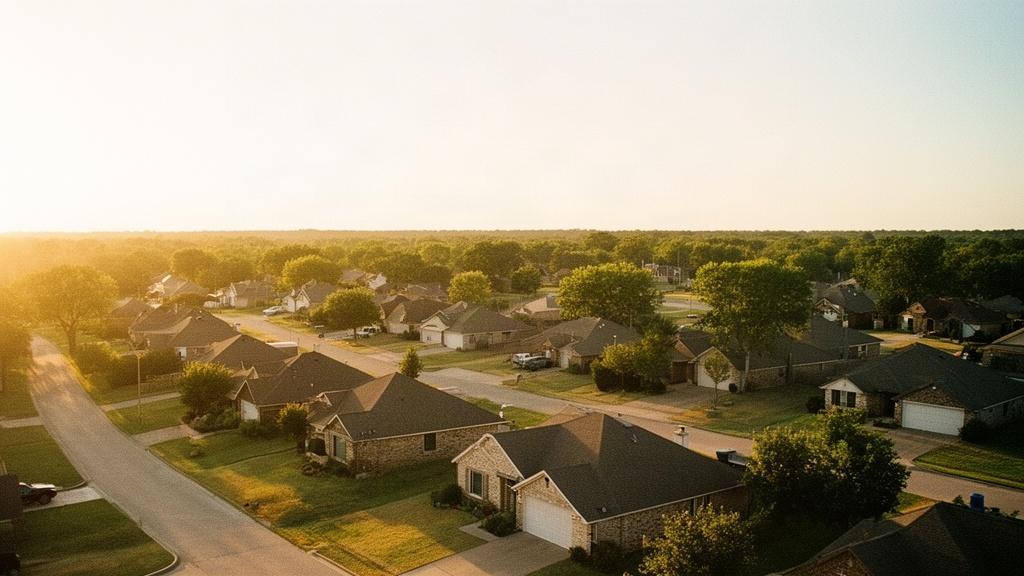
Magnolia's neighborhoods span a wide range of housing types, lot sizes, price points, and community styles. Understanding what each area physically looks like, and what it costs, is the starting point for narrowing your search. The following breakdown covers the most active communities in the Magnolia market right now.
Woodtrace and Audubon
Woodtrace is one of Magnolia's more established master-planned communities, located along Woodtrace Boulevard off FM 1488. Homes here were built primarily between 2013 and 2022 by builders including Perry Homes, Chesmar, and Meritage. Floor plans run from roughly 1,800 to 3,800 square feet, with list prices currently ranging from the mid-$300,000s to the low $500,000s. The community includes a resort-style pool, a catch-and-release lake, walking trails, and a fitness center.
Audubon sits just north of FM 1488 and is one of the newer large-scale communities in Magnolia, with active construction from several builders including Westin Homes and David Weekley. Lots in Audubon are generally 50 to 70 feet wide, and new construction prices start around $340,000 and climb past $550,000 for larger plans. The community is built around a central amenity complex with pools, a splash pad, and a clubhouse, and it connects to hike-and-bike trails that wind through the property.
Escondido and Northgrove
Escondido is a gated community off FM 1488 featuring larger lots, many of which are one acre or more, and custom and semi-custom homes. Prices in Escondido typically start around $600,000 and reach well above $1 million for newer custom builds. The lots are heavily wooded with mature pines, and the community has a quieter, more private feel than the larger master-planned developments nearby.
Northgrove, located off Northgrove Parkway near the intersection of FM 2978 and FM 1488, is a master-planned community developed by Johnson Development. Homes range from approximately 1,900 to over 4,000 square feet, with prices from the low $300,000s to the high $500,000s. Northgrove features a lazy river pool, a dog park, sports courts, and several pocket parks connected by trails. Resale turnover here is moderate, meaning inventory comes available but does not sit long when priced correctly.
Acreage and Rural Properties Along FM 1488
Outside the master-planned communities, Magnolia has a substantial inventory of rural and semi-rural properties on one to ten or more acres. These are scattered along FM 1488, FM 1774, Nichols Sawmill Road, and Dobbin-Plantersville Road. Homes on these tracts vary widely: some are older ranch-style homes built in the 1980s and 1990s, others are newer custom builds constructed in the last five to ten years. Prices depend heavily on acreage, well and septic condition, and whether the property has agricultural exemption status. A three-bedroom home on two acres might list around $350,000; a newer custom home on five acres with a shop and pond can push past $900,000.
Buyers considering acreage properties should budget for additional due diligence: septic inspections, well water testing, and a survey are all standard steps that add both time and cost to the transaction. Shanna Holt works with buyers on acreage transactions regularly and knows the local vendors and inspectors who specialize in this type of property.
3. Commute Times, Infrastructure, and What Is Being Built
Commute distance and drive time are among the most common concerns for people relocating to Magnolia. The city sits roughly 40 miles northwest of downtown Houston and about 15 to 20 miles west of The Woodlands, which means most residents commute by car. Here is what those drives actually look like in September 2026.
Getting to Houston and The Woodlands
From central Magnolia to The Woodlands Town Center via FM 2978, the drive runs approximately 20 to 30 minutes depending on time of day, with FM 2978 being the primary connector. The route can slow noticeably during morning and afternoon peak hours, particularly near the 2978 and 242 intersection.
To downtown Houston, most Magnolia residents use Highway 249 south to the Beltway 8 or take FM 1488 east to I-45, then south. Either route puts downtown Houston at 50 to 70 minutes during non-peak hours and 75 to 90 minutes or more during heavy traffic. Buyers who work in the Energy Corridor or Katy area often find the drive more manageable, running 45 to 60 minutes via 249 south to Beltway 8 west.
New Development Along the 249 Corridor
The extension of the Texas 249 toll road through Magnolia has been one of the most significant infrastructure changes in the area over the past several years. The 249 extension now runs through Magnolia and connects north toward Navasota, which has opened up land for new commercial development and residential construction along the corridor. Several new retail centers, a Costco that opened in the Tomball-Magnolia area in 2024, and additional restaurant and service businesses have followed the road's expansion.
New residential communities continue to be platted and developed along the 249 corridor and on the FM 1774 and FM 1488 feeders. Buyers purchasing new construction in these areas should ask about expected buildout timelines, since amenities and surrounding retail may still be under construction for another two to four years depending on the subdivision.
4. Timing the Market: When to Buy or Sell in Magnolia
Timing matters in any real estate market, but it matters differently depending on whether you are buying or selling. In Magnolia, seasonal patterns are real but not dramatic. The market does not freeze in winter the way northern markets do, but there are meaningful differences in competition and pricing across the calendar year.
Seasonal Patterns in Montgomery County
The busiest listing and sales period in Magnolia runs from late February through June, driven by buyers who want to close before the start of the school year. Inventory peaks in April and May, which gives buyers the most choices but also means more competition on well-priced homes. July and August see a slight slowdown as families settle in before school starts. Fall, from September through November, tends to be a balanced window: inventory is still reasonable, buyer competition eases somewhat, and sellers who list in this window are typically motivated.
December and January are the quietest months in the Magnolia market. Fewer homes list, but the buyers who are active in that window are serious. Sellers who list in December often do so out of necessity, which can create negotiating opportunities for buyers willing to move during the holidays.
What Sellers Should Know in September 2026
September 2026 is a workable time to sell in Magnolia, but pricing strategy matters more than it did in 2021 or 2022. With inventory up year over year, buyers have more alternatives, and overpriced listings are sitting longer. Homes that are priced within two to three percent of true market value and are in move-in-ready condition are still closing within 30 days in most price brackets. Sellers who have deferred maintenance or cosmetic updates should either address them before listing or price to reflect them, because buyers in today's market are factoring repair costs into their offers.
Sellers in the $500,000-plus range should expect longer average days on market, since that price tier has seen the most inventory growth. Acreage properties and custom homes above $700,000 may take 60 to 90 days or more to find the right buyer. Patience and accurate pricing are the two most important variables in that segment.
What Buyers Should Know in September 2026
Buyers in September 2026 have more leverage than at any point since 2019. Mortgage rates remain elevated compared to the historic lows of 2020 and 2021, which has cooled demand enough that multiple-offer situations are no longer the norm in most price ranges. Buyers can now negotiate on price, request seller contributions toward closing costs, and include inspection contingencies without losing deals, which was difficult to do during the peak years.
New construction builders in Magnolia are also offering incentives in September 2026, including mortgage rate buy-downs, design center credits, and free upgrades on select inventory homes. If you are open to new construction, it is worth comparing those incentive packages against resale options in the same price range.
For a deeper look at the buying process specific to this market, the Homes for Sale in Magnolia, Texas Buyer's Guide on this site covers the step-by-step process from pre-approval through closing in Montgomery County.
5. Costs Beyond the Purchase Price
The purchase price is only one piece of the monthly cost equation in Magnolia. Property taxes, HOA fees, and utility costs vary significantly depending on where in the Magnolia area you buy, and those differences can meaningfully affect your monthly payment and long-term budget.
Property Taxes in Montgomery County
Montgomery County's overall property tax rate for most Magnolia-area properties currently runs between 1.7 and 2.3 percent of assessed value annually, depending on the specific taxing entities that apply to a given address. Most Magnolia addresses fall under the Magnolia Independent School District, Montgomery County, and one or more municipal utility districts. MUD rates vary by district and can add 0.3 to 0.7 percent on top of the base county and school rates.
On a $380,000 home, a combined rate of 2.1 percent translates to roughly $7,980 per year in property taxes, or about $665 per month added to your payment. That number can be lower on properties with an agricultural exemption, which some rural acreage tracts carry. Buyers should always request the current tax certificate and verify the applicable MUD district before making an offer, since MUD boundaries do not always follow subdivision lines.
HOA Fees, Utilities, and Flood Zone Considerations
HOA fees in Magnolia's master-planned communities typically run between $600 and $1,500 per year, though some communities with more extensive amenity packages charge higher. Woodtrace, Northgrove, and Audubon all fall in that range. Gated communities like Escondido may have separate gate maintenance fees in addition to the base HOA. Rural properties outside subdivisions usually have no HOA, but buyers should verify deed restrictions, which can still limit land use even without a formal association.
Flood zone status is a practical concern in parts of the Magnolia area, particularly along creek corridors and lower-lying rural tracts. Buyers should pull the FEMA flood map for any property they are seriously considering and ask their lender whether flood insurance will be required. Flood insurance premiums in Montgomery County can range from a few hundred dollars per year for properties in low-risk zones to several thousand dollars annually for properties in Special Flood Hazard Areas. This is worth confirming before you fall in love with a property.
Utilities in Magnolia vary based on whether a property is on city water and sewer, a municipal utility district system, or a private well and septic. MUD-served properties pay monthly water and sewer bills through the district. Properties on wells have no monthly water bill but carry the cost of well maintenance and periodic pump or pressure tank replacement. Septic systems require pumping every three to five years depending on household size, typically costing $300 to $500 per service.
FAQ
What is the median home price in Magnolia, Texas right now?
As of September 2026, the median resale home price in Magnolia sits in the low-to-mid $300,000s, while new construction in master-planned communities like Audubon and Northgrove pushes the median closer to $380,000 to $420,000. Entry-level homes start around $240,000, and acreage properties regularly list from $500,000 to over $1 million depending on land size and improvements. Price per square foot varies significantly between subdivisions and rural tracts, so comparing within a specific area gives a more accurate picture than a single citywide median. A local agent with current MLS access can pull a precise comparable sales report for the specific neighborhood or property type you are targeting.
Is Magnolia, Texas a buyer's market or a seller's market in 2026?
The Magnolia market in September 2026 leans toward a moderate seller's market overall, but conditions vary by price range. Homes priced below $350,000 in move-in-ready condition still attract multiple showings and sell relatively quickly, while the $500,000-plus segment has seen inventory grow and days on market lengthen. Buyers have meaningfully more negotiating room than they did in 2021 through 2023, and seller concessions toward closing costs or rate buy-downs are more common. New construction builders are also offering incentive packages that were not available during the peak years, which adds another layer of competition for resale sellers.
How do property taxes work in the Magnolia area, and what should I budget?
Property taxes in the Magnolia area are set by a combination of Montgomery County, the Magnolia Independent School District, and any applicable municipal utility district. The combined effective rate for most addresses falls between 1.7 and 2.3 percent of assessed value annually. On a $380,000 home, that translates to roughly $6,460 to $8,740 per year, or approximately $540 to $730 per month added to your mortgage payment. Properties with an agricultural exemption can carry significantly lower effective tax bills, but that exemption must be in place before closing to benefit the buyer in the first year. Always verify the specific taxing entities and current rates for any property you are considering, since MUD rates vary by district and can change year to year.