
← Back to Blog
Market Trends
Magnolia, Texas Real Estate Market Guide: Prices, Neighborhoods and Timing
By Shanna Holt, Real Estate Agent
Boston Real Estate Group · TX# 743733
September 19, 2026 · 9 min read
This Magnolia, Texas real estate market guide covers everything you need to make a confident decision: where prices stand right now, what different parts of town offer, and when to make your move. Whether you are buying your first home, upsizing, or relocating from outside the area, the details here will save you weeks of research.
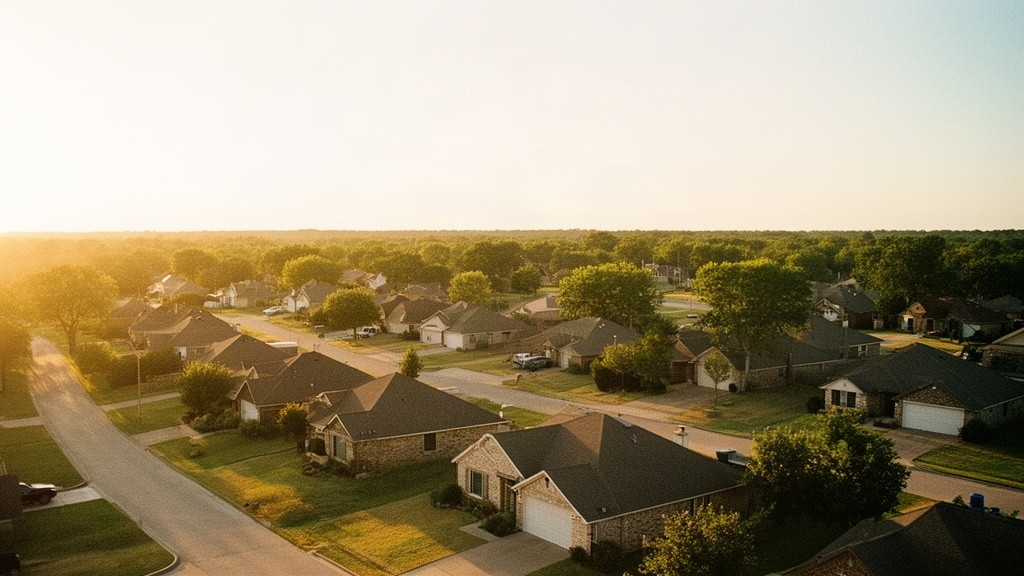
1. What the Magnolia, Texas Real Estate Market Looks Like Right Now
The Magnolia market is active and competitive, but not frenzied. Buyers have more options than they did two years ago, while sellers who price correctly are still moving their homes within a reasonable window. That balance makes September 2026 a genuinely interesting moment to be on either side of a transaction.
Where Prices Are Landing
Median home prices in Magnolia currently sit in the mid-to-upper $300,000s for a typical single-family home on a standard subdivision lot. Homes with larger lots, newer construction, or frontage on a community lake or greenbelt regularly cross the $450,000 to $550,000 range. Acreage properties outside the subdivisions can push well past $600,000 depending on land size and improvements. According to HAR's Magnolia market data, the area has seen steady price appreciation over the past several years, with the pace moderating in 2026 compared to the sharp run-up of the early part of this decade.
Entry-level options do exist in Magnolia, particularly in older sections of town closer to the city center near FM 1774 and Nichols Sawmill Road, where smaller homes on quarter-acre lots can be found in the $260,000 to $310,000 range. These properties tend to attract buyers who want the Magnolia zip code without stretching their budget into newer construction territory.
Inventory and Days on Market
Inventory has loosened noticeably since the tight conditions of 2022 and 2023. In September 2026, buyers in Magnolia typically have two to four months of supply to work with across most price bands, which gives them time to compare options without the pressure of same-day offer deadlines on every listing. Well-priced homes in move-in condition still generate multiple offers, but overpriced listings are sitting longer and requiring reductions before they sell.
Average days on market for sold homes in Magnolia currently runs between 35 and 55 days, depending on price point. Homes priced under $400,000 in good condition tend to move closer to the 30-day mark. Luxury and acreage listings above $700,000 often take 60 to 90 days or longer to find the right buyer.
How Magnolia Compares to the Broader Houston Region
Magnolia consistently offers more land per dollar than suburbs closer to Loop 610. A budget that buys a townhome with a small patio in the Heights or Midtown can purchase a four-bedroom home on half an acre in Magnolia. That trade-off, more space and a slower pace in exchange for a longer commute, is the central calculation most buyers are running when they consider this market.
The Texas housing market broadly has been navigating higher mortgage rates alongside population-driven demand, and Magnolia reflects those same forces. HousingWire's analysis of Texas housing trends highlights that suburban and exurban markets outside Houston have held their value better than many predicted, driven by continued in-migration from higher-cost states. Magnolia is a direct beneficiary of that pattern.
2. A Closer Look at Magnolia's Neighborhoods and Housing Stock
Magnolia's housing stock is genuinely varied. You will find 1980s brick ranch homes on wooded lots, 2010s traditional two-stories in gated communities, and brand-new construction with open floor plans and three-car garages. Understanding which pockets of the market align with your priorities is the most important step in narrowing your search. For a detailed breakdown of specific communities, the neighborhoods guide on this site covers each area in depth.
Established Subdivisions Along FM 1488
The FM 1488 corridor is home to some of Magnolia's most established residential communities. Subdivisions like Magnolia Ridge, Indigo Lake Estates, and Woodlands Estates offer mature tree canopies, larger lots ranging from half an acre to several acres, and homes built primarily between 1990 and 2010. Prices in these communities typically run from the mid-$300,000s into the low $600,000s depending on square footage and updates.
These neighborhoods sit within easy reach of the Magnolia Market at the Silos-style local shops and restaurants along FM 1488, as well as the Magnolia Community Center and its sports fields. The commute to The Woodlands Town Center from this corridor runs roughly 20 to 25 minutes under normal conditions.
Newer Master-Planned Communities
Communities like Audubon and Woodsons Reserve (which straddles the Spring and Magnolia area) represent the newer wave of master-planned development pushing northwest along SH 249. Audubon, located off Spur 149 near Magnolia, includes resort-style amenities: a lazy river, splash pad, fitness center, and miles of walking trails. Homes there range from the upper $300,000s to over $700,000 for larger lots and custom builds.
Newer construction in these communities typically features open-concept layouts, energy-efficient windows and insulation, and smart-home wiring that older Magnolia homes require buyers to add after the fact. The trade-off is smaller lot sizes, often in the 6,000 to 9,000 square foot range, compared to the half-acre-plus lots found in older subdivisions.
Acreage and Rural Properties on the Outer Edges
Move further out along roads like Nichols Sawmill, Dobbin-Huffsmith, or toward the Waller County line, and the landscape shifts to five-acre, ten-acre, and larger tracts. These properties attract buyers who want to keep horses, run a small agricultural operation, or simply have a significant buffer between themselves and their neighbors. Prices on acreage tracts vary widely based on whether a home already exists, the quality of that home, and the presence of a water well and septic system versus municipal utilities.
A raw five-acre tract with no improvements in the Magnolia area currently lists anywhere from $150,000 to $350,000 depending on road frontage, topography, and proximity to utilities. A five-acre property with a well-maintained three-bedroom home will typically start in the $450,000 to $550,000 range and climb from there.
3. What Drives Value in Magnolia: Lot Size, Location, and Infrastructure
Not all Magnolia addresses are priced the same, and the differences are not always obvious from a listing photo. Three factors consistently separate higher-value properties from lower-value ones in this market: the amount of land, access to major roads, and the type of utility infrastructure serving the property.
The Role of Acreage in Pricing
In Magnolia, land is priced into homes in a way that does not apply in denser suburbs. Two homes with identical square footage and finishes can differ by $100,000 or more if one sits on a quarter-acre subdivision lot and the other sits on two acres with a pond. Buyers who are comparing listings purely on price per square foot will consistently undervalue land-heavy properties and overpay for subdivision homes if they do not adjust their analysis.
Proximity to SH 249 and the Aggie Expressway
The extension of SH 249, known locally as the Aggie Expressway, has been a significant value driver for properties along the northwest corridor of the Magnolia area. Homes within a five-to-ten minute drive of a SH 249 interchange can reach the Houston Medical Center in roughly 45 to 55 minutes during off-peak hours, which opens the market to a much wider pool of buyers than areas that depend solely on FM roads.
Properties west of Magnolia proper, where the commute to any major employment center requires navigating two-lane county roads, tend to carry a modest price discount relative to comparable homes closer to the expressway. That discount can represent real value for buyers who work remotely or have flexible schedules.
Utilities and MUD Districts
Many Magnolia-area subdivisions are served by Municipal Utility Districts, or MUDs, rather than the City of Magnolia directly. MUD taxes are added on top of the base county and school district rates, and they vary by district. Some MUDs in the area carry an additional tax rate of $0.50 to $0.90 per $100 of assessed value, which adds several hundred to over a thousand dollars per year to a homeowner's tax bill on a $400,000 home.
Properties on private water wells and septic systems avoid MUD taxes but carry their own maintenance responsibilities. Before making an offer on any Magnolia property, confirm which utility district it falls under and what the current MUD tax rate is. That number belongs in your monthly payment calculation from day one.
4. Timing Your Buy or Sale in the Magnolia Market
Timing in real estate is rarely about finding a perfect moment. It is about understanding the conditions in front of you and making a decision that fits your circumstances. In Magnolia right now, the conditions favor buyers who are prepared and sellers who are realistic about pricing.
Seasonal Patterns in Magnolia Listings
Magnolia follows a seasonal rhythm similar to most of the Houston metro area. Listing activity peaks in March through June, when sellers want to be on the market before summer heat sets in and buyers are motivated by school-year timelines. Inventory typically thins out from mid-July through August as sellers pull back. September brings a secondary wave of activity as the market re-energizes after summer, which is exactly where the market sits right now.
For buyers, September through November can be a productive window. Sellers who have been on the market since spring without a contract are often more willing to negotiate on price or concessions. New listings coming on in September tend to be priced with realistic expectations after watching the summer market.
Rate Environment and Purchasing Power in September 2026
Mortgage rates in September 2026 remain elevated compared to the historic lows of 2020 and 2021, which has compressed purchasing power across the board. A buyer who qualified for a $450,000 home at a 3% rate in 2021 qualifies for roughly $330,000 to $360,000 at current rates, depending on their debt load and down payment. That math is not a reason to avoid the market; it is a reason to be precise about your budget before you start touring homes.
Many buyers in Magnolia are offsetting rate pressure by putting more cash down, accepting seller-paid rate buydowns, or targeting homes that need cosmetic work and are priced accordingly. Builder incentives in newer communities like Audubon have also included temporary rate buydowns, so new construction deserves a close look alongside the resale market.
Seller Strategy in the Current Market
Sellers in Magnolia who price at or slightly below recent comparable sales are still generating solid interest in September 2026. The listings that are sitting are almost universally priced above what the market will support. Buyers in this environment have seen enough inventory to know when a home is overpriced, and they are not making aggressive offers on listings they perceive as stretched.
Sellers who invest in pre-listing preparation, fresh paint, updated landscaping, and professional photography, are consistently outperforming comparable homes that are listed as-is. In a market where buyers have options, first impressions carry more weight than they did when inventory was scarce. A home that shows well at the right price in Magnolia right now will sell.
FAQ
Is Magnolia, Texas a good place to buy a home right now?
Magnolia offers a range of housing options from the mid-$200,000s to well over $700,000, with more inventory available in September 2026 than buyers faced two or three years ago. The market is not soft, but it is more balanced than it has been, which means buyers have time to evaluate options carefully rather than making rushed decisions. The right time to buy depends on your financial readiness, how long you plan to stay, and what you need from a home. Shanna Holt can walk you through current conditions specific to the price range and area you are targeting.
How much does a typical home cost in Magnolia, Texas?
In September 2026, the median price for a single-family home in Magnolia sits in the mid-to-upper $300,000s for a standard subdivision property. Homes with larger lots, premium finishes, or community amenities typically range from $450,000 to $600,000. Acreage properties and custom builds can exceed $700,000 or more. Entry-level options in older sections of town start closer to $260,000. Price per square foot alone does not tell the full story in Magnolia because land value plays a significant role in how homes are priced.
What should I know about MUD taxes before buying in Magnolia?
Municipal Utility Districts, or MUDs, are common in the Magnolia area and add a separate tax rate on top of the base Montgomery County and state rates. MUD tax rates in the area can range from roughly $0.50 to $0.90 per $100 of assessed value, which translates to an additional $2,000 to $3,600 per year on a $400,000 home. These taxes fund the water, sewer, and drainage infrastructure for the subdivision. Before making an offer, confirm the specific MUD district for the property and request the current tax rate so you can factor it into your true monthly cost. Properties on well and septic systems do not carry MUD taxes but have their own maintenance considerations.