

← Back to Blog
Market Trends
Downtown Lebanon, Oregon Real Estate Market Guide: Prices, Neighborhoods and Timing
By Shawn Richardson
Exp Luxury · DRE# 201210661
September 2, 2026 · 10 min read
If you are trying to understand the downtown Lebanon, Oregon real estate market, including what homes cost, what the streets actually look like, and when to make your move, this guide covers all of it in one place. Lebanon sits in the heart of the Willamette Valley, roughly 25 miles east of Corvallis and 20 miles southeast of Albany, and its downtown core has its own distinct housing character that sets it apart from the city's newer subdivisions. Whether you are buying, selling, or relocating, here is what you need to know right now.
1. What Makes Downtown Lebanon Different From the Rest of the City
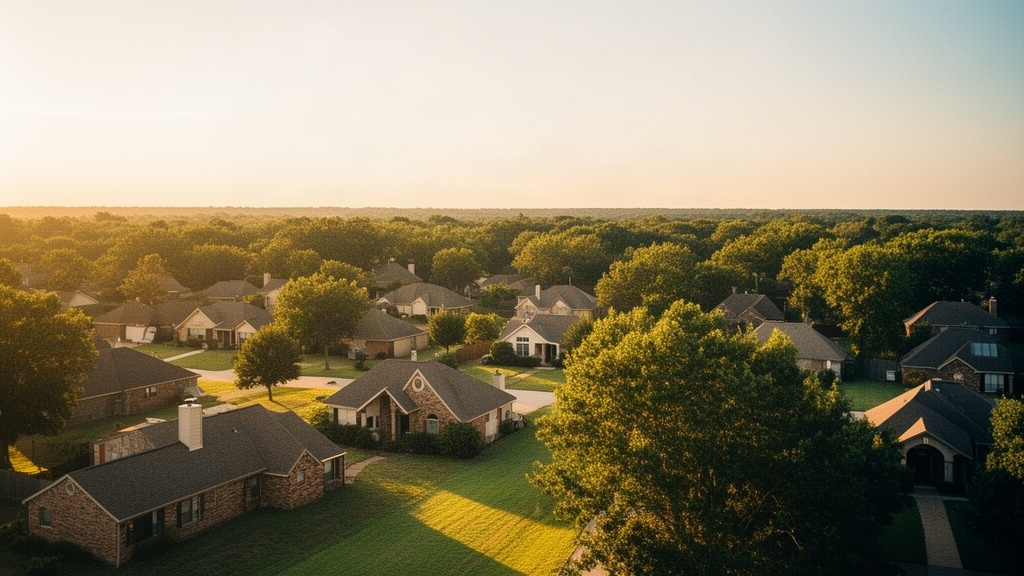
Downtown Lebanon is the oldest and most architecturally varied part of the city. While newer subdivisions on Lebanon's north and west sides feature tract homes built in the 2000s and 2010s, the blocks closest to Main Street and the commercial core contain homes that date from the 1890s through the mid-20th century. That mix of Craftsman bungalows, Victorian-era farmhouses, and modest mid-century ranches gives the area a texture you simply do not find in Lebanon's newer growth corridors.
The Housing Stock You Will Actually Find
Lot sizes near downtown tend to run smaller than in Lebanon's outlying areas, typically between 5,000 and 9,000 square feet, though corner lots and double lots do appear from time to time. Homes are predominantly two and three bedroom single-family residences, with square footage commonly ranging from around 900 to 1,800 square feet. Larger Victorian-era homes occasionally exceed 2,000 square feet, and these tend to attract buyers interested in renovation projects or historic character.
Condition varies considerably block to block. Some properties have been fully updated with modern kitchens, new roofs, and upgraded electrical panels. Others are original condition homes that present an opportunity for buyers willing to put in work. A buyer's inspection is especially important in this part of Lebanon, where deferred maintenance on older homes is common and foundation conditions can differ significantly even between neighboring properties.
Streets, Blocks, and What Is Nearby
The commercial heart of Lebanon runs along Main Street between 2nd and 7th Streets. Residential blocks begin immediately north and south of that corridor. The Santiam River forms a natural boundary to the south, and Cheadle Lake Regional Park sits within a short drive to the northwest, giving downtown residents easy access to trails, fishing, and open water without leaving the Lebanon city limits. Cascade Community Hospital is located on the city's south side, less than two miles from the downtown core, and the Lebanon Public Library anchors the civic block on 5th Street.
2. Downtown Lebanon Home Prices: What the Numbers Show Right Now
Lebanon's citywide median home price has been trending upward through 2026. As reported in the Corvallis Advocate, Lebanon home prices have risen while some neighboring Linn County markets have seen slight softening, a pattern that reflects Lebanon's relative affordability compared to Corvallis and the continued demand from buyers priced out of larger Willamette Valley cities. You can review the underlying data in that Corvallis Advocate market report for additional context on how Lebanon fits into the broader mid-valley picture.
Median Prices and Price Per Square Foot
As of September 2026, Lebanon's overall median sale price is hovering in the low-to-mid $300,000s, with the downtown and near-downtown pocket generally running slightly below the citywide median. That discount exists because older homes in the core often carry deferred maintenance costs and smaller lot sizes. Price per square foot in the downtown area typically falls between $175 and $215 depending on condition, with fully renovated properties pushing toward the upper end and original-condition homes sitting at the lower end. A turn-key three-bedroom Craftsman on a quiet block north of Main Street will price differently than a similar-sized home that needs a new roof and updated plumbing.
Entry-level buyers can still find properties in the $240,000 to $280,000 range in the downtown core, though these homes typically require meaningful updates. Move-in-ready homes in the same area have been listing and selling in the $310,000 to $360,000 range through 2026. Larger Victorian properties with original detail work and significant square footage have occasionally transacted above $400,000 when condition and location align. For a current snapshot of active listings and recent sold data, the Lebanon real estate market report tracks quarterly MLS data and is worth bookmarking if you are monitoring the market closely.
How Downtown Compares to Lebanon's Outer Neighborhoods
Newer subdivisions on Lebanon's north and west sides, particularly the areas developed after 2000 near Stoltz Hill Road and Airport Road, tend to carry slightly higher median prices than the downtown core. Those homes offer larger square footage, two-car garages, and newer mechanical systems, which appeals to buyers who prioritize low maintenance. The tradeoff is that they lack the lot character, mature trees, and walkable proximity to Main Street amenities that older downtown properties offer. Both segments of Lebanon's market have seen price appreciation through 2026, but the drivers differ.
Understanding which part of Lebanon fits your priorities is one of the most important early decisions in any home search here. If you are weighing the tradeoffs between downtown Lebanon's older housing stock and the city's newer residential areas, the breakdown in the broader Lebanon housing market buyers vs. sellers guide walks through how those dynamics are playing out right now.
3. Neighborhood Zones Around Downtown Lebanon
Downtown Lebanon is not a single uniform neighborhood. The blocks immediately adjacent to Main Street have a different character than the residential streets four or five blocks out, and the areas east of downtown near the industrial corridor behave differently still. Knowing these distinctions helps buyers set realistic expectations and helps sellers price accurately.
The Core Blocks Near Main Street
The blocks immediately north and south of Main Street, roughly between 2nd and 8th Streets, represent Lebanon's most walkable residential zone. Residents here can walk to the post office, the Lebanon Farmers Market (held seasonally on Main Street), local diners, and the Lebanon Aquatic Center on 5th Street. Homes on these blocks are dense by Lebanon standards, with narrow lots and homes set close to the street. Alley access is common, and many properties have detached garages or carports accessed from the rear. This is where you find the highest concentration of pre-1940 housing in the entire city.
The Transition Zones: North and South of Downtown
Moving north from the core, the residential character gradually shifts toward slightly larger lots and a higher proportion of mid-century homes from the 1950s and 1960s. Streets like Oak, Maple, and Sherman in the blocks north of Grant Street have a quieter, more established feel with mature Douglas firs and oaks lining the sidewalks. These homes often have full basements, which is notable in a region where slab-on-grade construction is also common. Prices in this transition zone tend to run close to or slightly above the immediate downtown core because lot sizes are more generous.
South of Main Street, the residential blocks run toward the Santiam River. This area includes some of Lebanon's most historically significant homes, including several large two-story properties built in the late 1800s and early 1900s. River proximity adds scenic appeal but buyers should confirm flood zone status for any property in this corridor. FEMA flood maps and the City of Lebanon's public works department are the right resources for that research.
East Lebanon and the Industrial Edge
East of about 10th Street, the downtown residential zone begins to give way to light industrial and commercial uses. Lebanon has a meaningful manufacturing and timber-processing presence, and some of those facilities sit within a mile of the easternmost downtown residential blocks. Homes in this transition area are typically priced at the lower end of the downtown range, reflecting the mixed-use surroundings. Buyers who prioritize quiet residential streets should focus their search west of this boundary.
4. Timing the Downtown Lebanon Market: When to Buy and When to Sell
Timing in Lebanon's market follows patterns common to the broader Willamette Valley, but the downtown segment has its own inventory quirks. Because the pool of downtown homes is small relative to the rest of the city, a single listing can shift the apparent supply picture significantly. That makes it important to track active inventory week by week rather than relying solely on monthly averages.
Seasonal Patterns in Lebanon's Market
Spring, from March through June, is historically the most active listing season in Lebanon. Sellers list in higher numbers, buyers are most active, and competition for well-priced downtown homes tends to be sharpest during this window. Multiple-offer situations on updated properties in the $300,000 to $350,000 range have occurred in recent spring cycles. Summer brings continued activity, though buyer fatigue and vacation schedules can slow things slightly by August.
Fall, including September and October, presents a practical window for buyers. Sellers who listed in spring and summer and did not close are often more willing to negotiate on price or terms. Inventory that has sat for 60 or more days is more common in fall than in spring. For sellers, listing in September rather than waiting until November or December typically yields better results, as winter listings in Lebanon tend to sit longer and attract lower offers due to reduced buyer activity during the holiday months.
What Inventory Levels Mean for Your Decision
Lebanon's downtown housing stock turns over slowly. In a given month, it is not unusual to see only three to six active listings within the core downtown blocks. That limited supply means buyers need to be prepared to move quickly when a well-priced property appears, particularly in the $280,000 to $340,000 range where demand is strongest. Pre-approval letters and a clear understanding of your priorities before you start touring homes will give you a meaningful advantage.
For sellers, low inventory is generally favorable, but condition and pricing still matter enormously in this market. Overpriced downtown homes do sit, even when overall supply is tight. Buyers in Lebanon are comparing downtown properties directly against newer homes in the city's outer neighborhoods, so a downtown listing priced as if it were fully renovated when it is not will lose that comparison every time. For a deeper look at how to price and time a sale in Lebanon, the guide on selling a home in Lebanon, Oregon covers the full process.
5. Commutes, Amenities, and Practical Details for Downtown Lebanon
Practical daily-life details matter as much as price when you are choosing a home in a specific part of a city. Here is what downtown Lebanon actually looks like from a commute and amenity standpoint.
Getting Around From Downtown Lebanon
Lebanon sits at the intersection of US Highway 20 and Oregon Route 34, making it accessible to the broader mid-valley without requiring freeway travel. From downtown Lebanon, the drive to Corvallis via Highway 34 runs approximately 25 to 30 minutes under normal conditions, covering about 25 miles. Albany is roughly 20 miles to the northwest via Highway 20, a drive that typically takes 20 to 25 minutes. Employees at Samaritan Lebanon Community Hospital, Lebanon School District facilities, or manufacturing employers along 2nd Street can often commute entirely within the city.
For buyers who work in the Eugene or Salem metro areas, Lebanon's position is less central. Eugene is approximately 45 miles south on I-5, typically a 45 to 55 minute drive from downtown Lebanon depending on traffic. Salem is roughly 50 miles north, a similar drive. These are workable commutes for some buyers, but they are worth factoring into any relocation decision. Lebanon does not currently have direct intercity transit connections to those metros.
Parks, Services, and Daily Life
Downtown Lebanon residents have several parks within walking or biking distance. Ralston Park sits just north of the downtown core and includes open lawn space and picnic areas. The Santiam River corridor to the south offers informal access points for fishing and walking. Cheadle Lake Regional Park, managed by Linn County, is about a mile and a half northwest of downtown and features a lake, disc golf, paved walking paths, and a boat launch. It is one of the most-used outdoor spaces in the Lebanon area.
Daily errands are manageable from downtown Lebanon without leaving the city. There is a Fred Meyer on the south side of Lebanon and a Bi-Mart on the west side, both within a five-minute drive of the downtown core. The Lebanon Farmers Market, running seasonally on Main Street, provides a local produce option within walking distance for downtown residents. Medical services are anchored by Samaritan Lebanon Community Hospital on Santiam Highway, and a range of specialty clinics operate throughout the city.
For buyers relocating to Lebanon from outside the area, it helps to understand the full picture of what the city offers before narrowing to a specific neighborhood. The guide on homes for sale in Lebanon, Oregon covers the broader buying process and what to expect when touring properties across different parts of the city.
FAQ
What is the typical price range for a home in downtown Lebanon, Oregon right now?
As of September 2026, downtown Lebanon homes are generally selling in the $240,000 to $380,000 range depending on condition, size, and exact location within the core. Original-condition homes requiring updates tend to fall at the lower end, while fully renovated properties with updated kitchens, new roofs, and modernized systems push toward the upper end. Price per square foot in the downtown area currently runs between roughly $175 and $215. Larger Victorian-era homes with significant square footage have occasionally sold above $400,000 when condition and location align. These figures reflect the downtown and near-downtown pocket specifically; Lebanon's newer subdivisions on the north and west sides carry somewhat different pricing dynamics.
Is downtown Lebanon, Oregon a good area to buy an older home?
Downtown Lebanon has a high concentration of pre-1940 and mid-century homes that offer architectural character you will not find in the city's newer subdivisions, including Craftsman bungalows, Victorian-era farmhouses, and early ranch-style homes. That said, older homes in any market require careful due diligence. A thorough inspection by a licensed home inspector is essential, with particular attention to foundations, electrical panels, plumbing materials, and roof condition. Some downtown Lebanon properties have been well maintained or fully renovated; others carry decades of deferred maintenance. The price you pay should reflect the actual condition of the home, not just its age or style. Working with an agent who knows the downtown inventory well helps you avoid overpaying for a property that looks appealing but carries significant hidden costs.
When is the best time of year to buy or sell a home in downtown Lebanon, Oregon?
Spring, from March through June, is the most active period in Lebanon's market, with the most listings and the most buyer competition. Sellers who list in spring typically see the fastest sales and strongest offers, particularly for well-priced, move-in-ready homes. Buyers face more competition during this window but also have the most choices. Fall, including September and October, can be a practical buying opportunity because sellers who did not close in spring or summer are often more negotiable on price and terms. Winter listings in Lebanon tend to sit longer and attract lower offers. If you are selling a downtown property, listing before November gives you a meaningful advantage over waiting until the following spring.