← Back to Blog
Neighborhoods
Relocating to Lafayette LA: Neighborhoods, Costs, Timelines
By Shayla Lange, Licensed Real Estate Agent
EXP Realty
September 10, 2026 · 12 min read
Relocating to Lafayette, LA involves more decisions than just picking a zip code. This guide covers the neighborhoods you will actually be choosing between, what homes cost right now in September 2026, what your buying timeline realistically looks like, and the practical details that most relocation articles skip entirely.
1. What Makes Lafayette Worth the Move
Lafayette pulls in relocating buyers for concrete reasons. The city sits at the center of Acadiana, a region of south-central Louisiana that runs from the Atchafalaya Basin to the Gulf Coast prairie. It is the fourth-largest city in Louisiana, with a metro population around 500,000, and it functions as a regional hub for healthcare, energy, and food manufacturing. That economic foundation creates steady demand for housing and keeps the job market more diversified than many comparably sized cities.
The Economy and Job Market
Lafayette's largest employers include Our Lady of Lourdes Regional Medical Center, Lafayette General Health, the University of Louisiana at Lafayette, LHC Group, and a cluster of oil and gas service companies. The University of Louisiana at Lafayette enrolls roughly 17,000 students and is one of the larger research universities in the Gulf South, which keeps a steady flow of academic and research employment in the city. The Port of Port Fourchon, about 90 miles south, also connects Lafayette to offshore energy logistics, making the city a practical base for workers in that sector.
For a broader picture of Lafayette's economic profile, Forbes covers the city's cost of living, economy and neighborhood breakdown in a detailed overview that is worth reading before you finalize your decision.
Cost of Living Context
Lafayette consistently ranks below the national average on cost of living. Housing is the biggest driver of that gap. You can buy a solid three-bedroom, two-bath home in established Lafayette neighborhoods for well under the national median home price, and you get considerably more square footage per dollar than you would in comparable metros like Austin, Nashville, or Charlotte. Groceries, dining, and entertainment also run lower than the national average, which matters when you are building a household budget after a move.
2. Lafayette Neighborhoods: What Each Area Actually Looks Like
When relocating to Lafayette, LA, most buyers narrow their search to four broad corridors. Each one has a distinct housing stock, price range, and daily-life feel. Understanding the differences before you start touring saves significant time.
South Lafayette and the Youngsville Corridor
The south side of Lafayette, extending into the city of Youngsville, has seen the most concentrated new construction in the metro over the past decade. Subdivisions like River Ranch, Couret Farms, and Copper Crossing sit in this corridor, offering homes built mostly between 2005 and the present. Lot sizes tend to run smaller in the planned communities closer to the city, while Youngsville proper still has some larger parcels. Pinhook Road and Kaliste Saloom Road are the main commercial arteries, lined with restaurants, grocers, and medical offices. The drive from the Youngsville area to downtown Lafayette typically runs 15 to 25 minutes depending on traffic on Ambassador Caffery Parkway.
If you want more detail on the buying process specific to this corridor, the article on buying a home in the Youngsville area of Lafayette walks through the steps, costs, and timeline in depth.
Oil Center and Midtown
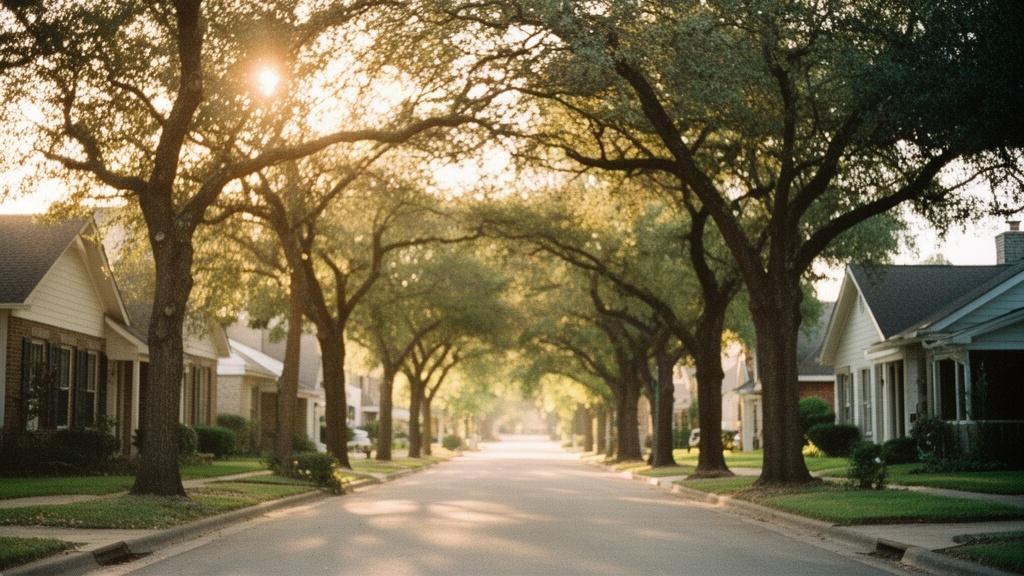
The Oil Center is Lafayette's original commercial district, developed in the 1950s when the oil industry was expanding rapidly through south Louisiana. The neighborhoods surrounding it, including areas along Johnston Street and toward the University of Louisiana campus, feature mid-century ranch homes, brick construction, mature live oak canopies, and larger lots than you typically find in newer subdivisions. Homes here range from modest 1,400-square-foot cottages to substantial four-bedroom properties on half-acre lots. The area puts you within a ten-minute drive of the UL campus, downtown, and most of the city's major hospitals.
North Lafayette and Carencro
North Lafayette and the adjacent city of Carencro offer some of the most affordable entry points in the metro. You will find a mix of older single-family homes, newer construction in subdivisions like Copper Mill and Heritage, and larger rural-style lots once you cross into Carencro proper. Interstate 49 runs through this corridor, which makes commuting north toward Opelousas or south into central Lafayette straightforward. The area around Carencro High Road and the Carencro town center has seen commercial growth in recent years, with more retail and dining options opening along the I-49 service road.
Scott, Broussard and the Surrounding Communities
Scott sits directly west of Lafayette along I-10, and Broussard lies about eight miles to the south along Highway 90. Both are incorporated cities with their own municipal services, lower property tax millage rates in some cases, and housing stock that skews toward newer construction and larger lots. Scott is known for its Cajun music heritage and the annual Scott Boudin Festival. Broussard has grown considerably since 2015, with new subdivisions along the Highway 182 and Albertson Parkway corridors. Commute times from both cities into central Lafayette run roughly 15 to 30 minutes by car.
3. What Homes Cost in Lafayette Right Now
Lafayette home prices in September 2026 sit in a range that remains more accessible than most Sun Belt metros. The market has seen moderate appreciation over the past two years, driven by in-migration from higher-cost states and consistent local demand. Here is a practical breakdown by area and price tier.
Price Ranges by Area
- South Lafayette and River Ranch: Entry-level condos and townhomes start around $200,000. Single-family homes in River Ranch typically range from $350,000 to well over $700,000 depending on size and proximity to the waterway amenities. New construction in Youngsville runs $280,000 to $500,000 for most production builds.
- Oil Center and Midtown: Older brick ranch homes in good condition typically list between $200,000 and $380,000. Renovated or larger properties on bigger lots can push past $500,000. This area offers strong value for buyers who want square footage and lot size over brand-new finishes.
- North Lafayette and Carencro: The most affordable corridor in the metro. Starter homes can be found from $150,000 to $230,000. Newer subdivisions in Carencro list from $220,000 to $340,000 for three and four-bedroom homes.
- Broussard: New construction subdivisions here list predominantly between $260,000 and $450,000. Larger custom builds on bigger lots push higher. Resale inventory is more limited than in Lafayette proper because so much of the housing stock is relatively new.
- Scott: Resale homes typically range from $175,000 to $310,000. The area offers good value for buyers who commute west toward Crowley or Jennings, or who work along the I-10 corridor.
For a deeper look at current price movements across the metro, the article on Lafayette home prices right now in September 2026 covers the data in detail.
Additional Costs to Budget For
Louisiana has some cost line items that surprise buyers relocating from other states. Homeowner's insurance is the biggest one. Because Lafayette Parish sits in a hurricane-prone region and experienced significant flooding during the 2016 flood event, insurers price Louisiana policies considerably higher than the national average. Wind and hail coverage, flood insurance through FEMA's National Flood Insurance Program, and standard homeowner's coverage are often purchased separately, and the combined annual cost on a $300,000 home can run $4,000 to $8,000 or more depending on flood zone designation and the home's elevation certificate.
Property taxes in Lafayette Parish are relatively low compared to most of the country. Louisiana's homestead exemption removes the first $75,000 of assessed value from your tax bill on a primary residence, which meaningfully reduces the annual tax burden. The article on property taxes on a $300,000 home in Lafayette Parish breaks down exactly what you will owe and how the homestead exemption applies.
4. Your Relocation Timeline: From Decision to Closing
Most out-of-state buyers closing on a Lafayette home take between 60 and 120 days from their first serious research conversation to the day they get keys. The range depends on how quickly you can visit in person, how competitive the price tier you are shopping in is, and whether you need to sell a home in another state before you can buy. Here is how that timeline typically breaks down.
Phase One: Research and Pre-Approval (Weeks 1 to 4)
Start by getting pre-approved with a lender before you tour a single home. Pre-approval takes one to five business days once you submit your documents, and it tells you your actual budget rather than an estimate. During this phase, use virtual tours and satellite mapping to narrow your neighborhood focus. Lafayette's grid is not complicated, but the difference between the Kaliste Saloom corridor and the Verot School Road corridor matters in daily life, so study commute routes to your workplace before you visit.
Plan at least one in-person visit to Lafayette during this phase, ideally a long weekend where you can drive the neighborhoods at different times of day, visit the Cajundome area, walk the Vermilionville living history museum grounds, and get a feel for the scale of the city. Lafayette is compact enough that you can cover most of the key areas in two days of driving.
Phase Two: Active Search and Offer (Weeks 4 to 8)
With a pre-approval letter and a clear neighborhood target, most buyers find their home within two to six weeks of active searching. In the under-$300,000 price range, well-priced homes in Lafayette move quickly, sometimes receiving multiple offers within the first weekend. In the $350,000 to $500,000 range, you typically have more time but still need to be ready to move within a few days of a listing hitting the market. Above $600,000, inventory sits longer and buyers generally have more negotiating room.
Once your offer is accepted, Louisiana uses a standard purchase agreement that includes a due diligence period for inspections. Budget for a general home inspection ($350 to $500), a termite inspection ($75 to $150), and potentially an elevation certificate review if the home is in or near a flood zone. These inspections happen within the first ten to fifteen days after contract execution.
Phase Three: Contract to Close (Weeks 8 to 14)
Louisiana closings go through a notary rather than a title company, which is a meaningful difference from most other states. The notary prepares the act of sale, handles the title search, and officiates the closing. Your lender will order an appraisal during this phase, which typically takes one to two weeks to complete. Conventional loan closings in Lafayette generally run 30 to 45 days from contract to close. FHA and VA loans can take 45 to 60 days. Cash purchases can close in as little as two weeks.
- Closing costs for buyers: Typically 2% to 4% of the purchase price in Louisiana, covering lender fees, title/notary fees, prepaid insurance, and escrow setup.
- Transfer taxes: Louisiana does not have a state deed transfer tax, which saves buyers money compared to states like Florida or Georgia.
- Homestead exemption filing: You must file for the homestead exemption with the Lafayette Parish Assessor's Office after closing. The deadline is December 31 of the year you purchase. Missing it costs you a full year of the tax benefit.
5. Practical Details Most Relocation Guides Skip
Relocating to Lafayette, LA means adapting to a few realities that do not show up in most city overview articles. Knowing them before you arrive makes the transition considerably smoother.
Commute Times and Getting Around
Lafayette is a driving city. There is no commuter rail and public bus service is limited, so your daily commute will almost certainly be by car. The good news is that the city is compact: driving from one end of Lafayette to the other on a non-peak hour takes about 20 minutes. The congestion points are predictable: Ambassador Caffery Parkway between Pinhook and Kaliste Saloom during morning and evening rush, and the I-10 interchange near the Evangeline Thruway. If your job is in the Medical Center District on Ambassador Caffery, living on the south side cuts your commute to under ten minutes.
Baton Rouge is 56 miles east on I-10, roughly a 55-minute drive in normal traffic. New Orleans is 136 miles east, about a two-hour drive. Both cities are realistic for occasional trips but not for daily commuting.
Utilities, Insurance and Louisiana-Specific Costs
Electricity bills in Lafayette run higher than the national average during summer months. June through September in south Louisiana means sustained heat and humidity, and air conditioning runs almost continuously. A 2,000-square-foot home with a standard HVAC system might run $200 to $350 per month in electricity during peak summer. Cleco and Entergy serve most of the Lafayette area. Natural gas service is available in many neighborhoods and tends to be more economical for water heating and cooking.
Flood zone designation is one of the most important things to verify before making an offer on any Lafayette home. Homes in FEMA Special Flood Hazard Areas (Zone AE) require flood insurance as a condition of most mortgage approvals, and premiums can add $1,500 to $4,000 or more per year to your housing costs. Homes with an elevation certificate showing they sit above the base flood elevation qualify for significantly lower rates. Ask for the elevation certificate on any home you are seriously considering.
Schools and How to Research Them
School assignment in Lafayette Parish is based on attendance zones tied to your home address. The Lafayette Parish School System operates public schools throughout the parish, and there are also charter schools, magnet programs, and private schools across the metro. Because school selection is a personal decision that depends on your household's specific priorities, the right approach is to research directly using the Lafayette Parish School System's own attendance zone maps. Shayla Lange can tell you which school zone a specific property falls in.
The Lafayette Economic Development Authority's official relocation guide includes a section on education resources and links to the relevant parish and state agencies, which is a useful starting point for families researching their options.
For a broader look at how Lafayette's neighborhoods compare on inventory and pricing right now, the article on which Lafayette zip codes have the most homes for sale this month gives you a current snapshot of where supply is concentrated.
FAQ
How long does it realistically take to buy a home when relocating to Lafayette, LA from another state?
Most out-of-state buyers take between 60 and 120 days from their first serious research step to closing day, depending on how quickly they can visit Lafayette in person, how fast their financing comes together, and whether they need to sell a home elsewhere first. Getting pre-approved before your first visit eliminates one of the biggest delays. Louisiana's notary-based closing process is efficient once the contract is signed, and conventional loan closings typically run 30 to 45 days from accepted offer to keys. If you are flexible on timing and can visit Lafayette for a focused search trip, the active house-hunting phase can move quickly, especially if you are shopping above the $350,000 price point where inventory is less competitive.
What is the biggest financial surprise for people relocating to Lafayette, LA?
Homeowner's insurance is the cost that catches most out-of-state buyers off guard. Because south Louisiana sits in a hurricane-risk zone and parts of Lafayette Parish are in FEMA flood zones, insurance costs are significantly higher than buyers from the Midwest or Mountain West are used to paying. On a $300,000 home, the combined cost of wind, homeowner's, and flood insurance can run $4,000 to $8,000 per year or more, depending on the property's flood zone designation and elevation. The best way to get an accurate picture before you make an offer is to request the home's elevation certificate and run it by a local insurance agent for a quote. Shayla Lange can connect you with local agents who specialize in Louisiana coverage.
Do I need to visit Lafayette in person before making an offer, or can I buy remotely?
Remote purchases happen in Lafayette, but they carry real risk if you skip the in-person visit entirely. The difference between a home that photographs well and one that suits your daily life is often something you only understand after driving the neighborhood at 7 AM and 5 PM, checking the drainage of the lot after rain, and getting a sense of the surrounding streets. That said, Shayla Lange can conduct live video walkthroughs of properties, provide detailed neighborhood context, and help you evaluate a home remotely if your schedule does not allow an early visit. The inspection period after contract signing also gives you time to fly in and see the property before you are fully committed. Most buyers who purchase remotely in Lafayette do at least one in-person visit during the inspection phase.