← Back to Blog
Market Trends
The Spring Mills Area of Martinsburg, West Virginia Real Estate Market Guide: Prices, Neighborhoods and Timing
By Sunny Singh
September 14, 2026 · 10 min read
The Spring Mills area of Martinsburg, West Virginia has become one of the most closely watched pockets of Berkeley County real estate, drawing buyers from the Eastern Panhandle and beyond with its mix of newer construction, accessible pricing, and proximity to Interstate 81. This guide covers current prices, what the housing stock actually looks like, how the local market has been moving as of September 2026, and what buyers and sellers need to know about timing a transaction here.
1. What Is the Spring Mills Area and Where Does It Sit in Martinsburg?
Spring Mills sits on the eastern and southeastern edge of Martinsburg in Berkeley County, West Virginia. The area is anchored by the Spring Mills Road corridor and spreads across a cluster of subdivisions that developed primarily from the late 1990s onward, making it one of the more recently built-out sections of the Martinsburg metro. It is not a single neighborhood with a formal boundary but rather a collection of planned communities and subdivisions that share a zip code (25403) and a common character.
Geography and Access
Interstate 81 is the primary artery connecting Spring Mills to the rest of the Eastern Panhandle and beyond. The interchange at Exit 16 places most Spring Mills addresses within five to ten minutes of the highway, which matters enormously for the large share of residents who commute north toward Hagerstown, Maryland, or south toward Winchester, Virginia. The Martinsburg MARC station, which runs commuter rail service toward Washington, D.C., is roughly a ten-minute drive from most Spring Mills subdivisions. For a full breakdown of commute times from Martinsburg to D.C. by both train and car, see the dedicated guide on commute times from Martinsburg WV to Washington DC.
Spring Mills Road itself runs roughly north-south and connects directly to Martinsburg Pike, giving residents a surface-road route into downtown Martinsburg in about fifteen minutes under normal traffic conditions. The area is also close to the Eastern Gateway Shopping Center and the Foxcroft Town Centre retail corridor on U.S. Route 11, so groceries, restaurants, and everyday services are within a short drive.
What the Neighborhood Physically Looks Like
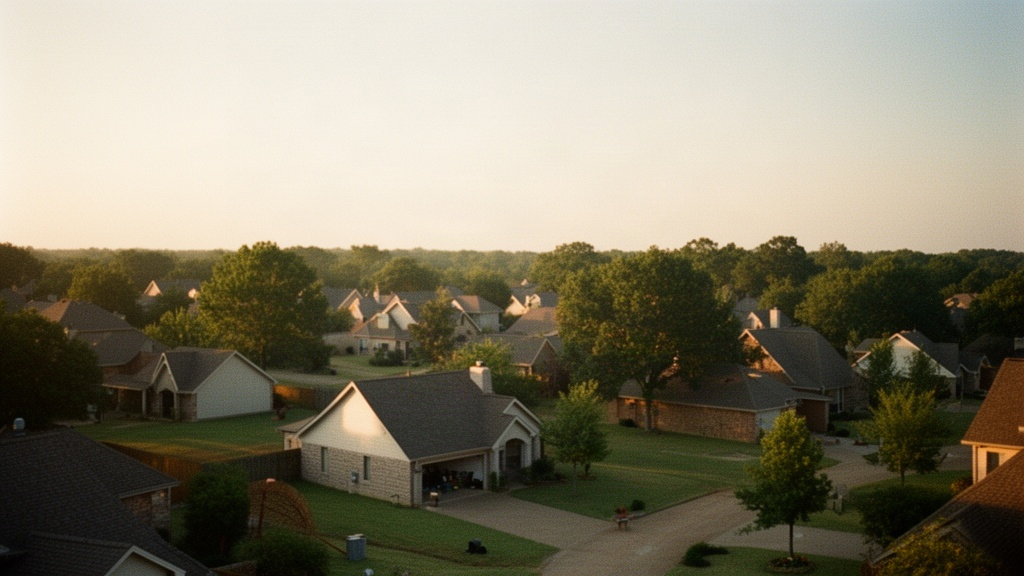
The Spring Mills area is defined by planned residential subdivisions on gently rolling terrain. Streets are laid out in curvilinear patterns typical of late-1990s and 2000s suburban development, with sidewalks, street lighting, and community common areas. Many subdivisions include ponds, walking paths, and small pocket parks. The visual character is consistent: vinyl-sided colonials, craftsman-style townhouses, and brick-front single-family homes on lots ranging from roughly a quarter acre to just under half an acre in the larger detached sections.
2. Spring Mills Real Estate Prices Right Now
As of September 2026, single-family homes in the Spring Mills area of Martinsburg are selling in a range of roughly $285,000 to $420,000, with the median for detached homes sitting near $340,000. Townhouses and end-unit row homes, which make up a meaningful share of the Spring Mills inventory, are trading in the $230,000 to $300,000 range depending on square footage, finish level, and whether the unit has a finished basement. These figures represent a continued upward trend from where the 25403 zip code was trading in early 2025, driven by sustained demand and limited resale inventory.
For a broader look at what home prices are doing across all of Martinsburg right now, the September 2026 Martinsburg home prices guide provides city-wide context that helps put Spring Mills numbers in perspective.
Current Price Ranges by Home Type
- Detached single-family homes (3 bed, 2 bath, under 1,800 sq ft): Typically $285,000 to $330,000 in September 2026, depending on lot position and updates.
- Detached single-family homes (4 bed, 2.5 bath, 2,000 to 2,600 sq ft): Most commonly listed and sold in the $330,000 to $390,000 range; homes with finished basements push toward $410,000.
- Larger detached homes (over 2,600 sq ft, premium lots): Priced from $390,000 into the low $420,000s, occasionally higher for fully upgraded builds.
- Interior townhouses (2-3 bed): Selling in the $230,000 to $265,000 range in most Spring Mills communities.
- End-unit townhouses (3 bed, finished lower level): Frequently closing between $270,000 and $300,000 as of September 2026.
How Spring Mills Prices Compare to the Broader Martinsburg Market
Spring Mills generally trades at a modest premium over older Martinsburg neighborhoods closer to downtown, reflecting the newer construction, community infrastructure, and the appeal of planned subdivision amenities. Homes in the 25401 zip code covering central and downtown Martinsburg often come in $20,000 to $50,000 below comparable square footage in Spring Mills, though those properties frequently sit on larger in-fill lots and offer different architectural character. The trade-off is real: buyers in Spring Mills are paying for newer systems, HOA-maintained common areas, and consistent streetscapes.
According to market data reviewed in the 2026 real estate market update for Jefferson and Berkeley County, Berkeley County as a whole has seen continued price appreciation through 2026, with demand remaining strong from out-of-state buyers relocating from Northern Virginia and Maryland. Spring Mills, as one of the most recognizable and accessible pockets of Berkeley County, sits squarely in the path of that demand.
3. Housing Stock and Subdivisions in the Spring Mills Area
The Spring Mills area contains a mix of established resale communities built between roughly 1998 and 2015, alongside pockets of newer construction that have continued to deliver homes through 2025 and into 2026. This layering of build years means buyers can find homes at different price points and finish levels within a relatively compact geographic footprint.
New Construction vs. Resale Inventory
New construction in the Spring Mills corridor has slowed compared to its peak years in the mid-2000s and again in the early 2020s, but builders have not exited the area entirely. Several smaller infill phases within existing communities have delivered new homes in 2025 and 2026, typically priced from the mid-$350,000s for entry-level detached plans. Buyers purchasing new construction in this area should budget carefully for lot premiums, upgrade packages, and the fact that landscaping, window treatments, and finishing touches are rarely included in the base price.
Resale inventory in Spring Mills has been tight throughout 2026. Homes that are priced accurately and show well are moving quickly, often within two to three weeks of listing. Buyers who have been watching this market and waiting for prices to soften have generally found that well-located Spring Mills homes do not sit long. For a current snapshot of how long homes are staying on the market across Martinsburg, including Spring Mills, the article on how long homes are sitting on the market in Martinsburg WV has the latest figures.
Lot Sizes, Architecture and Community Amenities
Lot sizes in Spring Mills subdivisions vary considerably by community and build era. Earlier phases of development, particularly those built in the late 1990s and early 2000s, tend to have larger lots, sometimes a third to half an acre, with mature trees and established landscaping. Phases built after 2010 often feature tighter lot configurations, sometimes under a quarter acre, in exchange for more square footage inside the home itself. Buyers who prioritize outdoor space should look at the older phases; buyers who want more finished living area for the dollar often find better value in the newer builds.
Most Spring Mills subdivisions are governed by homeowners associations. HOA fees in the area typically run between $40 and $120 per month depending on the community, and they generally cover common area maintenance, pond upkeep, and in some communities, a clubhouse or tot lot. Before making an offer, it is worth reviewing the HOA documents carefully, since restrictions on fencing, exterior paint colors, parking, and short-term rentals vary by community. The guide on HOA fees and rules in Martinsburg's new subdivisions covers what to look for before you sign.
Architecturally, Spring Mills is dominated by colonial two-story homes with attached two-car garages, vinyl or brick-front exteriors, and open-concept main floors. Craftsman-influenced designs became more common in communities built after 2010, with covered front porches and board-and-batten accents. Ranch-style single-level homes exist but are less common and tend to carry a premium because of their scarcity in the area.
4. Market Conditions and Timing in Spring Mills
The Spring Mills area of Martinsburg, West Virginia is currently operating in a seller-leaning market, though conditions have moderated from the extreme imbalance seen in 2021 and 2022. Buyers have more negotiating room than they did two years ago, but well-priced homes in desirable Spring Mills communities are still receiving multiple offers within the first week of listing.
How Fast Homes Are Moving
In September 2026, correctly priced detached homes in Spring Mills are going under contract in roughly 14 to 21 days on average. Townhouses are moving slightly faster in some cases, particularly in the $240,000 to $270,000 range where buyer demand from first-time purchasers and downsizers is concentrated. Homes priced above $390,000 are sitting a bit longer, averaging 25 to 35 days before going under contract, as that price point involves a smaller pool of qualified buyers.
Overpriced listings are being corrected by the market quickly. Homes that debut $15,000 or more above what comparable sales support are accumulating days on market and eventually requiring price reductions, which can stigmatize a listing and result in a lower final sale price than a correctly priced debut would have achieved. This is a consistent pattern across the Spring Mills area in 2026 and is worth understanding whether you are buying or selling.
Seasonal Patterns and When to Act
Spring Mills follows the broader Martinsburg seasonal pattern: the highest volume of new listings hits the market between March and June, and buyer activity peaks in April and May. September, which is where the market sits right now, represents a secondary window of activity. Buyers who missed the spring rush often re-enter the market in late summer and early fall, and sellers who list in September can still capture serious, motivated buyers before the holiday slowdown begins in November.
For sellers, listing in September 2026 means less competition from other sellers than in the spring peak, which can work in your favor if your home is well-prepared and priced correctly. For buyers, the fall window sometimes surfaces homes that did not sell in the spring and have been reduced, as well as new listings from sellers who need to move before year-end. Neither season is universally better; the right time to transact in Spring Mills is when your financial position and personal circumstances align with what the inventory offers.
5. What Buyers and Sellers Should Know Before Transacting in Spring Mills
Whether you are buying or selling in the Spring Mills area of Martinsburg, the details of how you approach the transaction matter as much as the market conditions themselves. This section covers the practical considerations that most commonly affect outcomes in this specific submarket.
Buyer Considerations
Pre-approval is non-negotiable in Spring Mills right now. Sellers in this area receive offers from buyers who have done their homework, and a pre-approval letter from a recognized lender is the baseline expectation before an offer is taken seriously. Buyers using VA loans, which are common in this market given the proximity to Martinsburg's veteran community and the draw of buyers from military installations in the broader region, should confirm their lender has experience closing VA transactions efficiently, since timeline matters in competitive situations.
Budget for closing costs in addition to your down payment. In Berkeley County, buyers typically pay between 2% and 4% of the purchase price in closing costs, which on a $340,000 Spring Mills home works out to roughly $6,800 to $13,600. The full breakdown of what those costs include is covered in the guide on closing costs when buying a house in Martinsburg, West Virginia.
Property taxes in Berkeley County are relatively low compared to neighboring Maryland counties, which is a meaningful factor for buyers relocating from the Washington metro area. On a $340,000 Spring Mills home, the annual property tax bill is generally in the range of $1,200 to $1,700 depending on the exact assessed value and applicable exemptions. For a detailed calculation, the article on property tax rates in Martinsburg, West Virginia walks through the math on a $300,000 home.
Seller Considerations
Presentation is the single biggest lever sellers control in Spring Mills. Because so many homes in this area share similar floor plans and exterior styles, the ones that stand out are those that have been well-maintained, decluttered, and photographed professionally. Buyers comparing two similar colonials in adjacent subdivisions will gravitate toward the one that photographs better online, since most buyer searches now begin on mobile devices with photo-first browsing.
Pricing strategy requires a granular look at comparable sales within Spring Mills specifically, not just broad Martinsburg averages. A home in one Spring Mills subdivision can command a different price per square foot than a nearly identical home two streets away in a different community, based on factors like pond views, proximity to the community entrance, HOA fee differences, and the age of major systems. A comp-by-comp analysis of recent Spring Mills sales is the foundation of any sound pricing decision.
FAQ
What zip code covers the Spring Mills area of Martinsburg, WV?
The Spring Mills area of Martinsburg is primarily served by the 25403 zip code, which covers the southeastern portion of Berkeley County and distinguishes Spring Mills addresses from those in the central Martinsburg 25401 zip code. When searching for homes in this specific area, filtering by 25403 will return the most relevant results. Some listings may also reference the Spring Mills Road corridor by name, which is a useful secondary search term. The 25403 zip code includes multiple subdivisions and communities that share the Spring Mills character: newer construction, planned community infrastructure, and I-81 access.
Are Spring Mills homes a good option for people relocating from Northern Virginia or Maryland?
Spring Mills is one of the most common landing spots for buyers relocating from Northern Virginia and the Maryland suburbs of Washington, D.C., largely because the price-per-square-foot differential is significant and the commute via MARC train or I-81 is manageable for remote or hybrid workers. A buyer selling a townhouse in Loudoun County or Montgomery County can often purchase a detached four-bedroom home in Spring Mills at a lower absolute price, while gaining more indoor and outdoor space. The trade-off is a longer commute for anyone required to be in an office daily, so the calculus depends heavily on how often you need to travel to the metro area. Martinsburg's MARC station is roughly ten minutes from most Spring Mills addresses, which makes the train option genuinely practical for commuters.
How do I find out which school district serves a specific Spring Mills address?
All residential addresses in the Spring Mills area of Martinsburg fall within the Berkeley County School District, which is administered by the Berkeley County Schools system in West Virginia. To identify which specific elementary, middle, or high school serves a particular address, you can use the school locator tool on the Berkeley County Schools website or contact the district's central office directly. Sunny Singh recommends that buyers who want to understand school assignments for a specific property verify directly with the district, since attendance zones can change and the most current information always comes from the district itself rather than from third-party websites.