
← Back to Blog
Buying
Homes for Sale in Wilson, NC: What Buyers and Sellers Need to Know in 2026
By Teirra Batts
September 10, 2026 · 9 min read
If you are searching for homes for sale in Wilson, North Carolina, you are looking at one of eastern North Carolina's most accessible and established housing markets. This guide covers current prices, local neighborhoods, what the 2026 market looks like for buyers and sellers, and the practical steps that will help you move forward with confidence.
1. What the Wilson, NC Housing Market Looks Like Right Now
Wilson's housing market in September 2026 sits in a moderate, balanced range. Median home prices in Wilson are running between $200,000 and $240,000, which positions the city well below the statewide North Carolina median and significantly below markets like Raleigh and Durham. That gap is one of the defining features of the Wilson market right now.
Current Price Ranges
Entry-level homes in Wilson, typically smaller ranch-style or older two-bedroom properties, start in the $120,000 to $160,000 range. Mid-range homes, which include three and four-bedroom houses on established lots, run from roughly $175,000 to $280,000. Larger homes, those with four or more bedrooms, updated kitchens, and generous lot sizes, can reach $350,000 to $450,000 or beyond, particularly in areas with newer construction or on acreage outside the city limits.
Inventory and Days on Market
Inventory in Wilson has loosened compared to the tight conditions of 2022 and 2023. Buyers currently have more options to consider and are spending more time evaluating properties before committing. Average days on market for homes in Wilson hover between 30 and 55 days as of September 2026, depending on price point and condition. Well-priced, move-in-ready homes in the $175,000 to $250,000 range still move quickly, sometimes within two weeks of listing.
How Wilson Compares to the Broader 2026 Market
Nationally, the 2026 real estate market has been shaped by mortgage rates that remain elevated compared to the historic lows of 2020 and 2021. The National Association of Realtors has noted in its coverage of the summer 2026 real estate market that affordability remains a central challenge in many metros. Wilson benefits from its lower price floor, which means buyers can often qualify for more home here than they could in larger North Carolina cities, even at current interest rates.
2. Neighborhoods and Housing Stock in Wilson
Wilson's housing stock reflects more than a century of growth. The city has distinct pockets of historic architecture, mid-century neighborhoods, post-2000 subdivisions, and rural properties on larger parcels just outside the city limits. Understanding what each area offers in terms of lot size, home age, and price helps buyers narrow their search before they ever step inside a front door.
Historic and Established Areas
The area surrounding downtown Wilson includes some of the city's oldest residential streets, with Craftsman bungalows, Colonial Revival homes, and four-square-style houses built between the 1900s and 1950s. Many of these properties sit on lots between 7,000 and 12,000 square feet, with mature trees and full front porches. Prices in these established corridors vary widely based on renovation level, ranging from around $130,000 for a property needing significant work to $280,000 or more for a fully updated historic home.
The Rountree Acres and Forest Hills sections of Wilson contain mid-century brick ranch homes, a style that defines much of the city's residential core. These homes typically offer three bedrooms, one or two bathrooms, and carports or single-car garages on level lots. Buyers who want a solid, low-maintenance structure and do not mind updating interiors often find strong value here.
Newer Construction and Subdivisions
Subdivisions built after 2000 are concentrated along the US-264 corridor and in areas to the south and west of the city center. These neighborhoods include homes with open floor plans, attached two-car garages, and HOA-maintained common areas. Lot sizes in these communities tend to run smaller, typically between 6,000 and 9,000 square feet, but the homes themselves are larger, often 1,800 to 2,800 square feet of living space. Prices in newer subdivisions generally start around $230,000 and climb to $380,000 depending on size and finishes.
Rural and Acreage Properties
Wilson County outside the city limits offers a different category of homes for sale. Properties on one to five acres, or larger agricultural parcels, are available in communities like Stantonsburg, Elm City, and Black Creek. These homes range from modest three-bedroom farmhouses to newer custom builds. Buyers who want space, a detached workshop, or agricultural use will find options here that simply do not exist within the city limits, often at prices well below $300,000 for the land and home combined.
3. What Homes for Sale in Wilson Actually Look Like
Knowing the style and condition of typical Wilson homes helps buyers set realistic expectations before touring. Wilson is not a market dominated by cookie-cutter construction. The variety in housing stock means buyers will encounter everything from original hardwood floors and plaster walls to brand-new LVP flooring and quartz countertops, sometimes on the same street.
Architectural Styles and Lot Sizes
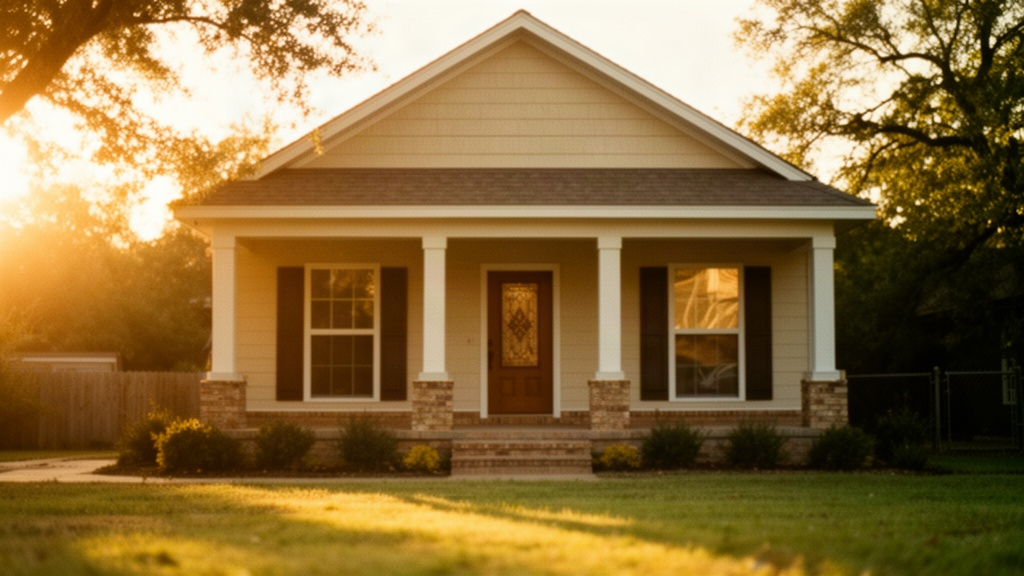
The most common styles in Wilson's existing inventory are brick ranch homes from the 1960s through 1980s, traditional two-story homes from the 1990s, and Craftsman-influenced newer builds. Brick construction is prevalent throughout the market, which buyers often appreciate for its durability and lower exterior maintenance. Lot sizes across the city average around 9,000 to 11,000 square feet for in-town properties, though corner lots and older properties on larger parcels do appear regularly in the MLS.
New Construction in Wilson
New construction activity in Wilson has been steady through 2026. Several builders are active in Wilson County, offering spec homes and build-to-order options in subdivisions along the NC-42 and US-264 corridors. The NAR has reported that nationally, the 2026 new-home market presents a genuine opportunity for buyers, partly because builders are offering incentives like rate buydowns and closing cost contributions that sellers of existing homes rarely match. In Wilson, new construction starting prices typically begin around $240,000 for a three-bedroom, two-bath home and increase based on square footage and lot selection.
4. How to Buy a Home in Wilson, NC: A Step-by-Step Overview
Buying a home in Wilson follows the same general process as anywhere in North Carolina, but local market conditions shape how each step plays out. Here is what to expect from first contact with a lender through closing day.
Getting Pre-Approved
Pre-approval is the non-negotiable first step. Sellers in Wilson, even in a more balanced market, take offers from pre-approved buyers more seriously than offers that arrive without financing documentation. A pre-approval letter shows the seller that a lender has reviewed your income, credit, and assets and confirmed you can borrow up to a specific amount. In North Carolina, buyers can work with local banks, credit unions, or mortgage brokers; some buyers relocating from out of state find that working with a lender familiar with NC closing timelines reduces friction later in the process.
Making an Offer in Today's Market
North Carolina uses a unique due diligence fee structure that buyers need to understand before writing an offer. When you make an offer in NC, you will typically include both an earnest money deposit and a due diligence fee. The due diligence fee is paid directly to the seller and is non-refundable if you walk away from the deal during the due diligence period. In Wilson's current market, due diligence fees on homes priced under $250,000 often range from $500 to $2,500, though this varies by negotiation. Your agent will help you determine what is competitive without overpaying.
Inspections and Closing Costs in North Carolina
Budget for closing costs between 2% and 4% of the purchase price in addition to your down payment. For a $220,000 home, that means setting aside roughly $4,400 to $8,800 for title fees, lender fees, prepaid homeowners insurance, and property tax escrow. A general home inspection in Wilson typically costs between $300 and $450 depending on the size of the property. Buyers purchasing older homes should also budget for a separate pest inspection, which runs around $75 to $125, and potentially a septic inspection if the property uses a private system.
5. Selling Your Home in Wilson, NC in 2026
Sellers in Wilson are working in a market that rewards preparation and accurate pricing. With more inventory available than in 2022 and 2023, buyers have options and are less likely to waive contingencies or ignore deferred maintenance. The sellers who are moving homes quickly in September 2026 are the ones who priced correctly from day one and presented their property in strong condition.
Pricing Strategy
Overpricing a home in Wilson's current market leads to extended days on market and eventual price reductions that can actually result in a lower final sale price than a correct initial list price would have achieved.
A comparative market analysis from a local agent uses recent closed sales within the past 90 days, active competition, and pending sales to establish a defensible price range. In Wilson, where individual streets and blocks can show meaningful price variation depending on lot size and renovation level, hyper-local data matters more than broad averages.
Preparing Your Home for the Wilson Market
Curb appeal carries significant weight in Wilson because so much of the housing stock features brick exteriors and mature landscaping that buyers have come to expect. Fresh mulch, trimmed shrubs, and a clean exterior make a measurable difference in first impressions. Inside, neutral paint, clean grout, and functioning fixtures are the baseline. Sellers who address obvious deferred maintenance before listing, things like leaking faucets, HVAC filters, and damaged flooring, tend to receive cleaner offers with fewer repair requests during due diligence.
6. Living in Wilson: Amenities, Commutes, and Local Landmarks
Understanding what daily life looks like in Wilson helps buyers relocating from outside the area make a fully informed decision. Wilson is a city of roughly 48,000 people and serves as the seat of Wilson County. It sits at the intersection of US-264 and US-301, which gives it straightforward road access to the Triangle region and the coast.
Parks, Recreation, and Downtown Wilson
Downtown Wilson has undergone meaningful investment over the past decade. The Vollis Simpson Whirligig Park on Nash Street is one of the city's most recognizable landmarks, featuring large kinetic sculptures created by local folk artist Vollis Simpson. The surrounding area includes restaurants, a farmers market, and the Wilson Arts Center. The park has become a gathering point for community events and draws visitors from across eastern North Carolina.
For outdoor recreation, Wiggins Mill Reservoir and Buckhorn Reservoir offer fishing, boating, and waterfront access within Wilson County. The Wilson County parks system maintains several facilities with athletic fields, walking trails, and picnic areas. Branch's Creek Golf Club is a public course within the city that draws regular play from residents throughout the county.
Commute Times and Regional Access
Wilson's location on US-264 places it approximately 45 miles east of Raleigh, which translates to a commute of roughly 45 to 55 minutes under normal traffic conditions. Rocky Mount is about 25 miles to the north, a drive of 25 to 30 minutes on US-301. Greenville, home to East Carolina University and Vidant Medical Center, is approximately 40 miles east on US-264, roughly a 40-minute drive. These distances make Wilson a realistic base for people who work in any of these regional employment centers but prefer a lower cost of living.
Wilson Memorial Hospital provides acute care within the city. The Wilson County school system operates multiple elementary, middle, and high schools throughout the county; for details on individual schools, the North Carolina Department of Public Instruction publishes school performance data that buyers can review directly at ncpublicschools.gov.
FAQ
What is the average home price for homes for sale in Wilson, NC right now?
As of September 2026, the median home price in Wilson, North Carolina sits in the $200,000 to $240,000 range, though the market spans a wide spectrum. Entry-level homes start around $120,000 to $160,000, while larger or newer properties can reach $350,000 to $450,000. New construction in active subdivisions typically begins around $240,000. Wilson's price range remains well below the statewide North Carolina median, which makes it one of the more accessible markets in the region for buyers working within a defined budget. A local agent can pull current MLS data to give you a precise picture based on the specific size and type of home you are targeting.
Is Wilson, NC a good place to buy a home if I am relocating from out of state?
Wilson offers several practical advantages for people relocating from out of state. The city's lower home prices relative to larger North Carolina metros mean buyers often get more square footage and lot size for their budget. Wilson is within a reasonable drive of Raleigh, Rocky Mount, and Greenville, which expands employment options without requiring a move to a higher-cost city. The housing stock is varied, ranging from historic downtown properties to newer suburban subdivisions and rural acreage outside the city limits. For questions about schools, you can review school performance data through the North Carolina Department of Public Instruction; for information on local services and municipal resources, Wilson's city website and Wilson County's official site are useful starting points.
How long does it take to buy a home in Wilson, North Carolina from start to close?
In North Carolina, the typical timeline from accepted offer to closing runs 30 to 45 days when the buyer is using conventional or FHA financing. Cash purchases can close faster, sometimes in 14 to 21 days. The due diligence period, which is written into the offer and agreed upon by both parties, is the window during which the buyer completes inspections, arranges financing, and decides whether to proceed. In Wilson's current market, due diligence periods of 14 to 21 days are common on standard residential transactions. Working with a local agent who knows the Wilson market helps ensure that timelines, fees, and contingencies are structured appropriately for the specific property and situation.