← Back to Blog
Neighborhoods
What Neighborhoods in Wilson NC Are Close to Downtown and What Kinds of Homes and Price Ranges Are Available There
By Teirra Batts
September 25, 2026 · 9 min read
If you are wondering what neighborhoods in Wilson NC are close to downtown and what kinds of homes and price ranges are available there, you are asking the right question before starting your search. The blocks surrounding downtown Wilson hold some of the most architecturally distinct housing stock in the entire city, ranging from century-old Victorian and Craftsman homes to modest bungalows and newer infill construction, all within a short drive or even a short walk of Nash Street, the Vollis Simpson Whirligig Park, and the growing collection of restaurants and shops that have taken root in the downtown core.
1. Why Proximity to Downtown Wilson Matters for Home Buyers
Living close to downtown Wilson puts everyday conveniences within reach without requiring a car for every errand. The neighborhoods immediately surrounding the downtown core sit within one to three miles of each other, which means commute times between them are short and the trade-offs between price, lot size, and home age are easy to compare side by side.
What Downtown Wilson Actually Offers Right Now
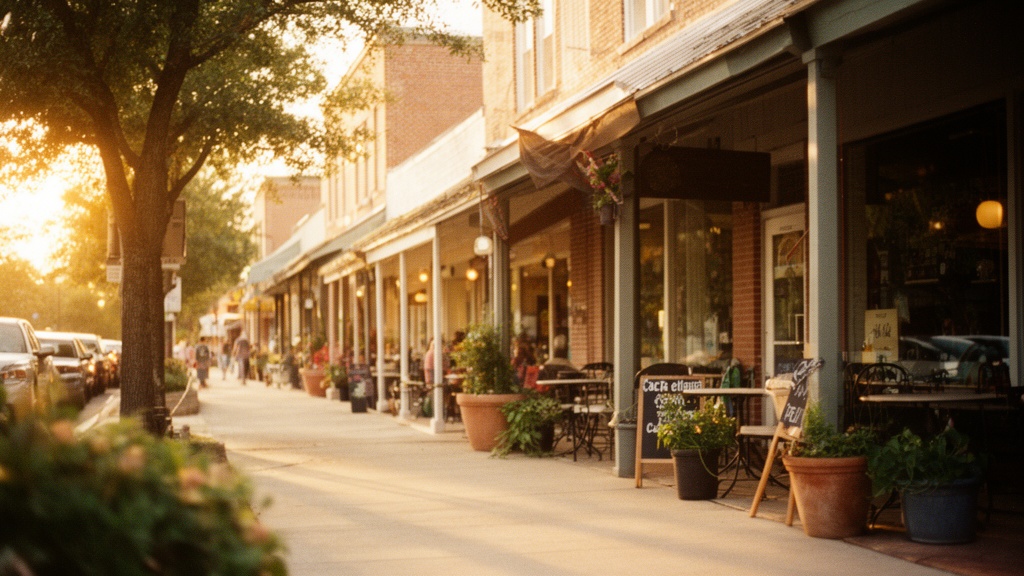
As of September 2026, downtown Wilson is an active destination, not a placeholder. The Vollis Simpson Whirligig Park on Nash Street anchors the entertainment district and draws visitors year-round. The Wilson Arts Center, the Boykin Pearl District, and a growing number of locally owned restaurants and coffee shops line the streets within a few blocks of each other. The Historic Train Depot has been preserved as a community landmark. For buyers who want to walk to dinner or spend a Saturday morning at a local market without getting in a car, the neighborhoods closest to this core carry real practical value.
How Close Is Close Enough
For the purposes of this guide, "close to downtown" means within roughly three miles of the Nash Street and Goldsboro Street intersection, which sits at the heart of the commercial core. At that distance, a drive takes five to eight minutes with no traffic. Homes within one mile are genuinely walkable to the Whirligig Park and the arts district. Homes in the two-to-three-mile range still offer a short commute into downtown and tend to sit at lower price points with larger lots.
2. The Historic District and Its Immediate Surroundings
The Wilson Historic District is the neighborhood closest to downtown, and it contains the oldest and most architecturally varied housing stock in the city. The City of Wilson officially recognizes several historic landmarks and districts within and near the downtown core; you can review those designations directly on the City of Wilson Historic Landmarks and Districts page.
Housing Stock and Architecture
The streets immediately surrounding downtown, including sections of Nash Street, Vance Street, Green Street, and Pender Street, contain homes built primarily between the 1890s and the 1940s. Architectural styles in this zone include Queen Anne Victorian, American Foursquare, Colonial Revival, and Craftsman bungalow. Many of these homes feature original hardwood floors, high ceilings, large front porches, and detailed millwork that is difficult to replicate in new construction. Lot sizes in this area typically run from about 6,000 square feet up to a quarter-acre, with some larger corner lots exceeding that. Square footage on the homes themselves ranges widely, from compact 1,000-square-foot bungalows to substantial two-story residences above 3,000 square feet.
Condition varies considerably from property to property in the historic zone. Some homes have been fully restored with updated kitchens, bathrooms, and mechanical systems while keeping original details intact. Others are being sold in original condition and represent renovation projects. Buyers who want a move-in-ready historic home will pay a premium; buyers willing to do work can still find opportunities at lower entry points.
Price Ranges in the Historic District
As of September 2026, homes in and immediately adjacent to the Wilson Historic District list across a broad range depending on size and condition. Smaller bungalows and cottages in need of updating can be found in the $80,000 to $130,000 range. Fully renovated or well-maintained homes in the 1,500-to-2,200-square-foot range typically list between $160,000 and $250,000. Larger historic properties, particularly those above 2,500 square feet with significant restoration work already completed, can push toward $300,000 and occasionally beyond. The variation is wide, which means buyers at multiple budget levels can find something in this zone if they are flexible on condition.
For a broader look at what the downtown Wilson real estate market looks like right now, including active listings and recent sales, the Downtown Wilson listings on Redfin give a useful snapshot of what is currently on the market.
3. Neighborhoods Within One Mile of Downtown Wilson
Several distinct residential pockets sit within about one mile of the downtown core, each with its own character in terms of home age, lot size, and price point. These are the neighborhoods where buyers who prioritize proximity above all else tend to focus their search.
The Rountree Area
The Rountree neighborhood sits just east of the downtown commercial zone, roughly centered around Rountree Street and its surrounding blocks. Homes here are primarily early-to-mid twentieth century construction, a mix of bungalows, ranch-style homes, and small two-story residences. Lot sizes in this area tend to be modest, typically between 5,000 and 9,000 square feet, and the streets are established with mature tree canopy. Home sizes generally run from about 900 to 1,800 square feet. Price points in this pocket currently range from roughly $75,000 for homes needing significant work up to around $175,000 for updated properties in good condition.
The Forest Hills Corridor
Moving slightly south and southwest of downtown, the Forest Hills area and the streets connecting it to the downtown core contain a mix of mid-century ranch homes and older two-story construction. This corridor includes portions of Forest Hills Drive and the surrounding residential grid. Homes in this zone were built primarily from the 1940s through the 1970s. Square footage ranges from compact 1,000-square-foot ranches to larger 2,000-plus-square-foot homes on corner lots. Lots here are generally a little more generous than those in the tighter historic blocks, with many properties sitting on a quarter-acre or slightly more. Prices currently span from about $100,000 on the low end up to $220,000 for well-maintained larger homes.
Neighborhoods Along Ward Boulevard
Ward Boulevard runs roughly north-south and serves as one of Wilson's main commercial and residential arteries. The residential streets that feed off Ward Boulevard within a mile of downtown include a variety of housing types: older bungalows, mid-century brick ranches, and some smaller two-story homes. The proximity to Ward Boulevard means these streets have easy access to grocery stores, pharmacies, and other everyday services in addition to the downtown core. Home prices along this corridor tend to mirror the broader near-downtown range, with most properties listing between $90,000 and $200,000 depending on size and condition.
4. Neighborhoods Within Two to Three Miles of Downtown Wilson
Buyers who expand their search radius to two or three miles from downtown gain access to more housing inventory, newer construction, and larger lots, often at similar or lower price points than the tightest historic blocks. A three-mile drive from the Whirligig Park still puts you downtown in under ten minutes on most days.
The Toisnot Area
The Toisnot area sits roughly two miles east of downtown Wilson and contains one of the more established residential pockets in the city. Toisnot Lake and Toisnot Park anchor the area, giving nearby streets a distinct feel with greenspace and walking paths close to the homes. The housing stock here is primarily mid-century and late-twentieth-century construction, with a strong presence of brick ranch homes on generous lots. Many properties in this zone sit on a third of an acre or more. Prices currently range from about $130,000 for smaller ranches up to $280,000 for larger, updated homes on well-maintained lots. For a deeper look at this specific area, the Toisnot area real estate guide covers pricing, inventory, and timing in detail.
Westwood and Its Surroundings
Westwood sits to the west of downtown, within a two-to-three-mile radius, and contains a mix of mid-century brick homes and some newer construction from the 1980s and 1990s. Streets in this area tend to be quieter residential corridors with established landscaping. Lot sizes vary but many properties offer a quarter-acre to a half-acre. Home sizes in Westwood range from about 1,200 square feet up to 2,500 square feet for larger floor plans. Current price ranges in this area run from approximately $120,000 on the lower end to around $260,000 for larger, well-kept homes.
What Price Ranges Look Like Further Out
As you move toward the two-to-three-mile boundary, the price-per-square-foot tends to drop relative to the tightest historic blocks, but the overall list price can actually be similar or higher because homes are larger. A 1,000-square-foot bungalow in the historic district at $160,000 and a 1,800-square-foot brick ranch two miles out at $175,000 are both close to downtown by Wilson's scale, but they represent very different living situations. Buyers need to decide whether square footage, lot size, home age, or raw proximity to Nash Street matters most to them before narrowing their search.
5. What to Think About When Comparing These Neighborhoods
Choosing between neighborhoods close to downtown Wilson is not just about price. Lot size, home condition, commute patterns, and what you plan to do with the property all factor into which area makes the most sense for your situation.
Lot Sizes and Home Conditions
The tightest blocks immediately adjacent to downtown tend to have the smallest lots and the oldest homes, which means buyers need to budget carefully for potential repairs and updates. Roof age, HVAC systems, plumbing, and electrical panels in homes built before 1950 deserve close inspection during due diligence. Buyers purchasing in the historic district should also be aware that some properties carry local historic designation, which can affect what exterior changes are permitted. Checking with the City of Wilson's Planning and Community Revitalization department before making offers on designated properties is a practical step.
Commute and Walkability Considerations
Wilson is a driving city for most residents, but the blocks immediately surrounding downtown are walkable to the Whirligig Park, the arts district, and several dining options in a way that most of Wilson is not. If you also commute to Raleigh or the Research Triangle for work, Wilson's position on US-264 and I-95 means that neighborhoods on the eastern and western sides of downtown can actually shave a few minutes off your morning drive depending on which direction you are heading. For a detailed look at what the Wilson-to-Raleigh commute looks like, the guide on commuting from Wilson to the Triangle covers distances, drive times, and route options.
Market Conditions in September 2026
The Wilson market as of September 2026 continues to offer relatively affordable entry points compared to the broader North Carolina market, particularly for buyers coming from Raleigh, Durham, or coastal areas. Homes near downtown that are priced correctly and in good condition are moving, while properties that need significant work or are priced above comparable sales are sitting longer. Buyers in the near-downtown corridors should be prepared to move decisively on well-priced listings, particularly in the $150,000 to $230,000 range where competition tends to be most active. Sellers in these same zones benefit from the ongoing interest in walkable, close-in properties as more buyers relocate to Wilson from higher-cost markets.
If you are thinking about buying an investment property in one of these near-downtown corridors, the Wilson investment property guide covers what to know before you buy, including rental demand and due diligence steps specific to Wilson.
For buyers who are relocating and trying to get oriented before visiting in person, the relocation guide for Wilson, North Carolina explains how to narrow down neighborhoods remotely and what to prioritize during a visit.
FAQ
What is the most affordable neighborhood close to downtown Wilson NC right now?
As of September 2026, the most affordable entry points near downtown Wilson are found in the Rountree area and along the residential streets feeding off Ward Boulevard within one mile of the downtown core. Smaller bungalows and older homes in need of updating in these zones can be found in the $75,000 to $130,000 range. Buyers willing to take on renovation work will find the most value in these pockets. Homes in better condition in the same general area tend to list between $140,000 and $180,000. The trade-off is that older homes require careful inspection and a realistic renovation budget.
Are there historic homes for sale near downtown Wilson NC and what should buyers know about them?
Yes, the Wilson Historic District and the streets immediately surrounding downtown contain homes built primarily between the 1890s and the 1940s, including Queen Anne Victorian, Craftsman bungalow, Colonial Revival, and American Foursquare styles. Prices range from roughly $80,000 for properties needing significant work up to $300,000 or more for fully restored larger homes. Buyers should be aware that some properties carry local historic designation, which can limit exterior changes; checking with the City of Wilson's Planning and Community Revitalization department before submitting an offer is a practical step. Home inspections on properties of this age should pay close attention to roof condition, plumbing, electrical panels, and HVAC systems. The City of Wilson maintains a public record of historic landmarks and districts on its official website.
How far are the neighborhoods close to downtown Wilson NC from Raleigh or the Research Triangle?
Neighborhoods within one to three miles of downtown Wilson sit approximately 45 to 50 miles west of Raleigh, which translates to a drive of roughly 45 to 60 minutes depending on traffic and which part of the Triangle you are heading to. Wilson connects to US-264 West and I-95, both of which are accessible from the near-downtown residential areas within a few minutes of driving. Buyers who commute to Raleigh, Research Triangle Park, or Durham regularly find that the neighborhoods on the western side of downtown have a slight advantage in terms of getting onto the highway quickly. For a detailed breakdown of the commute, the Wilson-to-Raleigh commute guide on this site covers distances, typical drive times, and route options by destination.