← Back to Blog
Selling
Selling a Home in Wilson, North Carolina: Pricing, Timeline and What to Expect Step by Step
By Teirra Batts
September 15, 2026 · 11 min read
Selling a home in Wilson, North Carolina is known for moving faster than sellers in many other markets expect, but only when the pricing, preparation, and paperwork align from the start. This guide walks you through every stage of the process, from setting the right list price to handing over the keys, with specific numbers and local context that actually reflect what is happening in Wilson right now in September 2026. Whether you own a brick ranch near Westwood, a craftsman bungalow close to downtown, or a newer build in one of Wilson's growing subdivisions, the steps below apply directly to your sale.
1. How Wilson's Market Shapes Your Pricing Strategy
Pricing is the single most important decision you will make when selling a home in Wilson, North Carolina. Set the number too high and buyers scroll past your listing. Set it accurately and you attract serious offers within the first two weeks, which is when buyer attention and negotiating momentum are at their peak.
In September 2026, Wilson's median sale price sits in the low-to-mid $200,000s for single-family homes, though that number shifts meaningfully depending on the corridor. Homes near the Westwood area, the established neighborhoods off Ward Boulevard, and properties with updated kitchens or newer roofs consistently command prices closer to the upper end of comparable ranges. Homes that need cosmetic work or sit on busier streets tend to land lower, regardless of square footage.
What Comparable Sales Actually Tell You
A comparative market analysis, or CMA, pulls closed sales from the past 90 to 180 days within roughly a half-mile to one-mile radius of your home. In a city the size of Wilson, with a population around 49,000 and a relatively compact footprint, that radius often captures enough data to price with real confidence. Your agent will look at price per square foot, lot size, age of major systems like HVAC and roof, and whether the comparable homes had garages or updated bathrooms.
The National Association of Realtors outlines the full framework buyers and sellers should understand when it comes to what goes into pricing a home, including how appraisers and agents weigh condition, location, and market momentum differently. Reading that resource alongside your CMA gives you a complete picture before you commit to a number.
The Cost of Overpricing in Wilson
Overpriced homes in Wilson do not just sit; they accumulate days on market that buyers and their agents notice immediately. Once a listing crosses 30 to 45 days without a contract, buyers start asking what is wrong with the property, even if the answer is simply that the price was off. The result is often a price reduction that still produces a lower final sale price than a correct list price would have generated on day one.
For a deeper look at how long homes are sitting before they sell in Wilson right now, the article How Long Are Homes Sitting on the Market in Wilson NC This Month Before They Sell breaks down current days-on-market data by price band, which is useful context before you lock in your list price.
2. Preparing Your Wilson Home Before It Lists
Preparation is where sellers in Wilson most often leave money on the table. A home that photographs well, smells clean, and shows no deferred maintenance gives buyers confidence to offer at or near list price. A home that shows rough around the edges gives buyers a mental checklist of costs they will subtract from their offer before they even write it.
What Buyers Notice First
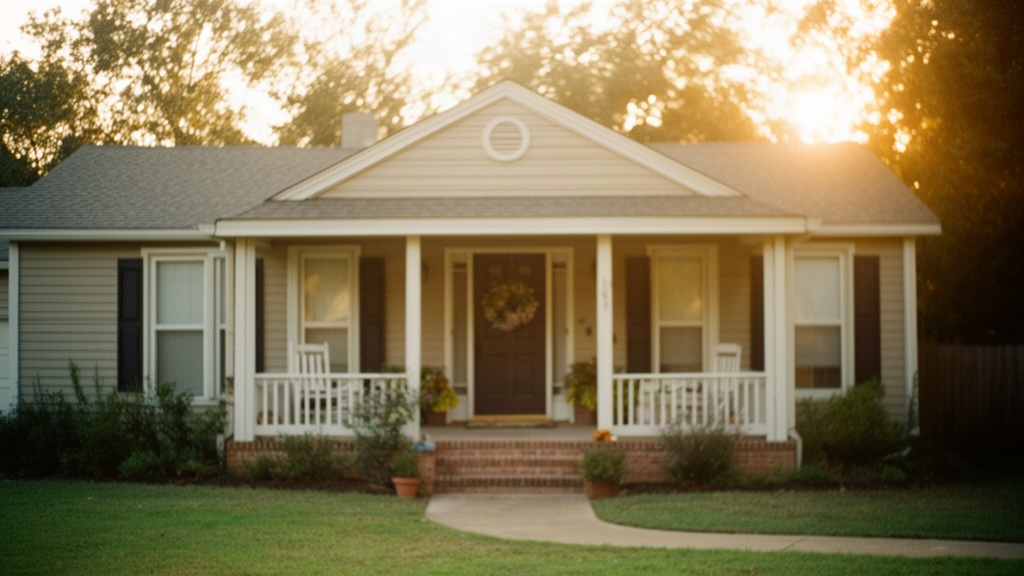
Wilson's housing stock skews toward brick ranch homes built between the 1950s and 1980s, with a growing number of vinyl-sided homes from the 1990s and early 2000s, plus newer construction in areas like the subdivisions off US-264 and out toward the county's growing edges. Regardless of era, buyers notice curb appeal within the first 30 seconds of pulling up. Fresh mulch in the beds, a power-washed driveway, and trimmed shrubs cost relatively little but shift first impressions dramatically.
Inside, the kitchen and primary bathroom carry the most weight in buyer perception. You do not need a full renovation. Painting dated cabinets, replacing hardware, and installing a new light fixture can modernize a kitchen built in 1978 for a few hundred dollars. Buyers in Wilson's sub-$250,000 range are not expecting magazine finishes; they are looking for clean, functional, and move-in ready.
Repairs That Move the Needle
North Carolina's disclosure laws require sellers to complete a Residential Property Disclosure Statement, which means known issues must be disclosed. Addressing those issues before listing, rather than letting them surface on the buyer's inspection report, keeps you in control of the cost and the narrative. A roof with five years of life left, an HVAC system that has not been serviced in three years, or a crawl space with moisture intrusion will come up during inspection. Fixing or crediting proactively is almost always better than negotiating reactively.
Wilson's climate, with hot and humid summers and mild winters, means HVAC systems work hard. Buyers and their inspectors pay close attention to the age and condition of the system. If yours is more than 15 years old, expect questions. A recent service record or a home warranty offered at closing can address buyer hesitation without requiring a full replacement.
3. The Wilson, NC Home Selling Timeline from List to Close
Selling a home in Wilson, North Carolina typically takes between 45 and 90 days from the moment you list to the day you close, though well-priced homes in active price bands can move faster. The timeline has two distinct phases: the marketing period, which runs from listing day until you accept an offer, and the contract-to-close period, which typically runs 30 to 45 days depending on the buyer's financing type.
Days on Market Right Now
In September 2026, the Wilson market is seeing homes priced accurately in the $180,000 to $250,000 range go under contract in roughly 15 to 30 days. Homes above $300,000 are taking longer, often 45 to 75 days, because the buyer pool at that price point in Wilson is smaller and more selective. Homes priced below $150,000 that are in livable condition are moving quickly, often drawing multiple offers, partly because investor interest in Wilson has remained steady and partly because first-time buyers stretch to find affordable options.
Spring and early summer tend to produce the most buyer activity nationally, a pattern that holds in Wilson as well. Research on the best time to sell a home consistently points to April through June as peak listing windows, though Wilson sellers who list in September and October often face less competition from other sellers, which can offset the slightly smaller buyer pool.
What Happens Between Contract and Closing
Once you accept an offer, the clock starts on a series of overlapping steps that all need to complete before the closing table. In North Carolina, buyers typically have a due diligence period, a negotiated window of time during which they can conduct inspections, request repairs, and even walk away for any reason while keeping their earnest money. Understanding this period is critical for Wilson sellers because it is where deals most often fall apart or get renegotiated.
The buyer's lender will order an appraisal, typically within the first two weeks of the contract period. If the home appraises at or above the purchase price, the deal proceeds. If it appraises below, you and the buyer will need to negotiate: the buyer can make up the difference in cash, you can lower the price, or you can split the gap. In Wilson's current market, appraisal gaps are less common than they were during the 2021 to 2022 surge, but they still happen on homes where sellers pushed the list price above what recent comps fully support.
The final step is the closing itself, which in North Carolina is handled by a real estate attorney. Both parties sign documents, the deed transfers, and the seller receives net proceeds, typically by wire transfer on the same day or the next business day.
4. Costs and Net Proceeds: What Sellers in Wilson Actually Keep
Most Wilson sellers are surprised to learn that the sale price and the check they receive at closing are meaningfully different numbers. Understanding your estimated net proceeds before you list helps you plan your next move, whether that is purchasing another home in Wilson, relocating, or paying off debt.
Closing Costs Sellers Pay in North Carolina
North Carolina sellers typically pay the following costs at closing, which together usually total between 8 and 10 percent of the sale price when commission is included.
- Real estate commission: Typically 5 to 6 percent of the sale price, split between buyer and seller agents, though commission structures have continued to evolve in 2026 following industry changes.
- North Carolina excise tax (deed stamps): $2 per $1,000 of the sale price, paid by the seller. On a $220,000 sale that is $440.
- Attorney fees: North Carolina requires a real estate attorney to handle closings. Seller-side attorney fees typically run $400 to $700.
- Prorated property taxes: You will owe taxes for the portion of the year you owned the home. Wilson's combined city and county tax rate means this can be a few hundred to over a thousand dollars depending on your sale month and assessed value.
- HOA fees or assessments: If your property is in a community with a homeowners association, any outstanding dues or transfer fees are settled at closing.
- Seller concessions: If you agreed to cover a portion of the buyer's closing costs as part of the offer negotiation, that amount is deducted from your proceeds.
How to Read Your Net Sheet
Your agent should provide a seller net sheet before you list, not after you accept an offer. This document starts with your expected sale price, subtracts your mortgage payoff balance, all closing costs, and any agreed concessions, and shows you what you will walk away with. Running this calculation at two or three different price points, such as your list price, a price 3 percent below list, and a price with a $5,000 concession, gives you a realistic range to plan around.
If you are curious about what property taxes look like on a Wilson home and how they factor into your annual costs before you sell, the article What Are Property Taxes Like in Wilson NC and How Much Should I Budget if I Buy a $250,000 Home walks through the current tax rates for both Wilson city and Wilson County, which is useful context for your proration calculation.
5. Negotiation and Offers: What to Expect in Wilson's Current Market
When an offer arrives, the purchase price is only one of several terms that determine whether the deal is actually good for you. Wilson sellers in September 2026 are operating in a market that is more balanced than it was two years ago, which means buyers have more leverage than they did during the peak frenzy, but well-prepared homes in accurate price ranges are still generating solid offers.
Reading an Offer Beyond the Price
In North Carolina, the due diligence fee is a non-refundable payment made directly to the seller at contract execution. A higher due diligence fee signals buyer commitment and is money you keep even if the buyer walks away during the due diligence period. In Wilson's current market, due diligence fees on homes in the $200,000 range typically run from $500 to $2,000, though competitive situations push them higher.
Other offer terms to evaluate include the closing date, whether the buyer is requesting seller concessions toward their closing costs, the type of financing (conventional, FHA, VA, or cash), and whether the buyer has a home to sell first. Cash offers and conventional financing with strong pre-approvals close more reliably and often faster than FHA or VA loans, not because those loan types are problematic, but because they have additional appraisal requirements that can add steps to the process.
Inspection Requests and How to Handle Them
After the home inspection, buyers in North Carolina submit a due diligence repair request, which is a list of items they would like addressed before closing. You have three options: fix the items, offer a credit at closing in lieu of repairs, or decline and let the buyer decide whether to proceed. In Wilson's balanced market, reasonable repair requests on safety items or major systems are generally worth addressing. Declining reasonable requests on a home that has been on the market for several weeks risks the buyer walking and restarting your marketing period.
Cosmetic items, normal wear and tear, and issues that were visible during showings are worth pushing back on. Buyers who toured the home and made an offer already accepted the condition they saw. Your agent's job is to help you distinguish between legitimate repair requests and buyer overreach, and to negotiate the right response for each item on the list.
If you are also planning to buy in Wilson after your sale, the article Who Should I Call If I Want to Buy a Home in Wilson, North Carolina covers how to coordinate your purchase timeline alongside your sale, which is one of the more logistically complex situations a Wilson homeowner can navigate.
FAQ
How long does it take to sell a home in Wilson, North Carolina right now?
In September 2026, homes priced accurately in Wilson's most active range of $180,000 to $250,000 are typically going under contract within 15 to 30 days of listing. Once under contract, the closing process takes an additional 30 to 45 days depending on the buyer's financing type, putting the full timeline at roughly 45 to 75 days for a well-positioned home. Homes above $300,000 are taking longer, often 45 to 75 days just to find a buyer, because the pool of qualified buyers at that price point in Wilson is smaller. The best way to shorten your timeline is accurate pricing from day one, since homes that require price reductions typically take significantly longer to close.
What costs should I expect to pay when selling my home in Wilson, NC?
Wilson sellers typically pay between 8 and 10 percent of the sale price in total costs, which includes real estate commission, North Carolina's excise tax of $2 per $1,000 of the sale price, attorney fees of roughly $400 to $700, prorated property taxes for the portion of the year you owned the home, and any seller concessions you agreed to in the offer negotiation. On a $220,000 sale, that can mean walking away with $20,000 to $22,000 less than the sale price before your mortgage payoff is factored in. Your agent should provide a seller net sheet before you list so you know your estimated proceeds at different sale price scenarios, not just at closing.
Do I need to make repairs before listing my home in Wilson?
You are not legally required to make repairs before listing in North Carolina, but addressing known issues proactively almost always produces a better financial outcome than waiting for the buyer's inspector to find them. North Carolina's Residential Property Disclosure Statement requires you to disclose known material defects, so issues you are aware of will need to be documented regardless. Buyers who discover problems during inspection often request credits or repairs at inflated estimates, and some walk away entirely, restarting your marketing period. Focusing pre-listing repairs on the roof, HVAC, plumbing, and electrical systems, which are the items inspectors flag most consistently in Wilson's older housing stock, gives buyers confidence and reduces the chance of a deal falling apart mid-contract.