← Back to Blog
Market Trends
The Westside Danville, CA Area Real Estate Market Guide: Prices, Neighborhoods and Timing
By Tess Pollitz
Tessellation Real Estate · DRE# 01348552
September 16, 2026 · 12 min read
The Westside Danville, CA area real estate market guide covering prices, neighborhoods and timing is exactly what buyers, sellers, and relocators need before making a move in this part of Contra Costa County. The Westside corridor sits between downtown Danville and the Diablo foothills, offering a distinct mix of lot sizes, architectural styles, and price points that differ meaningfully from Danville's gated communities to the east. This guide breaks down what the market looks like right now in September 2026, which pockets carry different price profiles, and how to time your transaction strategically.
1. What Is the Westside Danville Area and What Makes It Distinct
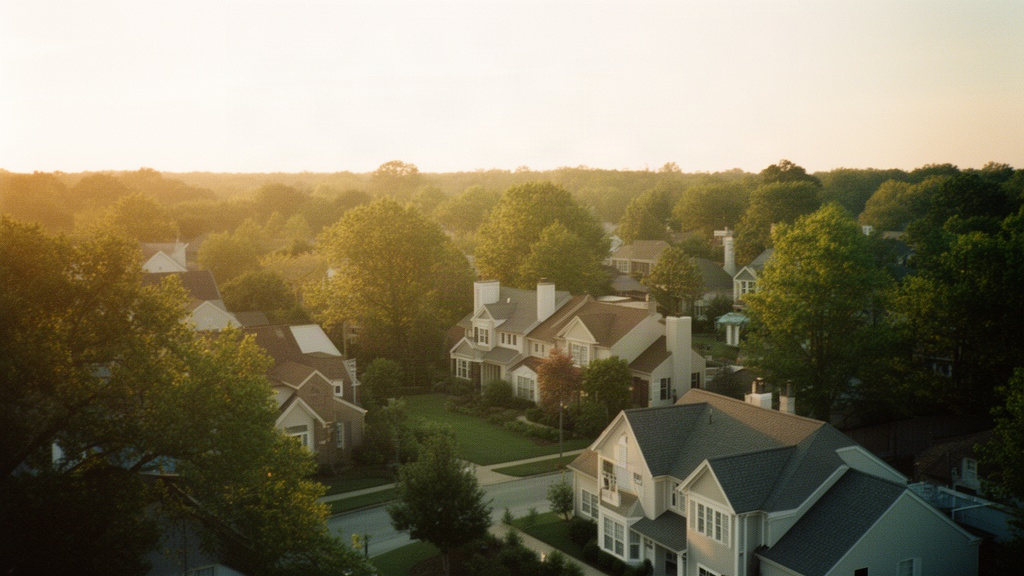
The Westside Danville area occupies the western and northwestern portions of town, generally defined by properties west of San Ramon Valley Boulevard and stretching toward the base of the hills that separate Danville from Walnut Creek and Alamo. It is not a single named subdivision but rather a collection of established neighborhoods, older custom streets, and hillside parcels that share a common geography: proximity to downtown Danville, access to Iron Horse Regional Trail, and a more open, less gated character than the Blackhawk or Diablo enclaves on the eastern side of town.
Understanding the Westside matters because it behaves differently from the rest of Danville's market. Homes here tend to sit on larger, non-HOA lots. Price per square foot can run lower than in newer planned communities, yet the proximity to downtown restaurants, the Danville Farmers Market on Railroad Avenue, and the Iron Horse Trail gives these properties strong and consistent demand.
Geography and Boundaries
The Westside corridor runs roughly from the northern end of town near Alamo Creek down through the downtown core and into the southern stretches near Sycamore Valley Road. Key arterials include Diablo Road to the north, Front Street and Hartz Avenue through the downtown, and La Gonda Way and Camino Tassajara at the southern edge. The hills to the west create a natural boundary, and many of the streets closest to those hills sit on half-acre to two-acre parcels with significant privacy and views across the valley.
Housing Stock and Architecture
The Westside carries Danville's most architecturally varied housing stock. You will find original ranch homes built in the 1950s and 1960s alongside fully renovated Craftsman-style properties, custom two-story colonials from the 1980s and 1990s, and a small number of newer infill builds on subdivided lots. Square footage typically ranges from about 1,400 square feet for a modest 1960s ranch to over 4,500 square feet for a hillside custom home. Lot sizes are one of the Westside's defining features: a quarter-acre lot is common, and parcels of one acre or more appear regularly in the upper hillside streets.
Most Westside properties carry no HOA, which is a meaningful distinction for buyers comparing this area to Sycamore Valley or Blackhawk. No HOA means no monthly dues and fewer restrictions on landscaping, additions, or short-term use. For buyers who want the Danville address without the overhead of a managed community, the Westside is often where the search begins.
2. Current Prices in the Westside Danville Real Estate Market
As of September 2026, the Westside Danville area real estate market is posting median sale prices in the range of $1.55 million to $2.1 million depending on the specific pocket, lot size, and condition of the home. That range is meaningfully wide because the Westside contains both modest post-war ranches and substantial hillside custom homes, and both categories trade actively. Buyers entering this market should expect competition: well-priced, move-in-ready properties in this corridor regularly attract multiple offers within the first ten days of listing.
Median Price Ranges by Pocket
Price varies considerably depending on where exactly a home sits within the broader Westside area. Downtown-adjacent streets, those within a five-minute walk of Hartz Avenue shops and the Farmers Market, tend to cluster between $1.5 million and $1.85 million for a three-bedroom home in good condition. Hillside streets with valley views and larger lots push above $2 million routinely, and fully renovated properties on parcels of an acre or more have closed north of $3 million in 2026. Entry-level opportunities, typically older ranches needing cosmetic updates, still appear in the low $1.3 million range, though these move quickly.
For additional context on how these figures compare across Danville's broader neighborhoods, DanvilleInStyle's neighborhood price overview provides a useful snapshot of how the Westside sits relative to other parts of town.
How Westside Prices Compare to Broader Danville
Danville as a whole is one of the higher-priced markets in Contra Costa County, with town-wide medians hovering around $1.9 million in September 2026. The Westside's median sits slightly below the town-wide figure at the entry level, primarily because it includes a larger share of older, smaller homes. At the upper end, however, Westside hillside properties compete directly with Blackhawk and Diablo pricing. Buyers who want Danville's core location without paying the premium of a guard-gated address often find the Westside offers the strongest value per square foot in the entire town.
Price per square foot on the Westside currently runs between $650 and $950 depending on condition, lot, and views. Renovated kitchens with quartz countertops and open floor plans command the top of that range. Original condition homes from the 1960s and 1970s, which are increasingly rare on the market, still trade in the $650 to $720 per square foot range, representing the corridor's most accessible entry point.
3. Neighborhood Breakdown: Key Pockets on the Westside
The Westside is not monolithic. Three distinct pockets carry their own character, price profile, and buyer profile, and understanding each one helps you narrow a search quickly.
Downtown-Adjacent Streets and Craftsman Corridors
The streets immediately west and northwest of downtown Danville, including portions of Prospect Avenue, La Gonda Way, and the blocks off Front Street, offer the most walkable setting in the entire Westside area. Homes here are often on smaller lots of 6,000 to 9,000 square feet, but the tradeoff is that you can walk to Danville's weekly Farmers Market, to restaurants on Hartz Avenue, and to the Iron Horse Regional Trail trailhead without getting in a car. Several of the homes in this pocket date to the 1930s and 1940s and have been updated over the decades, giving the streetscape a mix of original Craftsman bungalows and mid-century ranches sitting beside more recent remodels.
Prices in this pocket currently range from about $1.4 million for a two-bedroom bungalow to $1.95 million for a fully updated four-bedroom within walking distance of the Village Theatre and Art Gallery on Railroad Avenue. Inventory here is tight because owners tend to hold these properties for long periods. When a home does come to market, it typically receives offers within the first week.
Westside Foothills and Larger Lot Properties
Moving west and uphill from the downtown core, the streets begin to widen and the lots expand dramatically. Streets like Ridgewood Road, Green Valley Road near the Westside boundary, and the upper reaches of Diablo Road carry parcels ranging from half an acre to two or more acres. These are predominantly custom homes built between the 1970s and the early 2000s, with a smaller number of newer construction projects. Valley views are common, and many properties include features like detached garages, horse facilities, or secondary structures.
This pocket carries the Westside's highest price points. A four-bedroom custom home on a half-acre lot with valley views is currently priced in the $2.1 million to $2.7 million range. Fully renovated properties with pool, guest quarters, and modern finishes have closed above $3.2 million in 2026. Days on market here run slightly longer than the downtown pocket, averaging 18 to 28 days, because the buyer pool for properties above $2.5 million is smaller and more deliberate.
Sycamore Valley Road Corridor
The southern portion of the Westside, near Sycamore Valley Road and the neighborhoods that branch off it to the west, represents a transitional zone between the older downtown-adjacent streets and the newer planned communities of Sycamore Valley. Homes here were largely built in the 1980s and early 1990s and tend to be larger in square footage, often 2,200 to 3,400 square feet, with two-car garages and more conventional suburban lot sizes of 7,000 to 12,000 square feet. Many have been updated but retain their original floor plans.
Prices in the Sycamore Valley Road corridor currently run from about $1.55 million to $2.05 million. This pocket offers good access to both the Iron Horse Trail and the Sycamore Valley Park, and it sits close to the Crow Canyon Road interchange with Interstate 680, making it one of the more commuter-convenient parts of the Westside. If you are comparing this area to the planned Sycamore Valley subdivision communities nearby, our detailed guide on buying a home in the Sycamore Valley area walks through costs and timelines for that adjacent market.
4. Commute, Amenities, and Day-to-Day Living on the Westside
Location within Danville matters for daily life, and the Westside has specific practical advantages that buyers frequently cite as decision drivers.
Getting Around from the Westside
The Westside sits within a short drive of the Interstate 680 corridor, which is the primary route connecting Danville to the broader Bay Area. From the northern Westside near Diablo Road, the on-ramp at Diablo Road and I-680 is reachable in under five minutes. From the southern Sycamore Valley Road pocket, the Crow Canyon Road interchange is similarly close. Driving to the Walnut Creek BART station takes approximately 15 to 20 minutes without traffic, and to the Dublin-Pleasanton BART station roughly 20 minutes via Crow Canyon Road and I-680 south.
For buyers who commute to San Francisco or the East Bay, the Westside's freeway access is a genuine practical advantage. Our article on commute options from Danville to San Francisco covers BART, express bus, and carpool options in detail for anyone weighing this factor.
Parks, Trails, and Local Anchors
The Iron Horse Regional Trail runs directly through the heart of the Westside corridor, connecting Danville north to Walnut Creek and south toward Dublin. The paved multi-use trail is approximately 32 miles in total length and is accessible from multiple points along the Westside, making it a daily resource for cyclists, joggers, and walkers. The trail also connects to the Danville Livery and Mercantile, the Village Theatre, and the weekly Saturday Farmers Market on Railroad Avenue, all within the downtown core.
Las Trampas Regional Wilderness sits just west of the Westside hillside properties, offering over 5,000 acres of open space with hiking trails accessible from staging areas off Bollinger Canyon Road and Alamo. Sycamore Valley Regional Open Space Preserve, accessible from the southern Westside, adds another 578 acres of protected land. For Westside homeowners, these two preserves represent a significant quality-of-life feature: undeveloped open space that will remain undeveloped, preserving both views and the quieter character of the hillside streets.
Downtown Danville's commercial core on Hartz Avenue and Railroad Avenue is within a five-minute drive from virtually every Westside address, and walkable from the downtown-adjacent pocket. The downtown offers independent restaurants, the Danville Brewing Company, specialty retail, a post office, and the Museum of the San Ramon Valley, which provides a grounding sense of local history that newer developments in the region lack.
5. Timing the Westside Danville Market: When to Buy or Sell
Timing in the Westside Danville real estate market follows predictable seasonal rhythms, but current conditions in September 2026 add specific nuance that buyers and sellers should factor into their plans.
Seasonal Patterns in Westside Inventory
Inventory in the Westside area peaks in spring, typically from late February through May, when sellers list ahead of the traditional summer move season. This is when buyers see the most choices, but also the most competition. Multiple-offer situations are common on well-priced properties during this window, and overbids of 3 to 8 percent above asking are not unusual for move-in-ready homes in the downtown-adjacent pocket.
The fall window, from September through November, is the Westside's second-most active listing period. Right now in September 2026, the market is transitioning from the slower summer pace into fall activity. New listings are coming on, and buyers who sat out the spring rush are returning. This creates a window where inventory is building but buyer competition has not yet fully intensified, which can favor buyers who are ready to move decisively.
December and January are the quietest months for Westside listings. Fewer homes come to market, but the buyers who are active during this period are serious. Sellers who list in December often do so out of necessity, and buyers who engage during this window sometimes find less competition and more negotiating room, particularly on properties that have been sitting since October or November.
What Buyers and Sellers Should Watch Right Now
Mortgage rates remain the dominant variable shaping buyer behavior across all of Danville in September 2026. The National Association of Realtors has noted that rate sensitivity continues to influence buyer urgency and purchase timelines across California's premium suburban markets. For buyers watching the Westside, a rate shift of even half a percentage point changes the monthly payment on a $1.8 million home by roughly $500 to $600, which is meaningful even for well-qualified buyers. Staying pre-approved and current on rate movements is essential.
For sellers, the Westside's low HOA inventory is a consistent marketing advantage. Buyers who have been searching in Sycamore Valley or other HOA communities and then discover the Westside's no-HOA properties often pivot quickly. Sellers who price correctly within the first two weeks of listing, rather than testing high and reducing, consistently achieve stronger final sale prices in this corridor. Overpriced listings on the Westside tend to sit, and a price reduction signals weakness in a market where buyers are attentive to days-on-market data.
If you are selling a hillside property in the upper Westside, presentation matters at least as much as pricing. Professional photography that captures valley views, staging that emphasizes indoor-outdoor flow, and clear documentation of any well, septic, or fire safety features are all factors that move hillside properties faster and at stronger prices. For a parallel look at how the selling process works in another part of Danville, our guide on selling a home in the Blackhawk area outlines the pricing and timeline process in detail.
Buyers considering the Westside should also factor in property tax implications at these price points. Our breakdown of property tax rates in Danville on a $2 million home walks through what to budget annually once you close.
FAQ
What is the typical price range for homes in the Westside Danville area right now?
As of September 2026, Westside Danville homes are trading in a range from approximately $1.3 million for an original-condition 1960s ranch needing updates to over $3 million for a fully renovated hillside custom home on a large lot with valley views. The most active price band is $1.55 million to $2.1 million, which covers the bulk of three and four-bedroom homes in good condition across all three Westside pockets. Price per square foot currently runs between $650 and $950 depending on condition, lot size, and whether the property has been modernized. Homes without HOA fees, which is most of the Westside, tend to hold their value well because they appeal to a broad buyer pool that includes both move-up buyers from within Danville and relocators from other Bay Area markets.
Does the Westside Danville area have HOA fees?
The majority of Westside Danville properties carry no homeowners association and therefore no monthly HOA dues. This is one of the defining characteristics of the Westside compared to planned communities like Blackhawk, which has HOA fees, or newer Sycamore Valley subdivisions. A small number of newer infill developments on the Westside may have minimal HOA structures, but these are the exception. For buyers who want to avoid monthly HOA overhead and the restrictions that come with managed communities, the Westside is one of the few parts of Danville where that is consistently possible across a wide range of price points.
When is the best time of year to buy or sell on the Westside in Danville?
Spring, from late February through May, is when Westside inventory is highest and buyer competition is most intense, making it the strongest window for sellers and a more challenging one for buyers. The fall period from September through November offers a secondary opportunity, with new listings coming on and slightly less buyer competition than spring. Right now in September 2026, the market is in that fall transition, which can be a productive window for buyers who are pre-approved and ready to move. Sellers who list in fall typically see serious buyers who have a real timeline. Winter listings in December and January are fewer in number, but the buyers active during that period tend to be highly motivated, which can benefit sellers of well-priced, move-in-ready properties.