← Back to Blog
Neighborhoods
What Does the Cully Neighborhood in Portland Oregon Feel Like to Live in Day to Day
By Tiffany Pool
Realty ONE Group Prestige · DRE# 23018543
September 26, 2026 · 10 min read
If you are wondering what the Cully neighborhood in Portland Oregon feels like to live in day to day, the honest answer is: grounded, spacious by inner-Portland standards, and still evolving. Cully sits in Northeast Portland roughly between the airport corridor and the closer-in neighborhoods of Beaumont and Concordia, and it has a character that sets it apart from almost anywhere else in the city. This guide covers the streets, the housing stock, the commute realities, the green space, and the current real estate market so you can decide whether Cully belongs on your list.
1. Where Cully Actually Sits and What That Means for Daily Life
Cully occupies a stretch of Northeast Portland that most people pass through on their way to PDX rather than stop in. That is changing. The neighborhood is bounded roughly by NE Killingsworth Street to the north, NE Prescott Street to the south, NE 42nd Avenue to the west, and NE 72nd Avenue to the east, though locals will tell you the edges blur depending on who you ask. The zip code is 97218, shared with parts of the airport area, and the neighborhood sits about three miles from the Lloyd District and five miles from downtown Portland.
The Physical Footprint
Cully covers approximately 1,800 acres, making it one of the largest neighborhoods in Portland by land area. That size is part of what gives the neighborhood its distinctive feel. You are not squeezed between two busy commercial corridors the way you might be in Buckman or Kerns. There is room: room for larger lots, room for gardens, room for the kind of quiet mid-block streets that are increasingly rare this close to the urban core.
Street Grid and Getting Around on Foot
The street grid in Cully is not as uniform as it is in inner Northeast Portland neighborhoods. Several streets dead-end or jog unexpectedly, which slows through traffic and keeps many residential blocks genuinely quiet. NE Cully Boulevard runs diagonally through the neighborhood and serves as a kind of informal spine, connecting the northern and southern ends. NE 60th Avenue and NE Killingsworth are the main commercial streets where most daily errands happen. Walkability scores vary significantly by block: streets near Killingsworth and Alberta score well, while the interior residential streets require a car or bike for most trips.
2. What the Cully Neighborhood in Portland Oregon Feels Like Street by Street
The day-to-day feel of Cully is shaped almost entirely by its housing stock, which is older, varied, and set on lots that are noticeably larger than what you find in Sellwood or Mississippi. Walk a few blocks in any direction and you will see mid-century ranch homes next to 1940s bungalows next to newer infill construction. That variety is one of the things buyers either love or find disorienting when they first visit.
Housing Stock and Architecture
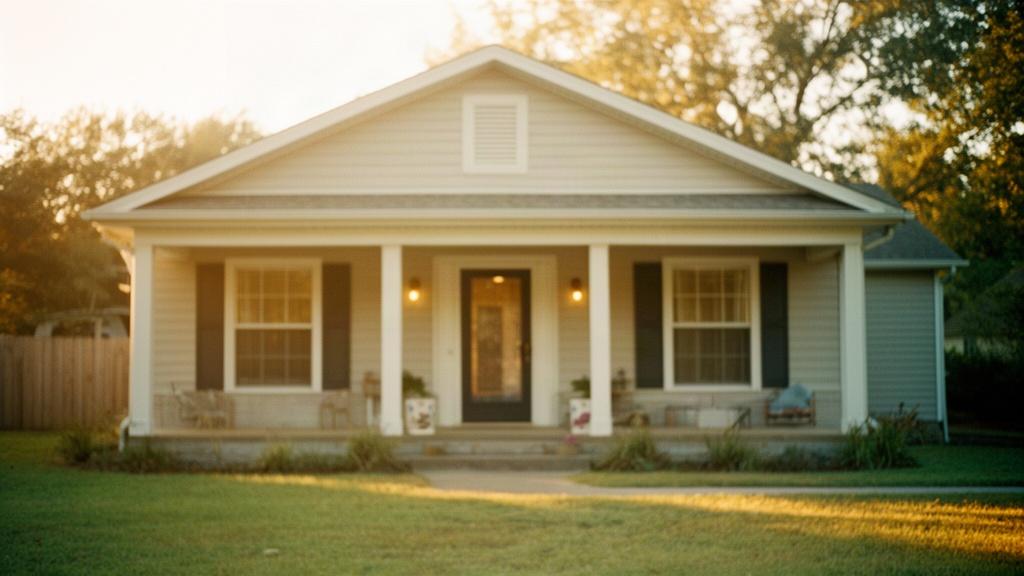
The majority of Cully's single-family homes were built between the 1940s and the 1970s. Ranch-style homes are common, often with original hardwood floors, single-car garages, and covered front porches. Many have been updated over the decades with added bathrooms, kitchen remodels, or accessory dwelling units in the backyard. You will also find a meaningful number of newer builds and duplexes that went up after Portland's residential infill rules loosened, so the streetscape in some blocks alternates between a 1955 ranch and a 2019 modern box.
Lot Sizes and Outdoor Space
Lot sizes in Cully run larger than the Portland average, with many parcels in the 6,000 to 9,000 square foot range and some exceeding 10,000 square feet. That translates directly into daily life: deep backyards with room for raised garden beds, fruit trees, and space for kids or dogs to move around. Several blocks have an almost semi-rural quality to them, with mature trees arching over the street and houses set well back from the sidewalk. This is not what most people picture when they think of Northeast Portland, and it surprises a lot of buyers who visit for the first time.
The Mix of Old and New
Cully went through a period of significant investment and new development starting around 2015, and the effects are still visible in September 2026. Renovated homes with new roofs and updated exteriors sit alongside properties that have not been touched in decades. That gap creates real opportunity for buyers who want to purchase at a lower price point and improve over time, and it also means buyers need to budget carefully for inspections. A pre-offer inspection or thorough due diligence period matters more in Cully than in a neighborhood where the housing stock is more uniform.
For a deeper look at what the overall Portland market looks like right now as you weigh your options, the article on relocating to Portland, Oregon covers neighborhoods, costs, and timelines across the city in one place.
3. Commuting In and Out of Cully Every Day
One of the most practical questions about any neighborhood is how long it takes to get where you need to go. Cully's location in Northeast Portland puts it at a middle distance from most major employment centers: not as close as the inner eastside, but not as far as Lents or Centennial. Commute times vary significantly depending on whether you drive, take transit, or ride a bike.
Driving Times to Major Employment Hubs
By car during typical morning commute hours, Cully residents can expect the following approximate travel times. Downtown Portland via NE Sandy Boulevard or I-205 runs about 15 to 25 minutes depending on congestion. The Lloyd District and Oregon Convention Center area is roughly 10 to 15 minutes. The Nike campus in Beaverton requires crossing the city and typically takes 35 to 50 minutes. PDX airport is genuinely close: the main terminal entrance is about 10 minutes from most of Cully by car, which matters a lot for frequent travelers. The Columbia Corridor industrial and business district along the Columbia River is about 10 to 15 minutes north.
Transit and Bike Options
TriMet bus service covers Cully on several routes, with lines running along NE Killingsworth, NE Alberta, and NE 60th Avenue. The MAX light rail does not run directly through Cully, so transit-dependent residents typically take a bus to connect to the Red or Blue Line. The Red Line at NE 60th Avenue and Halsey is the closest MAX station for most of the neighborhood, about a 10 to 15 minute bus ride or bike ride from the interior streets. For bike commuters, Cully has some dedicated infrastructure but also significant gaps; the neighborhood has been part of ongoing Portland Bureau of Transportation discussions about improving the NE Cully Boulevard bikeway, and conditions have improved noticeably since 2020.
For more detail on how Portland neighborhoods compare on transit access, the guide to Portland neighborhoods within a 30-minute commute of the Pearl District without a car puts the transit picture in broader context.
4. Parks, Errands, and the Rhythm of Daily Life in Cully
The texture of daily life in Cully is shaped by a handful of anchors: a large park, a growing cluster of small businesses, and a food scene that has expanded meaningfully in the last decade. It is not the kind of neighborhood where you step outside and immediately find yourself on a busy commercial strip. The residential character dominates, and the commercial activity is concentrated rather than spread evenly throughout.
Cully Park and Green Space
Cully Park at NE 72nd Avenue and Killingsworth is the neighborhood's largest green space, covering about 25 acres. It includes soccer and baseball fields, a disc golf course, a community garden with over 100 plots, and forested walking paths. The park was significantly improved through a community-led restoration project that added native plantings and improved drainage over several years. On weekends, the park draws residents from across the neighborhood for organized sports, informal gatherings, and garden work. It is one of the most actively used neighborhood parks in outer Northeast Portland.
Beyond Cully Park, the neighborhood borders Whitaker Ponds Nature Park near the Columbia Slough, which offers wetland trails and wildlife viewing. The Columbia Slough Trail is accessible from the northern edge of the neighborhood and connects to a broader network of off-road paths that stretch east toward Gresham and west toward the Willamette. For residents who want daily outdoor access without driving, the combination of Cully Park and the slough trail system is a meaningful draw.
Grocery Shopping and Local Businesses
Grocery options in Cully itself are limited to smaller markets and corner stores. Most residents drive or bike to Fred Meyer on NE 33rd and Killingsworth, which is the closest large grocery store and is about 10 minutes by car from the center of the neighborhood. New Seasons Market on NE 33rd and Broadway and the Grocery Outlet on NE 82nd are also common destinations. The lack of a full-service grocery store within walking distance of the interior blocks is one of the most frequently cited trade-offs by Cully residents.
Small businesses along NE Killingsworth and the Alberta Arts District edge include hardware stores, auto repair shops, a handful of cafes, and several Latino-owned restaurants and tiendas that reflect the neighborhood's demographic history. The business mix is practical rather than curated, which is part of what gives Cully its distinctly unpolished, working-neighborhood feel compared to the more commercial stretches of Mississippi Avenue or Division Street.
Food and Community Gathering Spots
Cully's food scene is modest but genuine. Expatriate, the bar and restaurant on NE Killingsworth, draws people from across Northeast Portland for its cocktails and straightforward food. Cully Central, the community gathering space and event venue, hosts neighborhood events, pop-ups, and markets that bring residents together throughout the year. The Alberta Arts District is a short bike ride or drive from the western edge of Cully and gives residents easy access to a much wider range of restaurants, bars, and coffee shops without having to go all the way downtown.
For more context on what daily life and costs look like across Portland as a whole, the cost of living in Portland, Oregon article covers housing, transportation, and everyday expenses city-wide.
5. Cully Real Estate: What Buyers and Sellers Are Seeing Right Now
Cully has historically been one of the more affordable entry points into Northeast Portland, and that positioning has held even as prices across the city have shifted. In September 2026, the neighborhood continues to attract buyers who want more square footage and lot size than inner-eastside neighborhoods offer at a comparable price. Sellers, meanwhile, are finding that well-maintained homes with updated systems move relatively quickly when priced correctly.
Price Ranges in September 2026
Single-family homes in Cully are currently trading in a range of approximately $380,000 to $600,000, with the median sitting around $465,000 as of September 2026. Entry-level properties, often smaller ranch homes that need cosmetic work, come in at the lower end of that range. Fully updated homes with accessory dwelling units or larger lot sizes push toward or above the $550,000 mark. Condos and attached units are less common in Cully than in inner Portland neighborhoods, so the market here is primarily a single-family market. You can review additional neighborhood data through the Cully neighborhood profile on NeighborhoodScout, which tracks housing and demographic data over time.
What Your Budget Gets You
At $420,000 to $460,000, a buyer in Cully can typically find a two or three bedroom ranch home on a 6,000 to 7,500 square foot lot with original hardwood floors, a one-car garage, and a functional but dated kitchen. At $500,000 to $560,000, updated kitchens and bathrooms are more common, and some listings include a permitted ADU that generates rental income. Above $575,000, buyers start to see newer construction or significantly renovated homes with open floor plans, energy-efficient systems, and larger lots. The price-per-square-foot in Cully is lower than in Concordia, Beaumont, or Alameda, which is one reason the neighborhood draws buyers who have been priced out of those areas.
Market Pace and Conditions
Cully is not a neighborhood where well-priced homes sit for months. In September 2026, correctly priced single-family homes are seeing accepted offers within two to three weeks of listing, with some move-in-ready properties drawing multiple offers in the first week. Overpriced listings or homes with deferred maintenance tend to sit longer and often require price reductions. For sellers, the condition of the home and the accuracy of the initial list price matter more here than in tighter inner-city markets where demand absorbs a wider range of conditions.
If you are selling a home in Cully and want to understand how pricing strategy and timing interact, the article on selling a home in Portland, Oregon walks through what to expect from the pricing and listing process.
For buyers who want to understand the full cost picture before making an offer, the guide to closing costs for buyers in Portland, Oregon in 2026 breaks down what you will owe at the table beyond the purchase price.
Living Room Realty's Cully neighborhood guide also provides a useful overview of recent sales activity and the neighborhood's general character for buyers who want additional local perspective.
FAQ
Is Cully a walkable neighborhood in Portland?
Walkability in Cully depends heavily on which block you live on. Streets near NE Killingsworth and the Alberta Arts District edge score reasonably well for walkability, with coffee shops, bus stops, and small businesses within a few minutes on foot. Interior residential blocks are quieter and more car-dependent for daily errands, particularly grocery shopping, since there is no full-service grocery store within walking distance of the neighborhood's center. Most residents find that a bike covers a lot of ground efficiently, especially for trips to Fred Meyer on NE 33rd or to the MAX Red Line station at NE 60th and Halsey. Transit-dependent residents should map specific routes from the address they are considering before committing.
How does Cully compare to nearby Northeast Portland neighborhoods on price?
Cully typically comes in at a lower price per square foot than immediately adjacent neighborhoods like Concordia, Beaumont-Wilshire, and Alameda, which have more uniform housing stock and higher demand. In September 2026, the Cully median is around $465,000 for a single-family home, while comparable homes in Concordia or Beaumont often list in the $530,000 to $650,000 range. That gap exists partly because Cully has more housing variability, meaning some blocks have well-maintained updated homes while others have properties that need significant work. Buyers who are willing to do due diligence and look past cosmetic issues often find more square footage and lot size in Cully than their budget would allow one neighborhood to the west.
What should I know about schools in the Cully neighborhood before buying?
School assignment in the Cully area falls within Portland Public Schools, and specific school boundaries can shift, so the most reliable step is to check your exact address against the current boundary maps on the Portland Public Schools website or the Oregon Department of Education's school finder tool. Those official sources will show you which schools serve a given address. Real estate agents cannot make representations about schools, and boundaries do change, so always verify directly with the district before making a purchase decision based on school access.