← Back to Blog
Market Trends
Livermore, CA Has the Best Reputation Real Estate Market Guide: Prices, Neighborhoods and Timing
By Tonya Dennett
Coldwell Banker Realty
September 17, 2026 · 10 min read
Livermore, CA has earned a strong reputation as one of the Tri-Valley's most active real estate markets, and for good reason: the city combines Alameda County's wine country setting with direct BART access to San Francisco, keeping buyer demand steady year after year. This guide covers what you need to know right now about Livermore prices, neighborhood features, and the timing questions that matter most whether you are buying, selling, or relocating. Every number and detail here reflects conditions as of September 2026.
1. Why Livermore Holds Its Value in the Bay Area Market
Livermore holds its value because of a combination of geography, infrastructure, and employment that few Tri-Valley cities can match. The city sits at the eastern end of Alameda County, roughly 45 miles from San Francisco and 35 miles from San Jose, giving commuters access to two major employment corridors. Two BART stations, Livermore and Isabel (the newer East Bay extension), connect residents directly to Oakland and San Francisco without requiring a car.
The Tri-Valley Price Advantage
Compared to Santa Clara County cities at similar commute distances, Livermore consistently offers more square footage per dollar. A buyer who cannot afford a 1,500-square-foot home in Sunnyvale or Mountain View will often find a 2,000-square-foot home with a yard in Livermore at a meaningfully lower price point. That spread has kept relocation demand strong even as broader Bay Area inventory has fluctuated.
According to Forbes Advisor's Bay Area housing market analysis, the broader Bay Area has seen sustained price appreciation driven by limited land supply and persistent tech-sector employment. Livermore sits within that broader trend while offering a price point that still attracts first-time buyers and move-up buyers who have been priced out of closer-in markets.
What Drives Demand in Livermore
Lawrence Livermore National Laboratory and Sandia National Laboratories are the two largest employers in the city, together employing thousands of scientists, engineers, and support staff. That employment base creates a layer of demand that is relatively insulated from private-sector hiring cycles. Employees at both labs tend to put down roots, which keeps turnover low and supports home values even in slower market periods.
The wine country setting adds another layer of appeal. Livermore Valley is home to more than 50 wineries, including Wente Vineyards, one of the oldest continuously operating family wineries in the country, and Las Positas Vineyards. The Arroyo Mocho Trail, Sycamore Grove Regional Park, and Del Valle Regional Park give residents substantial outdoor access within minutes of any neighborhood in the city.
2. Current Prices and What Your Money Buys
As of September 2026, the Livermore median single-family home price is approximately $1.15 million, with condominiums and townhomes ranging from roughly $620,000 to $850,000 depending on size and location. Those numbers represent a market that has continued to appreciate through 2026, supported by limited inventory and consistent buyer demand from both local move-up buyers and Bay Area relocators.
Median Home Prices Right Now
Single-family detached homes in Livermore typically range from around $850,000 for a smaller 3-bedroom built in the 1970s to well over $1.5 million for a newer 4-bedroom home in a planned community with updated finishes. Homes on larger lots in the South Livermore wine country corridor, particularly those with vineyard views or acreage, can exceed $2 million. The gap between entry-level and premium properties is wide, which gives buyers at multiple price points a real foothold in the market.
Price Per Square Foot by Area
Price per square foot in Livermore currently runs between $550 and $750 for most single-family homes, with newer construction in North Livermore communities like Sage and Altamont Creek pushing toward the upper end of that range. Older ranch-style homes built in the 1960s and 1970s near the downtown core tend to come in at the lower end of that range, giving buyers who are willing to renovate an opportunity to add equity. Condos and townhomes generally price between $420 and $520 per square foot.
How Livermore Compares to Nearby Cities
Dublin, directly to the west, runs roughly $100,000 to $150,000 higher than Livermore on median single-family prices, largely due to its proximity to the I-580/I-680 interchange and newer master-planned communities. Pleasanton, also adjacent, carries a similar premium. Tracy, to the east, comes in lower but involves a longer commute to Bay Area employment centers. Livermore occupies a middle position in the Tri-Valley price spectrum, which is part of why it draws buyers who have been outpriced in Dublin or Pleasanton.
For deeper historical context on Livermore's appreciation trajectory, NeighborhoodScout's Livermore real estate appreciation data provides a long-run view of how the city has performed relative to national and California averages, which is useful context for buyers evaluating Livermore as a long-term investment.
3. Livermore Neighborhoods: Features, Stock, and Price Ranges
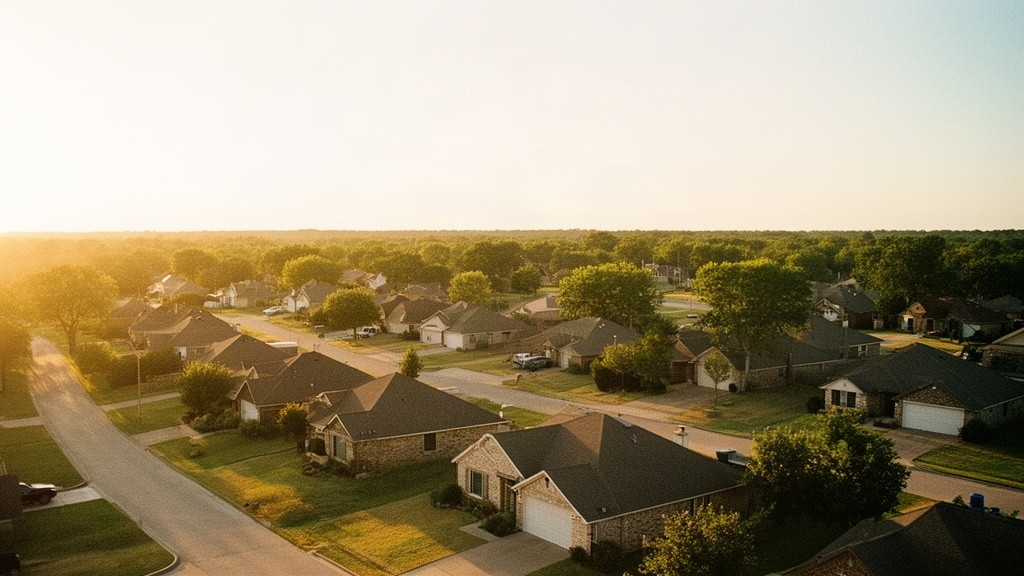
Livermore's neighborhoods vary significantly in housing stock, lot size, architectural style, and price, so understanding what each area physically offers is essential before narrowing your search. The city covers about 26 square miles, and the character of housing shifts noticeably as you move from the historic downtown core outward to the newer planned communities on the northern and eastern edges.
South Livermore and the Wine Country Corridor
South Livermore runs along Tesla Road and Mines Road into the valley's vineyard landscape. Properties here range from suburban tract homes built in the 1990s and early 2000s to custom homes on half-acre to multi-acre lots surrounded by working vineyards. Streets like Wetmore Road and Vallecitos Road connect neighborhoods to wineries and open space. Prices in this corridor start around $1.1 million for a standard 4-bedroom and climb sharply for estate properties with acreage.
Sycamore Grove Regional Park borders the southern residential areas, giving residents trail access directly from their neighborhoods. The combination of open space, vineyard proximity, and newer construction makes this corridor one of the most architecturally varied parts of the city. Lot sizes here are generally larger than anywhere else in Livermore, with many properties offering 10,000 square feet or more.
Sunset East and the Central Neighborhoods
The central and Sunset East portions of Livermore contain much of the city's 1960s through 1980s housing stock: ranch-style homes, split-levels, and early tract construction on standard 6,000 to 8,000 square-foot lots. These neighborhoods sit within a short drive of downtown Livermore, the Livermore Valley Performing Arts Center, and the Bankhead Theater. Prices here typically run from $850,000 to $1.1 million depending on lot size and update level. Buyers willing to put work into a property often find the best value per square foot in these central areas.
North Livermore and Newer Subdivisions
North Livermore has seen the most new construction activity over the past decade, with master-planned communities like Sage, Altamont Creek, and Springtown offering homes built from the late 1990s through the 2010s. These neighborhoods feature larger floor plans, often 2,000 to 3,200 square feet, with two-car garages, open-plan layouts, and HOA-maintained common areas. Prices range from approximately $1.05 million to $1.4 million. The Isabel BART station is accessible from this part of the city, which has reinforced demand in recent years.
Downtown Livermore and Historic Core
The blocks surrounding First Street and the downtown corridor contain some of Livermore's oldest housing, including Craftsman bungalows, Victorian cottages, and early California ranch homes from the 1910s through 1950s. Lot sizes are smaller, typically 4,000 to 6,000 square feet, but the walkability to restaurants, coffee shops, the Vine Cinema, and the weekly farmers market at Stockmen's Park adds a different kind of value. Prices for updated historic homes near downtown typically run from $900,000 to $1.2 million.
4. Market Timing: When to Buy or Sell in Livermore
Timing the Livermore market perfectly is not possible, but understanding its seasonal rhythms gives buyers and sellers a genuine strategic advantage. The Livermore market follows broader Bay Area patterns with some local variations tied to the academic calendar, the lab hiring cycle, and the wine country tourism season.
Seasonal Patterns in the Livermore Market
Spring, from March through May, is historically Livermore's most competitive buying season. Inventory rises as sellers prepare for the warmer months, but buyer demand rises faster, which produces multiple-offer situations and prices that frequently exceed list. Summer activity stays elevated through July, then moderates in August as families complete moves before the school year. Fall, particularly September and October, sees a second wave of motivated buyers who missed spring and are working against year-end deadlines.
For sellers, listing in late February or early March captures maximum buyer attention. For buyers, September and October can offer slightly less competition than spring, particularly for properties that have been on the market for two to three weeks. December and January see the fewest transactions and the lowest inventory, which cuts both ways: less competition but also fewer choices.
What September 2026 Conditions Mean for You
Right now in September 2026, the Livermore market is in its post-summer transition period. Inventory has ticked up modestly from the summer lows, and some sellers who priced aggressively in July and August have made adjustments. That creates a window for buyers who are pre-approved and ready to move: there is more to look at than there was in June, and the urgency of spring has faded. Sellers who list this month are reaching buyers who are serious and motivated to close before the end of the year.
Mortgage rate conditions in September 2026 continue to influence affordability calculations. Buyers should model their monthly payment at current rates rather than waiting for rate drops that may or may not materialize on a predictable timeline. At Livermore's median price, a one-percentage-point difference in rate changes the monthly payment by roughly $700 to $800 on a standard 80% loan, so rate awareness matters more here than in lower-priced markets.
5. Practical Steps for Buyers and Sellers Right Now
Knowing the market is only useful if you can act on it. The steps that move buyers and sellers forward in Livermore are specific to this market's pace and inventory levels, not generic advice that applies anywhere in the country.
For Buyers: How to Compete in Livermore
Get fully pre-approved before you tour a single home. In Livermore, where desirable homes in the $1 million to $1.3 million range routinely receive offers within the first weekend, a pre-approval letter from a local or regional lender carries more weight than one from an online lender the listing agent has never heard of. Know your walk-away number before you write an offer so you are not making emotional decisions under a 24-hour deadline.
Understand what contingencies are standard versus negotiable in the current market. In a competitive Livermore environment, buyers sometimes waive or shorten inspection contingency periods, but doing so without a clear understanding of the property's condition is a risk that needs to be weighed carefully. A local agent who knows which inspectors can turn around reports in 24 to 48 hours gives you options that out-of-area buyers do not have. For more on working with a buyer's agent in this market, see the guide on finding a good real estate agent in Livermore, CA.
For Sellers: How to Price and Prepare
Pricing is the single most important decision a Livermore seller makes. Homes priced at or slightly below current comparable sales generate the most showing activity in the first seven to ten days, which is when buyer interest peaks. A home that sits for three or more weeks in Livermore starts accumulating a stigma that is difficult to reverse even with a price reduction. The right price on day one is almost always better than a reduction on day twenty-one.
Preparation matters as much as pricing. In a market where buyers are spending over $1 million, they expect a home that shows well. Fresh interior paint, clean landscaping, and professional photography are table stakes. Homes in the central Livermore neighborhoods that have been updated to modern kitchen and bathroom standards consistently outperform comparable unrenovated homes by 5% to 8% at sale. For a detailed look at what sellers should expect through the process, the article on selling your home in Livermore: pricing, timeline and what to expect covers the full timeline.
Choosing the right agent to represent you is as important as pricing and preparation. An agent with recent closed transactions in your specific Livermore neighborhood brings comparable data, contractor relationships, and buyer network connections that a generalist agent cannot replicate. If you are evaluating agents, the article on what to look for when choosing a realtor to sell your home in Livermore gives you a practical framework for making that decision.
FAQ
What is the current median home price in Livermore, CA as of September 2026?
As of September 2026, the median single-family home price in Livermore is approximately $1.15 million. Condominiums and townhomes range from roughly $620,000 to $850,000. Prices vary significantly by neighborhood and housing vintage: newer planned communities in North Livermore and estate properties in the South Livermore wine country corridor sit at the upper end of the range, while older ranch-style homes in the central neighborhoods offer more accessible entry points. Buyers should work with a local agent to pull current comparable sales in the specific areas they are targeting, since list-to-sale price ratios can shift from month to month.
Is it a good time to buy a home in Livermore right now?
September 2026 represents a transitional moment in the Livermore market: post-summer inventory has increased modestly, buyer competition is less intense than it was during the spring peak, and sellers who did not close in the summer are more motivated to negotiate. That combination gives prepared, pre-approved buyers more leverage than they had in March or April. The long-term case for Livermore ownership remains strong given the employment anchor provided by Lawrence Livermore National Laboratory, Sandia National Laboratories, and the BART connectivity to Bay Area job centers. Buyers who are financially ready and plan to stay for at least five to seven years are entering a market with a well-established track record of appreciation.
How do Livermore's neighborhoods differ in terms of housing stock and price?
Livermore's neighborhoods span roughly a century of construction and a wide price range. The historic downtown core contains Craftsman bungalows and early ranch homes from the 1910s through 1950s on smaller lots, typically priced from $900,000 to $1.2 million for updated properties. The central and Sunset East areas feature 1960s through 1980s tract homes on standard lots, ranging from $850,000 to $1.1 million. North Livermore's newer master-planned communities offer larger floor plans from the late 1990s through 2010s, priced from $1.05 million to $1.4 million. South Livermore's wine country corridor includes everything from 1990s suburban homes to custom estate properties on acreage, with prices starting around $1.1 million and climbing well above $2 million for vineyard-adjacent parcels. Understanding these distinctions before you start touring saves significant time.