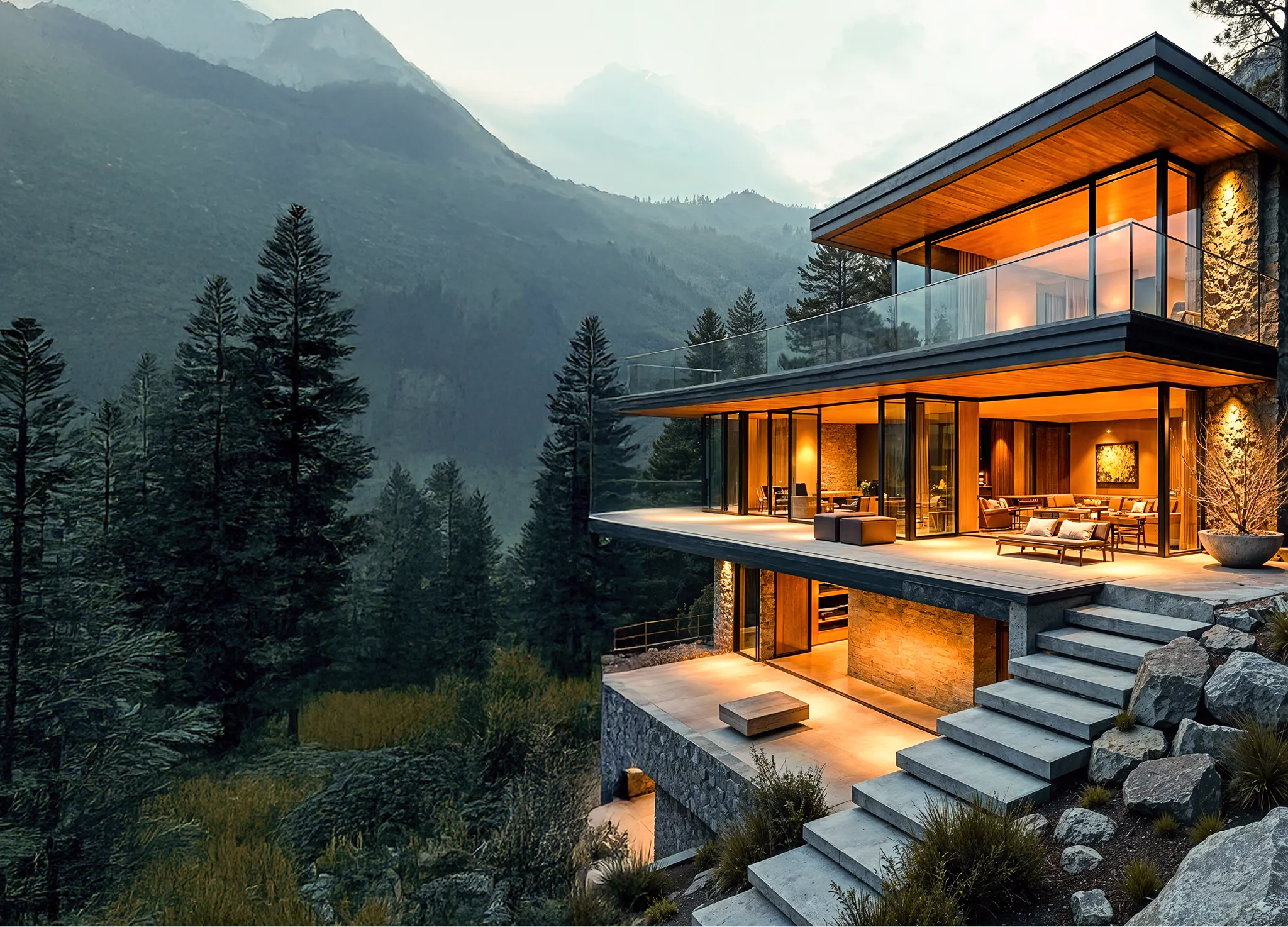
.webp)
Marketing
The Best Lens for Real Estate Photography: What Agents Should Know
Choosing the best lens for real estate photography affects how your listings appear online — and whether buyers feel compelled to schedule showings. This guide covers focal length recommendations, the trade-offs between wide and ultra-wide lenses, and what to look for whether you're shooting yourself or hiring a photographer.

March 5, 2026

5 min read
Share


What We'll Explore
1. Why Lens Choice Matters for Real Estate
2. The Best Lens for Real Estate Photography: Focal Length Guide
•
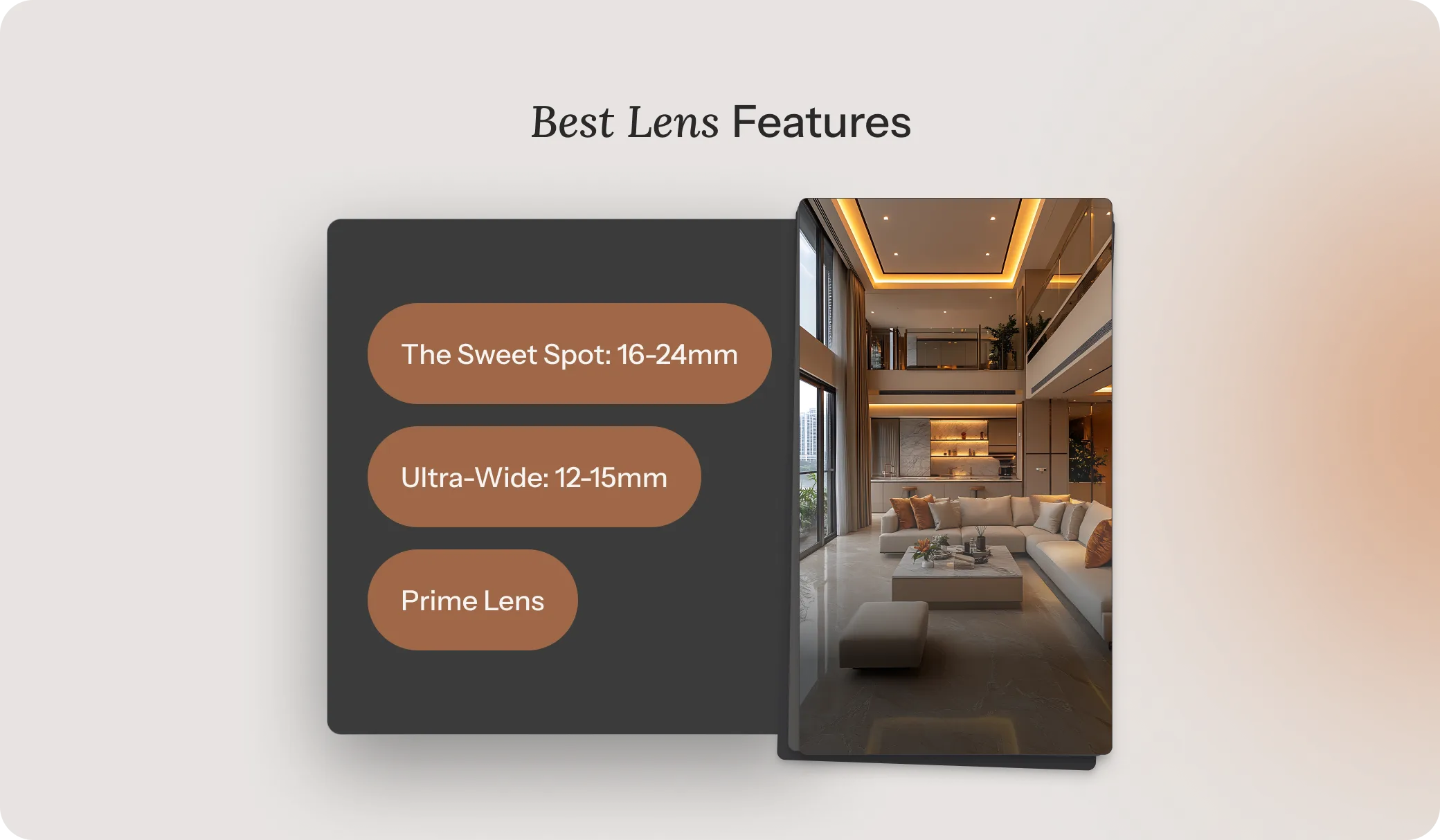
The Sweet Spot: 16-24mm
•
Ultra-Wide: 12-15mm
•
Standard: 35-50mm
3. Choosing Between Zoom and Prime Lenses
•
Zoom Lenses for Real Estate
•
Prime Lenses for Real Estate
4. Full Frame vs. Crop Sensor Considerations
5. Avoiding the "Wider Is Better" Trap
6. Beyond the Lens: Complete Listing Visuals
1. Why Lens Choice Matters for Real Estate
The lens determines how much of a room appears in frame and how accurately that space is represented. The right amount of width shows rooms accurately and invitingly without distortion. Matching focal length to room size ensures every space gets the context it deserves.
According to Digital Photography School, the goal of real estate photography is to show spaces accurately while making them look inviting. Lens selection directly impacts both objectives.
For agents, understanding lens basics helps you evaluate photographer portfolios, provide better direction during shoots, and make informed decisions if you're capturing your own listing photos.
2. The Best Lens for Real Estate Photography: Focal Length Guide
Focal length, measured in millimeters (mm), determines how wide or narrow your field of view is. Lower numbers mean wider angles; higher numbers mean tighter frames.
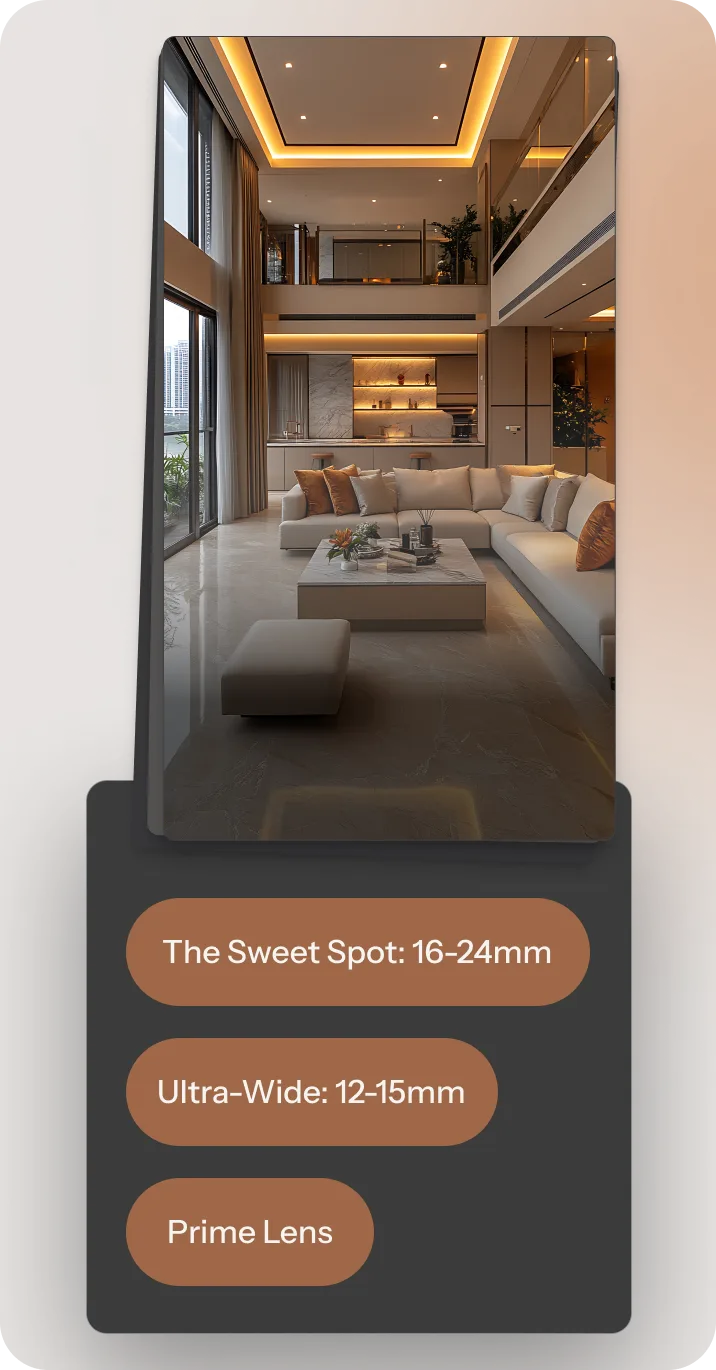
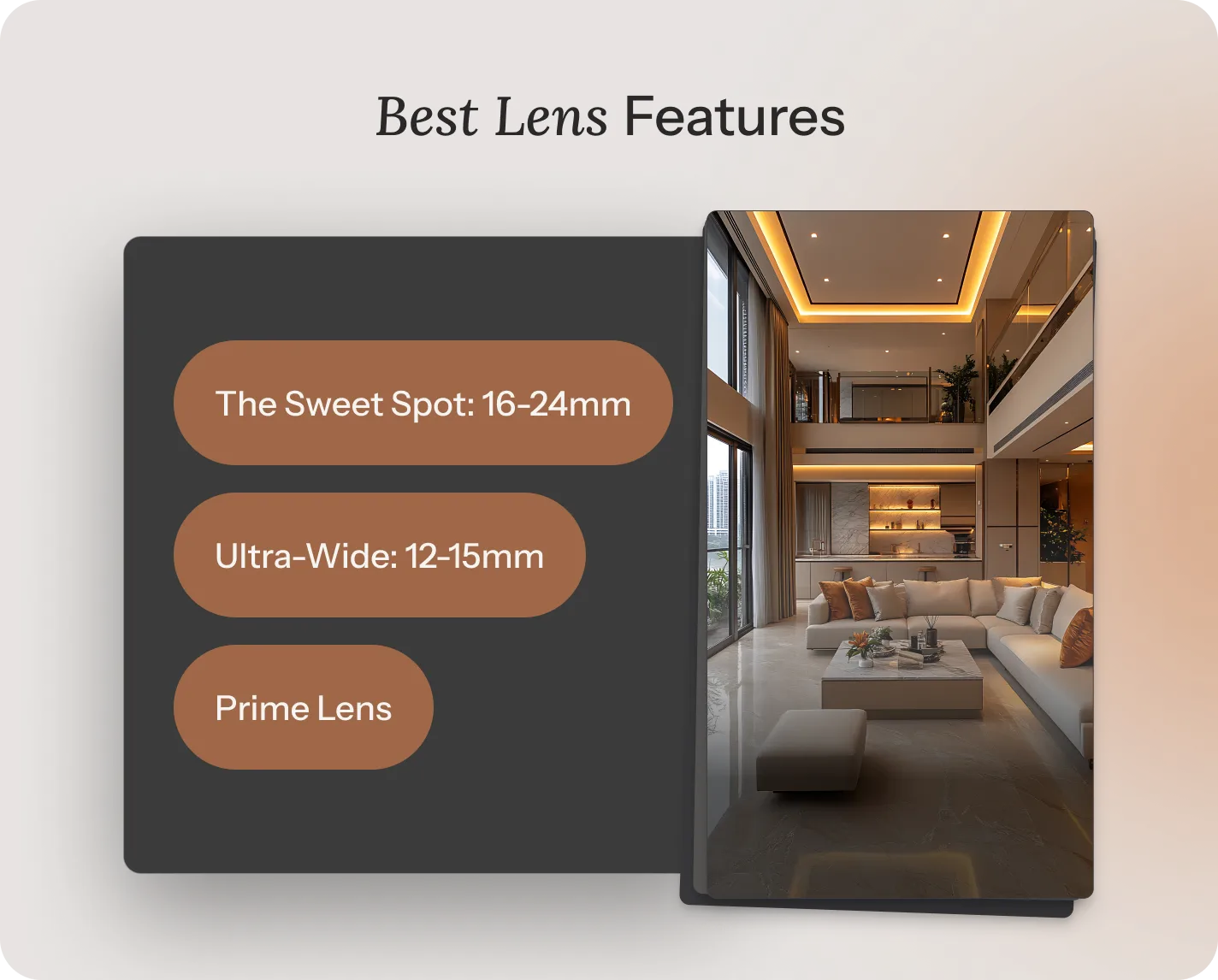
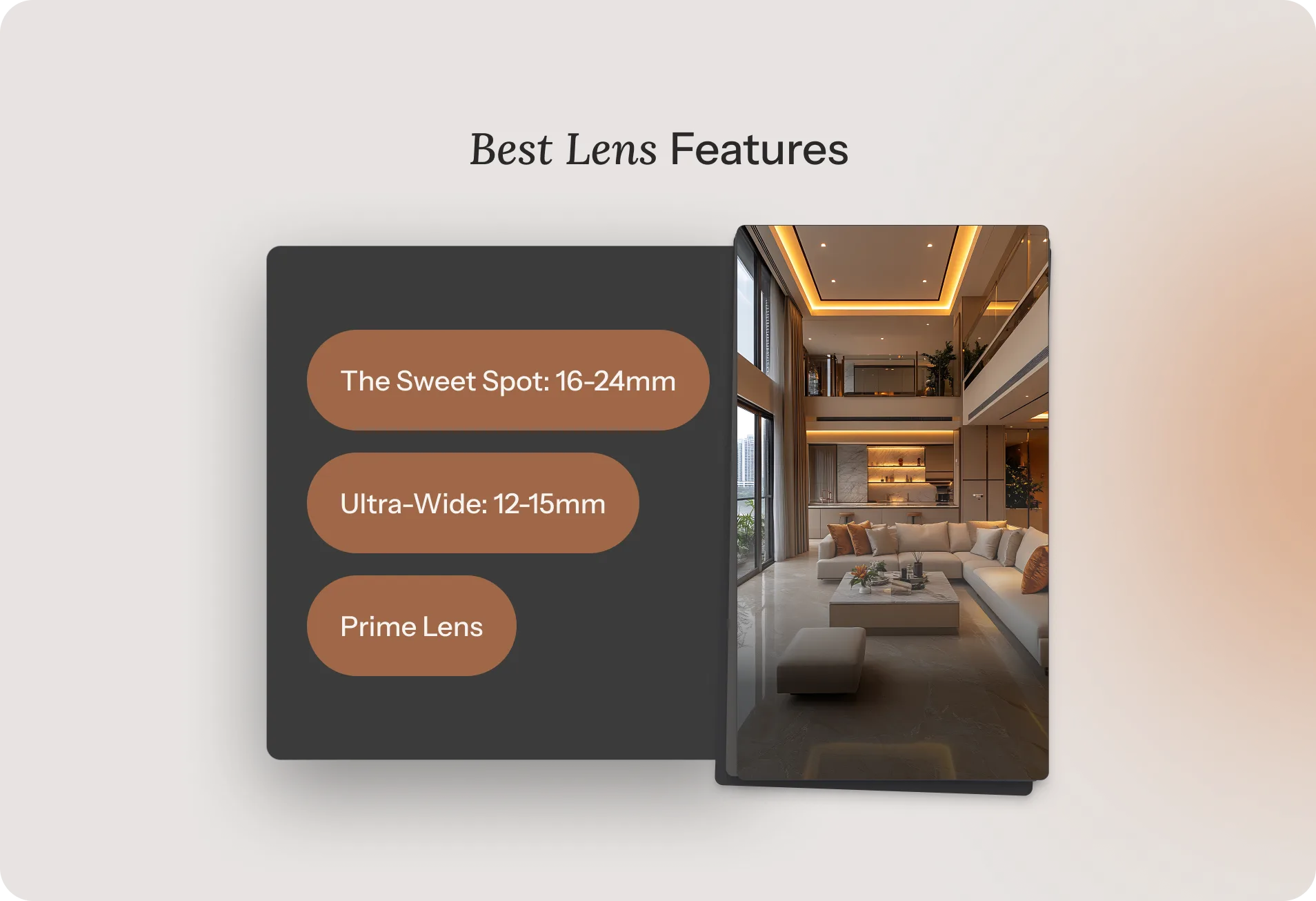
The Sweet Spot: 16-24mm
Most professional real estate photographers work primarily in the 16-24mm range. This range captures enough of a room to give context without the extreme distortion that makes spaces look unrealistic.
16-17mm works well for tight spaces like bathrooms, small bedrooms, and galley kitchens. It's wide enough to show the full room without requiring you to back into a wall.
20-24mm is ideal for larger spaces — living rooms, master suites, open floor plans. This range provides a natural-looking perspective that accurately represents room size.
The key is matching focal length to room size. A massive great room photographed at 16mm looks oddly stretched. A small powder room photographed at 24mm might show only half the space.
Ultra-Wide: 12-15mm
Ultra-wide lenses capture more of a scene but introduce noticeable distortion. Vertical lines near frame edges bend outward (barrel distortion), and rooms appear larger than reality.
Used selectively, ultra-wide focal lengths excel at dramatic exterior shots and sweeping open floor plans — the key is intentional, sparing use.
When listing photos accurately represent the space, buyers arrive genuinely excited and every showing counts.
Use ultra-wide focal lengths sparingly and correct distortion in post-processing when possible.
Standard: 35-50mm
Standard focal lengths shine as supporting lenses, best deployed for detail work and select exterior shots rather than primary room coverage. However, they have their place.
Detail shots of fixtures, finishes, and architectural elements benefit from standard focal lengths. A close-up of a designer faucet, custom millwork, or fireplace mantel looks better at 35-50mm than at 16mm.
Exterior shots of large properties sometimes work better at standard focal lengths, avoiding the distortion that makes buildings look oddly stretched.
3. Choosing Between Zoom and Prime Lenses
Zoom lenses offer variable focal lengths (like 16-35mm), while prime lenses have a fixed focal length (like 24mm).
Zoom Lenses for Real Estate
For most real estate work, zoom lenses make sense. You're constantly adjusting to different room sizes, and changing lenses between every shot slows you down.
Popular zoom choices include:
- 16-35mm f/2.8 — The professional standard, covering the most useful range
- 17-28mm f/2.8 — Slightly more affordable with excellent quality
- 14-24mm f/2.8 —Goes wider but may be overkill for typical work
The f/2.8 aperture matters less for real estate than portraiture since you're typically shooting at f/8 or higher for sharpness throughout the frame. However, f/2.8 helps in low-light situations.
Prime Lenses for Real Estate
Prime lenses offer superior sharpness and often cost less than comparable zooms. A 24mm prime delivers exceptional image quality for a fraction of a 16-35mm zoom price.
The trade-off is flexibility. You'll change lenses more often, which costs time and risks dust on the sensor.
For agents shooting their own listings on a budget, a single prime lens (like a 20mm or 24mm) can produce excellent results. For professional photographers shooting multiple properties daily, zoom lenses make more practical sense.
4. Full Frame vs. Crop Sensor Considerations
Camera sensor size affects effective focal length. A 24mm lens on a crop-sensor camera (APS-C) produces a narrower field of view equivalent to roughly 36mm on a full-frame camera.
This crop factor means you need wider lenses on crop-sensor cameras to achieve the same field of view. Where a full-frame shooter uses 16-35mm, a crop-sensor shooter might need 10-18mm for equivalent coverage.
Full-frame cameras generally produce better low-light performance and shallower depth of field options, but modern crop-sensor cameras deliver excellent real estate results at lower cost.
5. Avoiding the "Wider Is Better" Trap
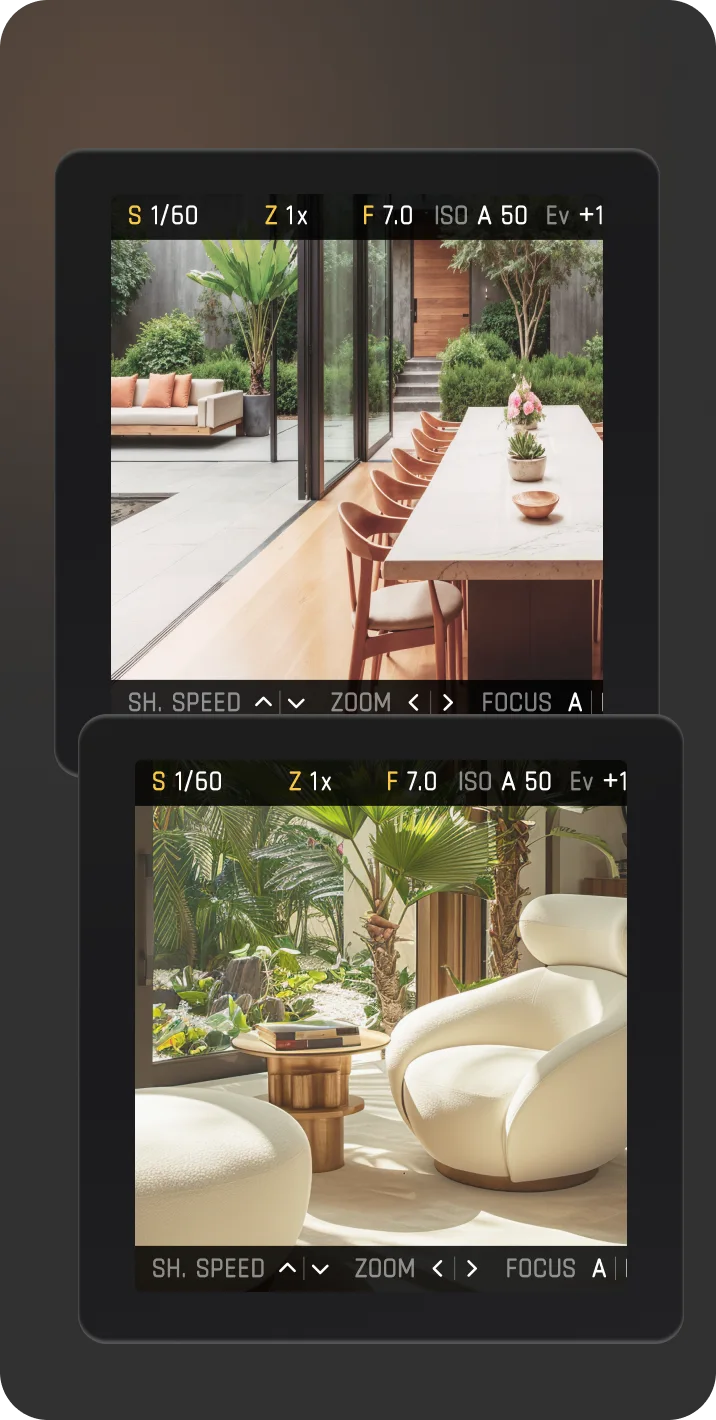
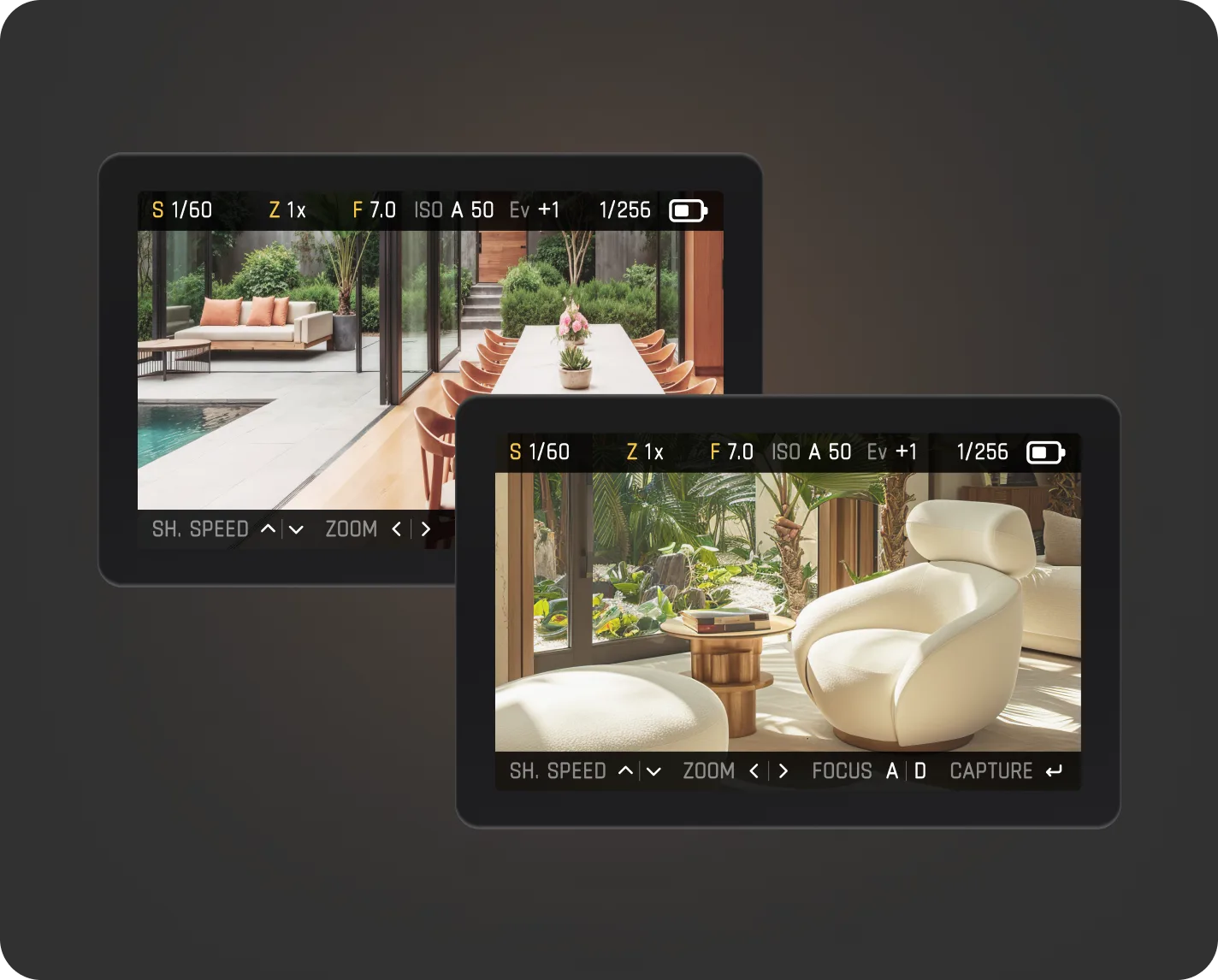
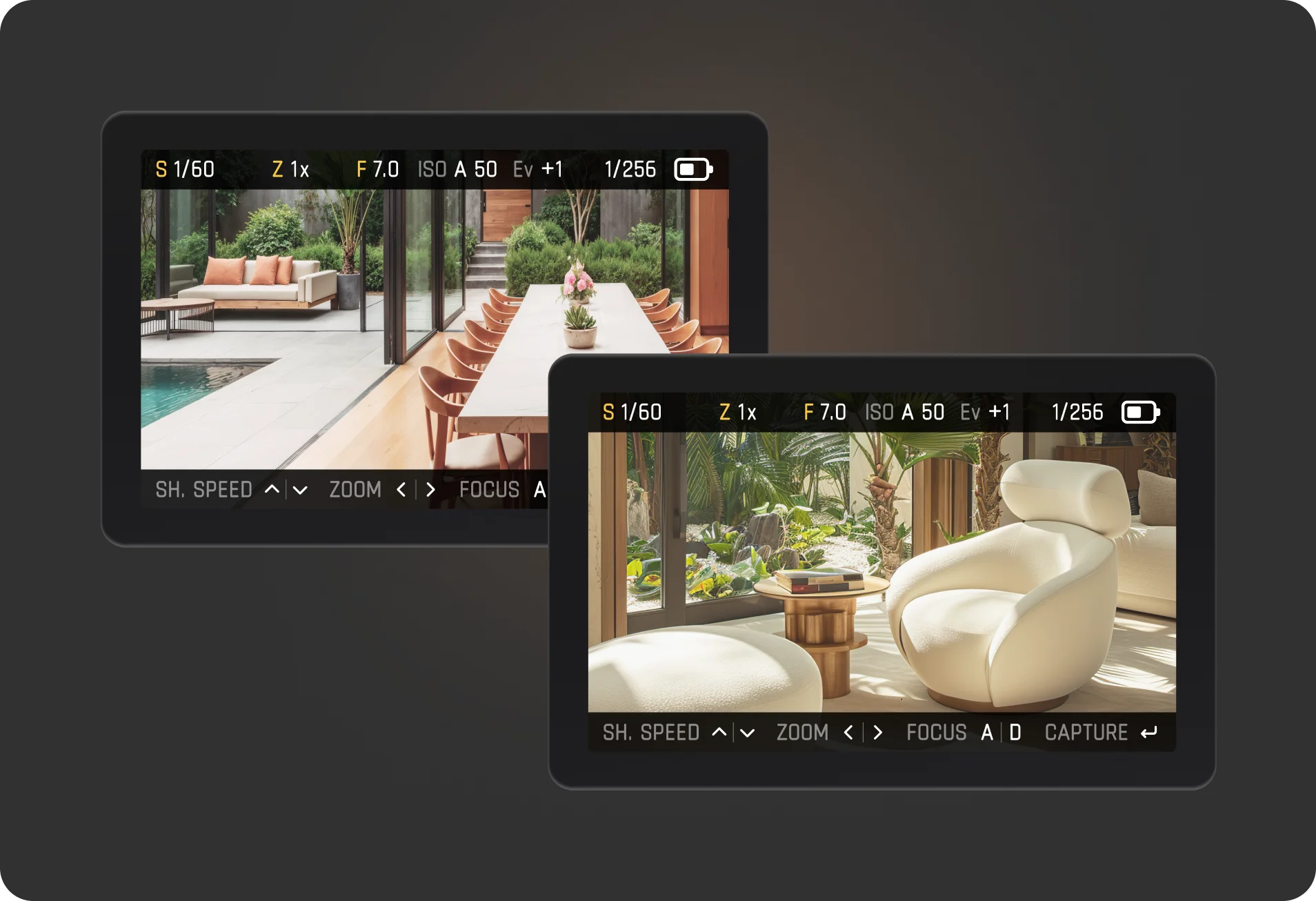
New real estate photographers get the best results by matching focal length to room size rather than defaulting to the widest setting available. The logic seems sound — wider means showing more, and showing more means better marketing.
In practice, matching focal length to room size consistently produces stronger results.
Accurate proportions help buyers arrive with realistic expectations. Well-matched focal lengths keep furniture, doorways, and room scale looking natural, so buyers feel confident and excited when they walk through the door.
The goal isn't to make rooms look as big as possible — it's to make them look as good as possible while remaining accurate. Sometimes that means stepping back and using a moderately wide lens rather than going ultra-wide from the corner.
Professional photographers find the angle and focal length that best represents each space. That might be 16mm for a small bathroom and 24mm for a generous living room. It varies by room.
6. Beyond the Lens: Complete Listing Visuals
Great photography starts with lens choice but doesn't end there. Lighting, composition, staging, and post-processing all affect final results.
For agents who want professional-quality visual marketing without becoming photography experts, there are other approaches. Video content, for example, conveys space and flow in ways that static photos cannot.
Trolto transforms your listing photos into cinematic property videos automatically. You don't need video equipment or editing skills — upload your photos, and receive a polished 4K video formatted for every platform. It's another way to present your listings professionally when hiring a videographer for every property isn't practical.
FAQ
What's the best lens for real estate photography on a budget?
A 20mm or 24mm prime lens offers excellent quality at lower cost than professional zoom lenses. For crop-sensor cameras, look at 10-18mm or 10-24mm zoom options. These provide the coverage you need without the professional price tag.
Should I hire a photographer or shoot my own listings?
For most agents, hiring a professional photographer delivers better results and saves time. If you're photographing your own listings, invest in learning proper technique — lens choice matters, but so do lighting, composition, and post-processing.
How do I evaluate a real estate photographer's lens choices?
Look at their portfolio for signs of extreme distortion — walls bending outward, rooms that look impossibly large, furniture that seems miniaturized. Good photographers use appropriate focal lengths for each space and correct distortion in editing.
Invest in Quality Visuals
Understanding the best lens for real estate photography helps you work more effectively with photographers and evaluate listing photos critically. The right focal length shows spaces accurately while making them look their best.
Whether you're shooting your own listings or working with professionals, strong visuals drive buyer interest. And when you want to extend those visuals into video without the production overhead, Trolto can help — turning your listing photos into cinematic videos that showcase properties from every angle.
See how Trolto works