.webp)
Marketing
The Best SEO Keywords for Real Estate: A Complete Guide
Finding the best SEO keywords for real estate determines whether potential clients find your website or your competitor's. This guide covers how to research and select keywords that drive traffic, organized by category with examples you can adapt for your market.

February 25, 2026

6 min read
Share






What We'll Explore
1. Why Keywords Matter for Real Estate SEO
2. How to Research the Best SEO Keywords for Real Estate
•
Use Keyword Research Tools
•
Evaluate Search Intent
•
Prioritize Local Keywords
3. Keyword Categories for Real Estate Websites
•
Location-Based Keywords
•
Buyer-Focused Keywords
•
Seller-Focused Keywords
•
Luxury Real Estate Keywords
•
Rental Keywords
•
Investment Keywords
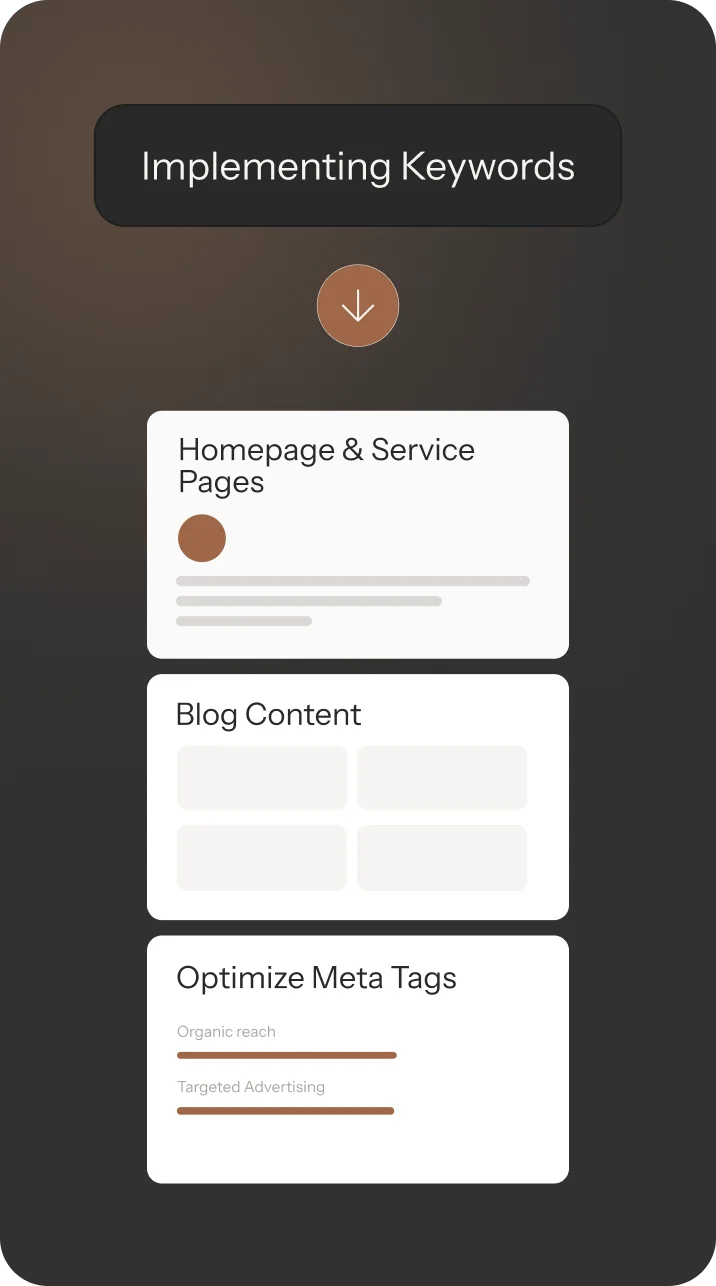
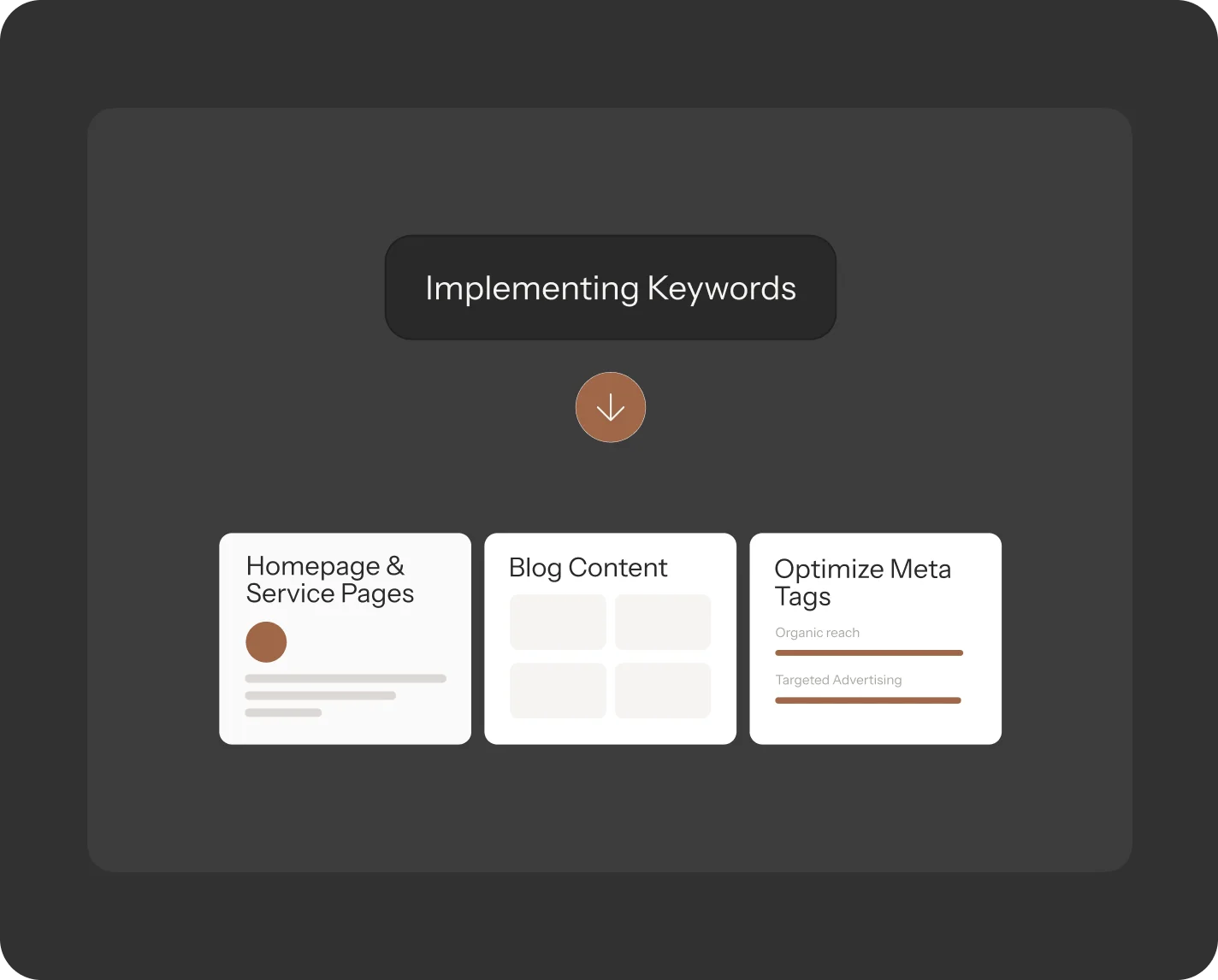
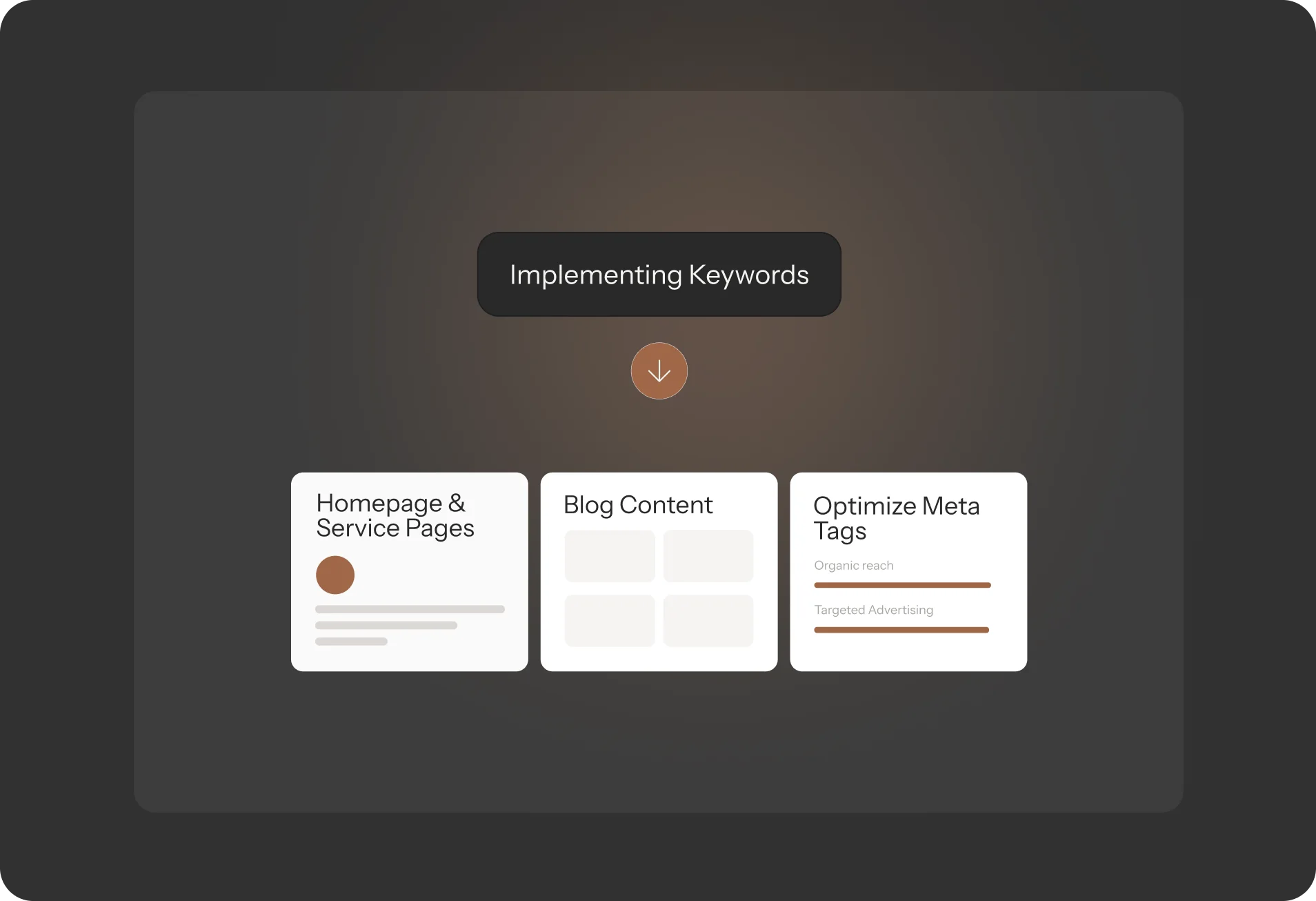
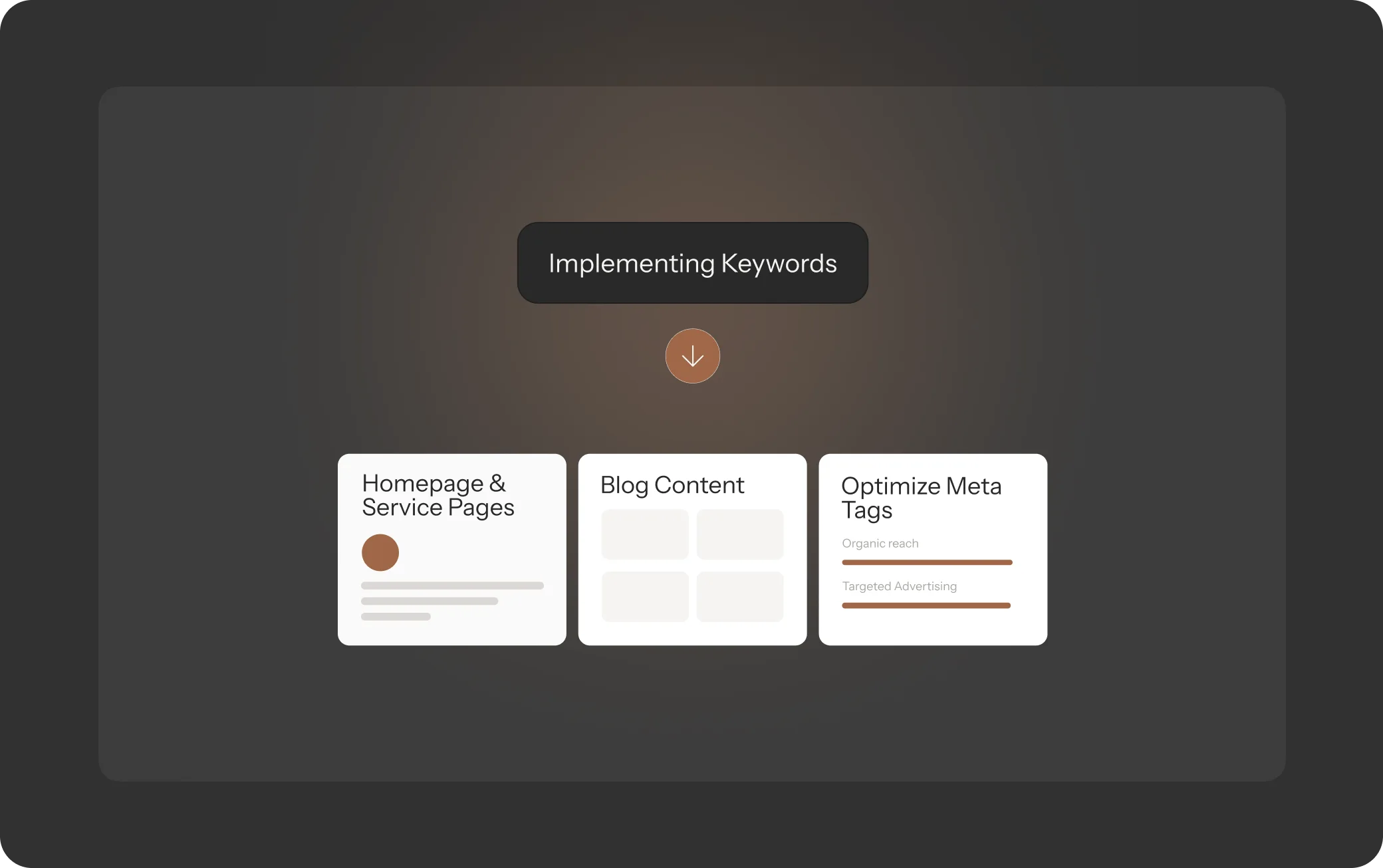
4. Implementing Keywords Effectively
•
Homepage and Service Pages
•
Blog Content
•
Property Listings
•
Meta Tags
5. Common Keyword Mistakes to Avoid
6. Supporting Your SEO With Consistent Content
1. Why Keywords Matter for Real Estate SEO
Keywords are the phrases people type into search engines when looking for homes, agents, or real estate information. When your website targets the right keywords, you appear in front of people actively searching for what you offer.
According to Moz's SEO guide, effective keyword targeting requires balancing search volume (how many people search for a term) with competition (how hard it is to rank). High-volume keywords like "homes for sale" draw millions of searches, led by major platforms like Zillow, Realtor.com, and other national portals.
The opportunity for individual agents lies in more specific terms — location-based keywords, long-tail phrases, and niche-focused queries where you can compete and rank.
2. How to Research the Best SEO Keywords for Real Estate
Before building your keyword list, understand how to evaluate which terms are worth targeting.
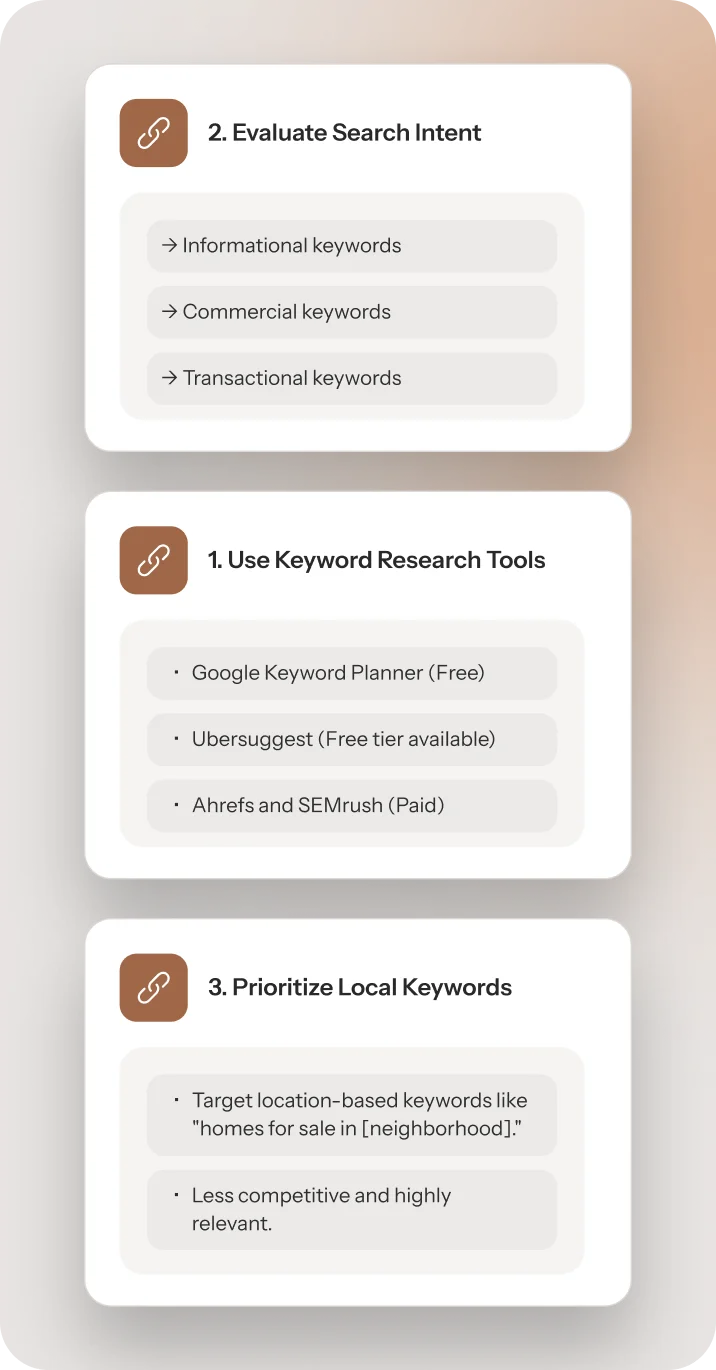
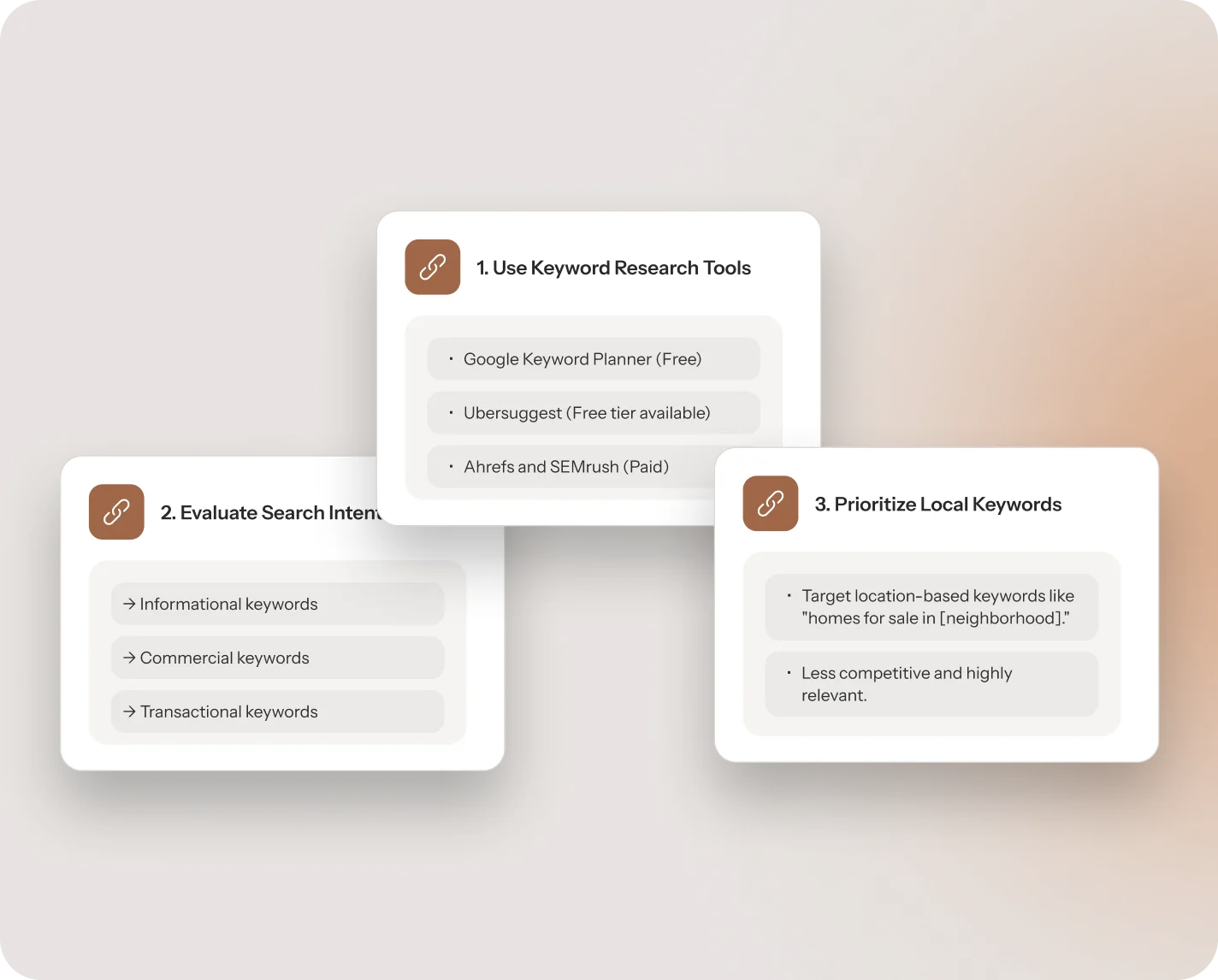
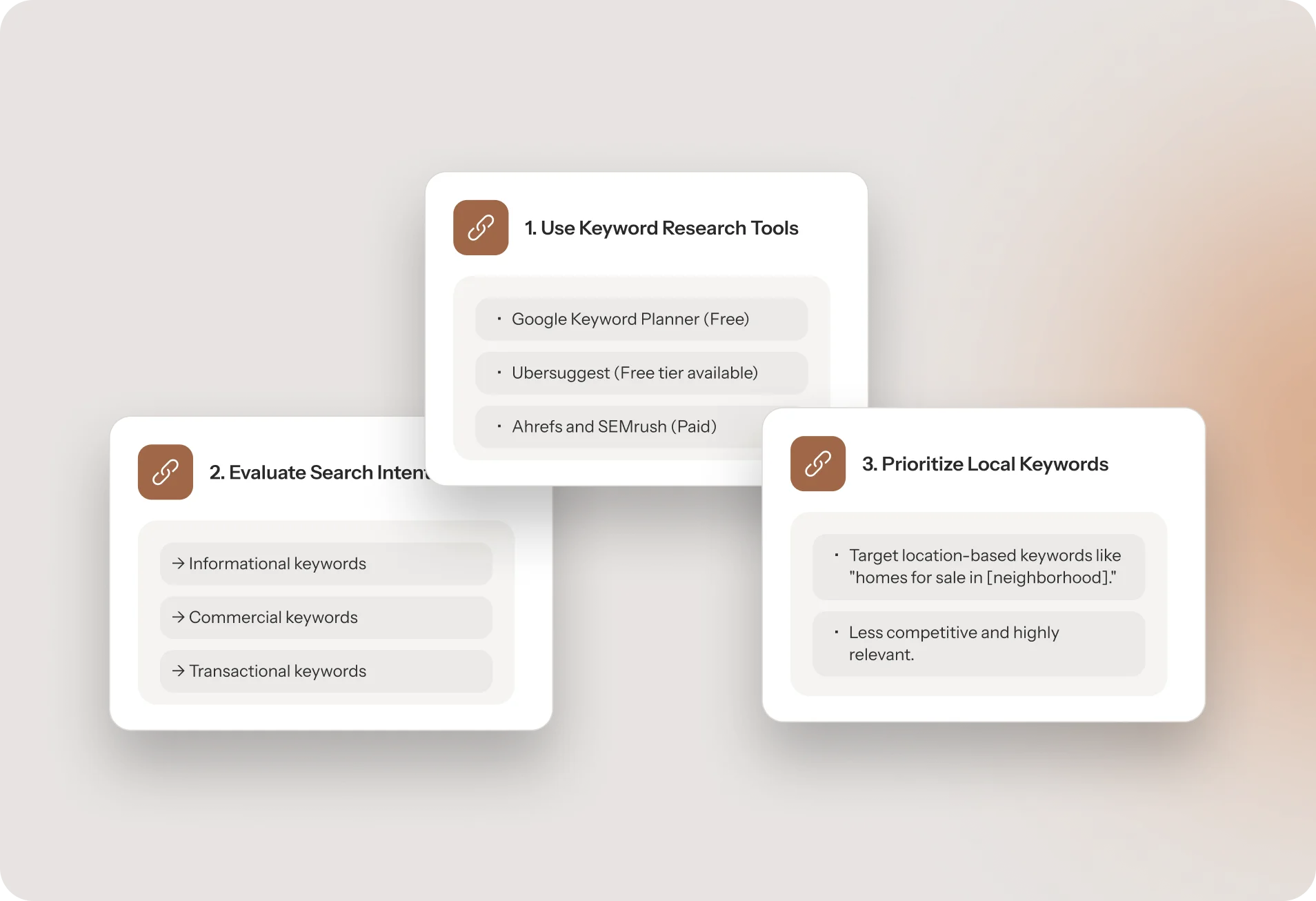
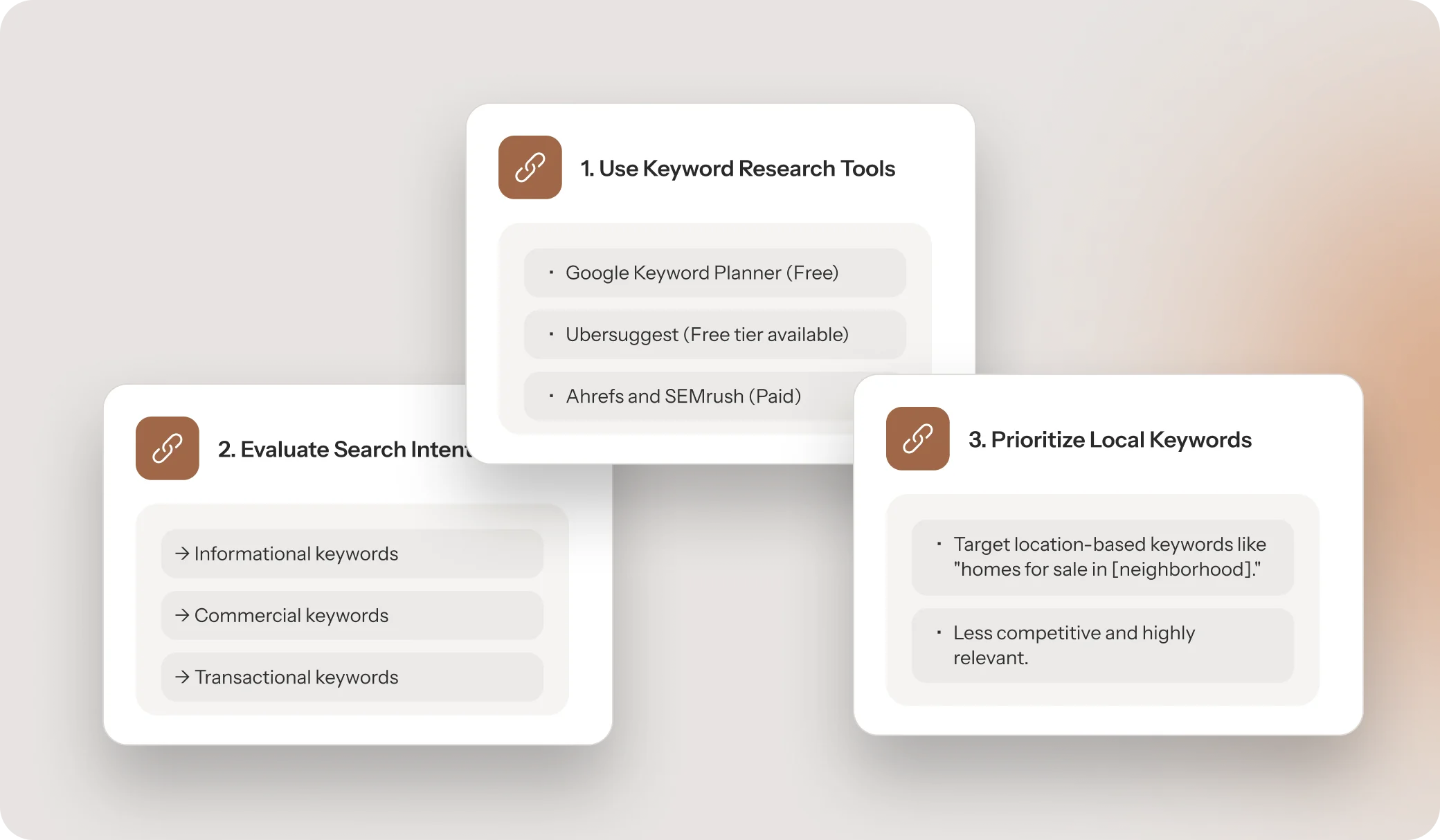
Use Keyword Research Tools
Several tools help you discover keywords and analyze their potential:
Google Keyword Planner (free) shows search volume and competition for any term. It's designed for advertisers but works well for organic keyword research.
Ubersuggest (free tier available) provides keyword suggestions, search volume, and difficulty scores.
Ahrefs and SEMrush (paid) offer more detailed analysis including competitor keyword research — what terms are driving traffic to other agents in your market.
Start by entering broad terms like "homes for sale [your city]" and review the suggestions these tools generate. You'll discover related queries you hadn't considered.
Evaluate Search Intent
Not all keywords serve the same purpose. Someone searching "how to buy a house" wants information. Someone searching "real estate agent [city]" wants to hire someone. Someone searching "[address] for sale" wants a specific listing.
Match your content to intent:
- Informational keywords → Blog posts, guides, educational content
Commercial keywords → Service pages, agent profiles
Transactional keywords → Listing pages, contact pages
Targeting informational keywords attracts people earlier in their journey. Targeting transactional keywords reaches people ready to act. A balanced strategy includes both.
Prioritize Local Keywords
Real estate is inherently local. National keywords are highly competitive, and local variations offer the most realistic opportunities for individual agents.
Targeting "homes for sale in [neighborhood]" or "[city] real estate agent" puts you in front of buyers and sellers searching with local intent. These location-specific terms have lower volume but much higher relevance to your business.
3. Keyword Categories for Real Estate Websites
Organize your keyword strategy by category, ensuring you cover the full range of potential client searches.
Location-Based Keywords
These target people searching for properties or agents in specific areas.
Examples:
- Homes for sale in [city]
- [Neighborhood] real estate agent
- [City] housing market
- Neighborhoods in [city]
- [Zip code] homes for sale
- [City] condos for sale
- Townhomes in [neighborhood]
- New construction in [city]
Location keywords should appear on your homepage, area pages, and throughout your listing content. Create dedicated pages for each neighborhood or area you serve.
Buyer-Focused Keywords
These capture people actively searching for properties or home-buying guidance.
Examples:
- First-time homebuyer tips
- How to buy a house
- Homes with pools for sale in [city]
- Move-in ready homes [city]
- Affordable homes in [area]
- New construction homes [city]
- Houses with large yards [city]
- Pet-friendly homes for sale
Buyer keywords work well for blog content. A post titled "First-Time Homebuyer Tips in [City]" targets an informational keyword while establishing your expertise.
Seller-Focused Keywords
These reach homeowners considering selling or preparing their homes for market.
Examples:
- How to sell my house
- Home valuation [city]
- What is my home worth
- Best time to sell a house
- Tips for staging a home
- How to choose a real estate agent
- Preparing home for sale
- Sell my house fast [city]
Seller keywords often have high intent. Someone searching "what is my home worth" is likely considering listing. Create content that answers their questions while positioning you as the expert.
Luxury Real Estate Keywords
For agents targeting the high-end market, luxury-specific terms attract qualified leads.
Examples:
- Luxury homes for sale [city]
- Waterfront properties [area]
- Gated communities [city]
- Luxury condos [city]
- Estate homes [city]
- High-end real estate [city]
- Exclusive listings [area]
- Luxury real estate agent [city]
Luxury keywords require matching content quality. Your website, photos, and video content should reflect the premium market you're targeting. Tools like Trolto help maintain this standard by generating cinematic listing videos and luxury property websites that match high-end buyer expectations.
Rental Keywords
If you handle rentals, these terms capture tenant searches.
Examples:
- Apartments for rent [city]
- [Neighborhood] rentals
- Pet-friendly apartments [city]
- Furnished rentals [area]
- Short-term rentals [city]
- Studio apartments [city]
Investment Keywords
These attract real estate investors searching for opportunities.
Examples:
- Investment properties [city]
- Rental income properties [area]
- Multi-family homes for sale [city]
- Real estate investment [city]
- Cap rate [city] rentals
- Fix and flip properties [area]
4. Implementing Keywords Effectively
Your homepage should target your primary keyword — typically "[City] real estate agent" or similar. Include the keyword in your page title, H1 heading, meta description, and naturally within body content.
Service pages (buyer services, seller services, property management) should each target relevant keywords for that service.
Blog Content
Blog posts target informational keywords that attract people researching real estate topics. Each post should focus on one primary keyword with supporting secondary keywords.
Write content that thoroughly answers the searcher's question. According to Backlinko's content study, comprehensive content that covers topics in depth tends to rank higher than thin, superficial pages.
Property Listings
Individual listing pages should include location keywords naturally. Describe the neighborhood, nearby amenities, and lifestyle benefits — all opportunities to incorporate relevant terms.
Meta Tags
Every page needs a unique meta title and description containing target keywords. These appear in search results and influence click-through rates.
5. Common Keyword Mistakes to Avoid
Keyword stuffing — Overusing keywords makes content unreadable and can trigger search engine penalties. Write naturally, using keywords where they fit organically.
Ignoring long-tail keywords — Specific phrases like "mid-century modern homes for sale [city]" have lower volume but higher intent and less competition. These often convert better than broad terms.
Targeting only high-volume terms — Competing with national portals for "homes for sale" wastes effort. Focus on terms where you can realistically rank.
Neglecting local modifiers — Always include city, neighborhood, or area names. Generic real estate terms won't attract local clients.
6. Supporting Your SEO With Consistent Content
Keywords only work when paired with regular, quality content. Search engines reward websites that publish consistently and maintain fresh, relevant information.
This is where many agents demonstrate their dedication — maintaining an active web presence while handling transactions. Tools like Trolto can help by automatically generating daily branded content for social media, which drives traffic back to your website and supports your overall SEO strategy.
FAQ
How many keywords should I target on my website?
Focus on one primary keyword per page, with two to three supporting keywords. Across your entire site, you might target dozens of keywords, but each individual page should have clear focus.
How long does it take for keywords to start ranking?
Expect 3-6 months before seeing significant ranking improvements for competitive terms. Less competitive long-tail keywords may rank faster. SEO is a long-term investment that compounds over time.
Should I target keywords with low search volume?
Yes — low-volume keywords often have high intent and low competition. A keyword with 50 monthly searches that converts well is more valuable than a keyword with 5,000 searches where you rank on page five.
Build Your Keyword Strategy
The best SEO keywords for real estate balance search volume with competition and align with your target client's search intent. Start with location-based terms where you can compete, expand into buyer and seller keywords through blog content, and track performance to refine your approach over time.
Consistent content creation supports your keyword strategy by keeping your website active and providing opportunities to target new terms. If maintaining that consistency is challenging, Trolto's automated content tools can help you stay visible online while focusing on client work.
See how Trolto works