.webp)
Marketing
How to Write Listing Details That Sell Properties Faster
Your listing details are often the deciding factor in whether a buyer schedules a showing or keeps scrolling. This guide covers how to write property descriptions that capture attention, convey value, and motivate buyers to take action.

March 5, 2026

5 min read
Share


What We'll Explore
1. Why Listing Details Matter More Than You Think
2. What to Include in Effective Listing Details
•
Opening Hook
•
Property Features
•
Location and Lifestyle
•
Call to Action
3. Writing Listing Details That Stand Out
•
Be Specific, Not Generic
•
Match Tone to Property Type
•
Avoid Common Mistakes
4. Listing Details Across Platforms
•
MLS Entry
•
Syndication Sites
•
Your Website and Property Pages
•
Social Media
5. Enhancing Listing Details With Visual Content
1. Why Listing Details Matter More Than You Think
Agents who invest real thought in listing details — crafting purposeful language that positions the property with intention — gain a meaningful edge. It's an opportunity worth seizing.
According to Zillow research, certain words and phrases in listing descriptions correlate with faster sales and higher prices. The language you use shapes buyer perception before they ever see the property in person.
Listing details serve multiple audiences. Buyers scan them to determine if a property fits their needs. Buyer's agents use them to filter options for clients. Search engines index them, affecting whether your listing appears in organic searches. Each audience requires different considerations.
The goal isn't creative writing for its own sake. It's strategic communication that positions the property's strengths, addresses likely concerns, and compels the next step.
2. What to Include in Effective Listing Details
Strong listing details follow a predictable structure while highlighting what makes each property unique.
Opening Hook
The first sentence matters most. Many listing portals truncate descriptions after a few lines, showing only a preview. Your opening needs to capture interest immediately.
Lead with the property's strongest selling point. Is it the location? The views? A recent renovation? The architectural style? Put that front and center.
Weak opening: "Welcome to this lovely 3-bedroom home in a quiet neighborhood."
Strong opening: "Fully renovated mid-century modern on a half-acre lot backing to protected woodland — the indoor-outdoor flow you've been searching for."
The strong opening is specific, visual, and addresses what buyers in this segment want.
Property Features
After the hook, cover the essential details systematically. Buyers expect certain information, and omitting it raises questions.
Interior features:
- Bedroom and bathroom count
- Square footage
- Recent updates and renovations
- Kitchen details (appliances, countertops, layout)
- Flooring types
- Storage and closet space
- Basement or bonus room details
Exterior features:
- Lot size
- Outdoor living spaces (decks, patios, porches)
- Landscaping highlights
- Garage capacity
- Pools, outbuildings, or special features
Systems and infrastructure:
- HVAC age and type
- Roof age
- Windows (if recently replaced)
- Water heater, electrical panel upgrades
Don't list every feature exhaustively — prioritize what matters for your target buyer and what differentiates this property from competitors.
Location and Lifestyle
This section connects the property to the buyer's life beyond the house itself.
Mention proximity to desirable destinations: schools, parks, shopping, dining, employment centers, transit. Be specific — "five-minute walk to downtown shops" is stronger than "close to everything."
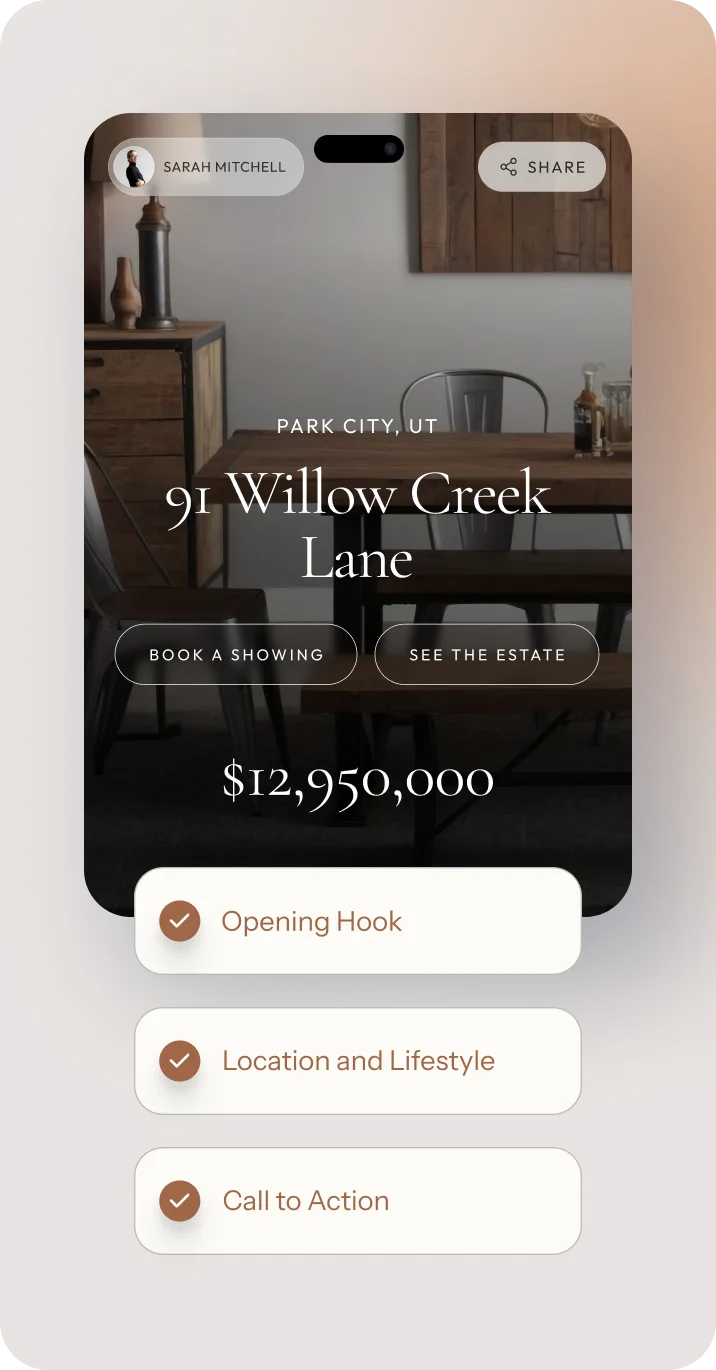
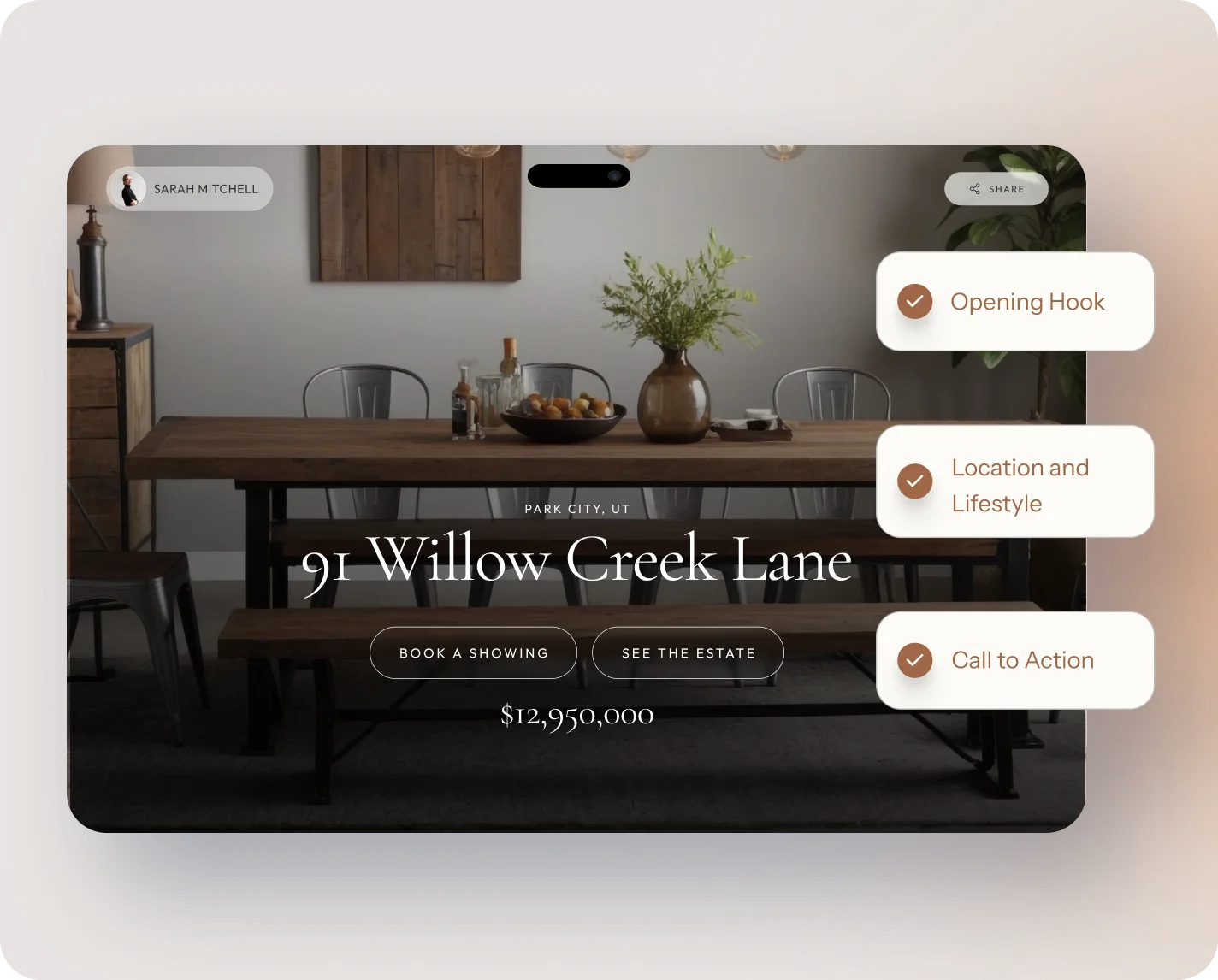
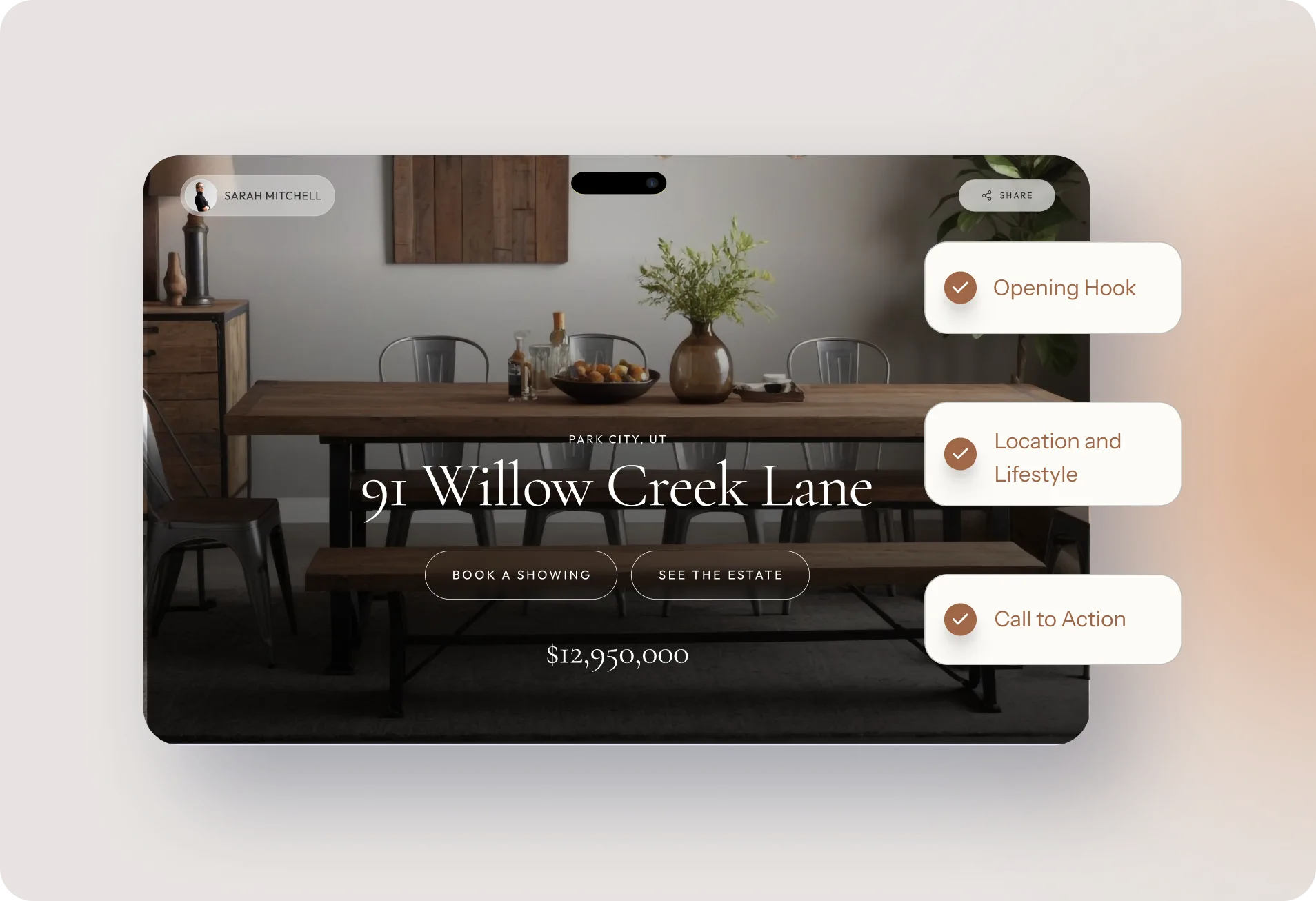
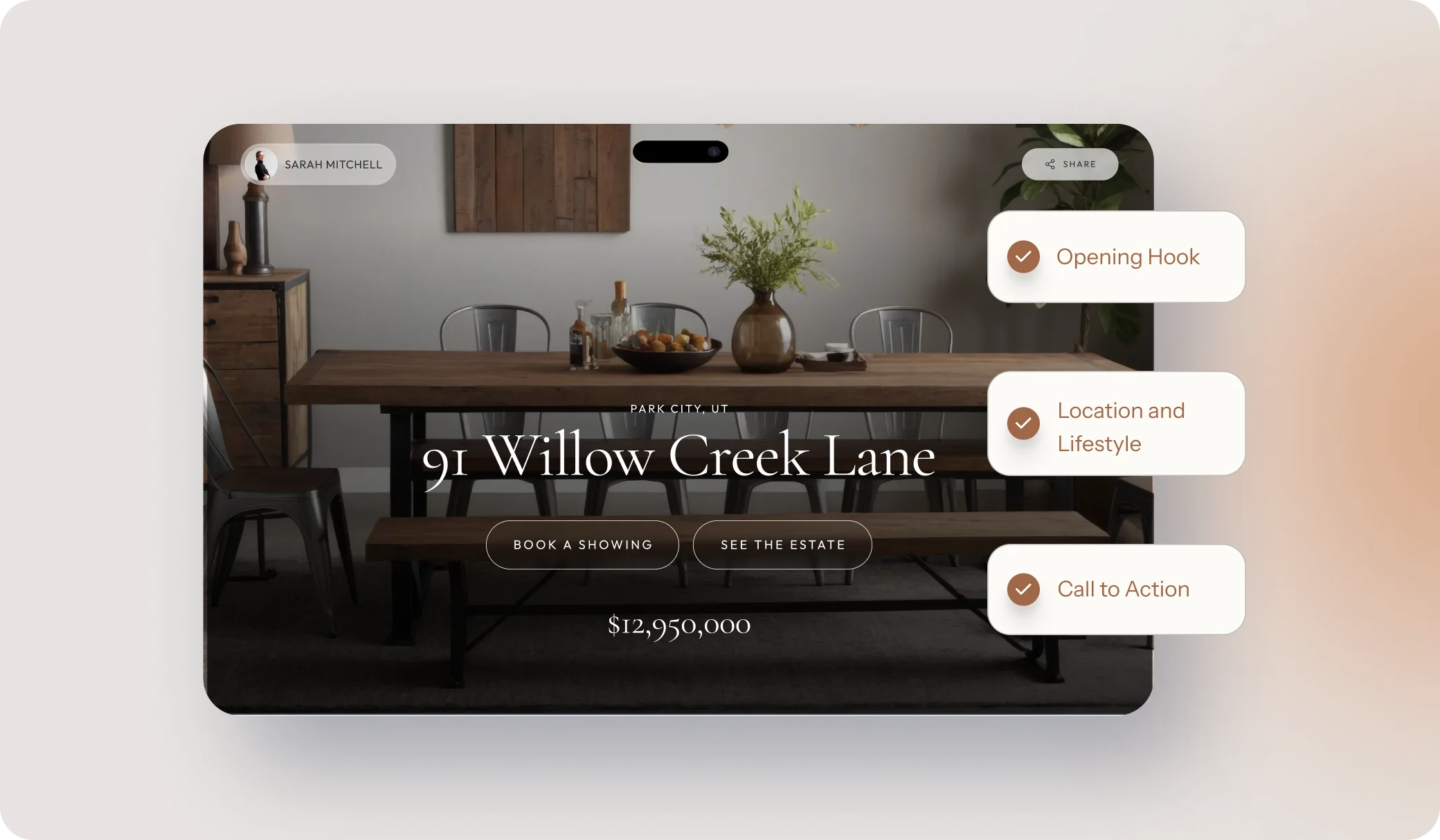
Describe the neighborhood character. Is it established? Up-and-coming? Family-oriented? Walkable? Quiet? Give buyers context for what daily life looks like.
For luxury properties, location details might include privacy, views, the address itself, or community amenities.
Call to Action
End your listing details with a clear next step. "Schedule your private showing today" or "Contact listing agent for a private tour" prompts action rather than leaving buyers wondering what to do next.
3. Writing Listing Details That Stand Out
Beyond structure, polished writing elevates how buyers perceive both the property and the agent representing it.
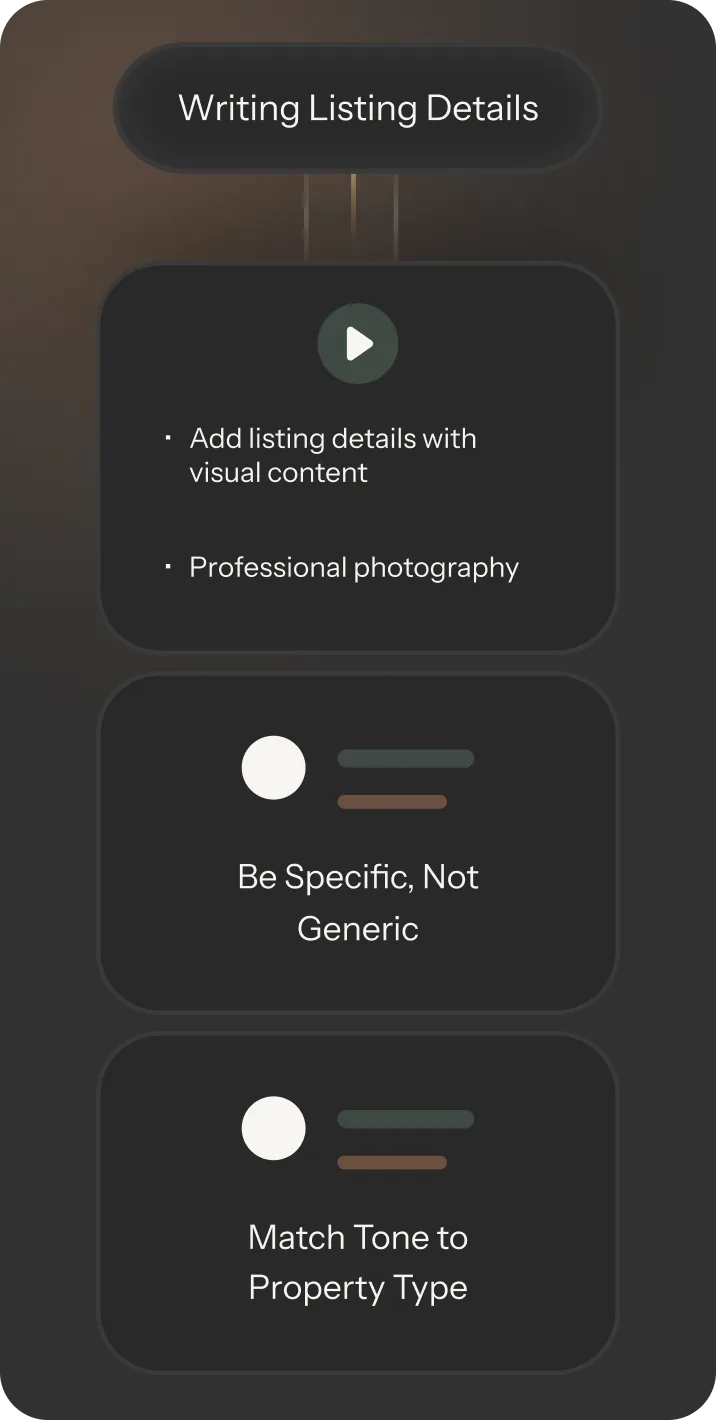
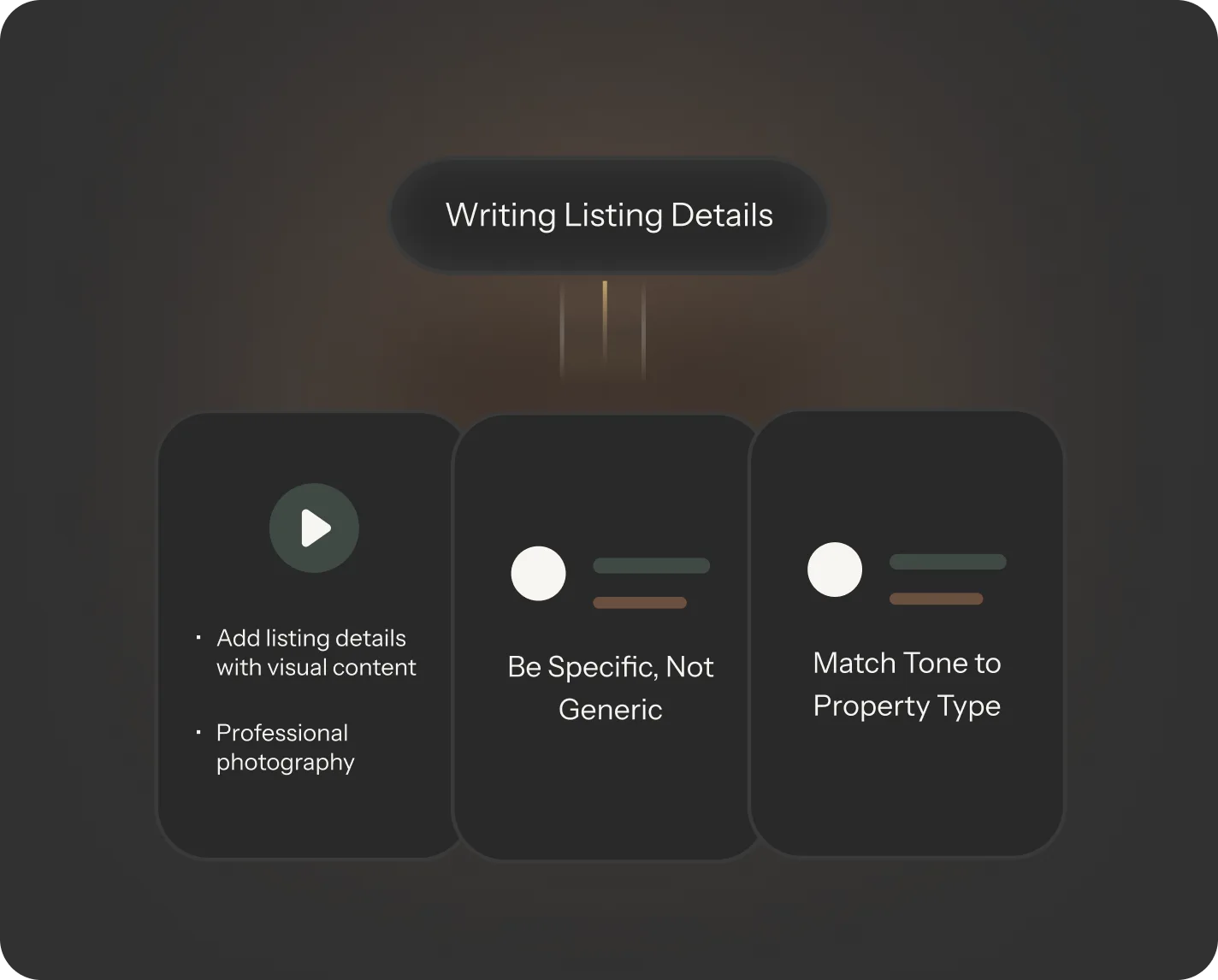
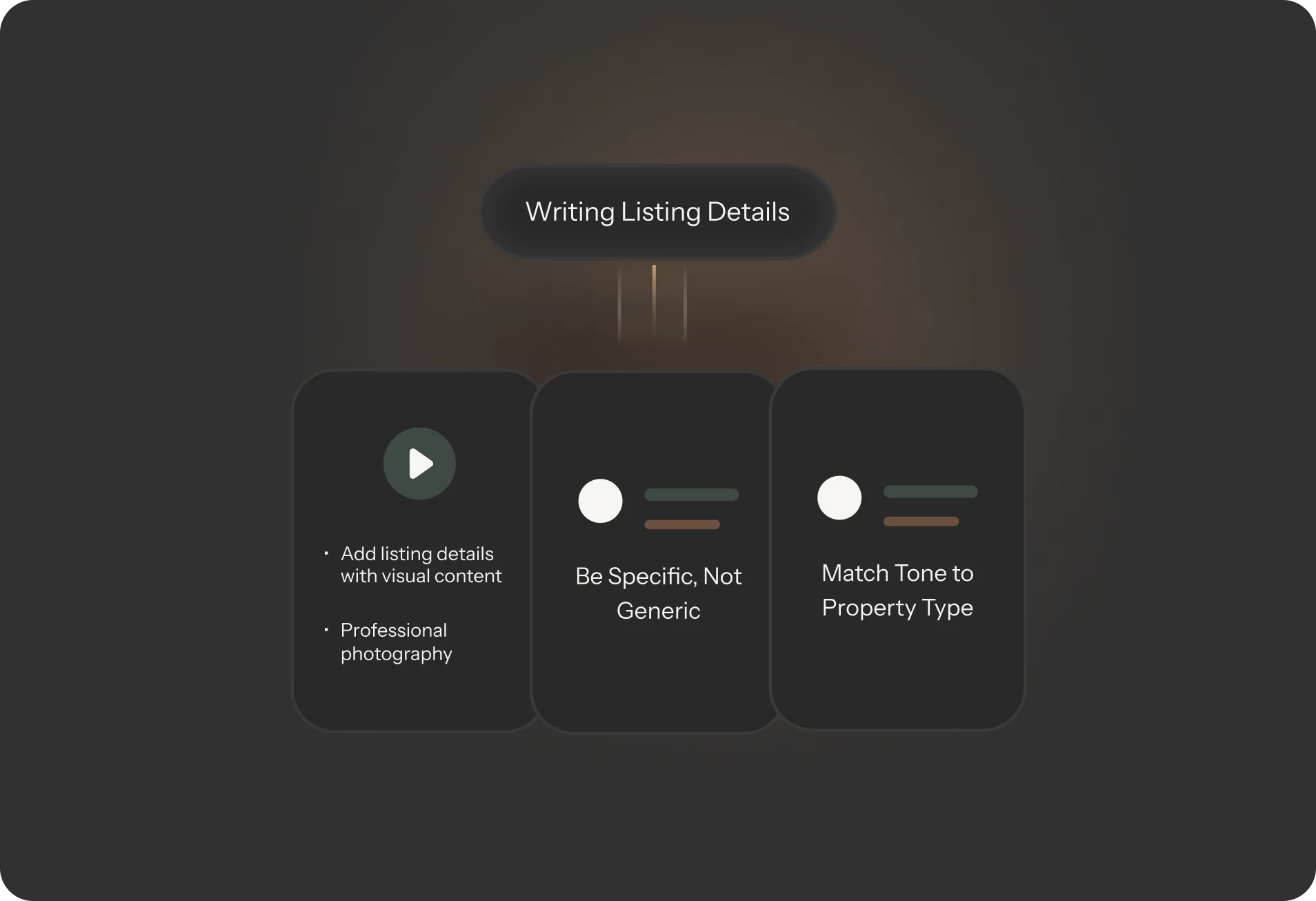
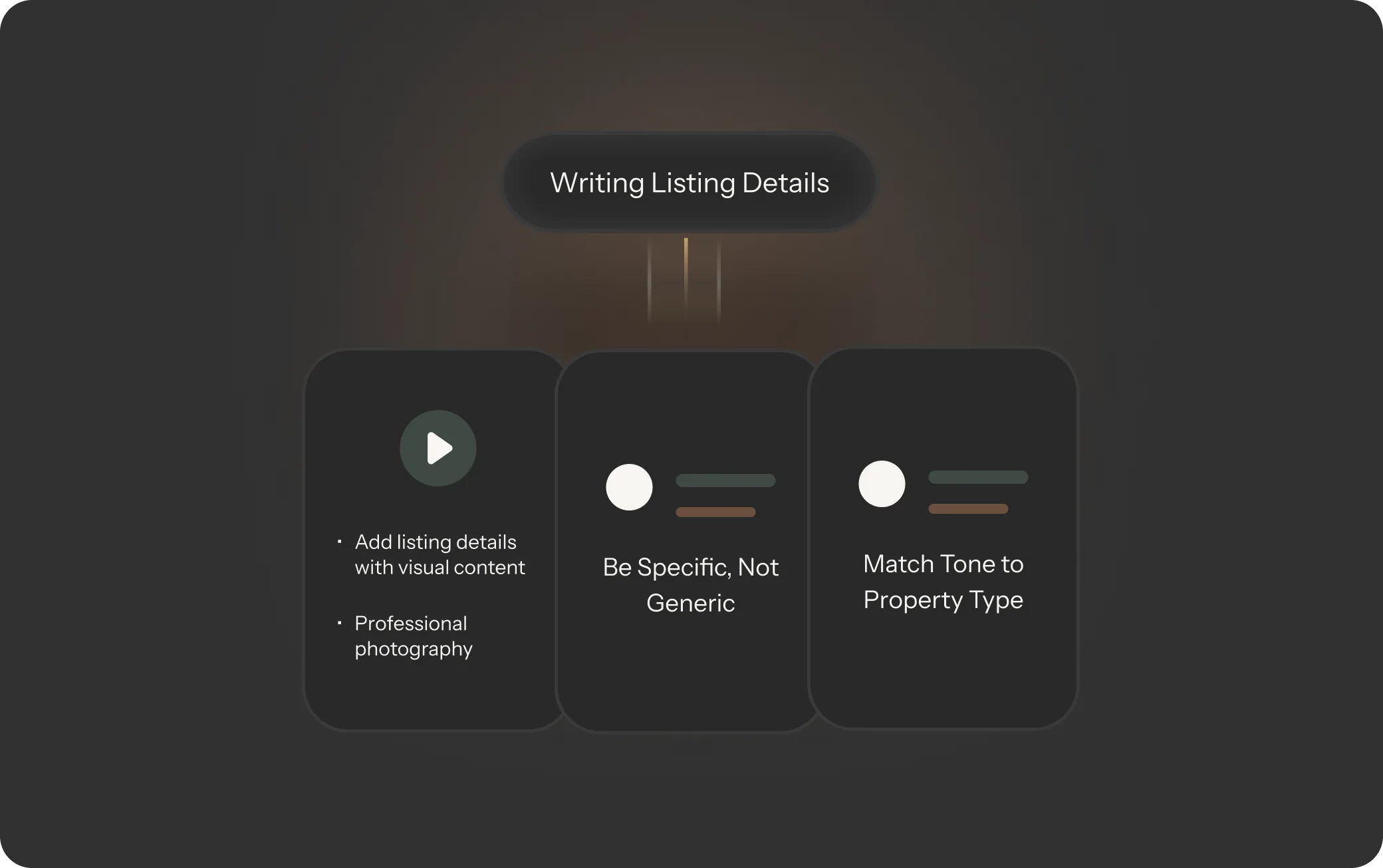
Be Specific, Not Generic
Specific, vivid language is what makes listings stand out — replacing common shorthand with concrete detail that helps buyers truly picture the property.
Replace generic claims with specific details:
- Instead of "updated kitchen" → "Kitchen remodeled in 2023 with quartz counters, soft-close cabinetry, and a six-burner Wolf range"
- Instead of "great backyard" → "Fenced half-acre with mature oak trees, stone patio, and built-in fire pit"
- Instead of "lots of natural light" → "South-facing living room with 10-foot ceilings and floor-to-ceiling windows"
Specificity builds credibility and helps buyers visualize themselves in the space.
Match Tone to Property Type
A starter home in a suburban subdivision requires different language than a waterfront estate. Match your writing style to buyer expectations.
Entry-level properties: Focus on value, functionality, and potential. Highlight practical features like storage, updated systems, and low maintenance.
Luxury properties: Emphasize exclusivity, craftsmanship, and lifestyle. Use sophisticated language without being pretentious. Highlight materials, finishes, and unique architectural elements.
Investment properties: Lead with numbers — rental income potential, cap rates, recent improvements that reduce maintenance costs.
Avoid Common Mistakes
Excessive abbreviations: Writing out key terms in full — rather than leaning on abbreviations — keeps descriptions readable and polished for every audience.
All caps or excessive punctuation: Clean, composed formatting projects professionalism and keeps the focus on the property.
Overselling: Accurate, honest language builds credibility — describe what the property genuinely offers and let its real strengths do the work.
Burying the lead: Lead with your strongest features right away. Most readers engage most deeply with the opening content.
4. Listing Details Across Platforms
Your listing details appear in multiple places — MLS, Zillow, Realtor.com, your website, social media, property flyers. Each platform has different requirements and audiences.
MLS Entry
The MLS is your primary data source. Be thorough and accurate, as this information syndicates everywhere. Follow your MLS formatting guidelines and use all available fields.
Syndication Sites
Zillow, Realtor.com, and other portals may truncate your description or display it differently. Front-load your most important information. Review how your listings appear on major portals and adjust formatting if needed.
Your Website and Property Pages
On your own website, you have full control. This is where expanded listing details shine — more photos, video content, neighborhood information, and detailed descriptions without character limits.
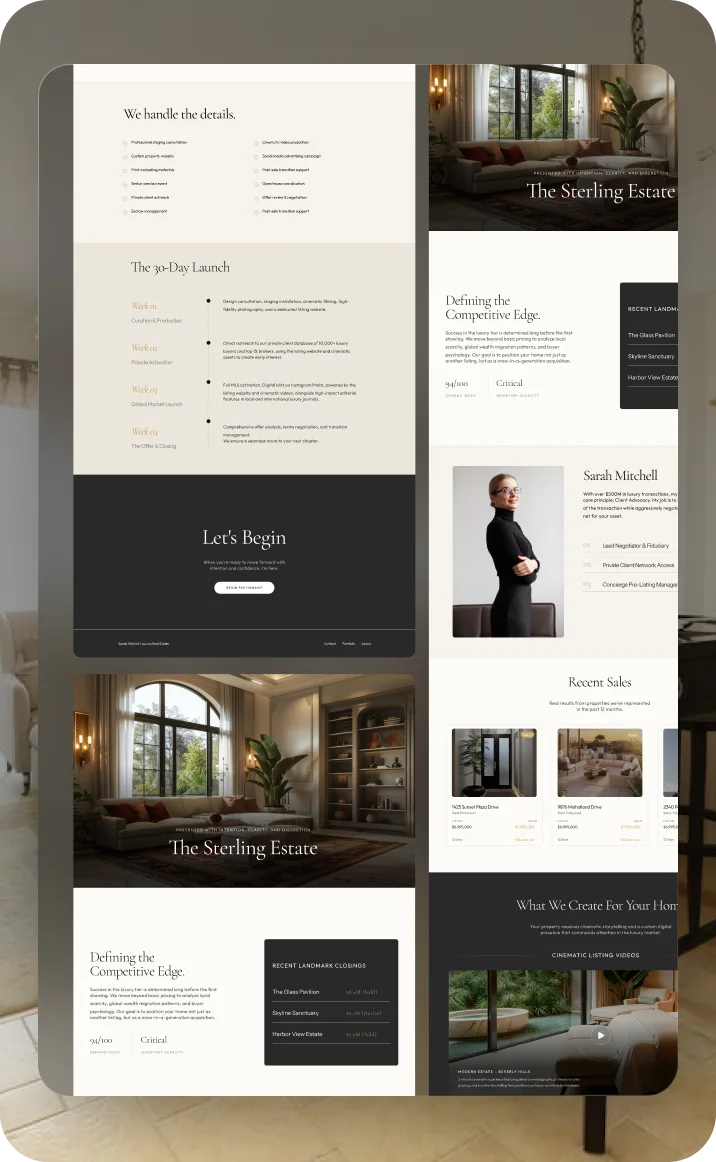
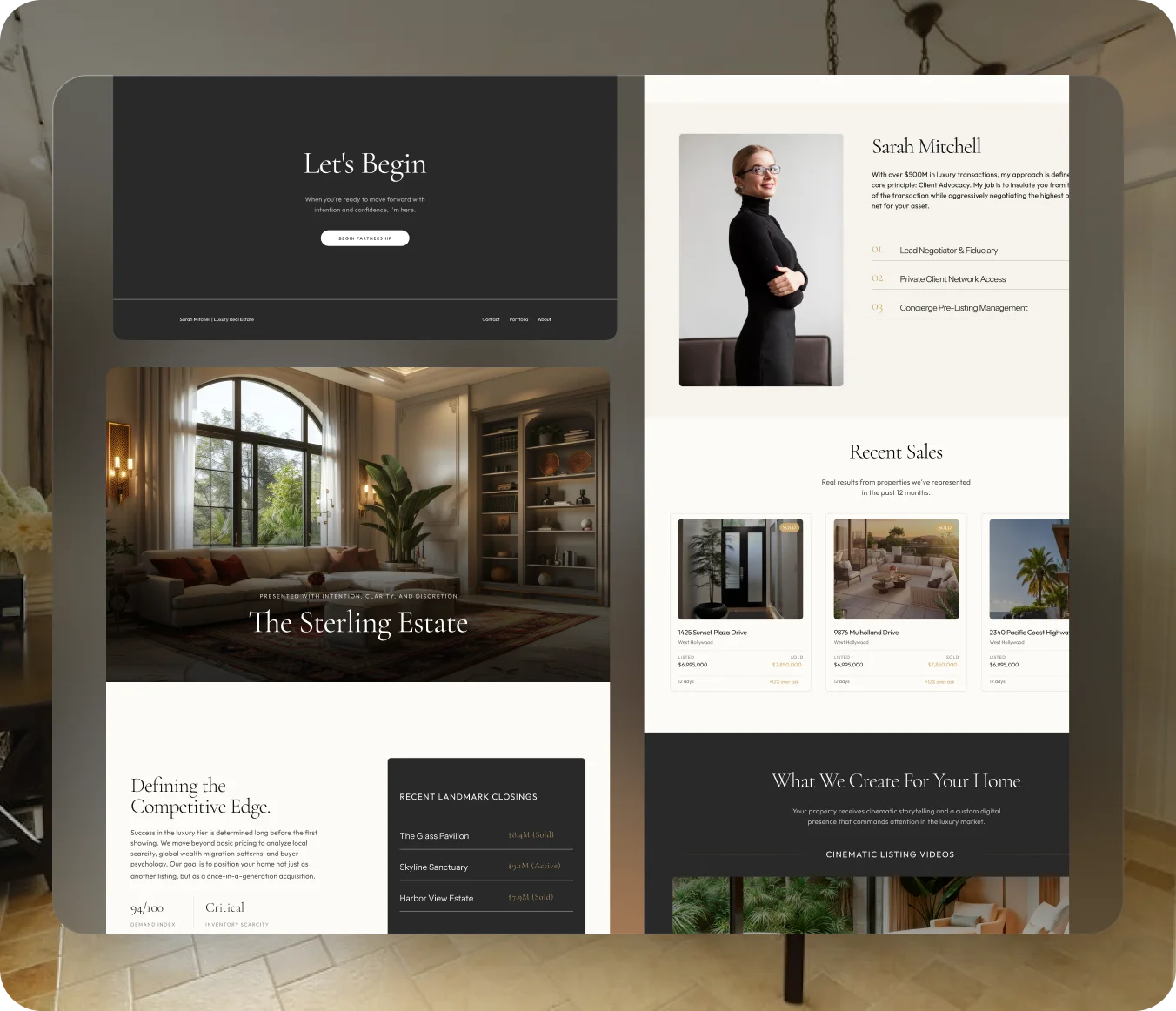
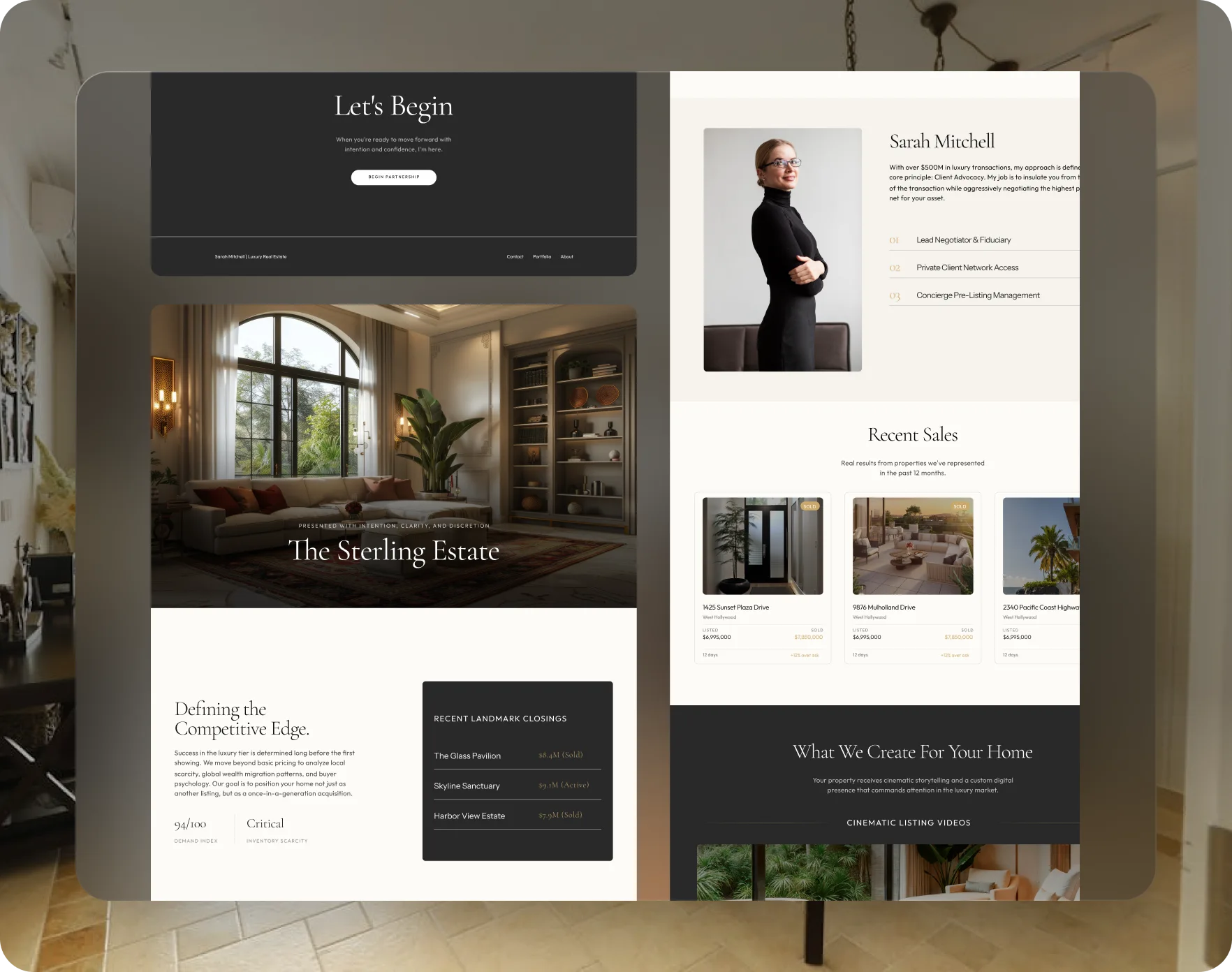
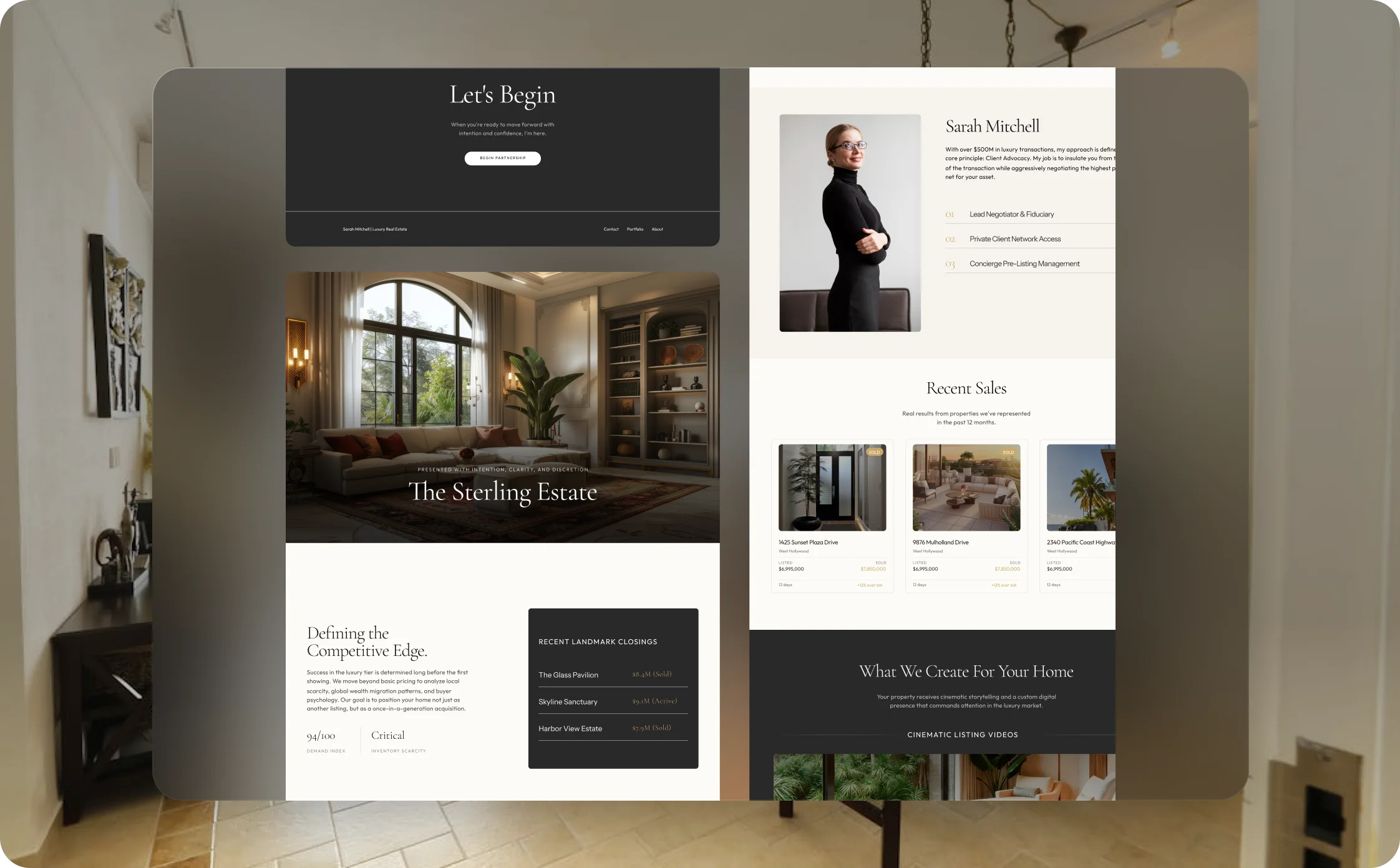
Tools like Trolto generate dedicated property websites for each listing automatically. These single-property pages give you space to present comprehensive listing details alongside cinematic video, lead capture, and your branding — everything buyers need in one focused destination.
Social Media
Social posts linking to listings should tease the best features, not reproduce the full description. Use the hook to drive clicks to the full listing details elsewhere.
5. Enhancing Listing Details With Visual Content
Written descriptions work alongside photos and video. Strong visuals reduce how much heavy lifting your text needs to do.
Professional photography is baseline. Video walkthroughs, drone footage, and 3D tours add layers of detail that words alone can't convey.
Trolto transforms listing photos into cinematic property videos automatically — another way to present your listing details in a format that engages buyers who prefer watching to reading.
FAQ
How long should listing details be?
Long enough to cover essential information, short enough to hold attention. For most properties, 150-300 words works well. Luxury properties with extensive features may justify longer descriptions. Avoid padding with generic filler.
Should I mention property flaws in listing details?
Avoid highlighting negatives, but don't misrepresent the property either. If a feature might disappoint buyers in person (small yard, busy street), consider whether it's better to set expectations or let photos convey the reality. Material defects should be disclosed appropriately, but marketing copy isn't the place for disclosure language.
How do I write listing details for a property without standout features?
Focus on lifestyle benefits rather than features. A modest home near local schools becomes "within walking distance of neighborhood schools." A dated property with a large lot becomes "bring your vision to this spacious corner lot with endless potential." Find the angle that serves your listing.
Make Your Listing Details Work Harder
Effective listing details combine strategic structure with specific, compelling language. They position the property's strengths, speak to buyer motivations, and prompt action.
The best listing marketing goes beyond text — combining written descriptions with professional photography, video content, and dedicated property websites that showcase every detail. If building those assets for each listing feels time-consuming, Trolto can help by generating cinematic videos and property websites automatically from your listing photos.
See how Trolto works