.webp)
Marketing
How to Create Real Estate Ads That Convert: A Practical Guide
Most real estate ads blend into the noise. Agents post listing photos with generic captions, run the same Facebook campaigns as everyone else, and wonder why their cost per lead keeps climbing. The problem isn't the platform — it's the approach.
Effective real estate ads share common traits: they target specific audiences, lead with value rather than features, and use visuals that stop the scroll. This guide breaks down how to create ads that stand out across digital and traditional channels — with practical strategies you can implement immediately.

February 19, 2026

6 min read
Share


What We'll Explore
1. Why Open Houses Still Matter
2. Pre-Event: Real Estate Open House Ideas for Promotion
•
Promote Beyond the MLS
•
Create Shareable Content Before the Event
•
Give Visitors a Destination
3. During the Event: Ideas That Capture Leads
•
Make Sign-In Effortless (and Required)
•
Create Conversation Starters
•
Partner With Complementary Professionals
•
Add Small Touches That Stand Out
4. Post-Event: Follow-Up That Converts
•
Follow Up Fast
•
Provide Ongoing Value
•
Share Marketing Results With Your Seller
1. What Makes Real Estate Ads Succeed
Understanding what drives high-performing advertising is the foundation for building campaigns that consistently convert.
The most effective ads work like conversations, speaking directly to what the audience wants rather than simply broadcasting information. A headline that speaks to the buyer's situation — rather than the listing status — immediately earns attention. "3BR/2BA, $450K" is a starting point — the message comes alive when it connects to what the buyer actually wants. The strongest ads earn interest by leading with something the audience already cares about.
According to HubSpot's advertising research, the average person encounters thousands of ads daily. The ads that earn attention are the ones worth studying. The ads that break through do one of three things: solve a problem, trigger emotion, or offer something valuable.
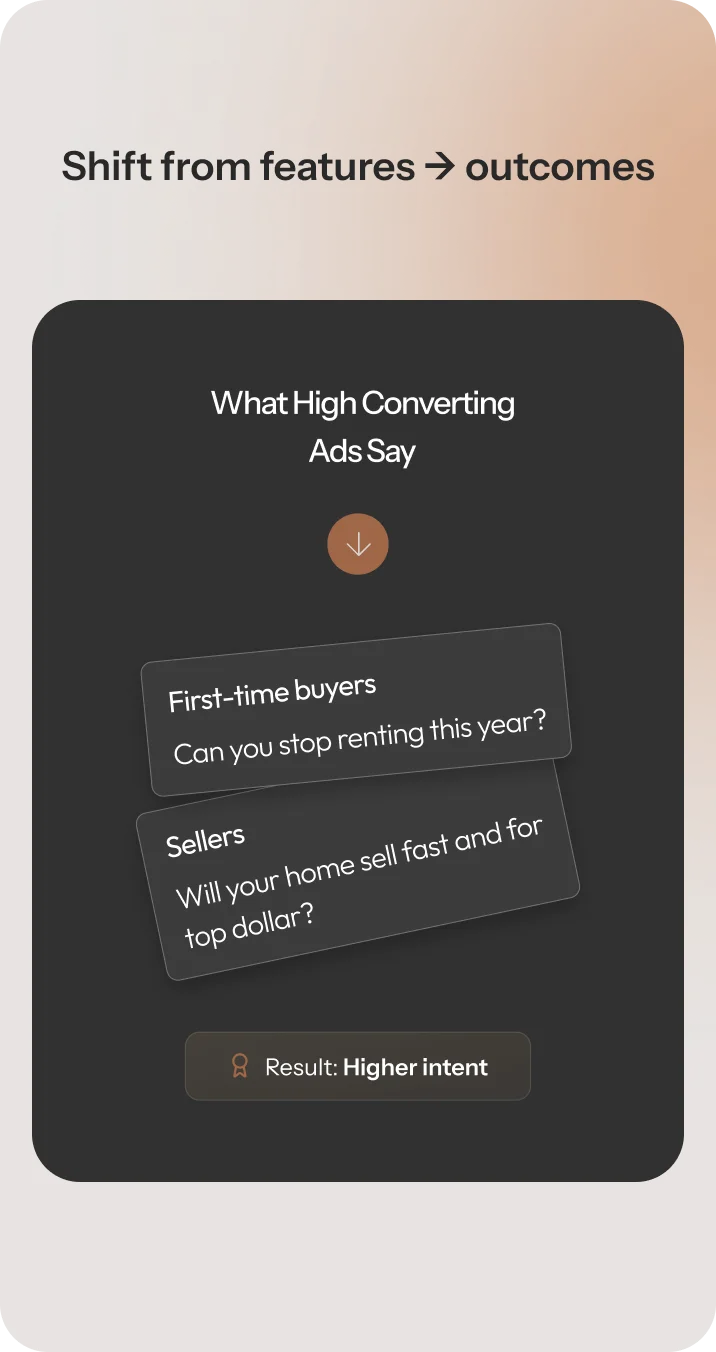
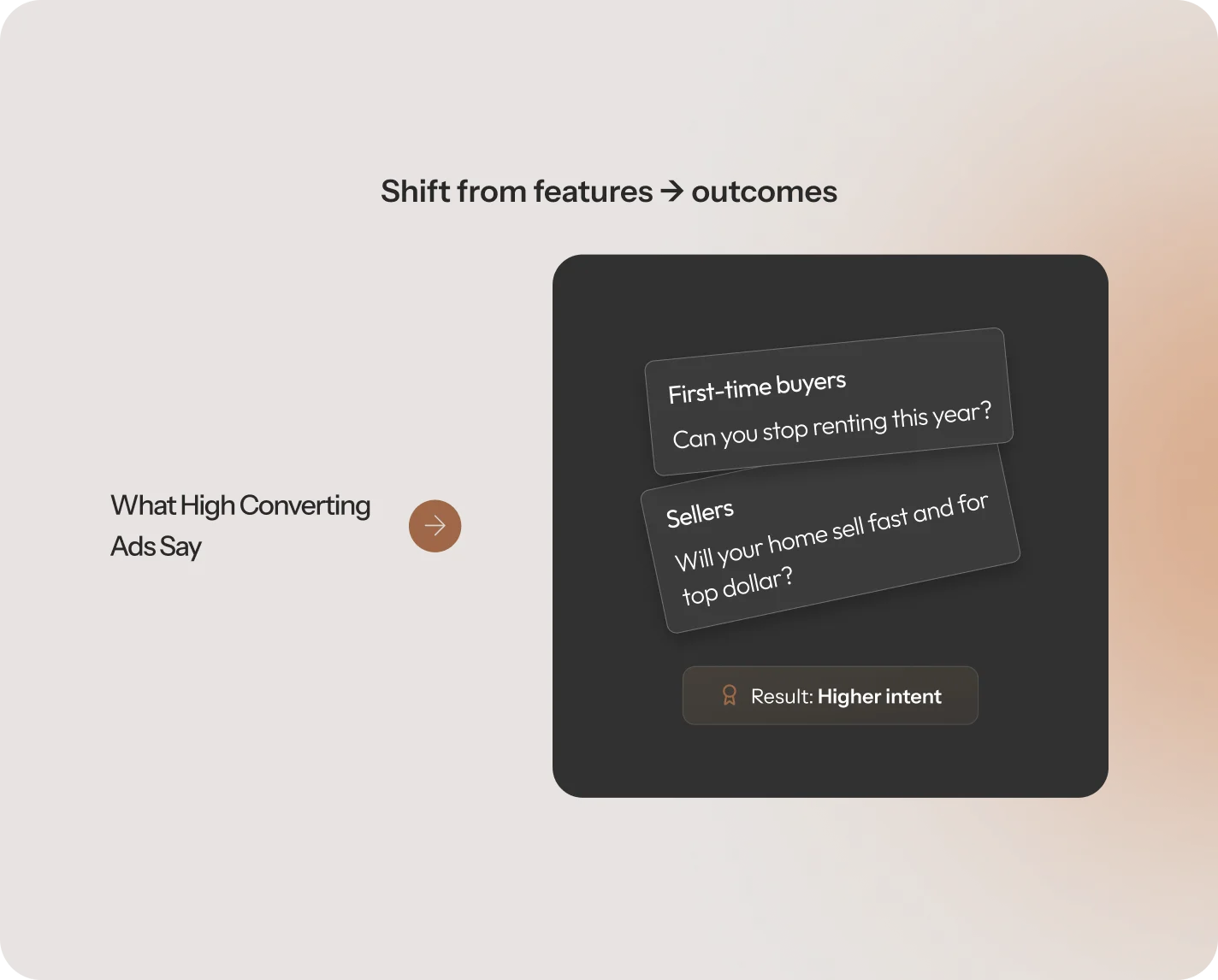
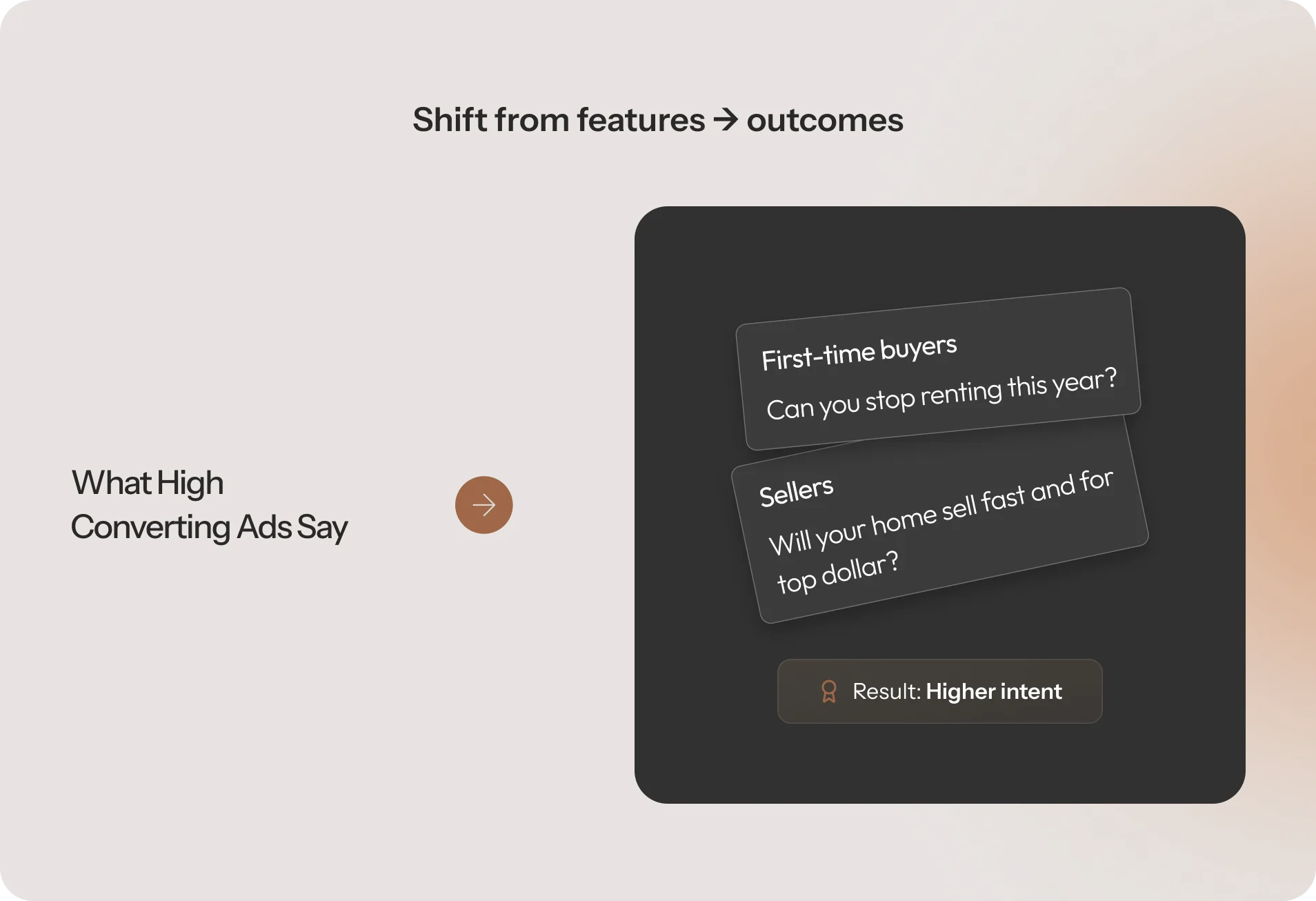
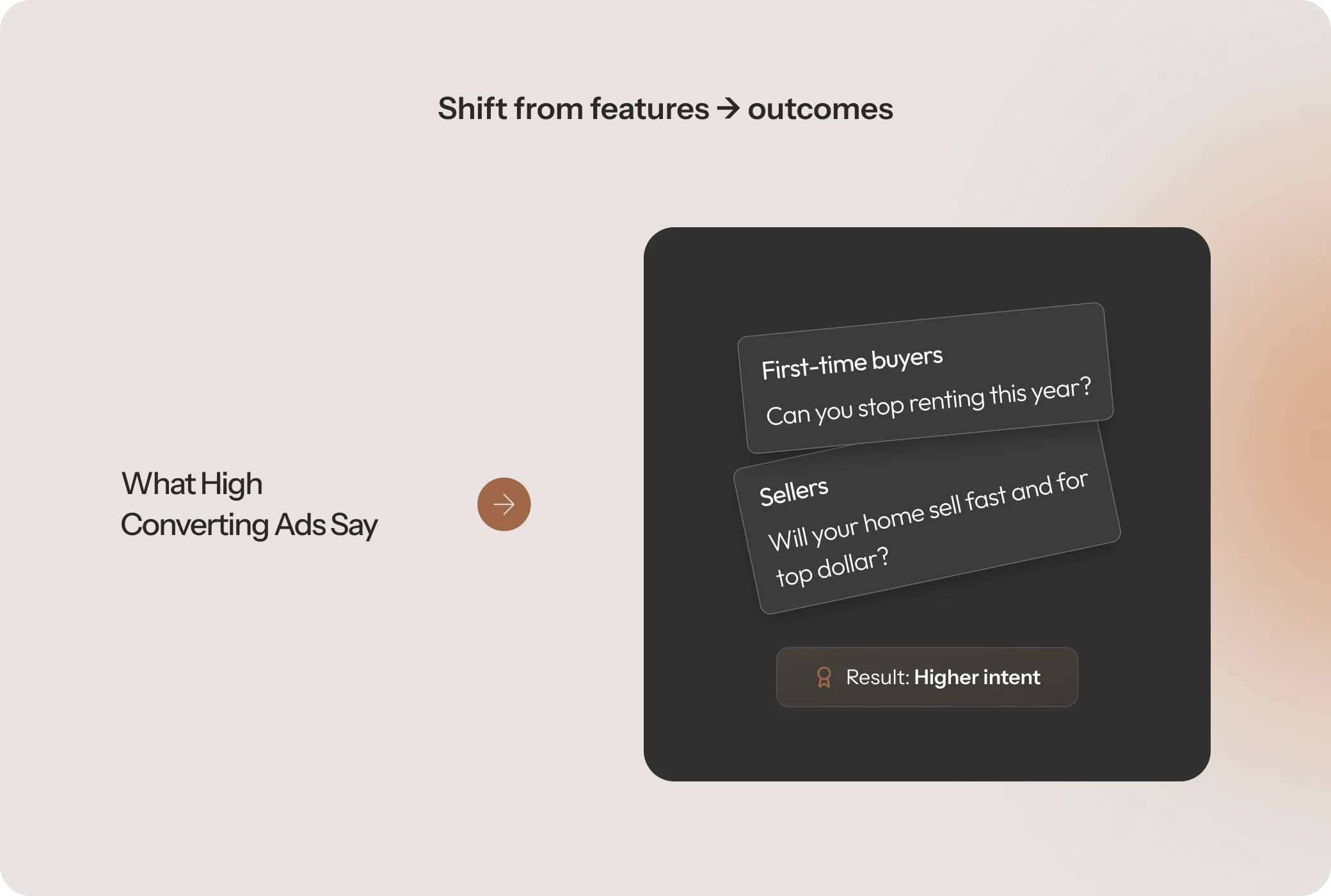
For real estate, this means shifting from "here's what I have" to "here's what this means for you." A first-time buyer is motivated by the moment they can afford to stop renting — lead with that outcome. A seller wants to know their home will sell quickly and for top dollar — lead with that promise.
2. Digital Real Estate Ads: Where to Focus
Digital advertising offers precise targeting and measurable results. In this landscape, a sharp strategy compounds the value of every dollar spent.
Social Media Advertising
Facebook and Instagram remain the most effective platforms for real estate advertising. The targeting capabilities let you reach people by location, income, life events (recently engaged, new job), and interests.
What works on social:
- Video outperforms static images consistently. Short property walkthroughs, neighborhood tours, and market updates generate higher engagement and lower cost per lead.
- Lead magnets — free home valuations, buyer guides, market reports — convert better than direct listing promotion. Offer value first, capture contact information, then nurture the relationship.
- Retargeting campaigns reach people who've already visited your website or engaged with your content. These audiences convert at significantly higher rates than cold traffic.
The opportunity in social advertising is fresh creative. Rotating new videos, updated graphics, and varied messages keeps your audience engaged and your cost per lead moving in the right direction.
This is where tools like Trolto become useful. Instead of hiring a videographer for every listing or spending hours on content creation, you can upload listing photos and receive cinematic property videos formatted for every platform. That gives you a steady stream of fresh creative without the production overhead.
Google Advertising
Google Ads capture high-intent traffic — people actively searching for agents, listings, or real estate services in your area. The cost per click tends to be higher than social, but conversion rates often justify the investment.
Focus on specific, localized keywords: "homes for sale in [neighborhood]," "real estate agent [city]," "[area] home values." Precise terms deliver higher-intent visitors and stronger returns on every dollar spent.
Landing pages matter as much as the ads themselves. Send traffic to dedicated pages with clear calls to action — not your homepage. A "Free Home Valuation" ad should land on a page specifically about home valuations, not a general website with competing messages.
Video Advertising
Video ads on YouTube, Instagram Reels, and TikTok offer exceptional reach at relatively low cost. The algorithm favors video content, which means organic reach supplements your paid spend.
Polished video content is now within reach for every listing — tools that transform listing photos into cinematic videos automatically mean professional-quality advertising is no longer reserved for luxury properties alone.
3. Traditional Real Estate Ads: Still Relevant
Digital dominates, but traditional advertising maintains value — especially for local brand building and reaching demographics less active online.
Direct Mail
Postcards, market updates, and "sold" announcements sent to targeted neighborhoods generate leads over time. The key is consistency. A sustained campaign over 12–18 months is what builds the recognition and trust that turns neighborhoods into pipelines.
Effective direct mail includes clear calls to action and easy response mechanisms. QR codes linking to property websites or home valuation tools bridge the gap between physical mail and digital follow-up.
Signage and Outdoor
Yard signs remain powerful advertising. They signal activity in a neighborhood and capture drive-by interest. Invest in high-quality, professionally designed signs that reflect your brand.
Add QR codes to signs linking to property websites with video content, detailed information, and inquiry forms. This transforms a passive sign into an interactive experience.
For high-visibility areas, consider branded bench ads, bus shelters, or local billboard placements. These build brand recognition over time, making your name familiar when prospects are ready to buy or sell.
Print Advertising
Local magazines, newspapers, and community publications still reach certain demographics effectively. Luxury real estate, in particular, benefits from placement in high-end lifestyle publications where the audience matches the property profile.
The creative standards for print are higher than digital. Invest in professional photography and clean design — print ads get scrutinized longer than digital impressions.
4. Creating Ads That Convert
Regardless of channel, effective real estate ads follow certain principles.
Lead With Benefit, Not Features
"4 bedrooms, 3 bathrooms, 2,500 sq ft" describes a house. "Space for your growing family, five minutes from local schools" sells a lifestyle. Features matter, but benefits drive action.
Think about what your target audience wants — not what the property has. First-time buyers want affordability and guidance. Move-up buyers want space and better neighborhoods. Sellers want speed, price, and minimal hassle. Speak to those desires.
Use Strong Visuals
Real estate is visual. Professional photography and polished graphics help showcase both the property and the agent in the best possible light, reinforcing the quality and care they bring to every listing.
Professional photography is baseline. Video content differentiates. Drone footage, walkthrough videos, and neighborhood tours provide context that photos can't match.
Trolto helps agents maintain visual quality at scale. Upload listing photos and receive 4K cinematic videos in multiple formats — vertical for social media, horizontal for YouTube, square for feeds. Every listing gets video content without the production cost or timeline.
Include Clear Calls to Action
Every ad should tell the viewer what to do next. "Schedule a showing," "Get your free home valuation," "See more photos" — be specific and make the action easy.
Vague CTAs like "Learn more" or "Contact us" underperform. Direct, benefit-oriented prompts convert better: "See if you qualify" beats "Apply now."
Test and Iterate
No ad strategy works perfectly from day one. Run multiple versions with different headlines, images, and offers. Track performance and shift budget toward what's working.
Most platforms provide detailed analytics. Pay attention to cost per lead, click-through rate, and conversion rate — not vanity metrics like impressions or reach.
FAQ
How much should I spend on real estate advertising?
Most successful agents invest 10-20% of their gross commission income in marketing. For new agents or those entering new markets, higher investment accelerates growth. Start with a budget you can sustain consistently — sporadic advertising produces poor results.
Which advertising channel works best for real estate?
It depends on your market and target audience. Facebook and Instagram offer the best combination of targeting and cost-effectiveness for most agents. Google captures high-intent searches. Direct mail builds local presence over time. The best approach combines multiple channels rather than relying on one.
How do I create video ads without a big budget?
You don't need professional videographers for every listing. Smartphone walkthroughs work for casual content. For polished property videos, tools like Trolto generate cinematic footage from your listing photos automatically — giving you professional-quality video at a fraction of the cost.
Build an Advertising System
The agents generating consistent leads from real estate ads don't rely on occasional campaigns. They build systems that produce fresh content, test performance, and maintain presence across channels.
That means having a steady supply of visual content — especially video. It means tracking results and adjusting spend toward what converts. And it means staying visible even when you're busy with active transactions.
If content creation is your bottleneck, Trolto can help. Cinematic listing videos generated from photos, property websites that capture leads, and daily branded social content — all produced automatically so you can focus on the conversations that close deals.
See how Trolto works