.webp)
Marketing
How to Build a Real Estate Marketing Plan That Wins Every Listing
Your real estate marketing plan is the difference between winning a listing and losing it to the agent down the street. Sellers don't just want someone who will "try hard" — they want to see exactly how you'll promote their home, where it will appear, and what results they can expect. A documented marketing strategy proves you have a system. It builds confidence before you even start talking price.
This guide walks through how to create a listing marketing plan that positions you as the professional choice — whether you're selling a first-time buyer home or a $5M estate.

February 4, 2026

6 min read
Share


What We'll Explore
1. Why a Strong Marketing Plan Wins Listings From the Start
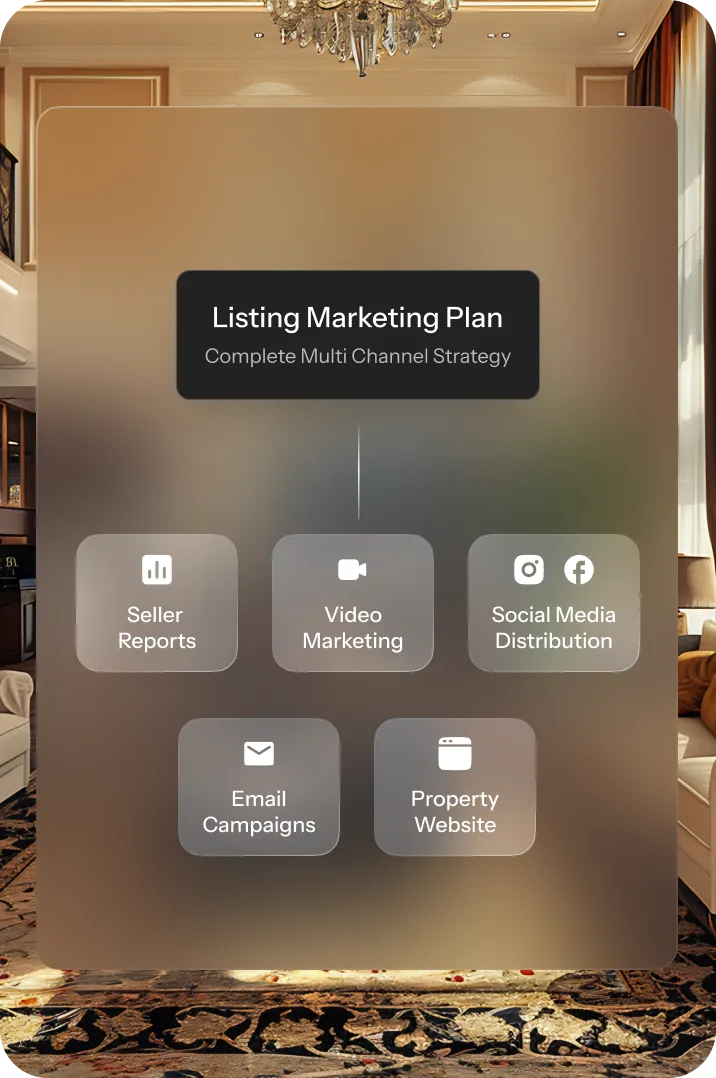
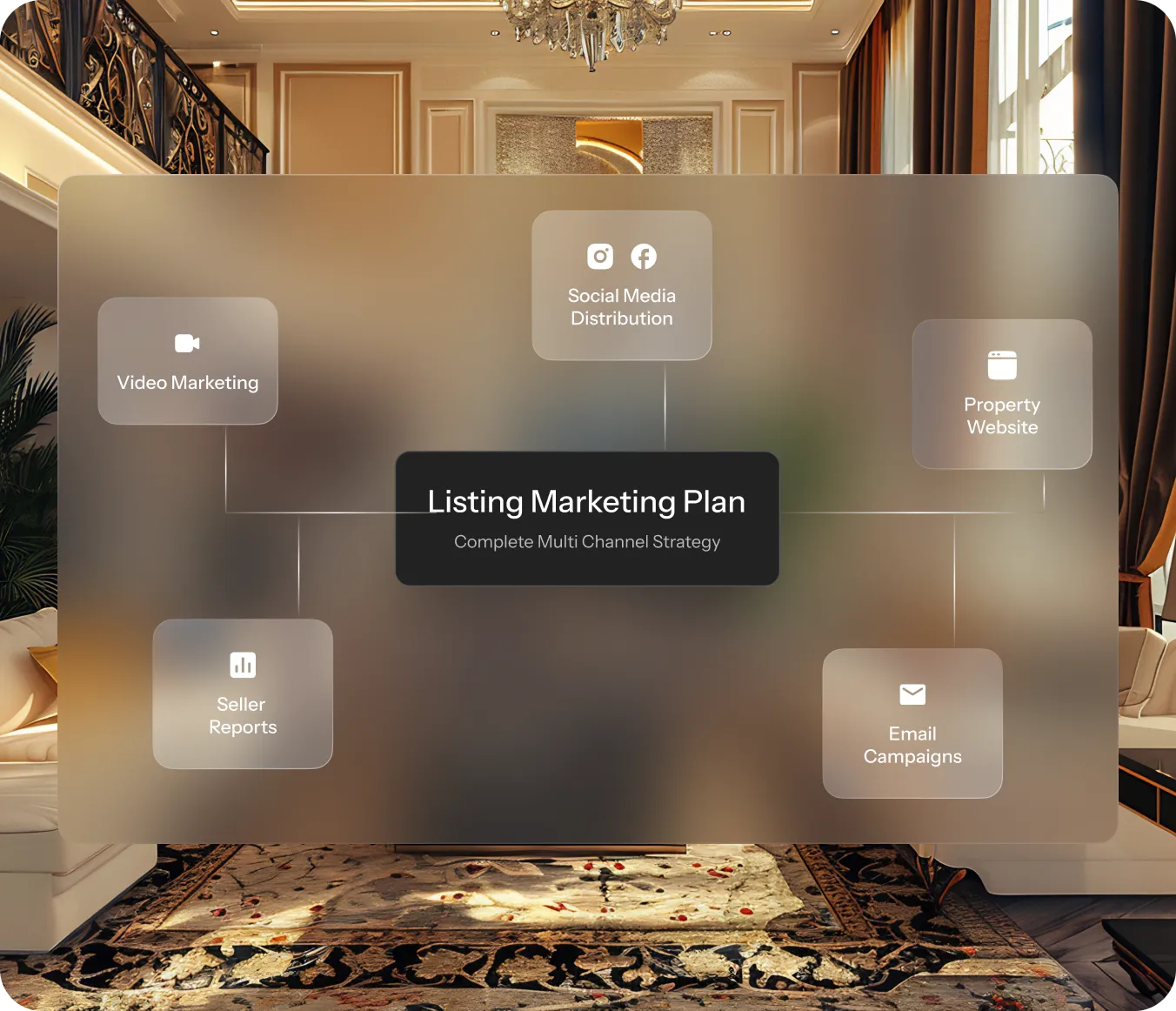
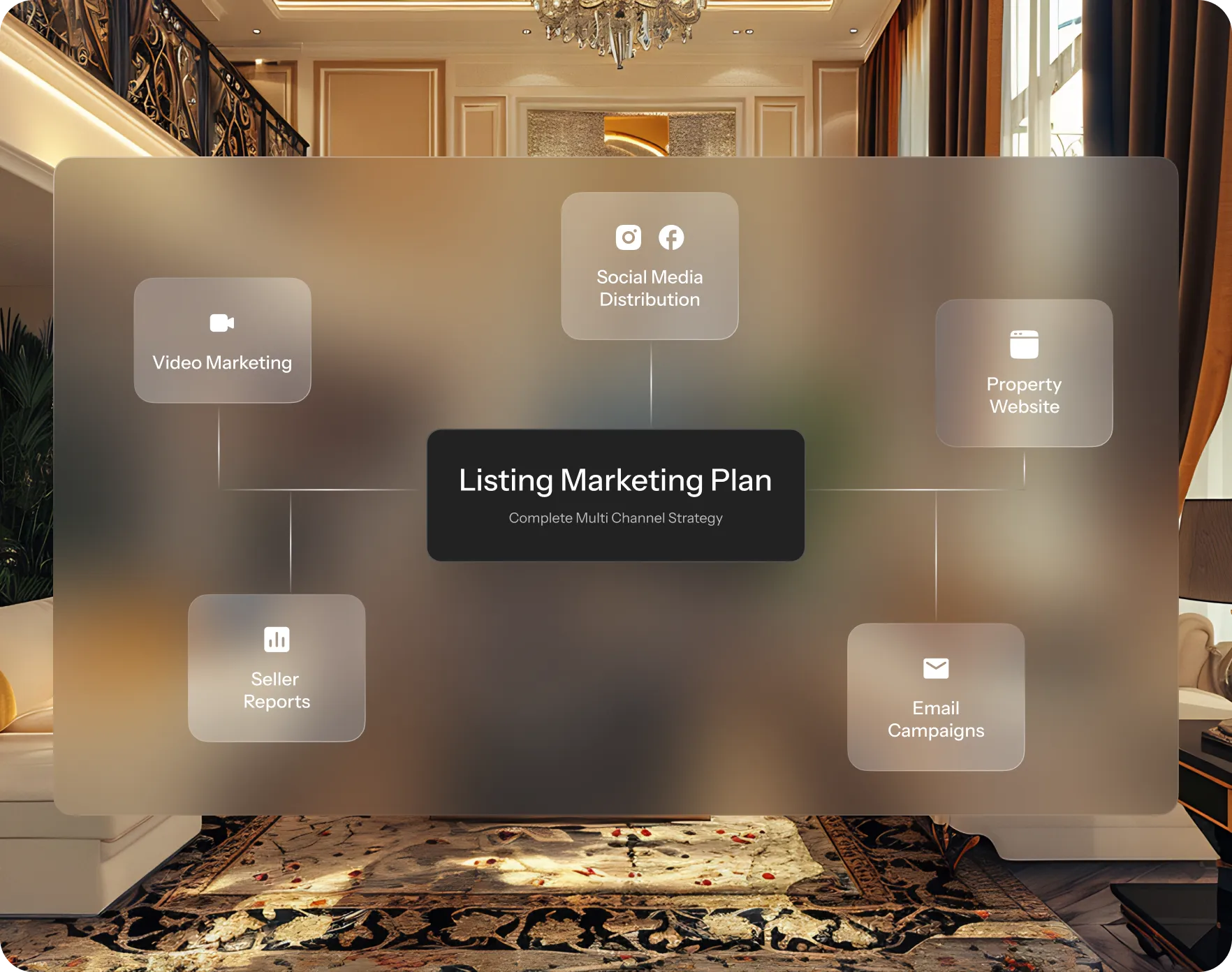
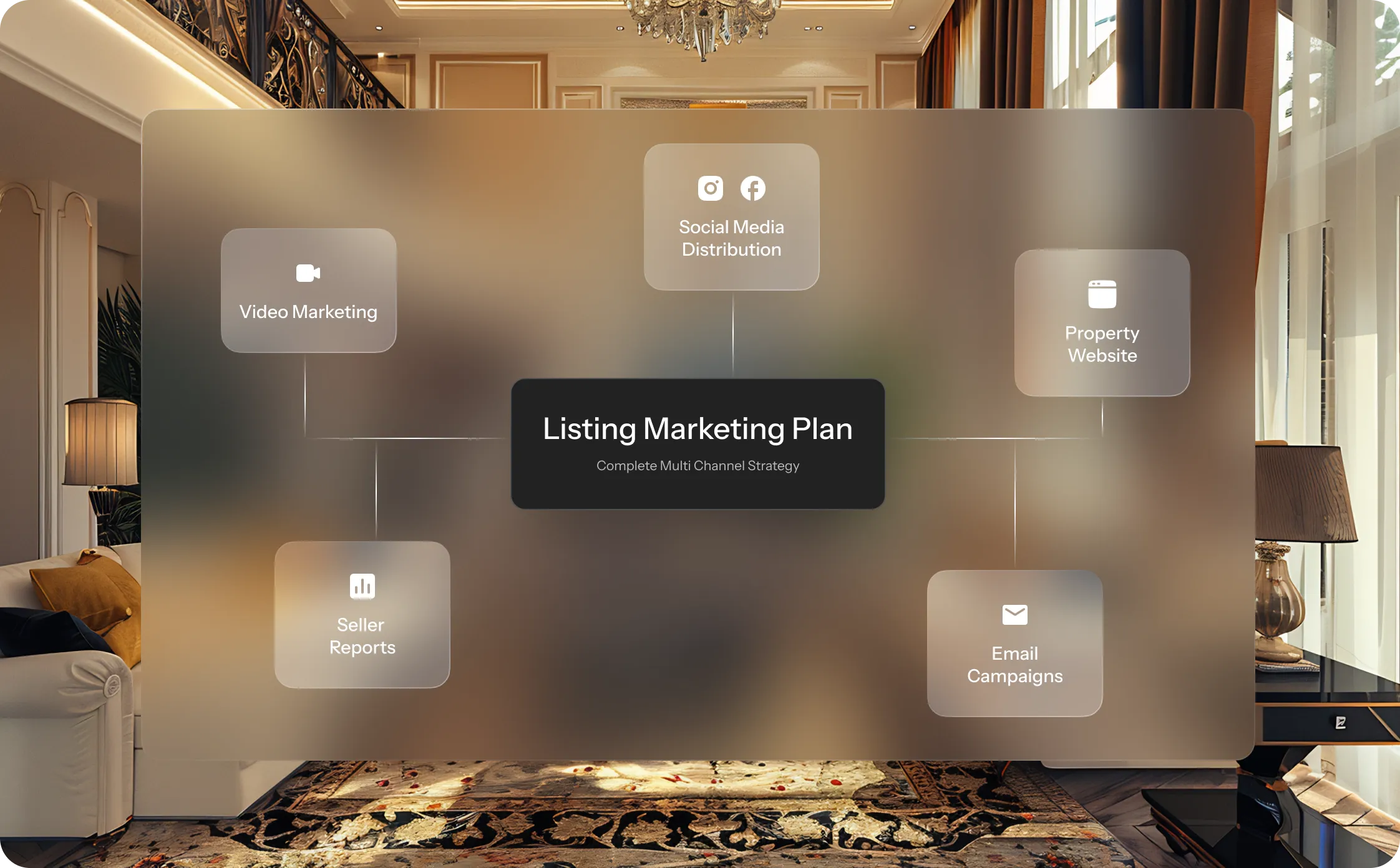
2. The Core Components of a Real Estate Marketing Plan
•
Property Preparation
•
Professional Visual Content
•
Single Property Website
•
Digital Marketing Channels
•
Traditional Marketing That Still Works
•
Syndication and Exposure
•
Seller Reporting
3. Presenting Your Marketing Plan to Win Listings
4. Adapting Your Plan for Luxury Listings
1. Why a Strong Marketing Plan Wins Listings From the Start
A strong listing presentation goes beyond experience and MLS access — it lays out exactly how the home will be promoted, with real detail behind every promise, giving sellers a clear and specific plan they can count on.
When sellers meet with multiple agents, the agent who shows up with a clear, visual marketing plan — complete with timelines, sample materials, and specific channels — wins by giving sellers exactly the certainty they're looking for.
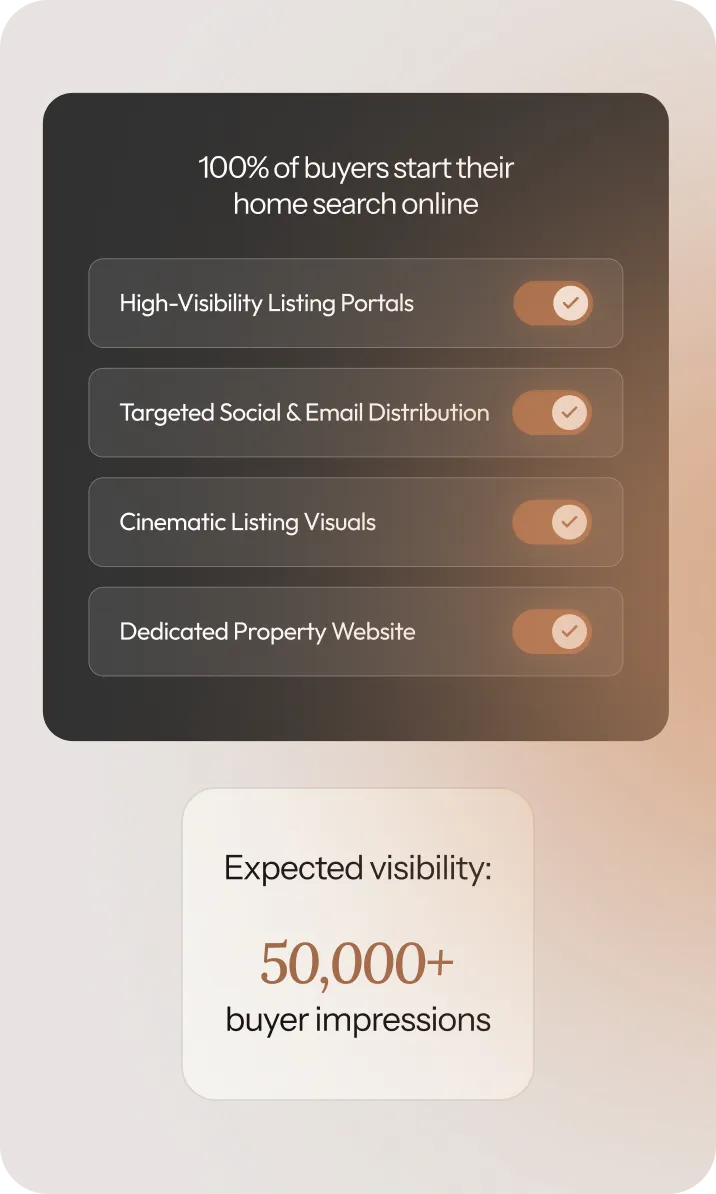
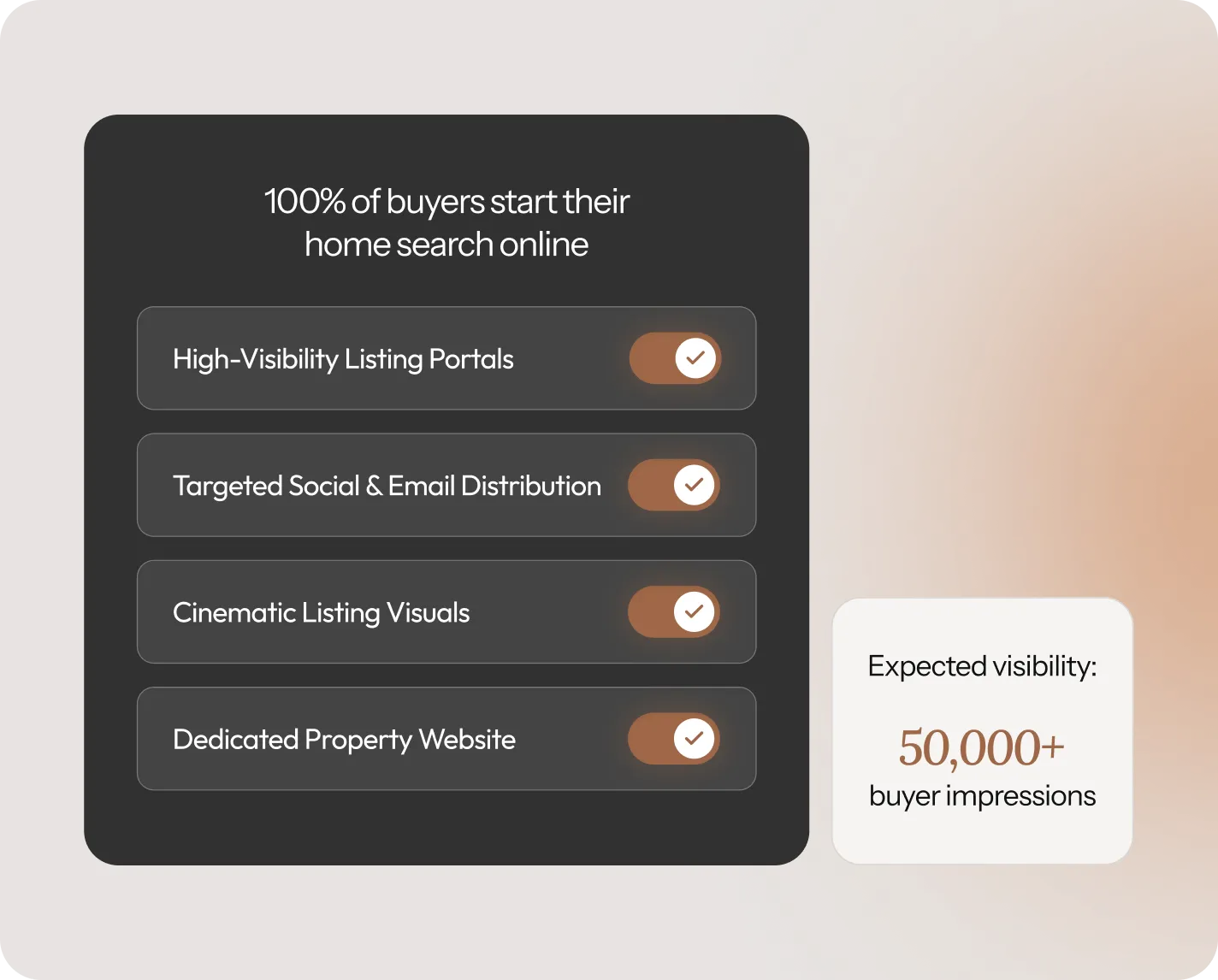
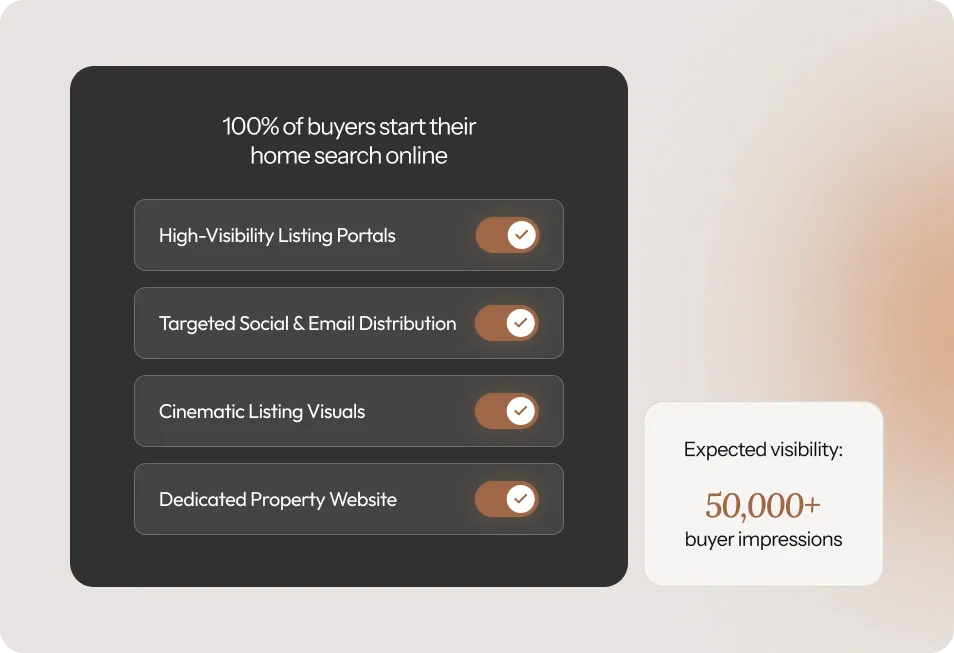
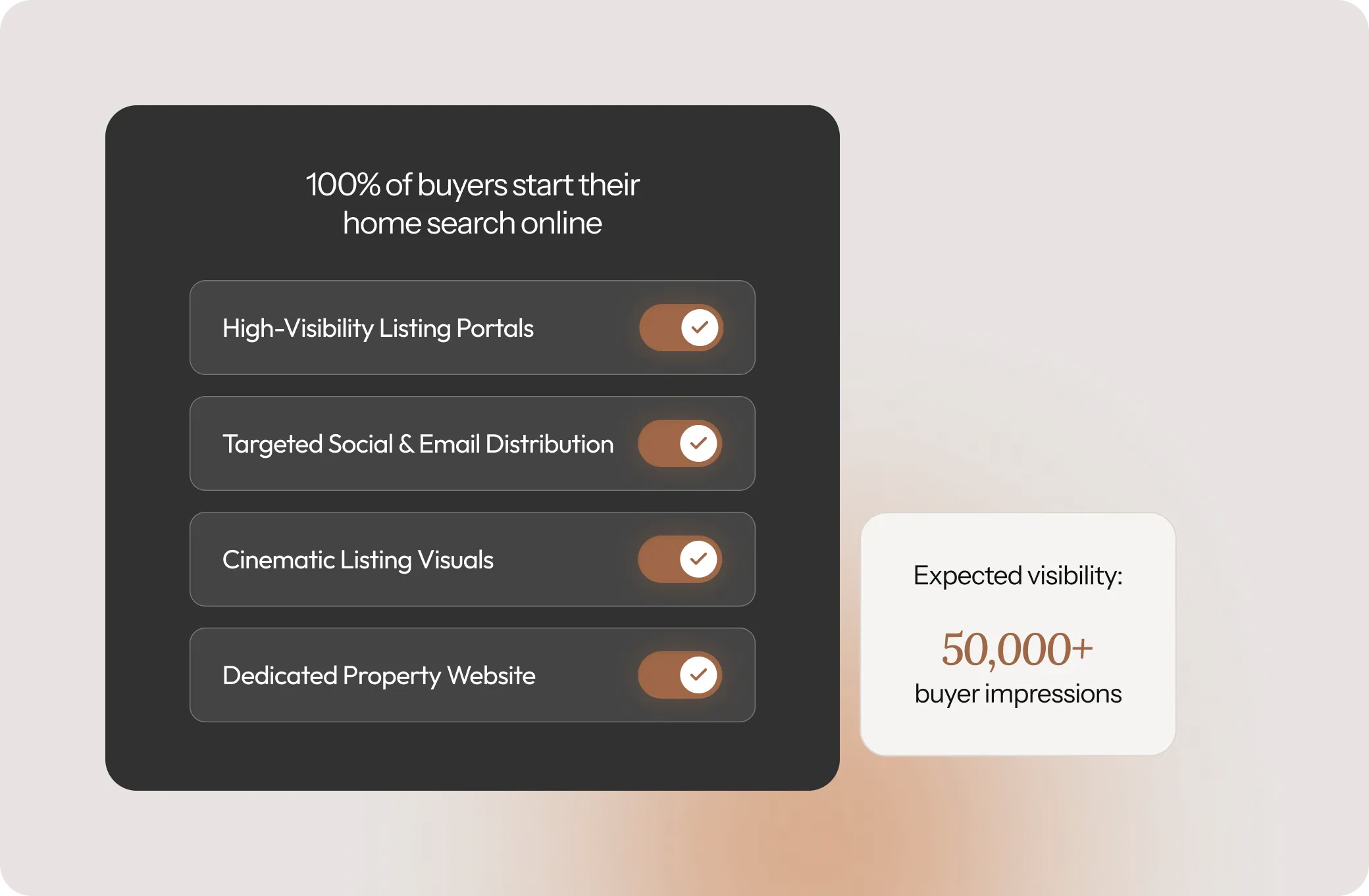
According to the National Association of Realtors, 100% of buyers use the internet during their home search. Your marketing plan needs to reflect that reality with a digital-first strategy that still incorporates traditional methods where they make sense.
2. The Core Components of a Real Estate Marketing Plan
Every listing marketing plan should cover these essential areas. Covering every area ensures your listing gets the full exposure it deserves.
Property Preparation
Marketing starts before the camera comes out. You need to know the home inside and out — what makes it attractive, what might concern buyers, and who the ideal purchaser is.
Walk through with your seller and document the features that matter: updated systems, recent renovations, storage, natural light, outdoor space. Then identify anything that needs addressing before photos. Small fixes like fresh paint on scuffed walls or replacing dated light fixtures can significantly impact how the home photographs.
For vacant properties or homes with dated furniture, discuss staging options. Virtual staging has become a cost-effective alternative that can transform empty rooms into styled spaces without the expense of physical furniture rental.
Professional Visual Content
Buyers move quickly through listings, making strong photos and video the fastest way to earn a closer look.
Professional photography is baseline — not optional. Adding video alongside photography gives listings the best chance of standing out. Video content consistently outperforms photos on social media, generating higher engagement and more shares. Tools that streamline video production make it practical to include cinematic content on every listing, without added cost or scheduling delays.
This is where tools like Trolto fit into your workflow. Upload your listing photos, and you get a cinematic 4K property video back in minutes — formatted for Instagram Reels, TikTok, and YouTube. It lets you include video in every listing without the production costs or scheduling delays.
Your visual checklist should include:
- 25-40 professional photos covering every room and exterior angles
- Property video in vertical (social) and horizontal (YouTube/MLS) formats
- Drone footage for properties where aerial views add value
- 3D virtual tour for remote buyers who can't visit in person
Single Property Website
A dedicated property website keeps all buyer attention focused entirely on your listing. A dedicated property website keeps attention focused on your listing only.
Single property sites serve multiple purposes: they give you a branded destination for all marketing channels, capture buyer inquiries directly to you (not to a portal that sells leads to other agents), and demonstrate to sellers that their home gets premium treatment.
Trolto generates these automatically from your listing photos — a modern, video-first landing page with your branding, built-in lead capture forms, and live analytics. When you can tell a seller "every listing gets its own luxury website," you immediately demonstrate a higher standard of marketing that goes well beyond MLS syndication.
Digital Marketing Channels
Your real estate marketing plan needs a clear digital strategy covering organic content, paid advertising, and email.
Social media is where buyers browse casually before they're ready to schedule showings. Post your listing across Instagram, Facebook, and TikTok with video content leading the way. Consistency matters more than perfection — Agents who post daily build stronger recognition and stay top of mind with buyers.
If daily content creation feels unsustainable, automation helps. Trolto's daily local content feature generates branded posts tailored to your market, written in your voice, and publishes them automatically. Your social presence stays active even when you're busy with showings
Paid ads on Meta (Facebook/Instagram) let you target by location, income, interests, and behaviors. Even $50-100 per listing can generate meaningful reach when targeting is set correctly.
Email marketing to your database announces new listings to buyers who already know you. Segment your list so active searchers get priority notification.
Traditional Marketing That Still Works
Digital dominates, but traditional channels still matter — especially for local visibility and seller perception.
Yard signs with QR codes linking to your property website turn drive-by traffic into digital leads
Direct mail postcards to the surrounding neighborhood surface buyers through word-of-mouth and position you for future listings from neighbors watching the sale. Open houses create urgency and bring multiple buyers through in a compressed timeframe.
Print materials like property brochures give open house visitors something tangible to take home. For luxury listings, high-quality print — thick cardstock, professional design — signals that you operate at a premium level.
Syndication and Exposure
Maximum visibility requires distributing your listing everywhere buyers search. Start with your local MLS, ensuring every field is complete and your best photos are positioned first.
Enable syndication to Zillow, Realtor.com, Trulia, and Redfin. For properties near market boundaries, consider posting to adjacent MLSs to reach buyers searching neighboring areas.
Don't overlook agent-to-agent marketing. Share listings with your office, participate in broker tours, and post in industry Facebook groups. An agent with a motivated buyer might bring you an offer faster than waiting for public marketing to generate one.
Seller Reporting
Your marketing plan isn't complete without a communication strategy. Sellers want to know their home is being actively promoted. Consistent communication keeps sellers confident and reassured throughout the process.
Commit to weekly updates sharing marketing metrics: website views, social engagement, showing feedback, inquiry counts. Even when there's nothing significant to report, consistent communication maintains trust.
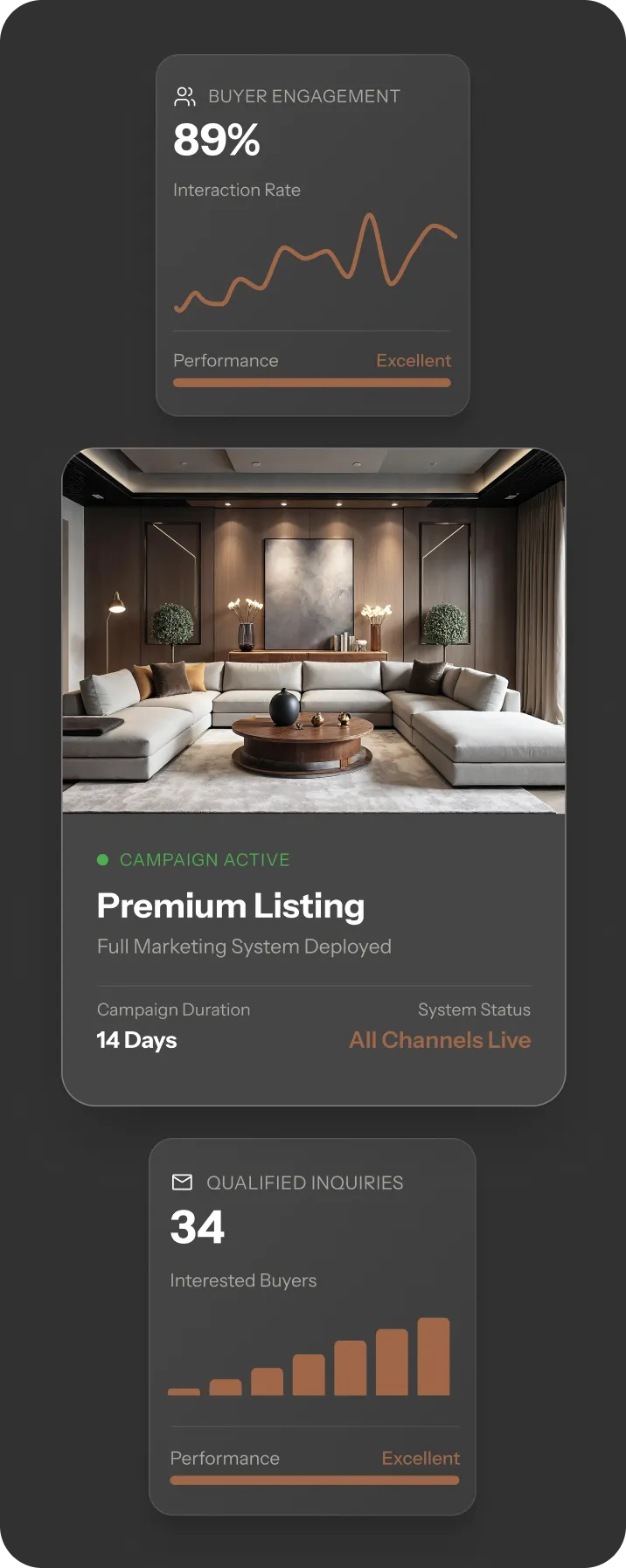
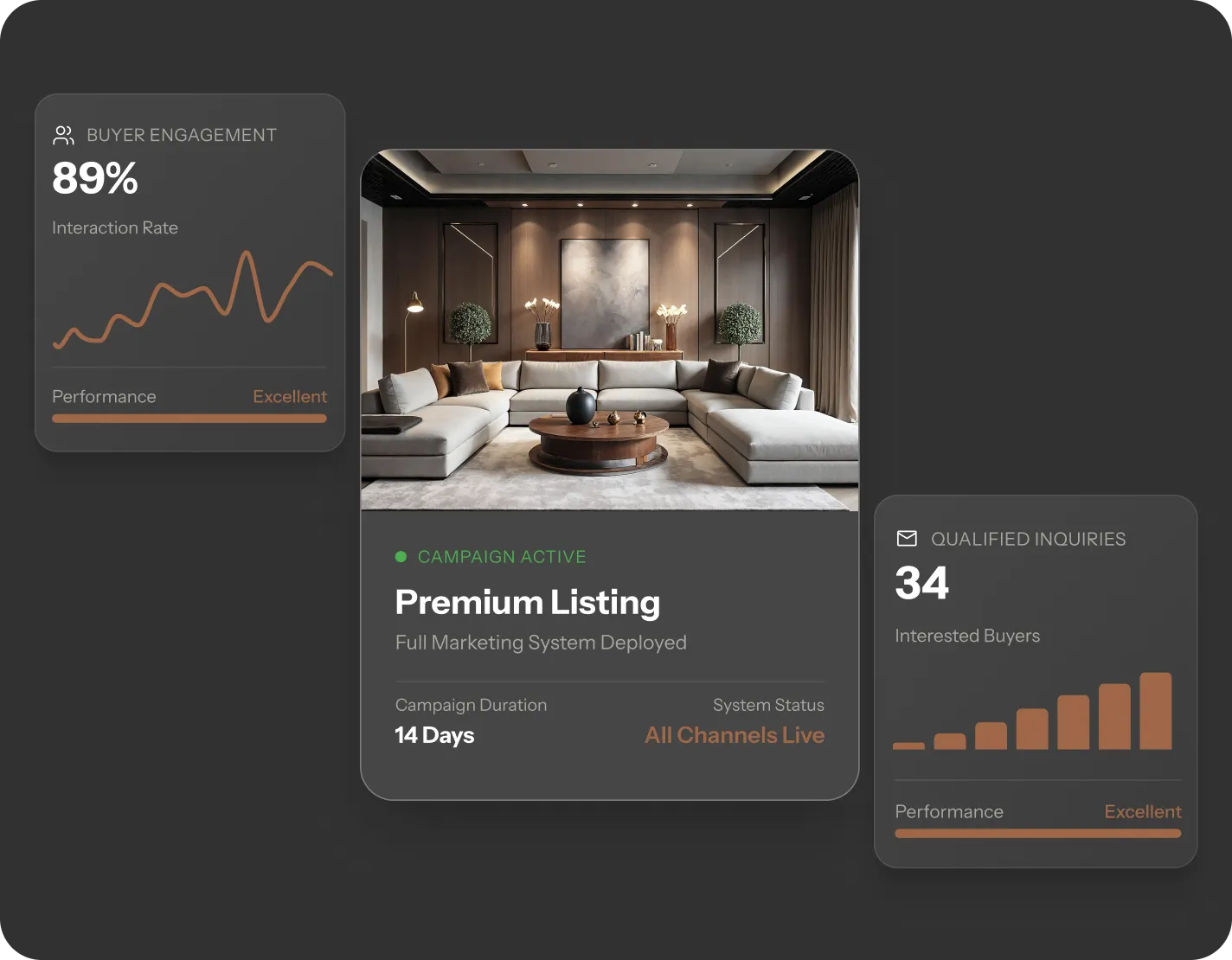
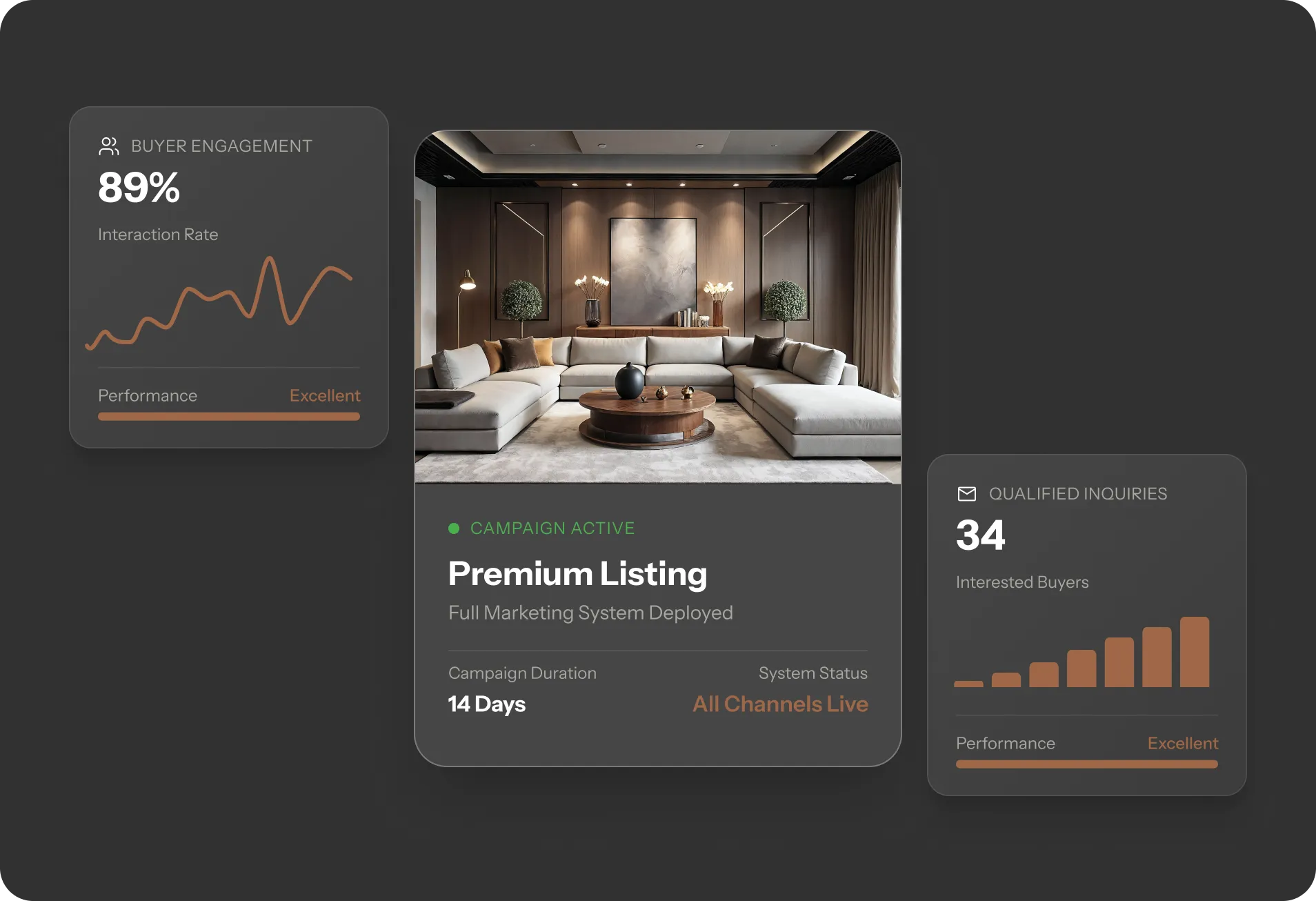
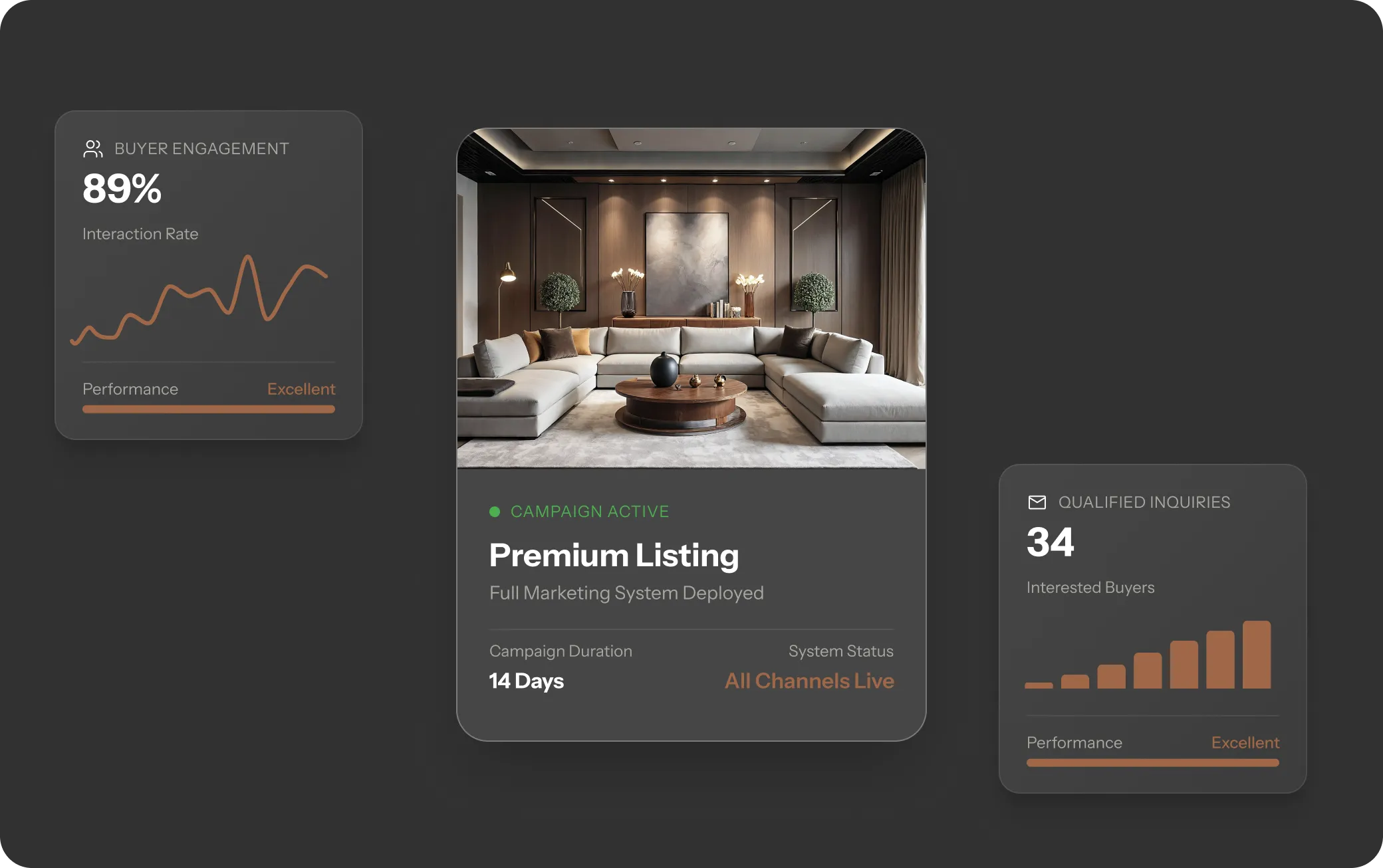
Trolto's seller reports provide this automatically — live dashboards tracking views, inquiries, and engagement that you can share directly with clients. It makes you look proactive without manually compiling data every week.
3. Presenting Your Marketing Plan to Win Listings
Having a plan matters. Presenting it effectively wins the listing.
Show examples, not promises. Include sample property websites, video clips, and marketing materials from previous listings. Sellers want to see what their listing will look like — not hear what you'll "try to do."
Make it specific. Reference their home's unique features. Explain which buyer demographics you'll target and why. Generic presentations feel generic.
Include a timeline. A week-by-week schedule showing when each marketing element launches demonstrates you have a system. It also creates accountability — sellers can track whether you're delivering.
Trolto generates listing presentations automatically, pre-populated with the seller's property details and your branding. Walking into an appointment with a polished, customized presentation ready to go makes an immediate impression.
4. Adapting Your Plan for Luxury Listings
Luxury properties require elevated execution across every element. Visual quality becomes non-negotiable — professional photography, cinematic video, drone footage, and virtual tours are baseline expectations, not premium add-ons.
Expand your geographic reach. Luxury buyers often relocate from other markets. Your plan should include strategies for reaching buyers nationally and, for ultra-high-end properties, internationally.
Consider exclusive events. Private broker opens with curated guest lists create buzz among agents working similar price points. Some luxury agents host invitation-only previews for select buyers before public launch.
The framework stays the same — you're simply executing at a higher level.
FAQ
What should be included in a real estate marketing plan?
Luxury properties require elevated execution across every element. Visual quality becomes non-negotiable — professional photography, cinematic video, drone footage, and virtual tours are baseline expectations, not premium add-ons.
How do I present my marketing plan to sellers?
Show, don't tell. Bring sample marketing materials, property website examples, and video clips from previous listings. Include a week-by-week timeline so sellers see exactly when each element launches. Make the presentation specific to their property, not generic.
How often should I update sellers on marketing progress?
Weekly updates are standard practice. Share metrics like website views, social engagement, showing feedback, and inquiry counts. Consistent communication builds trust even when there's no major news to report.
Build Your System
Luxury properties require elevated execution across every element. Visual quality becomes non-negotiable — professional photography, cinematic video, drone footage, and virtual tours are baseline expectations, not premium add-ons.
If building these materials from scratch for every listing feels unsustainable, tools like Trolto can systematize the process — generating cinematic videos, luxury property websites, listing presentations, and daily content automatically. That lets you deliver premium marketing on every listing without the premium time investment.
Explore how Trolto works