.webp)
Branding
How to Create Real Estate Slogans That Define Your Brand
Your real estate slogans and taglines communicate who you are before clients ever meet you. This guide covers the difference between slogans and taglines, examples that work, and a framework for creating your own memorable phrases.

March 6, 2026

5 min read
Share


What We'll Explore
1. Slogans vs. Taglines: Understanding the Difference
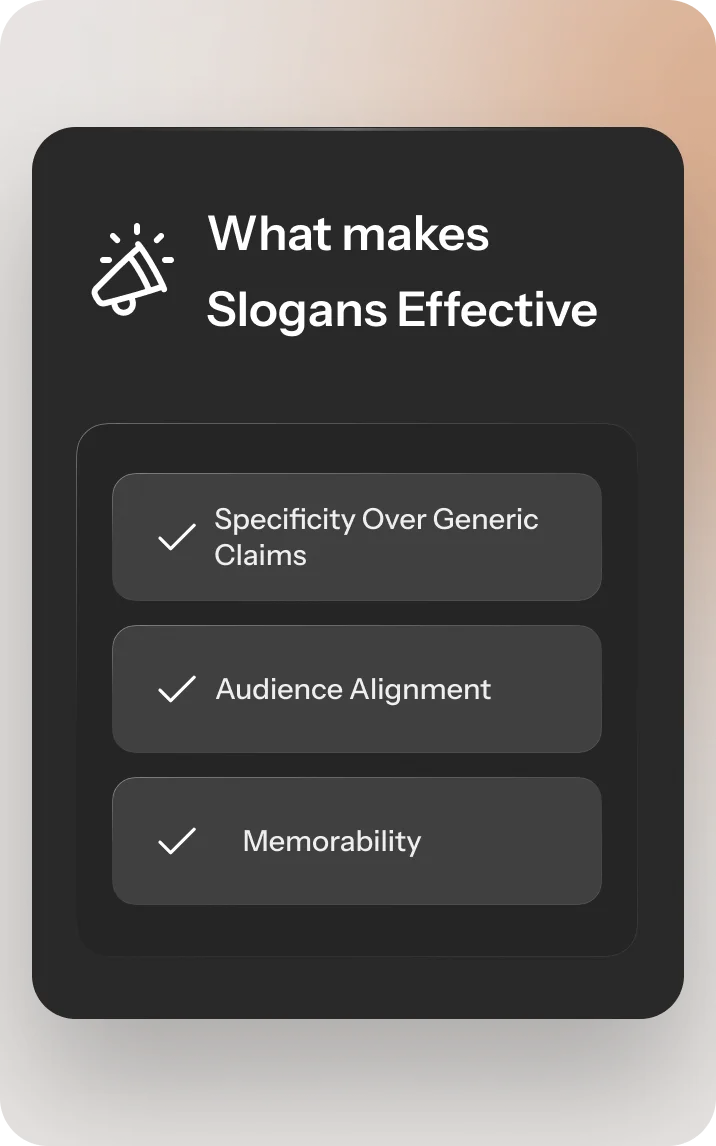
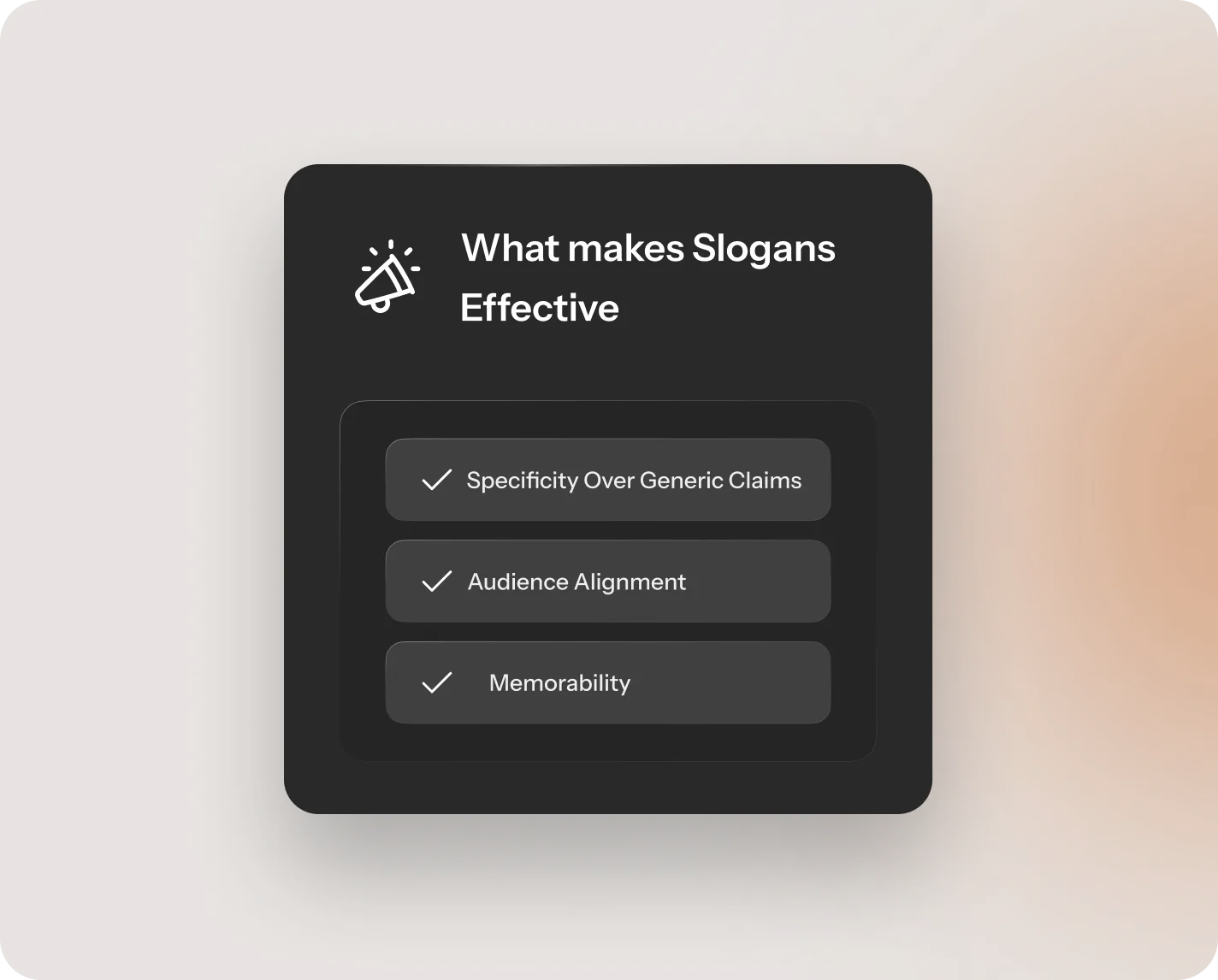
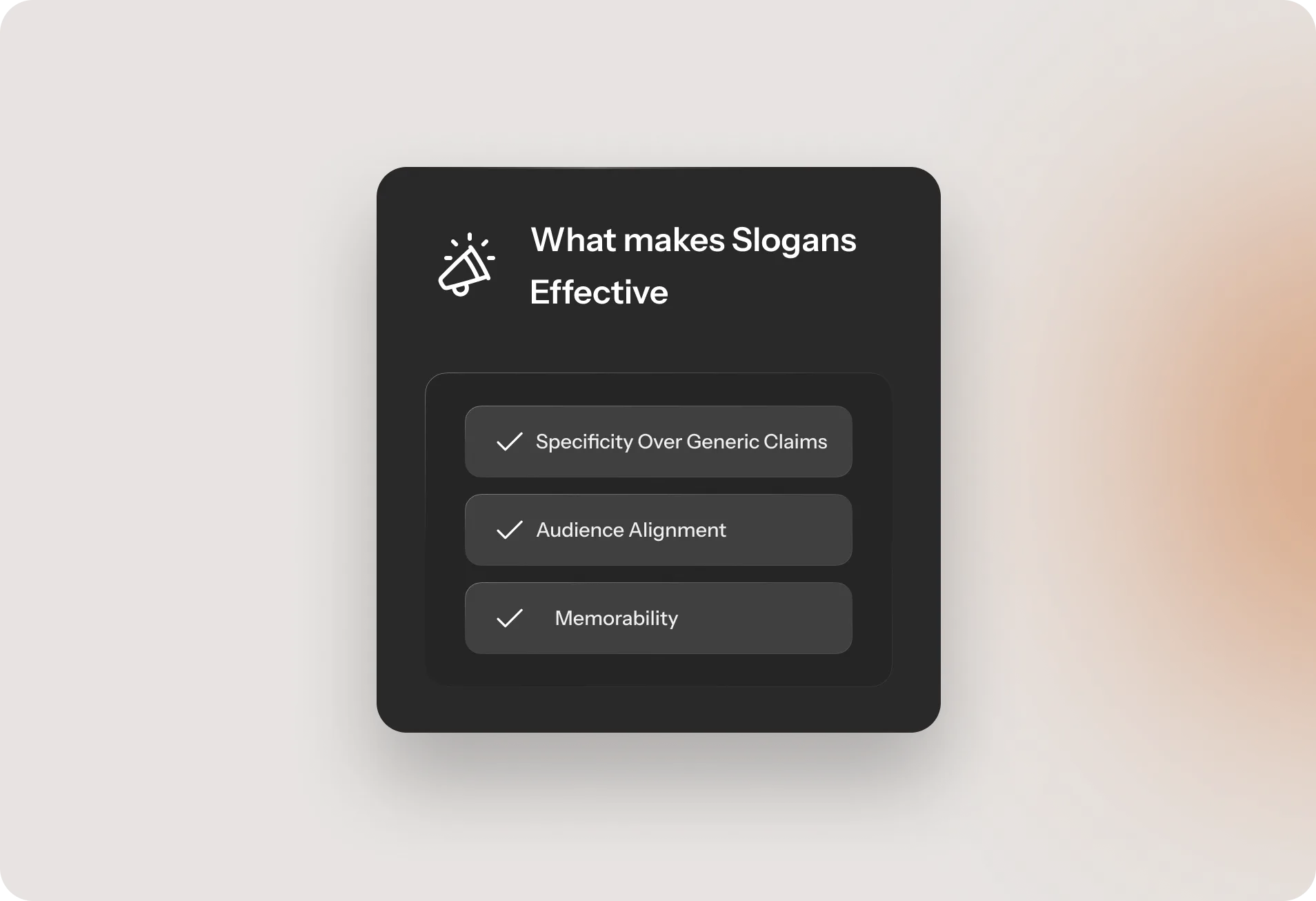
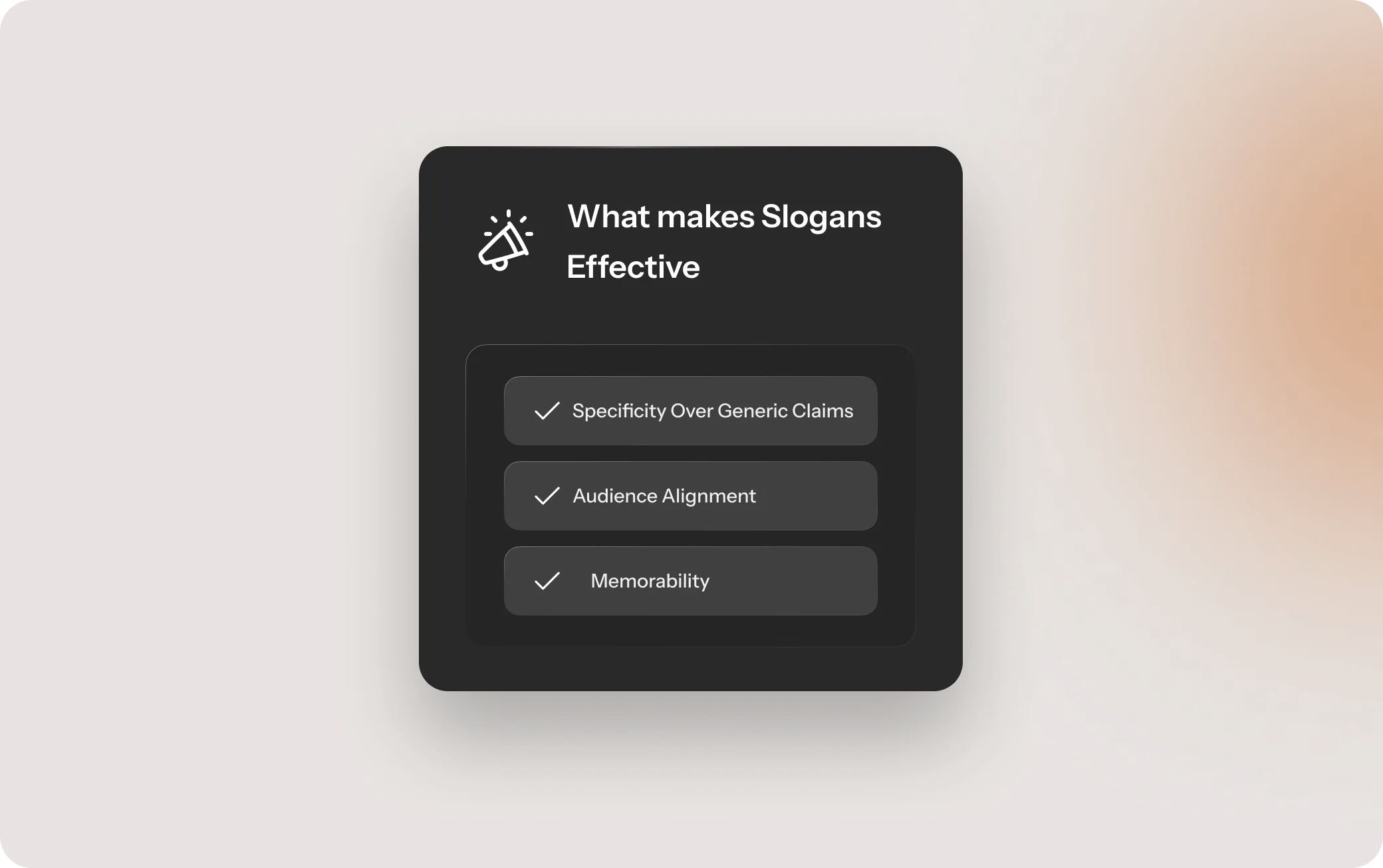
2. What Makes Real Estate Slogans Effective
•
Specificity Over Generic Claims
•
Audience Alignment
•
Memorability
3. Examples of Real Estate Slogans by Category
•
Location-Based Slogans
•
Service-Focused Slogans
•
Results-Focused Slogans
•
Relationship-Focused Slogans
•
Specialty-Focused Slogans
4. Creating Your Own Real Estate Slogan
•
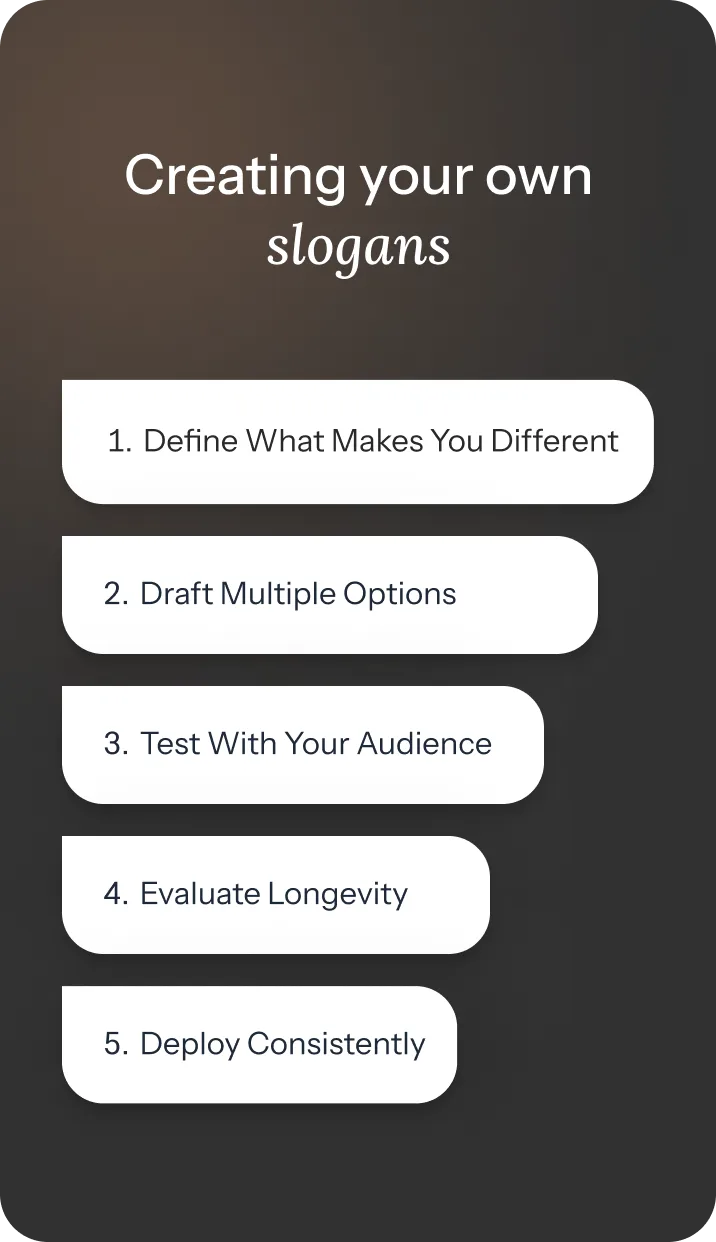
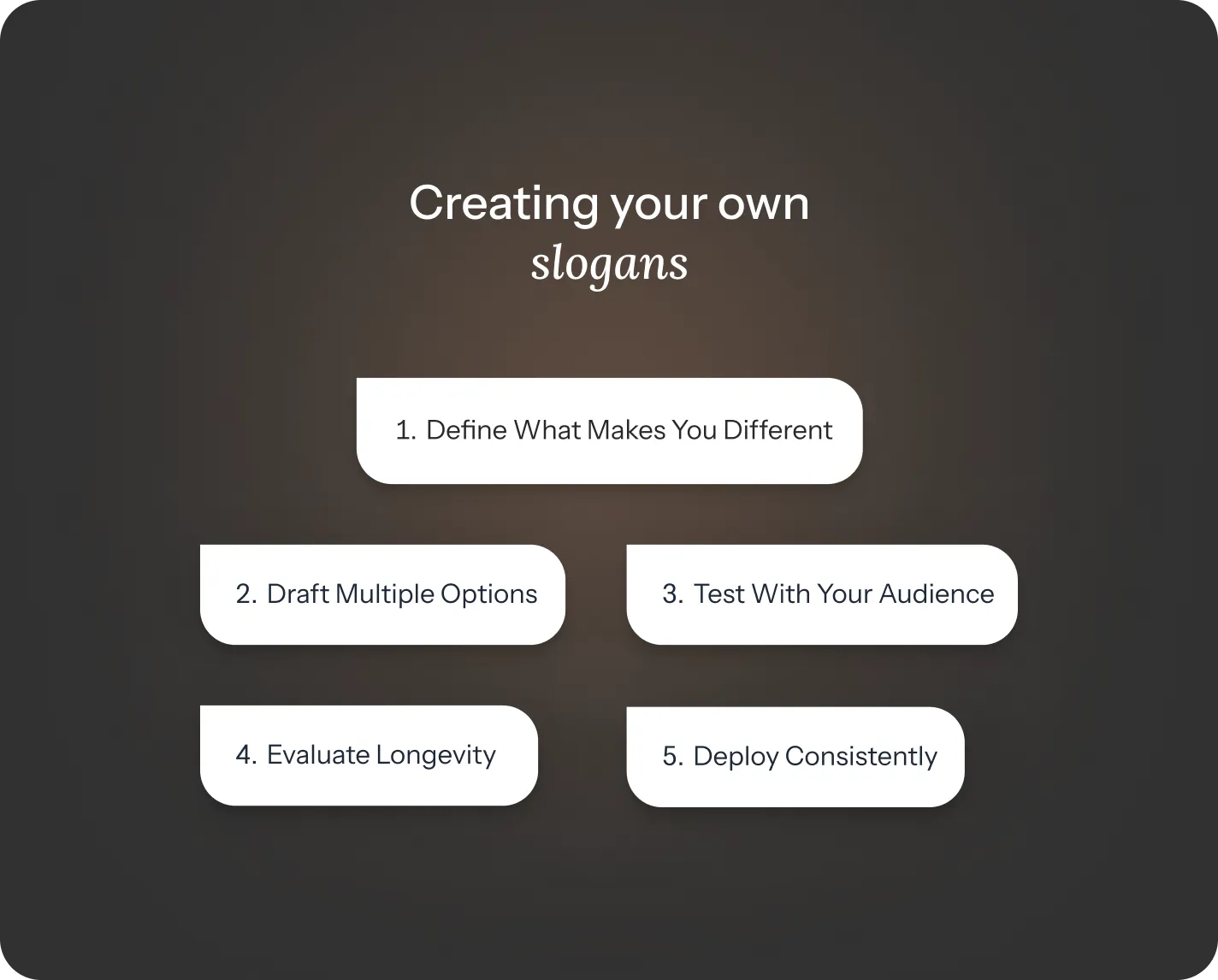
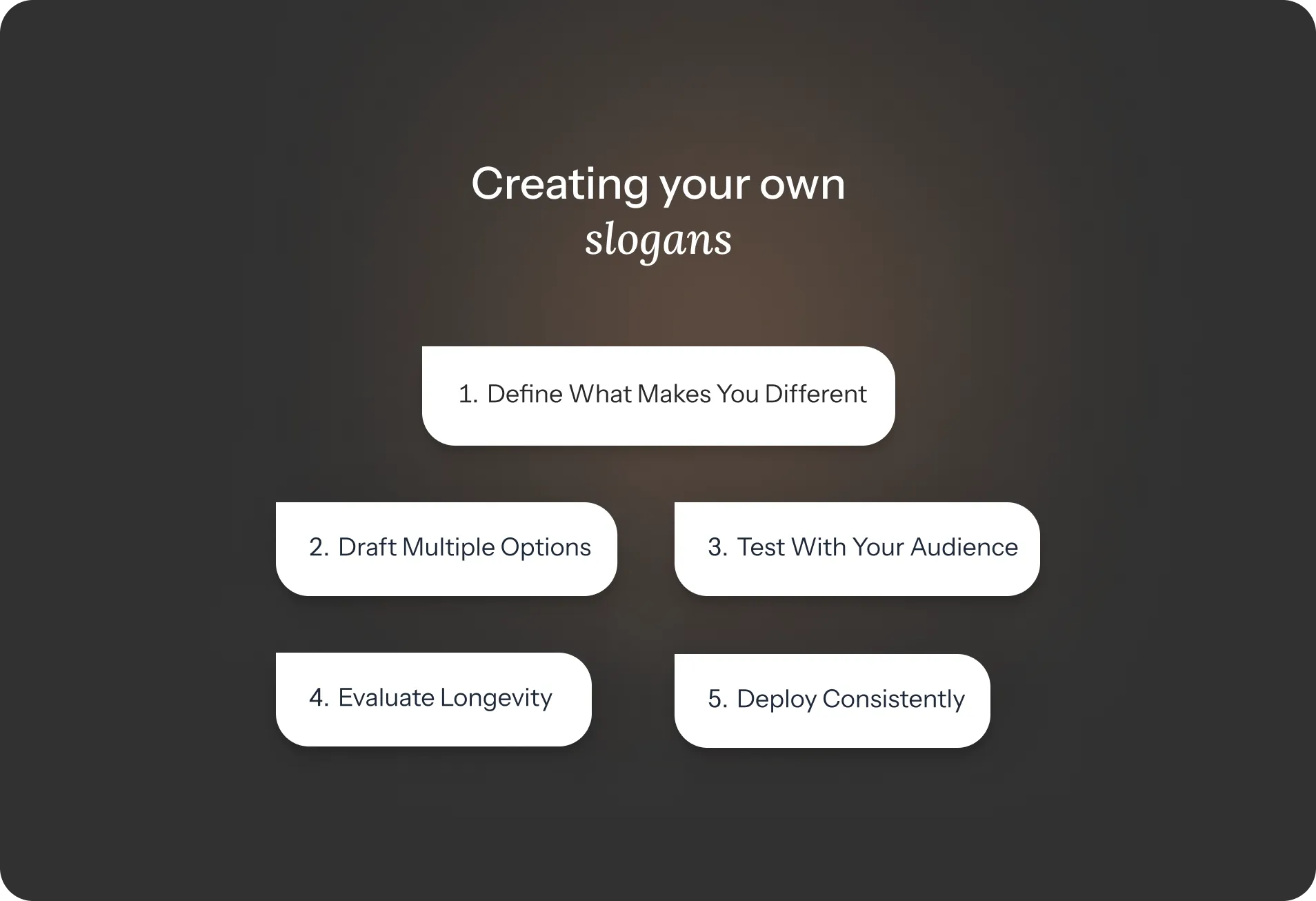
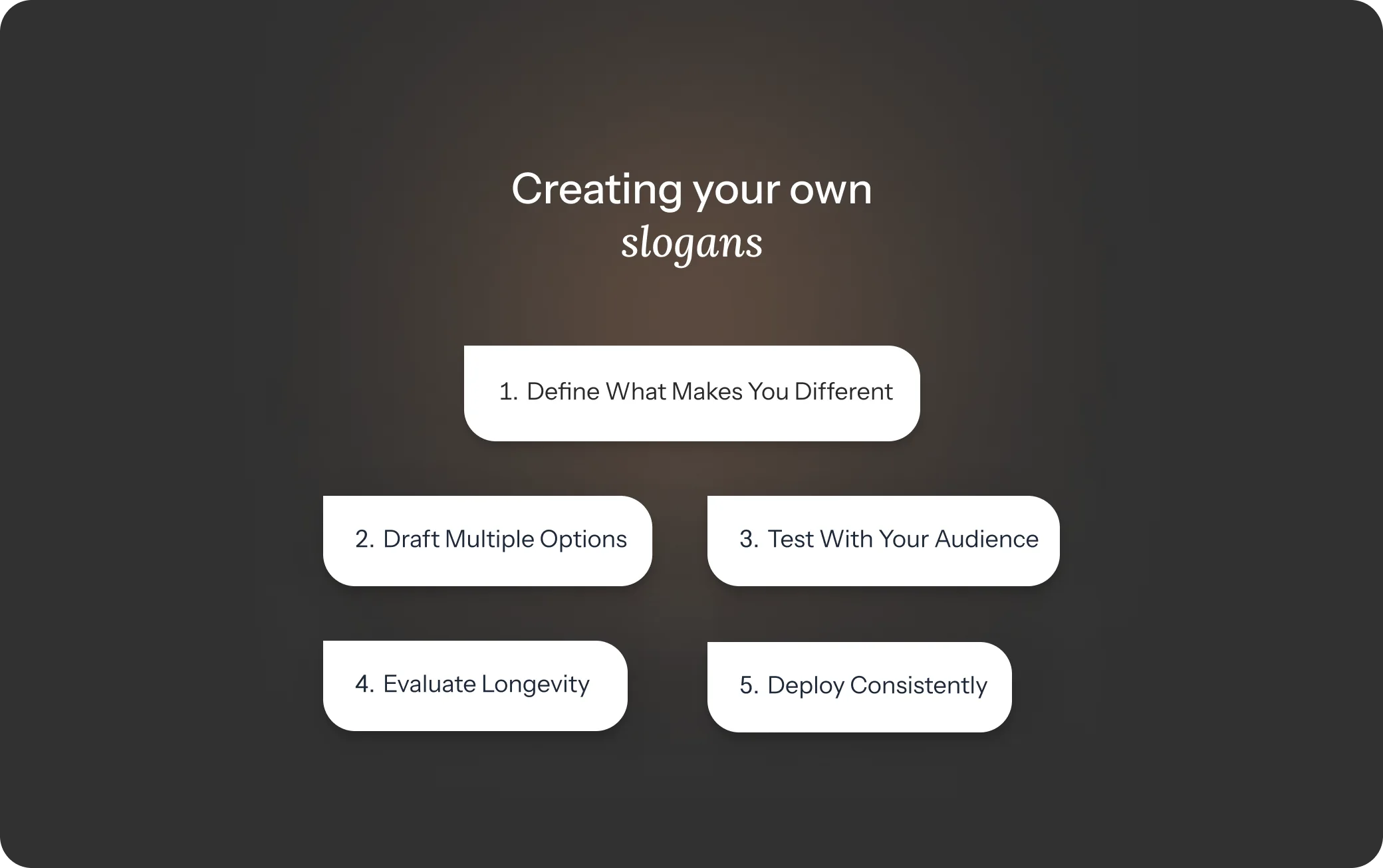
Step 1: Define What Makes You Different
•
Step 2: Draft Multiple Options
•
Step 3: Test With Your Audience
•
Step 4: Evaluate Longevity
•
Step 5: Deploy Consistently
5. Using Slogans in Your Marketing
6. Common Slogan Mistakes to Avoid
1. Slogans vs. Taglines: Understanding the Difference
Many agents use these terms interchangeably, but they serve different purposes in your marketing.
Taglines are permanent. They represent your brand identity and appear consistently across all marketing — your website, business cards, email signature, social media profiles. Think of Nike's "Just Do It" or Apple's "Think Different." These phrases define the brand itself.
Slogans are temporary. They tie to specific campaigns, promotions, or seasonal marketing efforts. A listing campaign might use one slogan while a buyer-focused campaign uses another. Slogans can change; taglines shouldn't.
For real estate, your tagline might appear on every piece of marketing you produce for years. Your slogans might rotate with each quarter's advertising focus.
2. What Makes Real Estate Slogans Effective
According to Harvard Business Review research on brand messaging, effective brand language connects to specific customer values rather than generic claims. The same principle applies to real estate slogans.
Specificity Over Generic Claims
"We sell homes" is a solid starting point — and the strongest slogans go further to show clients exactly what makes you the right choice.
"Helping families find their place in [City]" is better — it identifies an audience and location.
"The downtown condo specialist" is better still — it positions you as the expert in a specific niche.
Specific slogans stay top of mind precisely because they answer the question: "Why should I choose this agent?"
Audience Alignment
Your slogan should resonate with your target clients. Language that appeals to luxury buyers differs from language that connects with first-time homeowners.
Luxury-focused examples:
- "Where distinction meets address"
- "Discreet service for discerning clients"
- "Representing exceptional properties"
First-time buyer examples:
- "Making homeownership possible"
- "Your guide to buying your first home"
- "From renting to owning — we'll get you there"
Investor-focused examples:
- "Building wealth through property"
- "Your partner in portfolio growth"
- "Strategic real estate investment"
Alignment between language and audience builds instant credibility. A luxury agent who uses refined, aspirational language reinforces their positioning, and a first-time buyer specialist who keeps their tone warm and approachable puts their clients at ease.
Memorability
The best real estate slogans are short enough to remember and distinctive enough to stand out.
Test yours: The strongest slogans are uniquely yours — reflecting your personality, specialty, or approach in a way no other agent in your market could claim.
Wordplay can help when done tastefully. Alliteration, rhyme, or unexpected word combinations create phrases that stick. But don't force cleverness at the expense of clarity.
3. Examples of Real Estate Slogans by Category
Use these as inspiration, not templates to copy directly. The best slogans reflect your authentic brand.
Location-Based Slogans
Tying your slogan to a specific market reinforces local expertise:
- "Born and raised in [City]. Now helping you call it home."
- "Nobody knows [Neighborhood] like we do."
- "Your [City] real estate authority"
- "[Area]'s most trusted name in real estate"
Service-Focused Slogans
These emphasize how you work with clients:
- "Your advocate from offer to keys"
- "Full-service representation, personal attention"
- "Responsive, reliable, results"
- "We answer when you call"
Results-Focused Slogans
These highlight outcomes:
- "Getting you top dollar since [year]"
- "Sold. Again."
- "The results speak for themselves"
- "Moving you forward"
Relationship-Focused Slogans
These emphasize the human element:
- "More than your agent — your partner"
- "Clients become friends"
- "Built on referrals, sustained by relationships"
- "Here when you need us, before and after closing"
Specialty-Focused Slogans
These position you as the expert in a niche:
- "The relocation specialist"
- "New construction, expert guidance"
- "Investment properties, maximum returns"
- "Waterfront properties, lakeside living"
4. Creating Your Own Real Estate Slogan
Follow this process to develop slogans that work for your brand.
Step 1: Define What Makes You Different
Before writing anything, answer these questions:
- What do past clients say about working with you?
- What do you do differently from other agents?
- Who is your ideal client?
- What problem do you solve for them?
Your slogan should emerge from genuine differentiation, not wishful thinking.
Step 2: Draft Multiple Options
Write at least ten possibilities without judging them. Quantity leads to quality. Include variations — some serious, some playful, some focused on service, some on results.
Keep going beyond the first decent idea to find something truly distinctive.
Step 3: Test With Your Audience
Show your top options to past clients, colleagues, and people in your target demographic. Ask:
- Does this sound like me?
- Is it memorable?
- Does it make you want to learn more?
Their reactions will reveal which options resonate most strongly and which have room to improve.
Step 4: Evaluate Longevity
For taglines especially, consider whether the phrase will age well. Avoid references to current trends, specific metrics that might change, or language that could feel dated in a few years.
Phrases rooted in timeless values tend to stay fresh longer than those tied to a specific technology moment. "Selling homes since 1985" carries more weight when paired with what that experience delivers for today's buyers.
Step 5: Deploy Consistently
Once you've chosen your tagline, use it everywhere — website, email signature, social profiles, business cards, print materials, video content.
Consistency builds recognition. Changing your tagline frequently prevents it from ever becoming associated with your brand.
5. Using Slogans in Your Marketing
Your slogan appears across every marketing touchpoint. How you present it matters as much as the words themselves.
On your website, your tagline typically appears in the header or hero section — the first thing visitors see. It should complement your visual brand and set the tone for the entire site experience.
In video content, slogans work well as opening or closing elements. A consistent brand sign-off reinforces recognition across all your video marketing.
Tools like Trolto can help maintain brand consistency across your marketing. When your daily social content, listing videos, and property websites all carry consistent branding — including your slogan — you build recognition that reinforces your positioning.
6. Common Slogan Mistakes to Avoid
Being too long. If it's more than 8-10 words, it's hard to remember. Edit ruthlessly.
Claiming what everyone claims. "Honest, hardworking, dedicated" reflects the core values that agents genuinely strive to embody every day. Find something distinctive.
Maintaining personal well-being and professional boundaries while serving clients. "#1 Agent" is about you. "Your home, our priority" is about them. Client-focused language typically performs better.
Copying competitors. Drawing inspiration from successful agents can be a helpful starting point, though developing your own unique voice will help you stand out even more.
FAQ
How often should I change my slogan?
Taglines should remain consistent for years — changing them frequently prevents brand recognition from building. Campaign slogans can change with each marketing initiative. If your tagline no longer reflects your brand, a change may be warranted, but approach it as a significant brand decision.
Should my slogan include my name?
Name-based slogans can work when they're clever ("Sold by [Name]" or wordplay on your name), but they're not required. Many effective taglines focus on value proposition rather than agent identity.
Can I use the same slogan as another agent in a different market?
Legally, most slogans aren't trademarked. Practically, originality serves you better. If a slogan works for another agent, it's probably generic enough that it doesn't strongly differentiate either of you.
Build a Brand Worth Remembering
Effective real estate slogans distill your brand into a memorable phrase that resonates with your target audience. They reinforce what makes you different and give clients language to remember and refer you by.
Your slogan is one piece of a consistent brand presence. When combined with professional visual marketing — listing videos, property websites, daily social content — it builds recognition that positions you as the obvious choice in your market.
If maintaining that consistent presence feels challenging, Trolto can help by automatically generating branded content that keeps your marketing active and professional.
See how Trolto works