← Back to Blog
Neighborhoods
What Is Daily Life Like Living in the Cholul Neighborhood of Mérida?
By Aldo Chavez
September 6, 2026 · 11 min read
If you are asking what daily life is like living in the Cholul neighborhood of Mérida, the short answer is this: it is quieter, greener, and more rooted in Yucatecan tradition than almost anywhere else in the city. Cholul sits on Mérida's northern periphery, about 12 kilometers from the historic centro, and it offers a pace of life that feels noticeably different from the dense urban grid closer to Paseo de Montejo. This guide covers everything from morning routines and local markets to housing costs, commute times, and what the streets actually look like on a typical Tuesday.
1. Where Cholul Sits and What the Streets Look Like
Cholul is a comisaría of Mérida, meaning it is an outlying municipality that has been absorbed administratively into the city but still functions with its own distinct identity. It sits roughly 12 kilometers north of Mérida's centro histórico, just past the Anillo Periférico, along the road that continues toward Conkal and eventually toward Progreso on the Gulf Coast.
The area around Cholul is part of a corridor of comisarías that include Dzityá, Conkal, and Tixpéhual. Each has its own plaza, church, and local market. Cholul itself centers on its colonial-era church and a small park that anchors the social life of the older village core.
The Physical Layout of the Comisaría
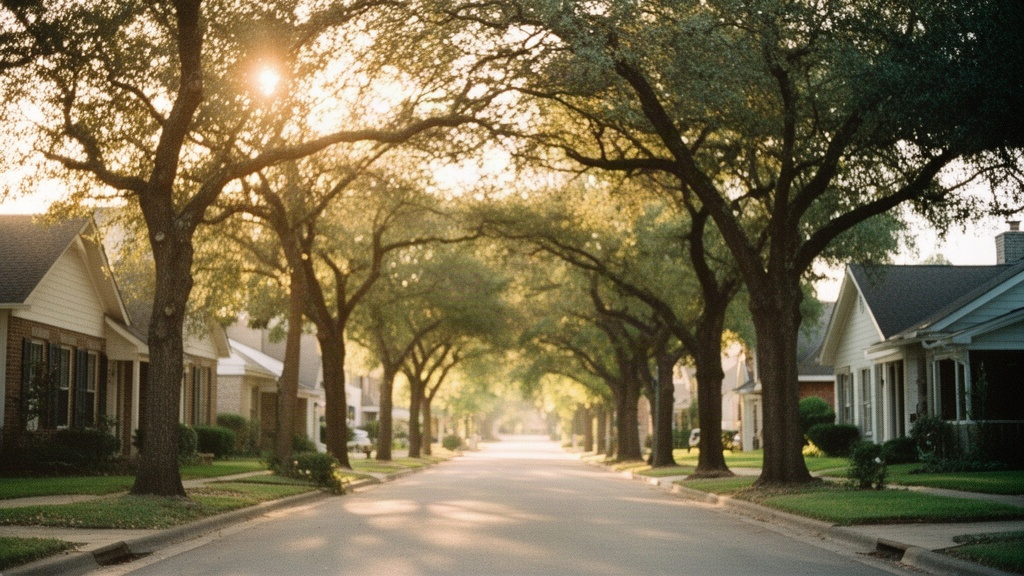
The older village grid follows the traditional Yucatecan pattern: narrow streets, low stone walls, and homes built close to the sidewalk with interior courtyards hidden behind solid facades. Beyond that historic core, newer residential fraccionamientos have grown up around Cholul over the past decade, bringing gated communities, wider streets, and modern construction directly adjacent to the original village streets.
The surrounding landscape is noticeably more open than central Mérida. There are trees, open lots, and a lower building density that lets in more light and air. The flat Yucatecan terrain means the horizon is wide, and on clear mornings the sky feels much larger than it does inside the city's older neighborhoods.
Architecture and Housing Stock
Housing in Cholul spans several distinct categories. The oldest homes in the village core are single-story structures built from local limestone, often with high ceilings, tile floors, and small gardens. Many have been in the same family for generations and rarely appear on the open market.
The newer fraccionamientos surrounding the village offer two and three-bedroom homes in a more contemporary style, typically with enclosed parking, small front yards, and community perimeter walls. Some developments also include small shared green areas or playgrounds within the complex.
2. A Typical Day in Cholul: Morning to Evening
Daily life in Cholul moves at a pace that reflects its village roots. The rhythm is set by local markets, church bells, and the school schedule rather than by office towers or heavy commercial traffic.
Morning Routines and Local Food
Mornings in Cholul start early. By 6:30 a.m., tortillerías are operating and the smell of fresh corn masa drifts into the street. Small tiendas open before 7:00 a.m. and sell basic groceries, bread from the local panadería, and cold drinks. Residents who work in central Mérida are on the road by 7:00 to 7:30 a.m. to beat the congestion that builds on the Periférico between 8:00 and 9:30 a.m.
Breakfast options within Cholul itself are limited but genuine. There are typically one or two small comedores near the village park that serve Yucatecan breakfasts: huevos motuleños, tamales, and atole on cooler mornings. These spots are inexpensive, with a full breakfast running between 60 and 100 pesos as of September 2026.
Afternoons and Community Rhythm
Midday in Cholul is quiet. The heat between noon and 3:00 p.m. keeps most activity indoors, as it does throughout Mérida. Streets that were busy at 7:00 a.m. are nearly empty by 1:00 p.m. Residents who work locally often return home for the main meal of the day, which remains a midday tradition in this part of Yucatán.
Activity picks up again around 4:30 to 5:00 p.m. as the temperature drops slightly. Children appear on the streets, neighbors gather near the park, and the tiendas see their second rush of the day. This late-afternoon window is when much of the social life of the village happens: conversations over the fence, kids on bicycles, and vendors pushing carts of elotes or fruit.
Evenings in the Neighborhood
Evenings are low-key by the standards of urban Mérida. There are no large restaurant strips or nightlife venues in Cholul itself. Residents who want a restaurant dinner or a bar typically drive the 12 to 15 minutes into the Norte corridor or toward Altabrisa, where there is a much denser concentration of dining and entertainment options.
Within Cholul, evenings tend to center on the home, the neighborhood park, or small gatherings. On weekends, the plaza near the church sees more activity, occasionally with live music or a community event tied to the local Catholic calendar. This is a defining feature of daily life in the Cholul neighborhood of Mérida: the community's social fabric is still organized around the village plaza and the church in a way that has largely disappeared from more urbanized parts of the city.
3. Getting Around: Commutes, Roads, and Practical Mobility
Mobility is one of the most important practical realities to understand before choosing Cholul as your home base. The neighborhood is well-connected by car but requires planning if you rely on public transport.
Driving to Central Mérida
The drive from Cholul to the centro histórico takes between 20 and 35 minutes depending on the time of day. The most direct route runs south along Calle 60 Norte and through the Anillo Periférico, then continues into the city grid. During peak morning hours, the Periférico interchange can add 10 to 15 minutes. Off-peak, the same trip can take as little as 18 minutes.
The Norte corridor, which includes Altabrisa, Montejo Norte, and the commercial zones around Gran Plaza and Altabrisa mall, is considerably closer: roughly 8 to 12 minutes by car. This makes Cholul a practical base for residents whose daily needs are met by the northern commercial strip rather than the historic center.
Public Transport Options
Colectivo vans run between Cholul and central Mérida, but the frequency is lower than in denser neighborhoods. Service runs roughly every 20 to 30 minutes during peak hours and less frequently in the afternoon. The fare is around 12 to 15 pesos per trip as of September 2026. The route typically terminates near the Parque San Juan area downtown, so reaching other parts of the city requires a transfer.
Residents who do not own a car find daily life workable but less convenient than in more central neighborhoods. Ride-hailing apps including InDriver and Uber operate in the Mérida metro area and reach Cholul, though surge pricing can apply during peak hours or late evenings.
Running Errands Without a Car
For basic daily needs, Cholul is reasonably self-contained. There are small grocery stores, a tortillería, a pharmacy, and a produce market within walking distance of most homes in the village core. For larger grocery runs, the nearest Walmart Supercenter is located on the Periférico Norte, approximately 7 kilometers south, and is most easily reached by car or colectivo.
4. Housing in Cholul: What You Find and What You Pay
Housing costs in Cholul are meaningfully lower than in Mérida's most urbanized northern neighborhoods, and that price difference is one of the main reasons buyers consider the area. For context on how prices compare across the city, the Mérida real estate market guide on this site covers broader pricing trends across the metro area.
Traditional and New Construction Homes
Traditional village homes in the Cholul core are typically single-story, built on lots ranging from 200 to 600 square meters, with high ceilings and thick limestone walls that provide natural insulation against the Yucatecan heat. Many have not been renovated and require meaningful investment to bring up to modern standards.
Newer fraccionamiento homes are typically two or three bedrooms, built on lots of 120 to 250 square meters, with contemporary finishes, enclosed parking, and connection to municipal water and electricity. These developments have grown significantly along the roads connecting Cholul to the Periférico since 2018.
Price Ranges as of September 2026
Entry-level homes in Cholul's newer fraccionamientos currently list in the range of 1.2 million to 2.2 million pesos for two-bedroom units. Larger three and four-bedroom homes in newer developments range from approximately 2.5 million to 4.5 million pesos. Traditional village properties with renovation potential can be found from as low as 800,000 pesos, though fully restored village homes with modern amenities can reach 3 million pesos or more depending on lot size and finishes.
These figures contrast sharply with comparable properties in the Norte neighborhood closer to the Periférico, where three-bedroom homes routinely list above 5 million pesos. For a detailed look at what prices look like in that corridor, see the article on home prices in Mérida's Norte neighborhood as of September 2026.
What Buyers Should Know
Foreign buyers purchasing property in Cholul follow the same legal process as anywhere in Mérida. Because Cholul is within 100 kilometers of the coast, properties technically fall within Mexico's restricted zone, which means foreign nationals typically acquire property through a fideicomiso (bank trust) or a Mexican corporation. The full process is explained in the guide on buying property in Mérida as a foreigner.
Buyers should also budget for closing costs and acquisition taxes, which in Yucatán typically add 4 to 7 percent to the purchase price. The article on taxes and closing costs when buying in Mérida breaks those numbers down in detail.
5. Amenities, Services, and Community Life
Understanding what Cholul offers within its own boundaries, versus what requires a drive, is essential for evaluating whether daily life there will suit your habits.
Markets, Shops, and Daily Necessities
Cholul has a small local market that operates most mornings and sells fresh produce, meat, eggs, and pantry staples at prices that are lower than supermarket chains. This is one of the practical advantages of living in a comisaría: the informal market economy keeps everyday food costs down.
For larger grocery shopping, hardware supplies, pharmacy chains, banks, and most services, residents drive to the commercial corridor along Prolongación Montejo or to the Altabrisa area, both roughly 10 to 15 minutes away. The Gran Plaza shopping center, one of Mérida's largest malls, is approximately 12 kilometers from Cholul and reachable in about 15 minutes outside of peak hours.
Parks, Cenotes, and Open Space
One of the most distinctive features of the Cholul area is its proximity to cenotes. The northern Mérida corridor and the comisarías surrounding it sit above the Yucatecan limestone shelf, and there are several accessible cenotes within 10 to 20 kilometers of Cholul, including those near Conkal and Dzityá. These natural swimming holes are a regular weekend destination for residents of the area.
Within the village itself, the central park provides a shaded gathering space with benches and trees. The surrounding roads are flat and low-traffic enough that walking and cycling are practical for short trips within the comisaría. The open lots and lower density compared to central Mérida mean there is simply more physical space per person than in the city's older neighborhoods.
For a broader look at how Cholul compares to other northern areas, Mérida Living's neighborhood guide provides useful context on the range of options across the city.
Schools and Healthcare Access
Cholul has a primary school within the village. For secondary and preparatory education, residents typically look to schools in the broader northern Mérida area. For specific information about school options and enrollment, the Secretaría de Educación del Gobierno del Estado de Yucatán maintains a directory of public schools, and the Mérida municipal government website lists private institutions by zone. These are decisions worth researching directly through those sources.
Healthcare in Cholul itself is limited to a small IMSS or community health clinic for basic consultations. For specialist care, imaging, or hospital services, residents use facilities in northern Mérida, including the Clínica de Mérida and Star Médica, both located along the Periférico Norte and reachable in 15 to 20 minutes from Cholul.
6. Is Cholul Right for Your Lifestyle? Honest Considerations
Daily life in the Cholul neighborhood of Mérida is genuinely different from what you experience in the centro histórico or the dense Norte corridor, and those differences cut both ways.
The strengths are concrete: lower housing costs, more physical space per property, a quieter street environment, proximity to cenotes and open countryside, and a village-scale community life that retains strong Yucatecan cultural traditions. The tortillería, the morning market, the church bells on Sunday, and the neighbors who have lived on the same block for decades are all part of what makes Cholul feel distinct.
The trade-offs are equally real. A car is a practical necessity for most residents. Restaurant options, nightlife, specialty grocery stores, and most professional services require a drive. The colectivo network functions but is not as frequent or extensive as in more central neighborhoods. And while the newer fraccionamientos have brought modern infrastructure, parts of the village core still have older road surfaces and intermittent utility service quality.
Cholul appears in broader discussions of Mérida's northern growth corridor. Resources like the Top Mexico Real Estate neighborhood guide place it within the wider context of how buyers are looking at the comisarías north of the Periférico as Mérida's urban footprint expands.
For buyers who are also evaluating the historic center, the article on Mérida's Centro Histórico real estate market offers a useful point of comparison on pricing, architecture, and urban lifestyle.
FAQ
How far is Cholul from central Mérida and how long does the commute take?
Cholul is approximately 12 kilometers north of Mérida's centro histórico. By car, the drive takes between 20 and 35 minutes depending on the time of day, with peak congestion on the Anillo Periférico between 8:00 and 9:30 a.m. adding the most time. The Norte commercial corridor, including the Altabrisa area, is closer at roughly 8 to 12 minutes by car. Colectivo vans connect Cholul to central Mérida but run every 20 to 30 minutes at peak times, making a personal vehicle the more practical choice for most residents.
What are home prices like in Cholul as of September 2026?
Entry-level two-bedroom homes in Cholul's newer fraccionamientos currently list in the range of 1.2 million to 2.2 million pesos. Three and four-bedroom homes in those same developments range from approximately 2.5 million to 4.5 million pesos. Traditional village homes in the older core can start as low as 800,000 pesos for unrenovated properties, while fully restored homes with modern finishes can reach 3 million pesos or more. These prices are considerably lower than comparable properties in the denser Norte neighborhoods closer to the Periférico.
Is daily life in Cholul practical without a car?
For basic daily needs, Cholul is reasonably self-contained: there is a morning market, small grocery stores, a tortillería, and a pharmacy within walking distance of most village-core homes. However, for larger grocery shopping, specialist healthcare, secondary schools, restaurants, and most professional services, residents need to travel to the broader northern Mérida area. Colectivo vans and ride-hailing apps do operate in Cholul, but the frequency and coverage are lower than in more central neighborhoods. Most residents find a car significantly improves the practicality of daily life there.