
← Back to Blog
Market Trends
Santaquin, Utah Real Estate Market Guide: Prices, Neighborhoods and Timing
By Allison Peterson
September 24, 2026 · 12 min read
This Santaquin, Utah real estate market guide covers everything buyers, sellers, and people relocating need to understand: what homes cost right now, how the different parts of town are laid out, what drives value here, and how to time a move in a market that has changed considerably over the past few years. Santaquin sits at the southern tip of Utah County, roughly 60 miles south of Salt Lake City and about 20 miles south of Provo, and its combination of canyon access, newer housing stock, and lower price points than northern Utah County cities has made it one of the more closely watched small cities in the Wasatch Front.
1. What the Santaquin Market Looks Like Right Now
Santaquin is an active, supply-constrained market in September 2026. Median sale prices for single-family homes are running in the low-to-mid $400,000s, with well-finished newer builds in the western subdivisions pushing toward the upper $400,000s and occasionally crossing $500,000 depending on square footage and lot position. Entry-level attached homes and townhomes, which represent a smaller share of the inventory here than in Provo or Orem, are trading in the high $200,000s to low $300,000s.
For a closer look at exactly where prices have landed this month, see the dedicated breakdown in What Are Home Prices Doing in Santaquin Utah Right Now in September 2026. That article tracks median price per square foot, days on market, and list-to-sale price ratios in detail.
Median Prices and Inventory Levels
Active listings in Santaquin tend to sit in the 40 to 70 home range at any given time, which is thin for a city of roughly 15,000 residents. That limited supply keeps sellers in a relatively stable position even as mortgage rates have cooled buyer enthusiasm compared to the 2021 and 2022 peak years. Homes that are priced correctly and show well are still moving within 30 to 45 days. Overpriced listings, particularly in the resale segment, are sitting longer and sometimes requiring price reductions before they close.
You can track broader Utah County and statewide trend data through sources like Redfin's Santaquin housing market page, which updates monthly and shows median sale price, months of supply, and how quickly homes are going under contract.
How Santaquin Compares to Surrounding Utah County Cities
Santaquin consistently prices below Springville, Spanish Fork, and Payson for comparable square footage. A 2,000-square-foot four-bedroom home that would list around $440,000 to $460,000 in Spanish Fork might list in the $410,000 to $430,000 range in Santaquin, depending on finish level and age. That gap has narrowed over the past three years as Santaquin has grown, but it persists, which is one reason buyers who are priced out of northern Utah County cities often end up here.
Payson, which borders Santaquin to the north along US-6, has slightly more established commercial infrastructure and a longer resale history, which sometimes gives it a modest price premium on older homes. Santaquin's advantage is in newer construction: a significant share of its housing stock was built after 2015, meaning buyers often get more modern layouts, better insulation standards, and updated mechanical systems for their dollar.
2. The Physical Layout of Santaquin and What That Means for Buyers
Santaquin is not a uniform grid. The city stretches from the mouth of Santaquin Canyon in the east, where the terrain rises sharply into the Wasatch foothills, westward across a flat valley floor toward I-15. Understanding that geography matters because where a home sits within Santaquin affects its price, its views, its lot size, and how long it takes to get to the freeway.
For a full breakdown of each part of town, including street-level details and what the housing stock looks like in each area, the Santaquin neighborhoods and areas guide covers that in depth. The summary below focuses on what each area means for price and market behavior.
The Historic Core and Canyon Road Corridor
The older part of Santaquin, centered around Main Street and the blocks running east toward the canyon, contains the city's original housing stock. Homes here are typically one-story or split-level builds from the 1950s through the 1990s, sitting on lots ranging from a quarter acre to just over half an acre. Prices in this corridor are generally lower on a per-square-foot basis than the newer subdivisions, which reflects the age of the homes and the cost of updating older mechanical systems. Buyers who want more land and a quieter setting close to the canyon trailheads often focus here.
Santaquin Canyon itself is a draw for outdoor recreation. The canyon road leads into the Uinta National Forest, and residents have access to hiking, fishing along Santaquin Creek, and dispersed camping within a short drive of their front door. Homes on the eastern side of the city with canyon views or direct canyon road access tend to hold value well even when the broader market softens.
West Santaquin and the Newer Subdivision Belt
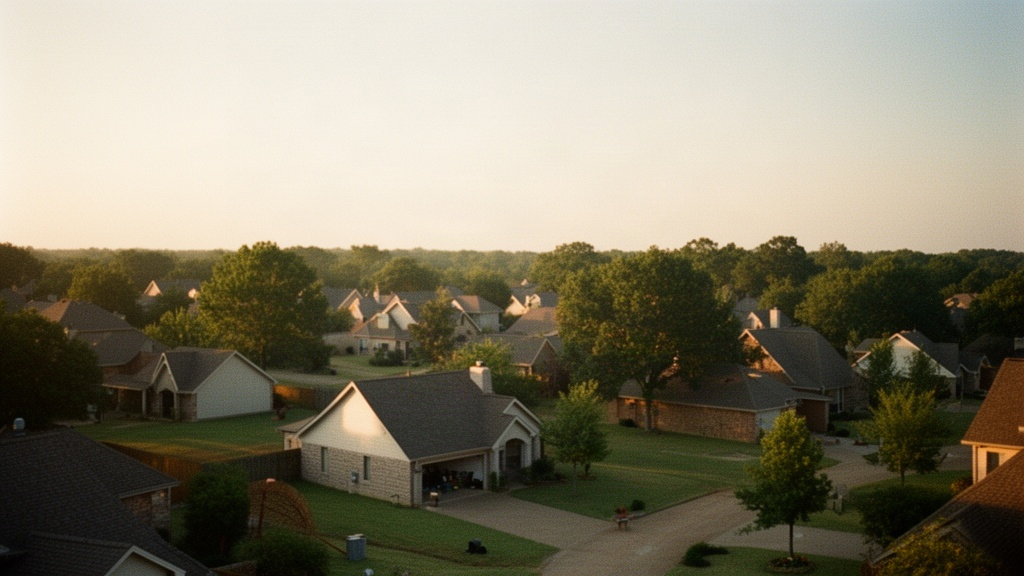
The majority of Santaquin's growth since 2010 has happened west of Main Street and south of Center Street, where developers have built out planned subdivisions on the valley floor. These neighborhoods contain the bulk of the city's inventory: three-to-five-bedroom homes ranging from roughly 1,600 to 3,200 square feet, most built between 2012 and 2026. Lot sizes are smaller here, typically 6,000 to 9,000 square feet, and the street layouts follow cul-de-sac patterns common to Utah suburban development.
This is where you will find the most active resale market and also where most new construction closes. Prices per square foot are higher here than in the historic core because the homes are newer, but the trade-off is smaller lots and longer drives to the canyon. The I-15 interchange at Santaquin is accessible from this part of the city in roughly five to eight minutes, which matters for buyers who commute north to Provo or Salt Lake City.
Rural Parcels and the Santaquin Bench
On the elevated bench land to the south and southeast of the city center, and on scattered agricultural parcels throughout the valley, you will find a smaller inventory of rural residential properties. These are homes on one to five-plus acres, sometimes with horse privileges or outbuildings, and they appeal to buyers who want space that the subdivision lots cannot provide. Prices vary widely depending on acreage, water rights, and the condition of structures, but the per-acre cost of land in Santaquin is still meaningfully lower than in comparable rural pockets of Utah County closer to Provo.
3. What Drives Home Values in Santaquin
Several factors specific to Santaquin shape what a home is worth, and understanding them helps both buyers evaluate listings and sellers price accurately. Generic statewide metrics give you a baseline, but the local drivers here are distinct enough to warrant a closer look.
Lot Size, Views and Canyon Proximity
In Santaquin, lot size carries more weight than it does in denser Utah County cities. A home on a 10,000-square-foot lot will almost always command a premium over an otherwise identical home on a 6,000-square-foot lot, because usable outdoor space is genuinely scarce in the newer subdivisions. Canyon views from the eastern side of town add a measurable premium as well, particularly for homes on elevated lots where the Wasatch foothills are visible from the backyard.
Proximity to Santaquin Canyon Recreation Area also affects desirability. The canyon offers trails, creek access, and a campground managed by the US Forest Service, and buyers who prioritize outdoor access are willing to pay to be closer to it. Homes within a mile of the canyon mouth have historically sold faster than the city-wide average.
New Construction Premiums and Resale Dynamics
New construction in Santaquin has carried a premium of roughly 8 to 15 percent over comparable resale homes during most of 2026. Builders have been offering rate buydowns and closing cost contributions to move inventory, which compresses the effective price gap somewhat, but the sticker price difference remains. Resale sellers competing against active builder inventory need to account for this when pricing: a home that is five to eight years old and has not been updated will struggle to justify a price near new construction unless it has meaningfully larger square footage or a larger lot.
Buyers weighing new construction against resale should factor in the total cost of ownership. Resale homes in Santaquin's older sections often have mature landscaping, established trees, and finished basements that add livable space without the additional cost of finishing it post-close. New construction homes frequently deliver with unfinished basements, which can add $30,000 to $60,000 in finishing costs depending on scope.
Infrastructure and Development Pipeline
Santaquin's commercial base is still developing. The city has a handful of local restaurants, a grocery option, and basic services along Main Street and near the I-15 interchange, but residents who want a broader retail selection drive north to Payson or Spanish Fork. As the city's population has grown, more commercial development has followed, and the expectation among local observers is that the commercial corridor near the interchange will continue to fill in over the next several years.
That developing infrastructure is a double-edged consideration for buyers. On one hand, buying before full commercial build-out means accepting some inconvenience now. On the other hand, homes purchased before a city's commercial corridor matures have historically appreciated as that infrastructure arrives, because the city becomes more self-contained and more attractive to a wider pool of buyers.
4. Timing the Santaquin Market as a Buyer or Seller
Timing matters in Santaquin, but not always in the ways buyers and sellers expect. The market here follows some of the same seasonal rhythms as the broader Wasatch Front, but its small inventory size means that individual listing decisions can shift the balance of supply and demand more than they would in a larger city.
Seasonal Patterns in Santaquin Specifically
Spring, from March through May, is the most active listing period in Santaquin. Inventory climbs, buyer activity picks up, and well-priced homes see the most competition during this window. Summer brings continued activity, though the intense heat of July and August in the valley can slow showings slightly. Fall, which is where the market sits right now in September 2026, is a transitional period: serious buyers are still active, but the pool is smaller than spring, and sellers who list in September and October are typically motivated.
Winter listings in Santaquin are sparse. Fewer than a dozen homes may be active in any given week between December and February. That low inventory can actually benefit sellers who are willing to list in winter, because buyers who are searching in January are almost always genuinely motivated, and competition among listings is minimal. Buyers in winter, conversely, have more negotiating room on price and terms but fewer options to choose from.
Interest Rate Sensitivity in an Entry-Level Market
Santaquin's price range makes it particularly sensitive to mortgage rate movements. At a $420,000 purchase price, a half-point shift in rate changes the monthly payment by roughly $140 to $160, which is meaningful for buyers stretching to qualify. When rates rose sharply in 2022 and 2023, Santaquin saw days on market extend and price reductions become more common. As rates have stabilized in 2026, the market has found a more balanced footing, but it has not returned to the frenzy of 2021.
Buyers who are rate-sensitive should think carefully about whether to wait for further rate movement or lock in now. Waiting for rates to drop while prices continue rising can erode the benefit of a lower rate. A local lender who understands Utah County pricing and can model different scenarios is worth consulting before making that call.
When Sellers Tend to Have More Leverage
Sellers in Santaquin hold the most leverage when inventory drops below 30 active listings citywide and when their home is priced in the $350,000 to $450,000 range, which is where buyer demand is deepest. Homes above $500,000 face a thinner buyer pool and typically require more time and more negotiation. Sellers in that upper tier should expect buyers to ask for concessions, whether on price, closing costs, or rate buydowns, and should budget for that in their net proceeds calculation.
5. Practical Steps for Navigating This Market
Whether you are buying or selling in Santaquin, the steps that move a transaction forward smoothly are specific to this market's size and pace. Generic advice from national real estate sites does not always translate to a city with 40 active listings and a buyer pool that skews toward first-time and move-up buyers from within Utah County.
For Buyers: What to Prioritize
Get pre-approved before you start touring homes. In a market where a well-priced home can go under contract within a week of listing, showing up without a pre-approval letter puts you at an immediate disadvantage. Sellers in Santaquin are not going to accept an offer contingent on financing approval from a buyer who has not started the process.
Understand the property tax picture before you close. Santaquin sits in Utah County, and the property tax rate affects your monthly carrying cost in ways that the purchase price alone does not capture. The detailed breakdown of what to expect on a $450,000 home is covered in the Santaquin property tax rates guide, which is worth reading before you finalize your budget.
Plan your commute before you commit to a specific part of town. Santaquin's western subdivisions near I-15 cut five to ten minutes off the drive to Payson and Spanish Fork compared to homes on the eastern side near the canyon. If you commute north daily, that difference adds up over a year. The full commute analysis for Santaquin to Provo and Salt Lake City is covered in the Santaquin commute guide, including FrontRunner and bus options.
For Sellers: How to Position Your Home
Price it based on the last 60 days of closed sales, not the last six months. Santaquin's inventory is small enough that a handful of outlier sales can distort a longer-window average. Your agent should pull comps from the most recent 60 days and weight them by location within the city, since a sale in the historic core is not a reliable comp for a home in a western subdivision, even if the square footage is similar.
Presentation matters more in a slower market than it did in 2021. Buyers in September 2026 have more time to evaluate listings and more willingness to walk away from homes that show poorly online. Professional photography, a clean exterior, and minor cosmetic updates, fresh interior paint, updated hardware, clean grout, make a measurable difference in how quickly a home goes under contract and at what price.
Consider offering a rate buydown as a seller concession rather than dropping your list price. In Santaquin's price range, a 1 to 2 point temporary buydown can lower a buyer's first-year payment by $200 to $400 per month, which is often more motivating to a buyer than an equivalent reduction in purchase price, because the payment impact is immediate and tangible.
FAQ
Is Santaquin, Utah a buyer's market or a seller's market right now?
As of September 2026, Santaquin sits in balanced-to-slightly-seller-favorable territory, depending on the price range. Homes priced between $350,000 and $450,000 are moving relatively quickly, often within 30 to 45 days, and sellers in that range are not giving away large concessions. Above $500,000, the market tilts more toward buyers, with longer days on market and more room for negotiation on price and terms. The overall active inventory of 40 to 70 homes is thin for a city of Santaquin's size, which structurally supports sellers across most price points.
How much have home prices changed in Santaquin over the past few years?
Santaquin saw significant price appreciation from 2020 through early 2022, with median prices rising by roughly 35 to 45 percent over that two-year period, consistent with broader Wasatch Front trends. Prices softened modestly in late 2022 and 2023 as mortgage rates climbed, but they did not collapse the way some national markets did, partly because Utah's job market and in-migration remained strong. By 2026, prices have largely stabilized in the low-to-mid $400,000s for single-family homes, representing a significant increase from pre-2020 levels but a more measured pace of change than the peak years. For current month-by-month data, NeighborhoodScout tracks long-term appreciation trends for Santaquin specifically.
What should I know about buying new construction versus resale in Santaquin?
New construction in Santaquin currently carries a sticker price premium of roughly 8 to 15 percent over comparable resale homes, but builders are actively offering incentives including rate buydowns and closing cost contributions that reduce the effective cost gap. Resale homes, particularly those built between 2010 and 2020, often come with finished basements, mature landscaping, and established yards that would cost $40,000 to $80,000 or more to replicate in a new build. The right choice depends on your priorities: new construction gives you a warranty, modern finishes, and a blank slate; resale gives you move-in-ready livability and sometimes a larger lot. An agent who knows both the builder inventory and the resale market in Santaquin can help you compare total cost of ownership across both options.