← Back to Blog
Buying
Investment Property Guide for Dover, Florida: What Works Most
By Angel Purcell
Dalton Wade
September 14, 2026 · 12 min read
If you are looking for an investment property guide for Dover, Florida that covers what actually works most in this market, you are in the right place. Dover sits in eastern Hillsborough County, roughly 18 miles east of downtown Tampa, and its combination of rural character, newer construction, and strong rental demand makes it a market worth understanding in detail before you commit capital. This guide walks through property types, price ranges, financing realities, and the local factors that separate a solid investment from a stalled one.
1. Why Dover, Florida Attracts Real Estate Investors
Dover draws investor attention because of its position between two high-growth corridors. To the west, the Tampa metro continues to absorb population and employment. To the east, the Plant City and Lakeland markets are expanding. Dover sits directly in the middle, along State Road 60 and close to Interstate 4, which means tenants who work across a wide geography can realistically live here. That geographic leverage is one of the core reasons an investment property guide for Dover, Florida looks different from a guide written for a purely suburban market.
Location and Growth Pressure
Hillsborough County as a whole has posted consistent population growth over the past decade, and eastern Hillsborough has absorbed a meaningful share of that growth as land costs closer to Tampa have risen. Dover's unincorporated status under Hillsborough County means there is no city layer of permitting or taxation, which can simplify the landlord experience compared to operating inside Brandon or Plant City proper. Investors who understand this distinction tend to have fewer surprises at closing and in the first year of ownership.
The area around Valrico Road, Sydney Road, and Gallagher Road represents the core of Dover's residential inventory, with a mix of homes built between the 1970s and 2010s sitting on lots that range from a quarter acre to several acres. That variety matters for investors because it creates multiple price points and multiple tenant profiles within a compact geography.
What the Rental Market Looks Like Right Now
As of September 2026, single-family rental demand in the Dover and eastern Hillsborough area remains firm. Tenants who cannot qualify for a mortgage, or who are relocating for work and not yet ready to purchase, consistently look for homes in this corridor. Three-bedroom, two-bathroom homes in Dover typically rent in a range that supports positive cash flow at current purchase prices, though the exact numbers depend heavily on your financing structure and what you pay at acquisition. For a broader look at how Dover's market is performing in September 2026, the Dover, Florida Real Estate Market Guide on this site covers current pricing and inventory in detail.
2. Which Property Types Work Best in Dover
Single-family homes are the dominant investment vehicle in Dover, and they work best here because the area's infrastructure and tenant expectations are built around that format. Multi-family properties of four units or more are rare in Dover's residential zones. Investors who want a duplex or triplex typically find more options in Brandon or Plant City. Dover's strength is in the detached single-family home on a lot with space, which commands a rental premium over comparable square footage in a dense suburban subdivision.
Single-Family Homes
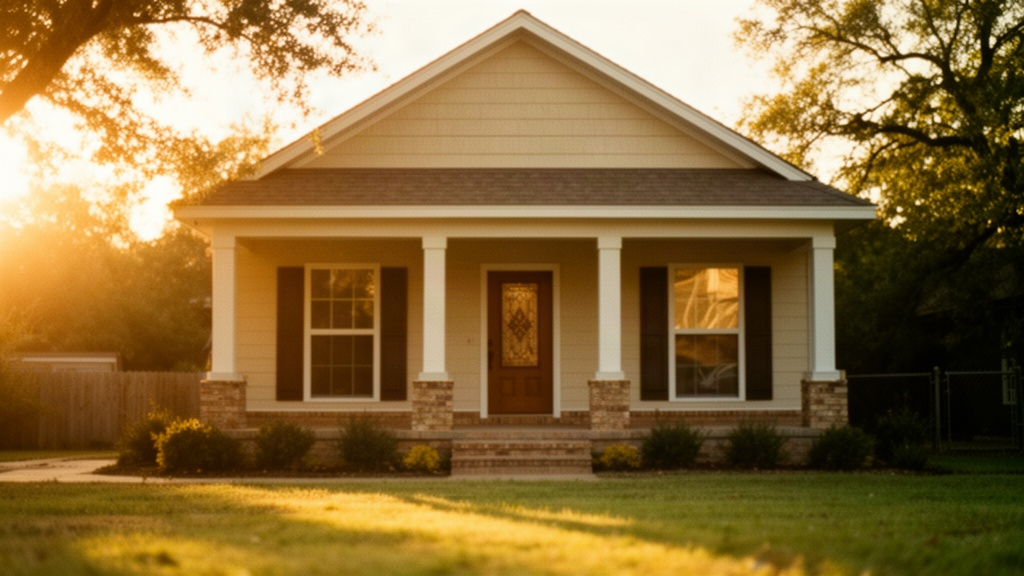
A three-bedroom, two-bathroom home in Dover built between 1990 and 2010 on a half-acre lot is the most common investment target in this market. These homes typically have block construction, attached garages, and well or septic systems rather than municipal utilities, which is an important operating cost consideration. Well and septic systems require maintenance budgets that a city-water property does not, but they also eliminate monthly utility bills that would otherwise fall on the landlord in a lease structure where the tenant pays utilities. Understanding which utilities are on the property before you make an offer is not optional; it is foundational.
Four-bedroom homes in Dover attract a different tenant profile and often command meaningfully higher rents than three-bedroom properties. If the price gap between a three-bedroom and a four-bedroom at acquisition is modest, the four-bedroom often produces a better return. That calculation changes if the four-bedroom comes with deferred maintenance, which is common in older Dover inventory that has not been updated.
Larger Lots and Agricultural Zoned Land
Dover has a meaningful inventory of properties zoned agricultural or rural residential, with lot sizes from one acre to ten acres or more. Some investors purchase these properties for the land value and future development potential rather than immediate rental income. Others buy a home on a larger parcel and lease the residential structure while holding the land. Hillsborough County's zoning rules govern what can be built on these parcels, and changes to zoning require going through the county's planning process, so investors should review the current zoning designation and the county's future land use map before assuming any particular development outcome.
Short-term rentals on larger agricultural parcels have also attracted investor interest in the Dover area, particularly properties with equestrian facilities or significant acreage. Hillsborough County has regulations governing short-term rentals, and those rules apply regardless of lot size or zoning classification. Verify the current short-term rental ordinance with the county before underwriting any investment on that assumption.
3. Dover Investment Property Price Ranges and What You Get
Price ranges in Dover in September 2026 reflect the broader Hillsborough County market, which has cooled modestly from the 2022 peak but remains well above pre-pandemic levels. Investors entering this market now are working with higher acquisition costs than those who purchased in 2019 or 2020, which means underwriting discipline matters more than it did in an era of lower prices and lower rates. The NAR's consumer guide on real estate investing is a useful starting point for understanding what questions to ask before committing to a purchase.
Entry-Level Investment Range
Entry-level investment properties in Dover currently start around $300,000 to $340,000 for a three-bedroom, two-bathroom home on a standard lot. At this price point, expect homes built in the 1980s or early 1990s that may need cosmetic updates: flooring, paint, appliances, and possibly HVAC systems that are approaching the end of their service life. The purchase price may look attractive, but the renovation budget and the timeline to get the property rent-ready are part of the real cost. Investors who skip a thorough inspection at this price point tend to encounter the largest surprises.
Mid-Range and Move-Up Investment Properties
The $360,000 to $480,000 range in Dover covers a wide variety of properties, from updated three-bedroom homes on half-acre lots to four-bedroom homes on one to two acres with newer roofs and HVAC systems. This is where most active investors in the Dover market are currently focused, because the homes in this range typically need less immediate capital expenditure and can be placed into service faster. Rental rates for well-maintained four-bedroom homes in Dover have been running in the $2,200 to $2,700 per month range depending on condition, lot size, and specific location within the Dover corridor, though you should verify current comps with a local agent before building your pro forma.
Above $500,000, Dover offers larger parcels, newer construction, and homes with pools or detached workshops. These properties attract a narrower tenant pool and carry higher holding costs, so the investment math requires more careful stress-testing. They can work, but the margin for error is smaller.
4. Financing an Investment Property in Dover, Florida
Financing is where many first-time investors in the Dover market run into friction. Investment property loans are not the same as primary residence loans, and the differences affect both your qualification and your cash flow from day one.
Conventional Investment Loans
Conventional loans for investment properties typically require a minimum 20 to 25 percent down payment, and the interest rate will be 0.5 to 0.75 percentage points higher than what you would receive on a primary residence loan. On a $400,000 Dover property with 25 percent down, you are financing $300,000. At current rates in September 2026, that produces a monthly principal and interest payment that you need to cover comfortably with the rent before accounting for property taxes, insurance, property management fees, and maintenance reserves. Running those numbers honestly before you make an offer is the single most important step in this investment property guide for Dover, Florida.
Hillsborough County property taxes on a non-homestead investment property do not receive the Save Our Homes cap that limits annual increases for primary residents. That means your tax bill can increase more significantly year over year. Budget accordingly, and verify the current assessed value and millage rate with the Hillsborough County Property Appraiser before closing.
DSCR Loans and Portfolio Lending
Debt service coverage ratio (DSCR) loans have become a common financing tool for investors in the Dover market who do not want to document personal income the way a conventional loan requires. With a DSCR loan, the lender qualifies the property based on whether the rental income covers the debt service, typically at a ratio of 1.0 to 1.25. These loans generally require 20 to 25 percent down and carry slightly higher rates than conventional investment loans, but they offer flexibility for self-employed investors or those with complex income structures. Portfolio lenders who operate in the Florida market are another option, particularly for properties on larger agricultural lots that do not fit standard appraisal guidelines.
5. Local Factors That Determine Whether an Investment Works
The investment property guide for Dover, Florida that works most is the one that accounts for local specifics, not just national averages. Several factors unique to this market shape whether a property performs.
Commute Access and Tenant Draw
Dover's location along State Road 60 puts tenants within a 25 to 35 minute drive of downtown Tampa under normal conditions, though rush hour on the I-75 and I-4 interchange can extend that. The commute from Dover to downtown Tampa is covered in detail on this site if you want the specific route and timing breakdown. From a landlord perspective, commute access is one of the primary reasons tenants choose Dover over more rural alternatives in Polk County or Pasco County. Properties closer to State Road 60 and with easy access to I-4 tend to lease faster and hold tenants longer.
The proximity to the Amazon fulfillment center on East Adamo Drive and the distribution corridor along I-4 also creates consistent demand from logistics and warehouse workers who need affordable housing within a reasonable commute of shift-based employment. That demand is not going away, which gives Dover landlords a durable tenant base.
HOA Status and Land Use Considerations
Many of Dover's older subdivisions and rural residential parcels have no homeowners association, which gives investors more flexibility in how they manage and maintain the property. Some newer sections of Dover do have HOAs, and a small number of those HOAs restrict or prohibit rental activity. Verifying HOA status and reviewing the community's declaration of covenants before making an offer is not a step you can skip. An HOA that prohibits rentals makes a property functionally unusable as an investment, regardless of how attractive the price looks.
Flood zone status is another local factor that affects both insurability and operating cost. Parts of Dover sit in or near FEMA flood zones, and properties in those zones require flood insurance in addition to standard homeowners insurance. The combination of flood and wind insurance in Hillsborough County can add meaningfully to annual operating expenses. Check the FEMA flood map for any specific parcel before finalizing your underwriting.
6. Steps to Take Before You Buy an Investment Property in Dover
A clear sequence of steps separates investors who close on properties that perform from those who get stuck in analysis or who close on something that does not pencil out. Here is the order that works most consistently in the Dover market.
Define your investment criteria before you look at listings. Decide on your target price range, minimum lot size, preferred property age, and whether you want a property that is ready to rent immediately or one you are willing to renovate. Without defined criteria, you will look at too many properties and make decisions based on emotion rather than numbers.
Get pre-approved for investment financing before you make an offer. Sellers in Dover's market, including those selling investment-grade properties, expect buyers to demonstrate financial readiness. A pre-approval letter from a lender who has reviewed your full financial picture, including any existing mortgages, gives you credibility and speeds the process once you find the right property.
Pull rental comps for the specific street and subdivision, not just the ZIP code. Rental rates in Dover vary by location within the corridor. A home on a quiet road with larger lots commands different rent than a comparable home on a busier collector road. Your local agent should be able to pull active and recently leased comparables from the MLS to give you a realistic rent estimate.
Budget for a full inspection and specialty inspections. In Dover, this means a standard home inspection plus a well and septic inspection on properties with those systems, a wind mitigation inspection for insurance discounts, and a four-point inspection if the home is older than 20 years. The cost of these inspections is modest relative to the purchase price, and the information they produce is worth every dollar.
Build a realistic operating budget before you close. Include property taxes at the non-homestead rate, homeowners insurance, flood insurance if applicable, property management fees if you are not self-managing, a maintenance reserve of at least one percent of the property value annually, and vacancy allowance of five to eight percent of gross rents. If the property still cash flows after all of those line items, you have a real investment. If it only works on paper with perfect occupancy and no expenses, it is not ready.
Work with a local agent who knows the investment side of the Dover market. This is not the same as working with any agent who has a license. You want someone who can tell you which streets hold value, which subdivisions have HOA rental restrictions, which properties have been sitting because the price is wrong versus because the condition is genuinely problematic, and what tenants in this specific area are willing to pay. That local knowledge is what the best investment property guide for Dover, Florida is built on, and it is what separates a good acquisition from an expensive lesson. For more on how buyers approach this market, the article on what most people do when buying a home in Dover offers useful context.
FAQ
Is Dover, Florida a good market for rental properties in 2026?
Dover's rental market in September 2026 remains active, supported by its position between Tampa and the I-4 corridor, which gives tenants access to a wide range of employment without living inside a high-cost urban area. Single-family homes on larger lots continue to attract tenants who want space and privacy at rents below what comparable properties cost in Brandon or Valrico. That said, the market has matured since 2020 and 2021, and investors need to underwrite carefully rather than assuming appreciation alone will make a deal work. Cash flow discipline matters more now than it did four years ago. A local agent with investment experience can help you identify which specific properties and price points are performing best right now.
What is the minimum down payment for an investment property in Dover?
Most conventional lenders require 20 to 25 percent down for an investment property in Dover, Florida, which is higher than the minimums available for primary residences. On a $400,000 property, that means bringing $80,000 to $100,000 to closing before accounting for closing costs, which typically add another two to three percent of the purchase price. DSCR loans and portfolio loans often have similar down payment requirements but qualify you differently, using the property's projected rental income rather than your personal debt-to-income ratio. Some investors use a cash-out refinance on an existing property to fund the down payment, which is a legitimate strategy but adds leverage and risk to your overall portfolio. Speaking with a lender who works regularly with investment buyers in Hillsborough County will give you the most accurate picture of what you qualify for.
Are there HOA restrictions on renting out a home in Dover, Florida?
Dover has a mix of HOA and non-HOA communities, and the rules vary significantly from one subdivision to the next. Many of Dover's older and rural residential areas have no HOA at all, which gives investors maximum flexibility. Some newer developments do have HOAs, and a subset of those include rental restrictions ranging from minimum lease terms to outright prohibitions on renting. Before making an offer on any property in Dover that is inside a planned community, you should request the full declaration of covenants, conditions, and restrictions and review them carefully. Your real estate agent should be able to identify HOA status during the search process so you are not discovering restrictions for the first time during due diligence.