

← Back to Blog
Market Trends
What New Housing Developments and Subdivisions Are Being Built in Spokane in 2026
By April Moore, Real Estate Broker
Mackay Team Exp Powered · DRE# 137976
September 17, 2026 · 10 min read
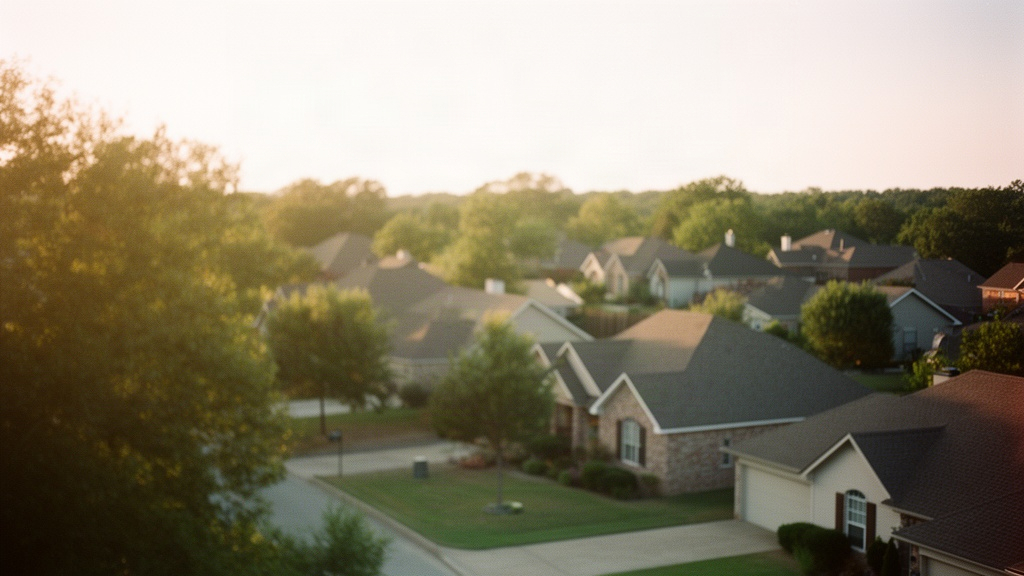
Spokane's construction pipeline in 2026 is one of the most active it has been in over a decade, with new housing developments and subdivisions taking shape across the south, east, and northwest corridors of the city. If you are wondering what new housing developments or subdivisions are being built in Spokane in 2026, this guide breaks down where they are, what they cost, what types of homes are going up, and what buyers and relocating households need to know before making a move.
1. Why Spokane's New Construction Pipeline Is So Active Right Now
Spokane is building more homes in 2026 than it has in years, driven by a combination of population growth, a persistent shortage of move-in-ready resale inventory, and city-level policy changes that have made permitting faster in targeted growth zones. The region's population has grown steadily since 2020, drawing households from the Puget Sound area, California, and Idaho who are looking for lower land costs and a smaller-city lifestyle within reach of outdoor recreation.
Demand Outpacing Existing Inventory
Resale inventory in Spokane has remained tight through most of 2025 and into 2026. That shortage has pushed more buyers toward new construction as their primary path to homeownership, which in turn has encouraged builders to accelerate land acquisition and subdivision planning across the metro area. For a broader look at how prices and inventory are moving across Spokane right now, the Spokane real estate market guide covers current conditions in detail.
City Permitting and Infrastructure Trends
The City of Spokane has been actively tracking and publishing its active development projects, giving buyers and investors more transparency into what is in the pipeline. You can review the city's own active development projects portal to see permitted projects by location, which is one of the most reliable ways to verify what is actually under review or construction in a given area.
Infrastructure investment is following the building activity. Road extensions, utility expansions, and stormwater upgrades are underway in several growth corridors, particularly on the south and southeast edges of the city where land is still available at a scale that supports subdivision-style development. Builders have been responding to that infrastructure commitment by accelerating project timelines.
2. Where New Subdivisions and Developments Are Being Built in Spokane in 2026
New housing developments in Spokane in 2026 are concentrated in four main geographic areas: southeast Spokane, the South Hill corridor, the Five Mile Prairie area to the northwest, and the Spokane Valley to the east. Each area has a distinct character in terms of lot sizes, price points, and proximity to services.
Southeast Spokane
Southeast Spokane has become one of the most active zones for new residential construction in 2026. The area around the Palouse Highway corridor and the neighborhoods east of Latah Creek have seen a surge in subdivision plat applications and townhome proposals. One notable proposal reported by the Spokane Journal of Business involves a townhome development in southeast Spokane that would bring attached housing to an area that has historically been dominated by single-family lots. That shift reflects a broader push to add density in corridors that already have road access and utility connections.
Southeast Spokane sits roughly 10 to 15 minutes from downtown by car via the Palouse Highway or South Freya Street. The terrain is rolling with views toward the Palouse hills to the south, and many lots in this area are larger than what you would find closer to the city core. Buyers drawn to new construction here often cite the combination of newer finishes, attached garages, and lower price per square foot compared to older resale homes closer to downtown.
South Hill and Surrounding Areas
The South Hill area continues to attract new construction, particularly along its southern and western fringes where undeveloped parcels remain. Builders have been active in areas near 57th Avenue and beyond, where street grids are newer and lots tend to run between 6,000 and 9,000 square feet. The South Hill's elevation gives many of these new homes views toward downtown Spokane and the Spokane River valley.
If you are already researching the South Hill area, the South Hill real estate market guide covers existing home prices, lot characteristics, and what to expect from the resale market alongside new builds in that corridor.
Northwest Spokane and the Five Mile Prairie Area
Five Mile Prairie sits on a basalt plateau northwest of downtown and has been a steady location for new single-family construction for several years. In 2026, builders are continuing to develop the remaining platted lots in existing subdivisions while also pursuing new plat approvals on the plateau's edges. Homes here typically sit on lots ranging from 7,000 square feet to a quarter acre, and the area is roughly 15 to 20 minutes from downtown via Francis Avenue or the Northwest Boulevard corridor.
The northwest corridor also includes activity near the Wandermere area and along the US 395 corridor heading toward Colbert and Mead, which are technically outside Spokane city limits but fall within the broader metro area that many buyers consider when shopping for new construction.
Spokane Valley and the Eastern Corridor
Spokane Valley, which is its own incorporated city east of Spokane proper, is seeing significant new subdivision activity in 2026, particularly in the areas around Sullivan Road and the Greenacres and Liberty Lake corridors. Liberty Lake in particular has continued to attract master-planned community development, with new phases of existing subdivisions opening and fresh plat applications moving through review. Commute times from Liberty Lake to downtown Spokane run approximately 25 to 35 minutes depending on traffic on Interstate 90.
3. What Types of New Homes Are Being Built in Spokane in 2026
The mix of new housing product coming to market in Spokane in 2026 is more varied than it was five years ago, reflecting both affordability pressures and changing buyer preferences. Builders are delivering single-family detached homes, attached townhomes, and a growing number of mixed-use infill projects closer to established commercial corridors.
Single-Family Subdivisions
Traditional single-family subdivisions remain the dominant form of new construction in Spokane's outer growth areas. These projects typically involve a builder acquiring a larger parcel, having it platted into individual lots, installing streets and utilities, and then constructing homes on a spec or presale basis. Lot sizes in 2026 subdivisions tend to run smaller than they did in developments from the 1990s and early 2000s, with 5,500 to 8,000 square feet being common in the south and southeast corridors.
Floor plans in these subdivisions typically range from about 1,400 square feet for a starter configuration to over 2,400 square feet for a larger move-up model. Most production builders in Spokane offer two to four base floor plans with a menu of structural and finish upgrades that buyers can select before framing begins.
Townhomes and Attached Housing
Townhome construction is growing faster in Spokane in 2026 than at any point in recent memory. Attached housing allows builders to put more units on a given parcel, which helps with land cost math in areas where raw land prices have risen. For buyers, townhomes often represent a lower entry price than a detached home in the same area, though they come with shared walls, homeowner association fees in most cases, and smaller or no private yard space.
The southeast Spokane townhome proposals noted earlier are part of a city-wide pattern. Similar projects are moving through permitting near the Division Street corridor to the north and along the East Sprague Avenue area, where infill development has been encouraged by zoning updates in recent years.
Mixed-Use and Infill Projects
Spokane's established neighborhoods are also seeing residential infill, where older lots are redeveloped with duplexes, small apartment buildings, or mixed-use structures that combine ground-floor commercial with upper-floor residential units. This type of development tends to appear near transit corridors and in areas where the city has upzoned to allow higher density. Neighborhoods close to the Perry District and areas along Monroe Street have seen this activity, adding new housing units without requiring the city to extend infrastructure into undeveloped land.
4. What New Construction Homes Cost in Spokane in 2026
New construction pricing in Spokane in 2026 spans a wide range depending on location, builder, lot size, and finish level. Understanding where the price bands fall helps buyers set realistic expectations before they start touring model homes.
Entry-Level and Mid-Range New Builds
Entry-level new construction in Spokane's outer growth areas is currently starting in the low-to-mid $400,000s for a production-built home in the 1,400 to 1,600 square foot range. That typically includes an attached two-car garage, three bedrooms, two bathrooms, and a standard finish package. Buyers who want to add features like a covered patio, upgraded cabinetry, or a larger lot will see that base price climb, often by $20,000 to $50,000 depending on the selections.
Mid-range new builds, generally in the 1,800 to 2,400 square foot range, are pricing from the mid $400,000s to the low $600,000s in most Spokane-area subdivisions as of September 2026. The Avey Construction Group's 2026 construction outlook for Spokane notes that material costs have stabilized compared to the volatility of 2022 and 2023, which has allowed builders to hold prices more predictably through the year. You can read more about those Spokane construction trends for 2026 directly from their published outlook.
Move-Up and Custom Home Pricing
Move-up new construction, meaning homes in the 2,400 square foot and above range with higher-end finishes, is pricing from the low $600,000s into the $800,000s and beyond in areas like the South Hill's newer sections and Liberty Lake's established master-planned communities. Custom and semi-custom builds on larger lots, particularly in areas like the Five Mile Prairie plateau or on acreage parcels east of the city, can push well past $900,000 depending on the land cost, square footage, and specification level.
Townhome pricing in Spokane's newer attached projects is generally running from the low-to-mid $300,000s to the mid $400,000s in 2026, making them the most accessible new construction option for first-time buyers or those downsizing from a larger home. For buyers thinking about downsizing, the downsizing guide for Spokane covers how new construction fits into that decision alongside resale options.
5. What Buyers Need to Know Before Purchasing a New Construction Home in Spokane
Buying a new construction home in Spokane is a meaningfully different process from buying a resale property. The contract terms, timelines, financing requirements, and negotiation dynamics all work differently, and buyers who go in without preparation can end up paying more than necessary or committing to terms that do not serve their interests.
Builder Contracts Are Different From Resale Contracts
Production builders use their own purchase contracts, not the standard Washington State forms that govern most resale transactions. Those builder contracts are written to protect the builder's interests first. They often include provisions that allow the builder to extend the closing date, change specifications if materials become unavailable, and limit the buyer's ability to cancel without forfeiting their earnest money. Reading the contract carefully before signing, ideally with a buyer's agent who has new construction experience, is essential.
Timelines, Upgrades, and Hidden Costs
Build timelines in Spokane's current construction environment are running roughly six to ten months for a production home, depending on the builder's backlog and the complexity of the floor plan. Buyers who lock in a price at contract signing but then spend weeks in the design center selecting upgrades can see their final purchase price climb significantly above the base price. It is common for upgrade selections to add $30,000 to $80,000 to a mid-range home's base price once flooring, countertops, fixtures, and structural options are factored in.
There are also costs that buyers sometimes overlook entirely: landscaping is rarely included in a production home's base price, window coverings are almost never included, and some builders charge separately for fencing, driveway completion beyond the apron, and mailbox installation. Budgeting an additional $10,000 to $20,000 for these items after closing is a reasonable baseline for most Spokane new builds.
Using a Buyer's Agent With New Construction
One of the most persistent misconceptions about buying new construction is that the buyer saves money by going directly to the builder's sales office without representation. The builder's on-site agent represents the builder, not the buyer. Having your own buyer's agent costs you nothing as a buyer in Washington State, because the builder pays the cooperating agent's commission as a cost of doing business. Your agent can review the contract, flag problematic clauses, negotiate on your behalf for upgrades or closing cost contributions, and help you understand what comparable resale homes are selling for so you can evaluate whether the builder's pricing is competitive.
For buyers who are also selling a current Spokane home to fund a new construction purchase, coordinating the two timelines is one of the more complex parts of the transaction. The guide to buying a home in Spokane covers the full purchase process, including how contingencies work when you are building rather than buying an existing home.
FAQ
Which parts of Spokane have the most new housing construction activity in 2026?
The most active areas for new housing developments and subdivisions in Spokane in 2026 are southeast Spokane along the Palouse Highway corridor, the southern edges of the South Hill, the Five Mile Prairie plateau in the northwest, and the Spokane Valley communities of Greenacres and Liberty Lake to the east. Each area has different price points, lot sizes, and commute distances to downtown. Southeast Spokane and the South Hill's newer sections are seeing a mix of single-family and townhome development, while Liberty Lake continues to attract larger master-planned subdivision activity. Checking the City of Spokane's active development projects portal gives you real-time visibility into what is currently permitted or under review.
How long does it take to build a new home in Spokane in 2026?
For a production-built home from a volume builder, the typical timeline in Spokane in 2026 is six to ten months from contract signing to closing, depending on the builder's current workload and the complexity of the floor plan selected. Semi-custom and custom homes on individual lots generally take twelve to eighteen months or longer. Delays can occur due to weather, subcontractor scheduling, or material lead times on specific items like windows, appliances, or custom cabinetry. Buyers who need to be in a home by a specific date should discuss the builder's current completion track record before signing a purchase contract, and should avoid assuming the estimated completion date will hold without a contractual guarantee.
Is it possible to negotiate with a builder on a new construction home in Spokane?
Yes, negotiation is possible with most builders in Spokane, though it works differently than negotiating on a resale home. Builders rarely reduce the base price significantly because doing so creates comparable sale issues for their other lots in the same subdivision. Instead, they are more likely to offer concessions in the form of upgrade credits, closing cost contributions, or lot premiums waived for a limited time. The amount of flexibility a builder will show typically depends on how many unsold inventory homes they are carrying and how close they are to completing a phase of the subdivision. A buyer's agent with new construction experience in the Spokane market can help you identify which builders are currently more motivated and what levers are available to negotiate.