← Back to Blog
Market Trends
Bishop Arts District Dallas Real Estate Market Guide: Prices, Neighborhoods and Timing
By Brian McNulty
United Real Estate Dallas
September 9, 2026 · 12 min read
The Bishop Arts District Dallas real estate market guide covers everything buyers, sellers, and relocating households need to know: current prices, what the housing stock actually looks like, how the surrounding neighborhoods compare, and when to move. This is one of Dallas's most architecturally distinct urban pockets, and the market here behaves differently from the broader city, so the details matter.
1. What Is the Bishop Arts District and Where Does It Sit in Dallas?
The Bishop Arts District sits in the North Oak Cliff section of Dallas, roughly two miles southwest of downtown. It is bounded loosely by Davis Street to the north, Zang Boulevard to the east, Colorado Boulevard to the south, and Beckley Avenue to the west, though most locals think of the commercial core as the six-block stretch centered on West Davis and North Bishop Avenue.
Geography and Boundaries
The district is part of the larger Oak Cliff area, which was an independent city before annexation by Dallas in 1903. That history shows in the street grid, the lot configurations, and the age of the housing stock. Commute distance to downtown Dallas is short: roughly 10 to 15 minutes by car via the Zang Boulevard or Colorado Boulevard corridors, and the Dallas Streetcar connects the neighborhood to Union Station, making it one of the few Dallas submarkets with a rail link into the central business district.
What the Neighborhood Looks Like on the Ground
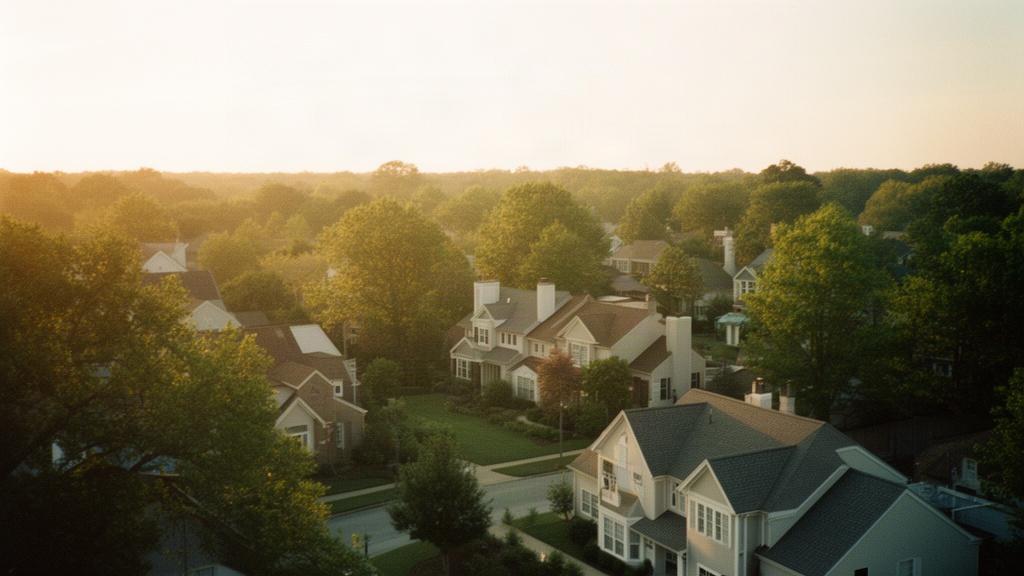
The commercial strip on Bishop Avenue is dense with independent restaurants, coffee shops, boutiques, and galleries, all in low-rise brick storefronts that date mostly from the 1920s and 1930s. The residential streets immediately surrounding that strip are quiet and tree-lined, with mature live oaks overhanging sidewalks and front porches set close to the street. Sylvan Avenue, Llewellyn Avenue, and Rosemont Avenue are among the most recognizable residential blocks inside the district.
Nearby amenities include Kiest Park to the south, Stevens Park Golf Course, and the Methodist Dallas Medical Center campus about one mile to the north. The Trinity River Corridor and its trail system are accessible within a short drive or bike ride, and the Sylvan Thirty mixed-use development along Fort Worth Avenue has added grocery and retail options that residents use regularly.
2. Bishop Arts District Dallas Real Estate Prices Right Now
Prices in the Bishop Arts District are elevated relative to the broader Dallas market, reflecting the neighborhood's walkability, architectural character, and proximity to downtown. As of September 2026, single-family homes in the immediate Bishop Arts area are trading in a wide band depending on size, condition, and whether the property has been renovated.
Single-Family Home Prices
Median sale prices for single-family homes in the Bishop Arts District core and the immediately adjacent blocks of North Oak Cliff are currently running between $525,000 and $650,000, with fully renovated bungalows on larger lots pushing past $750,000. Unrenovated or original-condition homes on smaller lots can still be found in the $390,000 to $480,000 range, though that inventory is limited and moves quickly when it appears.
Price per square foot is a useful metric here because lot sizes and home sizes vary so much. Renovated homes in the district are selling at roughly $320 to $420 per square foot as of September 2026. Original-condition properties tend to land between $240 and $300 per square foot, though buyers should budget for renovation costs on top of the purchase price when evaluating those deals.
Condos, Townhomes, and Attached Housing
The Bishop Arts area has seen meaningful infill townhome construction over the past several years, and those properties now represent a significant share of available inventory. New and near-new townhomes in the district are priced from roughly $450,000 to $620,000 depending on square footage, finish level, and whether a rooftop deck or attached garage is included. These properties typically run 1,600 to 2,200 square feet across three stories.
True condominium inventory is thin in this submarket. The neighborhood's character skews toward detached and attached fee-simple ownership rather than high-rise or mid-rise condo product. Buyers looking for a lock-and-leave condo lifestyle with walkable retail below will find more options in Uptown Dallas, which is covered separately in other resources on this site.
How Prices Have Moved
The Bishop Arts District saw sharp appreciation between 2019 and 2022, followed by a period of moderation as interest rates rose. In 2026, prices have stabilized with modest upward movement rather than the rapid gains of earlier years. The broader Dallas market context is relevant here: HousingWire's analysis of the Dallas housing market notes steady demand as inventory expands, which describes the Bishop Arts submarket reasonably well. Demand from buyers who want walkable urban living close to downtown has remained consistent, which has kept prices from pulling back significantly even as broader market conditions softened.
3. The Housing Stock: What You Are Actually Buying
The housing stock in the Bishop Arts District is one of the most architecturally varied in Dallas, which is part of what makes it compelling and also what makes due diligence so important. Buyers should understand what they are looking at before making an offer, because a 1925 bungalow and a 2022 townhome present very different inspection concerns, financing considerations, and long-term maintenance profiles.
Bungalows and Craftsman Cottages
The oldest and most sought-after residential properties in the district are the Craftsman bungalows and cottage-style homes built between roughly 1910 and 1945. These homes typically run 1,000 to 1,800 square feet, sit on lots ranging from 5,000 to 7,500 square feet, and feature front porches, wood floors, and original millwork that has survived in many cases. Pier-and-beam foundations are common, which can be an advantage for leveling and repair but requires buyers to understand what a foundation inspection report actually says.
Knob-and-tube wiring, galvanized plumbing, and original single-pane windows are still present in some unrenovated homes. A thorough inspection by a licensed Texas inspector is non-negotiable on any pre-1960 property in this area. Renovation costs on these homes vary widely, but buyers should budget $80,000 to $150,000 or more for a full systems update and cosmetic refresh on a property that has not been touched in decades.
New Infill Construction and Townhomes
Infill construction has been active in the Bishop Arts area for the better part of a decade. Developers have built three-story townhome clusters on lots that previously held deteriorated single-family structures, and these newer properties offer open floor plans, attached garages, rooftop terraces, and modern mechanical systems. They trade at a premium per square foot compared to unrenovated vintage homes, but the financing is straightforward and inspection concerns are minimal on recently completed builds.
Some buyers are drawn to the character of the older homes and find the newer townhomes out of scale with the surrounding streetscape. Others prioritize the lower maintenance profile and modern layouts of new construction. Both perspectives are legitimate, and the right choice depends on what a buyer values and how long they plan to hold the property. If you are weighing options across multiple Dallas neighborhoods, the comparison between Bishop Arts and other established urban areas is worth exploring; the Highland Park Dallas real estate market guide on this site covers a very different price point and product type that some buyers consider alongside Bishop Arts.
Lot Sizes and Setbacks
Lots in the Bishop Arts District are generally smaller than what buyers find in suburban Dallas or even in neighborhoods like Lake Highlands to the northeast. Standard lots run 4,500 to 6,500 square feet, with some corner lots and double lots exceeding that. Setbacks are tight, and side yards are often minimal. Buyers who want a large private backyard should calibrate expectations before touring this area, because outdoor space is typically more modest than in newer suburban construction.
4. Surrounding Neighborhoods Worth Knowing
The Bishop Arts District does not exist in isolation. The surrounding North Oak Cliff neighborhoods each have their own character, price ranges, and housing stock, and buyers who focus only on the Bishop Arts core may miss properties that offer comparable access to the same amenities at different price points.
Winnetka Heights
Winnetka Heights sits directly north of the Bishop Arts commercial core, bounded roughly by Colorado Boulevard, Zang Boulevard, Davis Street, and Edgefield Avenue. It is one of the largest historic districts in Dallas, with a concentration of Prairie-style, Colonial Revival, and Tudor Revival homes built primarily between 1910 and 1940. The neighborhood is listed on the National Register of Historic Places, which affects what exterior changes owners can make and also creates eligibility for certain preservation tax incentives.
Home prices in Winnetka Heights overlap with Bishop Arts but tend to run slightly lower on average, with single-family homes trading between $480,000 and $700,000 as of September 2026 depending on size and renovation status. The historic designation means buyers need to understand the City of Dallas Landmark Commission review process before planning any exterior modifications.
Kessler Park
Kessler Park is a curvilinear neighborhood to the west of Bishop Arts, developed in the 1920s and 1930s around the natural topography of the Trinity River bluffs. Streets curve and wind in a way that is unusual for Dallas, and the homes are larger on average than in Bishop Arts proper, with lot sizes frequently exceeding 8,000 to 12,000 square feet. Tudor, Colonial, and French Eclectic architecture dominates. Prices in Kessler Park generally run $600,000 to $950,000 for single-family homes, with notable properties on the bluff commanding more.
Stevens Park Golf Course, one of Dallas's oldest municipal courses, sits at the heart of the Kessler Park area and is a significant green space amenity for residents. The neighborhood is quieter and more residential in feel than Bishop Arts, with less foot traffic and no commercial strip, but it is within a five-minute drive of the Bishop Avenue retail and restaurant corridor.
North Oak Cliff Broadly
Beyond the named historic districts, the broader North Oak Cliff area includes blocks that are less formally defined but still offer older housing stock, mature trees, and proximity to the Bishop Arts amenities. Buyers on tighter budgets sometimes find more options in these transitional blocks, where prices can start below $400,000 for homes that need work. The trade-off is typically less architectural uniformity and more variation in the condition of surrounding properties.
For buyers comparing North Oak Cliff to other established Dallas neighborhoods like Lake Highlands, the differences in commute patterns, housing age, and lot configuration are worth understanding in detail. The Lake Highlands Dallas real estate market guide on this site provides a useful point of comparison for buyers weighing urban Oak Cliff against the mid-century neighborhoods to the northeast.
5. Market Timing: When to Buy or Sell in Bishop Arts
Timing in the Bishop Arts real estate market follows some of the same seasonal rhythms as the broader Dallas market, but the submarket's limited inventory creates dynamics that buyers and sellers need to understand separately from citywide trends.
Seasonal Patterns in This Submarket
Spring, specifically March through May, is historically the most active listing season in Bishop Arts. More homes come to market, more buyers are actively searching, and competition for well-priced renovated properties can be significant. Sellers who list in this window typically see the broadest buyer pool and the shortest days on market.
Summer in Dallas brings heat that slows foot traffic, and July and August tend to see fewer new listings and fewer active buyers. September, which is where the market sits right now, represents a secondary active period as buyers who paused over summer re-engage before the holiday slowdown. Sellers listing in September and October can still reach motivated buyers, particularly those with year-end relocation timelines.
What Inventory Looks Like Right Now
As of September 2026, inventory in the Bishop Arts District and immediately adjacent blocks of North Oak Cliff remains tight relative to demand. Active listings in the core area typically number fewer than 20 to 25 at any given time, which means buyers need to move deliberately when something well-priced appears. Days on market for renovated, correctly priced homes have been running 15 to 30 days. Properties that are overpriced or have deferred maintenance are sitting longer, sometimes 60 to 90 days, before sellers adjust.
The broader Texas housing market context is useful here as well. Analysis of Texas housing market trends points to continued demand in urban infill locations as buyers prioritize shorter commutes and walkable amenities. That dynamic directly supports the Bishop Arts submarket, where the streetcar connection and proximity to downtown are real differentiators.
Advice for Sellers
Sellers in the Bishop Arts District benefit from pricing precisely. Because the pool of comparable sales is small, a single outlier transaction can skew automated valuations significantly. Working with an agent who has pulled and analyzed actual closed sales in the district, rather than relying on automated estimates, is important for landing on a list price that attracts offers without leaving money on the table.
Presentation matters more here than in many Dallas submarkets because buyers paying $550,000 to $700,000 for a 1,400 square foot bungalow have high expectations. Professional photography, accurate disclosure of any known foundation or systems issues, and a clean pre-listing inspection report all reduce the chance of a deal falling apart after contract. Sellers who skip these steps often end up with price reductions or failed contracts that cost more than the upfront investment would have.
Advice for Buyers
Buyers in Bishop Arts should get pre-approved, not just pre-qualified, before touring homes. When a well-priced renovated bungalow hits the market, it can receive multiple offers within the first weekend. A fully underwritten pre-approval letter from a lender carries more weight with sellers than a soft pre-qualification, and in a tight inventory market that distinction can determine whether your offer is taken seriously.
Buyers should also be clear about their renovation tolerance before committing to this area. If the budget is $500,000 and the expectation is a move-in-ready renovated home, the math is tight in the current market. If a buyer is open to an original-condition home and has a realistic renovation budget in addition to the purchase price, there is more opportunity. Understanding the closing timeline is also practical: the typical closing timeline in Dallas runs 30 to 45 days for conventional financing, and sellers in this neighborhood generally expect standard timelines.
If you are relocating to Dallas from another city and trying to evaluate Bishop Arts alongside other neighborhoods, having a local agent who knows the submarket in detail is genuinely useful. The guide to finding a Dallas realtor who knows the area on this site walks through what to look for and how to evaluate agent experience in a specific submarket.
FAQ
Is the Bishop Arts District a good place to buy real estate in Dallas right now?
As of September 2026, the Bishop Arts District has stable prices, limited inventory, and consistent buyer demand driven by its walkability, historic architecture, and proximity to downtown Dallas via the Dallas Streetcar. Homes that are correctly priced and in good condition are selling within 15 to 30 days. Whether it is the right fit depends on your budget, renovation tolerance, and lifestyle priorities, so touring the area and reviewing recent comparable sales with a knowledgeable local agent is the best way to make that assessment.
How do prices in the Bishop Arts District compare to the broader Dallas market?
The Bishop Arts District trades at a premium relative to the Dallas citywide median. As of September 2026, renovated single-family homes in the district are selling between $525,000 and $750,000 or more, while the broader Dallas metro median sits meaningfully below that range. The premium reflects the neighborhood's walkable commercial corridor, historic housing stock, and short commute to downtown. Buyers who need more square footage or a larger lot for their budget often find more options in neighborhoods farther from the urban core.
What should I know about pier-and-beam foundations before buying in Bishop Arts?
Many of the pre-1950 homes in the Bishop Arts District sit on pier-and-beam foundations rather than the concrete slab foundations common in newer Dallas construction. Pier-and-beam foundations can be easier to access and repair than slabs, but they also require inspection for wood rot, termite damage, and settlement issues. A licensed Texas structural engineer or foundation specialist should evaluate any pier-and-beam home before purchase, in addition to the standard home inspection. Repair costs for pier-and-beam leveling typically run $5,000 to $20,000 depending on severity, so understanding the foundation condition upfront is an important part of evaluating the true cost of a purchase in this area.