← Back to Blog
Market Trends
The Frisco, Texas Real Estate Market Guide People Trust Most: Prices, Neighborhoods, and Timing
By Brittani Miller
September 8, 2026 · 11 min read
If you want the Frisco, Texas real estate market guide people trust most, you need current numbers, honest context, and neighborhood-level detail, not recycled headlines. This guide covers median prices as of September 2026, what different parts of Frisco look like on the ground, and how to think about timing whether you are buying, selling, or relocating.
1. Where Frisco Home Prices Stand Right Now
The Frisco housing market in September 2026 sits in a range most would describe as elevated but stabilized. After the sharp appreciation of 2021 and 2022, prices pulled back modestly in 2023, then found a floor and have been grinding upward again through 2025 and into 2026. The median sold price for a single-family home in Frisco currently runs in the low-to-mid $600,000s, though the figure shifts meaningfully depending on which part of the city you are looking at and what size home you need.
For deeper context on price trends and forecasts, Norada Real Estate's Frisco market overview tracks historical appreciation rates and compares Frisco to the broader DFW metro. It is a useful reference point when you want to see how local numbers fit into the regional picture.
Median and Average Price Benchmarks
The median sold price gives you a cleaner read than the average because it is not pulled upward by a handful of luxury sales. In Frisco, the median currently sits around $615,000 to $640,000 for a single-family home, based on closed sales tracked through the Texas Real Estate Research Center and local MLS data. The average sold price, which includes more luxury product, runs closer to $720,000 to $760,000. Both figures are up modestly from September 2025, when the median was tracking closer to $590,000.
You can pull Frisco-specific closed-sale data directly from the Texas Real Estate Research Center's Frisco housing activity page, which updates monthly and shows volume, median price, and days on market in one place. It is one of the most reliable public sources for understanding what is actually happening in the Frisco market right now.
How Price Varies Across Price Tiers
Frisco's price spectrum is wider than many buyers expect. At the lower end, you can find resale townhomes and smaller single-family homes in the $400,000 to $499,000 range, though that inventory is thin and moves quickly. The bulk of the market sits between $550,000 and $800,000, covering three-to-four bedroom homes with two-car garages on lots ranging from 5,000 to 8,500 square feet. Above $900,000, you are typically looking at larger lots, custom finishes, or homes in gated communities like Starwood or Phillips Creek Ranch.
New construction adds another layer to the price picture. Builders in active Frisco communities are pricing entry-level product starting around $550,000, with most move-in-ready inventory landing between $650,000 and $850,000. Premium lots along greenbelt or water features push base prices above $900,000 before upgrades. If you are weighing resale versus new construction, the gap in price per square foot has narrowed considerably since 2024.
2. What the Frisco Market Inventory and Pace Look Like
Inventory and pace tell you more about market conditions than price alone. Right now, Frisco is operating in a range that leans slightly toward sellers in the most popular price bands, while buyers have more negotiating room in the upper tiers. Understanding these dynamics is central to the Frisco, Texas real estate market guide that actually helps you make decisions.
Months of Supply and What It Means for You
Months of supply in Frisco currently runs between 2.8 and 3.5 months, depending on price band. A balanced market is typically defined as 4 to 6 months of supply. Below that threshold, sellers generally hold more leverage. Above it, buyers gain ground. In Frisco's $500,000 to $700,000 range, supply is tightest, often under 2.5 months. In the $900,000-plus range, supply climbs closer to 5 months, which gives buyers time to negotiate.
Days on Market and List-to-Sale Ratios
The median days on market in Frisco sits around 32 to 40 days as of September 2026. That is meaningfully longer than the 10 to 14 days that characterized the peak frenzy of 2021 and 2022, but it is not a slow market. Well-priced homes in move-in condition are still going under contract in under three weeks. Homes that are overpriced or need cosmetic work tend to sit longer and often require price reductions.
List-to-sale ratios in Frisco are averaging around 97 to 98 percent right now. That means the typical home is selling for 97 to 98 cents on every dollar of list price. Buyers are not routinely paying over asking the way they were in 2022, but they are not getting steep discounts either. If you are a buyer, expect to negotiate within a few percentage points of list price on most homes. If you are a seller, accurate pricing matters more than ever because buyers are doing their homework.
3. A Ground-Level Look at Frisco's Neighborhoods and Housing Stock
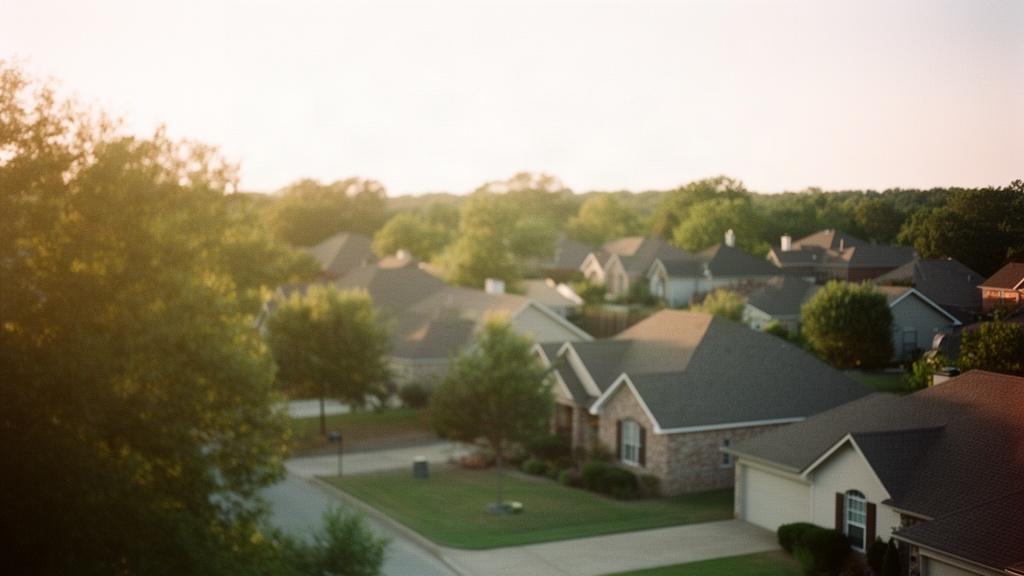
Frisco spans roughly 70 square miles, and the housing stock varies considerably from one part of the city to another. Knowing what you are looking at in each area helps you understand why two homes priced $100,000 apart can both represent fair value depending on location, age, and lot size.
Established Communities on the East Side
The eastern portions of Frisco, closer to the Dallas North Tollway and Legacy Drive, contain most of the city's older housing stock, built primarily between 1998 and 2012. Neighborhoods like Stonebriar, Plantation Resort, and the areas surrounding Frisco Square feature homes on lots ranging from 6,000 to 10,000 square feet, with traditional brick exteriors and mature trees. These homes typically run from the high $400,000s to the mid $700,000s depending on size and condition. Buyers drawn to established landscaping and proximity to the Tollway corridor tend to focus here.
Starwood is one of the most recognizable established communities in Frisco. It is a gated neighborhood with a mix of custom and semi-custom homes, a private country club, and lot sizes that often exceed a quarter acre. Prices in Starwood generally start around $900,000 and extend well past $2 million for the largest homes. For a detailed breakdown of what life in Starwood looks like day to day, including amenities and architecture, see the article on living in the Starwood neighborhood in Frisco, Texas.
Newer and Master-Planned Areas Toward the West
Frisco's western edge, roughly west of the Dallas North Tollway and extending toward FM 423 and beyond, is where most of the active new construction is happening in 2026. Communities like Hollyhock, Shaddock Creek Estates, and newer phases of Phillips Creek Ranch offer homes built between 2018 and the present. Lot sizes here tend to run smaller, typically 5,000 to 7,000 square feet, but floor plans are larger and finishes are more current. Prices for resale homes in these areas generally range from $580,000 to $850,000.
Several master-planned communities on the west side are still actively selling new homes in 2026. For a current list of which builders are selling, what communities have remaining phases, and what to expect from the buying process, the article on new master-planned communities still selling homes in Frisco, Texas in 2026 covers that ground in detail.
The Legacy and PGA District Corridor
The area around the PGA of America headquarters and the Fields development in far north Frisco represents the city's most significant new urban node. The Fields community, anchored by the Omni PGA Frisco Resort and two championship golf courses, is introducing a mix of single-family homes, townhomes, and eventually mixed-use product. Prices in Fields start around $700,000 for townhome-style product and exceed $1.5 million for larger single-family lots. This corridor is also driving commercial development along Panther Creek Parkway and future road extensions.
The Frisco west side also has its own set of Frisco ISD school assignments that buyers frequently ask about. For information on which campuses serve neighborhoods in that corridor, the article on Frisco ISD schools zoned to neighborhoods near Frisco's west side development lays out the current zoning assignments by area. School zoning is always worth verifying directly with Frisco ISD since boundaries do shift as new campuses open.
4. Timing the Frisco Market: When to Buy and When to Sell
Timing in real estate is rarely about finding the single perfect moment. It is about understanding where you are in the cycle, what seasonal patterns look like locally, and how broader economic forces are shaping buyer and seller behavior right now in Frisco.
Seasonal Patterns in Frisco
Frisco follows a fairly predictable seasonal rhythm. Listing activity peaks in March through June, when the largest pool of buyers is active and competition is highest. July and August slow down as Texas heat and back-to-school timing pull some buyers out of the market. September, which is where we are right now, marks the beginning of the fall market, which historically sees a secondary uptick in Frisco as buyers who missed spring listings re-enter. November and December are the quietest months for volume, but serious buyers are still active and sellers face less competition.
What Rate Movement Has Done to Buyer Demand
Mortgage rates have been the single biggest variable shaping Frisco buyer demand since 2023. When rates climbed above 7 percent in late 2023 and through 2024, transaction volume in Frisco dropped and days on market stretched out. As rates moderated into the mid-6 percent range through 2025 and into 2026, demand stabilized and prices resumed a gradual upward drift. Buyers who have been waiting for rates to return to 2021 levels are likely to keep waiting; most economists do not project a return to sub-4 percent rates in the near term.
The practical effect for buyers in September 2026 is that affordability remains stretched relative to 2020, but the frenzied competition of 2021 and 2022 is gone. You can take time to inspect a home, negotiate on repairs, and ask for seller concessions toward closing costs in many cases. That was not possible two years ago in Frisco.
Seller Timing Considerations
Sellers in Frisco right now are dealing with the lock-in effect: many homeowners who refinanced at 3 or 4 percent in 2020 and 2021 are reluctant to give up that rate by selling. That reluctance is part of why resale inventory remains relatively thin even as demand has cooled from its peak. For sellers, the reduced competition from other listings is an advantage. The question of whether to sell now or wait depends heavily on your personal circumstances, your equity position, and where you plan to go next. The article on whether right now is a good time to sell a home in Frisco or wait until next year walks through that decision in detail.
5. Key Costs Beyond the Purchase Price
The purchase price is only one number in the Frisco homeownership equation. Property taxes, HOA fees, and closing costs add up quickly in this market, and buyers who do not account for them upfront sometimes find themselves stretched thinner than they expected.
Property Taxes in Frisco
Frisco sits within Collin County and, depending on the specific location, may also fall within Denton County. The combined property tax rate for most Frisco addresses, including city, county, Frisco ISD, and any applicable MUD or special district levies, runs between 1.8 and 2.4 percent of appraised value annually. On a $640,000 home, that translates to roughly $11,500 to $15,360 per year in property taxes before any exemptions. The homestead exemption, available to primary residents, reduces the taxable value and provides a cap on annual appraisal increases.
For a detailed breakdown of what property taxes actually look like on a specific price point, including how to calculate your effective tax burden, the article on property taxes on a $600,000 home in Frisco, Texas walks through the math with real numbers.
HOA Fees and New Construction Costs
Most Frisco neighborhoods have a homeowners association, and fees vary considerably by community. Smaller neighborhood HOAs in established areas typically charge between $400 and $900 per year. Master-planned communities with resort-style amenity centers, pools, trails, and event programming often charge $1,200 to $2,400 annually. Gated communities like Starwood carry higher fees that reflect private security and club access. New construction communities sometimes carry both an HOA and a Municipal Utility District tax, which can add 0.3 to 0.5 percent to your effective annual tax rate.
Closing Cost Estimates
Buyers in Texas typically pay 2 to 3 percent of the purchase price in closing costs. On a $640,000 home, that is $12,800 to $19,200 in addition to your down payment. Costs include lender fees, title insurance, the survey, prepaid homeowner's insurance, and the initial escrow deposit for taxes. Texas does not have a state income tax, but it also does not cap seller-paid closing costs the same way some states do, so negotiating a seller concession toward closing costs is worth attempting in price bands where inventory is higher.
Commute costs are also worth factoring in, particularly if you are relocating from outside the area. Frisco sits roughly 25 to 35 miles north of downtown Dallas depending on your specific address. The commute time during morning rush hour varies significantly based on your route and destination. For a realistic look at what that drive actually looks like, the article on commute time from Frisco, Texas to downtown Dallas during morning rush hour breaks it down by route and time of day.
FAQ
Is the Frisco, Texas real estate market a buyer's market or a seller's market right now?
As of September 2026, Frisco leans toward sellers in the $500,000 to $700,000 price range, where months of supply sits under 2.5 months and well-priced homes go under contract in under three weeks. In the $900,000-plus range, supply climbs closer to 5 months, giving buyers more room to negotiate on price and terms. The overall market is more balanced than it was at the 2022 peak, meaning buyers have more time and leverage than they did then, but sellers with well-priced, move-in-ready homes are still getting strong results. The best way to understand where you stand is to look at the specific price band and neighborhood you are targeting.
What is a realistic budget for buying a home in Frisco, Texas in 2026?
The median sold price in Frisco currently runs in the $615,000 to $640,000 range for a single-family home, but the market has product at multiple price points. Buyers with budgets under $500,000 will find limited inventory and will likely be looking at smaller homes or townhomes. The largest share of available listings sits between $550,000 and $800,000, covering three-to-four bedroom homes in both established and newer communities. Above $900,000, the market includes gated communities, larger lots, and custom construction. Beyond the purchase price, plan for property taxes of 1.8 to 2.4 percent annually, HOA fees ranging from $400 to $2,400 per year, and closing costs of 2 to 3 percent of the purchase price.
How do I know if a home in Frisco is priced correctly before making an offer?
The most reliable way to assess pricing is to compare the home against recent closed sales, not active listings, within the same neighborhood and similar square footage, lot size, age, and condition. List prices tell you what sellers are asking; closed sales tell you what buyers actually paid. In Frisco right now, homes are selling at roughly 97 to 98 percent of list price on average, so a home priced correctly should sell close to asking. Homes that have sat on the market for more than 45 days without a price reduction often have a pricing issue rather than a condition issue. Working with a local agent who has access to the full MLS data for Frisco and can pull a detailed comparable sales analysis is the most practical way to avoid overpaying.