
← Back to Blog
Market Trends
Dayton, Ohio Is Best Real Estate Market Guide: Prices, Neighborhoods and Timing
By Carie Chesser
September 27, 2026 · 11 min read
Dayton, Ohio continues to draw attention from buyers, sellers, and relocating families who want an affordable Midwest market with genuine momentum. This guide covers what you need to know right now: median prices across the metro, what distinguishes each major submarket, how long homes are sitting, and when to move. Whether you are buying your first home or selling one you have owned for twenty years, the Dayton, Ohio real estate market has specific conditions in September 2026 that shape every decision.
1. Why Dayton Stands Out Among Midwest Real Estate Markets
Dayton offers entry prices well below the national median while sitting within a two-hour drive of Columbus, Cincinnati, and Indianapolis. That combination is rare, and it explains why the metro has attracted sustained interest from both owner-occupants and investors over the past several years.
Price Points That Still Make Sense
The Dayton metro median home price sits in the low-to-mid $200,000s as of September 2026, with meaningful variation across ZIP codes. That figure puts Dayton well below the national median, which has hovered above $400,000 for much of 2026. Buyers who have been priced out of Columbus or Cincinnati often find that Dayton gives them more square footage, larger lots, and established neighborhoods at a fraction of the cost.
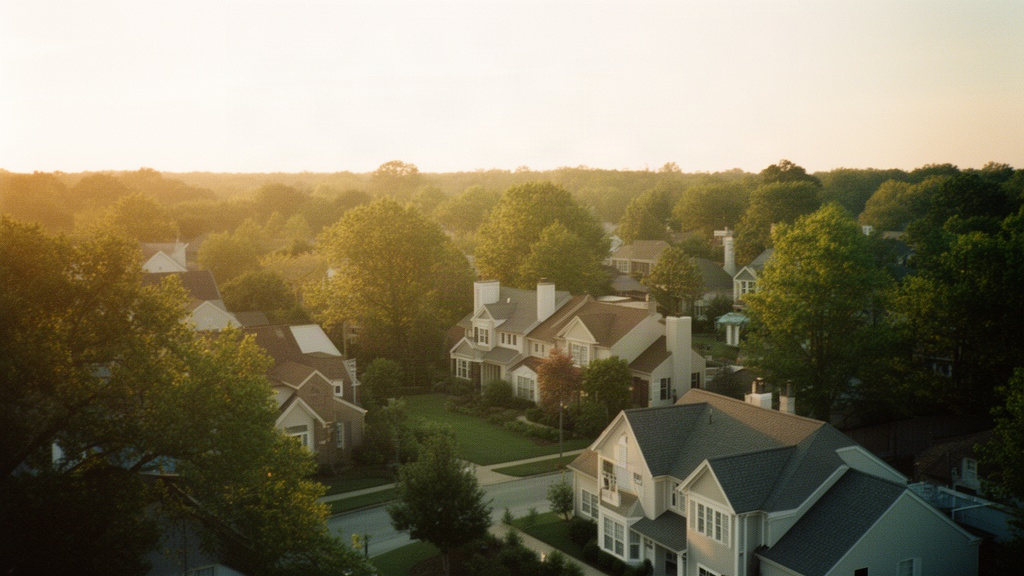
The housing stock here reflects the city's industrial and mid-century roots. Brick ranches, Cape Cods, and two-story colonials from the 1940s through the 1970s dominate large swaths of Dayton proper and the inner suburbs. Newer construction concentrates in communities like Beavercreek, Centerville, and Springboro, where subdivisions built from the 1990s onward offer open floor plans, attached garages, and larger lots.
What National Recognition Means Locally
Dayton has been cited by national real estate analysts as a market worth watching. The National Association of Realtors flagged the Dayton-Kettering metro as one of its top markets to watch, pointing to relative affordability, steady job growth anchored by Wright-Patterson Air Force Base, and a lower-than-average foreclosure rate. That recognition has translated into real buyer activity, particularly from out-of-state relocators who can work remotely and want to stretch their housing dollar.
For more context on how Dayton earned that attention, the NAR's analysis of markets building momentum outlines the underlying economic drivers that continue to support the metro's performance. The fundamentals cited there, including employment diversity and relative inventory tightness, remain relevant to conditions in September 2026.
2. Current Prices Across the Dayton Metro
Prices vary significantly depending on which part of the metro you are targeting. Understanding the range across communities helps buyers set realistic expectations and helps sellers price competitively without leaving money on the table.
City of Dayton Proper
Within the city limits, median prices generally range from the upper $80,000s to the low $200,000s depending on the specific neighborhood. Areas like the Oregon District, where walkable brick streets meet 19th-century commercial buildings converted to residential use, command premiums relative to other parts of the city. Homes there have sold in the $180,000 to $280,000 range for renovated properties, with unrenovated stock available below $150,000.
Neighborhoods like Wright-Dunbar and Five Oaks have seen meaningful price movement over the past few years as buyers seek out older architectural stock at accessible price points. If you want a detailed look at how prices in those specific areas have shifted, the article on Wright-Dunbar and Five Oaks home price trends covers the recent trajectory in depth.
Kettering and Oakwood
Kettering sits directly south of Dayton and offers a dense mix of brick ranches, split-levels, and two-story homes on tree-lined streets. Median prices in Kettering currently run in the $175,000 to $240,000 range, with well-maintained homes on larger lots pushing toward the upper end. Kettering's proximity to the Dayton Mall corridor, the Fraze Pavilion outdoor amphitheater, and Delco Park adds to its draw.
Oakwood is a small, incorporated city entirely surrounded by Dayton and Kettering, known for its 1920s and 1930s Tudor, Colonial Revival, and Craftsman homes on large wooded lots. Prices in Oakwood typically start around $300,000 and can reach $700,000 or more for larger properties on Shafor Boulevard or Park Drive. Inventory in Oakwood is consistently tight because the community is fully built out with no vacant land for new construction.
Beavercreek and Centerville
Beavercreek, which borders Wright-Patterson Air Force Base to the east, carries median prices in the $260,000 to $330,000 range as of September 2026. The housing stock skews toward newer construction: vinyl-sided colonials and ranches built from the 1980s through the 2010s on quarter-acre to half-acre lots. Proximity to the base drives consistent demand, which keeps days on market relatively low even when broader inventory loosens.
Centerville, directly south of Kettering along I-675, tends to run slightly higher than Kettering, with medians in the $240,000 to $310,000 range. The community has a mix of 1970s and 1980s subdivisions in its northern sections and larger, newer homes closer to the Sugarcreek Township border. Centerville Road and the Feedwire Road corridor offer a dense retail and restaurant strip that residents rely on daily.
If you are weighing a commute from either of these communities into downtown Dayton, the detailed breakdown on Beavercreek and Centerville commute times gives you real numbers for rush-hour travel.
Springboro and Miamisburg
Springboro sits along the Warren County line, roughly 20 miles south of downtown Dayton via I-75, and carries some of the highest median prices in the broader metro. Homes there currently range from the mid-$300,000s for older ranch-style properties to well above $500,000 for newer two-story homes in planned subdivisions. The community's historic downtown, centered on South Main Street, features 19th-century storefronts, a preserved rail depot, and walkable access to local restaurants.
Miamisburg, just north of Springboro along the Great Miami River, offers older housing stock at more accessible price points, typically $160,000 to $240,000. The city's riverfront trail system, the Mound archaeological site, and a compact downtown with local dining make it a community with distinct physical character. Buyers who want proximity to the Austin Landing mixed-use development, which sits at the Miamisburg-Miami Township border, often look here first.
3. Neighborhood Features Buyers Are Researching Right Now
Beyond price, buyers consistently ask about what daily life looks like in each part of the Dayton metro. The physical features of a neighborhood, its walkability, its housing architecture, its proximity to employment corridors, and its access to parks, are the details that determine whether a home fits your life.
Oregon District and Inner Ring
The Oregon District is Dayton's most walkable urban neighborhood, concentrated along East Fifth Street between downtown and the Huffman Historic District. The streetscape includes 19th-century brick commercial buildings at ground level with residential units above, plus standalone single-family homes on narrow lots behind the main corridor. Residents can walk to independent restaurants, a farmers market, live music venues, and the Dayton Art Institute, which sits on a bluff overlooking the Great Miami River less than a mile away.
The Oregon District real estate market has its own distinct pricing dynamics compared to the broader city. The article on the Oregon District real estate market covers current prices, what is selling, and what buyers should know before making an offer there.
Suburban Corridors to the South and East
The I-675 corridor connecting Beavercreek, Centerville, and Kettering is the most active suburban real estate corridor in the metro right now. Buyers who work at Wright-Patterson, at the large employer campuses along Wilmington Pike, or at the Premier Health and Kettering Health hospital systems find this corridor puts them within 15 to 25 minutes of most major employment centers. The corridor also runs parallel to the Little Miami Scenic Trail, which connects to over 70 miles of paved bike path.
Springboro's position at the southern end of the metro, near the junction of I-75 and Ohio 741, puts it within 30 minutes of both Dayton and the northern Cincinnati suburbs. That dual-commute access is a real factor for households where two people work in different directions. For a full breakdown of what the Springboro market looks like right now, the Springboro real estate market guide covers prices, inventory, and what distinguishes the community's different subdivisions.
Western Suburbs and Older Stock
Communities west of Dayton, including Trotwood, Englewood, and Vandalia, offer some of the most affordable detached single-family homes in the metro. Median prices in these areas run from the upper $100,000s to the low $200,000s. The housing stock is primarily mid-century brick and frame construction, with lot sizes that tend to be larger than what you find in the inner suburbs. Vandalia, which sits along I-70 near Dayton International Airport, has attracted buyers who travel frequently for work.
4. Market Timing: What September 2026 Looks Like for Buyers and Sellers
The Dayton market in September 2026 is more balanced than it was at the peak of 2021 and 2022, but it has not swung fully to a buyer's market. Sellers in well-priced, well-maintained homes are still seeing competitive offers. Buyers have more time to make decisions than they did two years ago, but that window is not unlimited.
Days on Market and Inventory Levels
Across the Dayton metro, median days on market currently sits between 18 and 35 days depending on price point and submarket. Homes priced below $250,000 in Kettering, Beavercreek, and Centerville are still moving in under three weeks when priced correctly. Above $350,000, sellers are seeing more days on market and more negotiation on price and terms than they did in 2022.
Inventory has loosened modestly since 2023, but the Dayton metro still carries fewer active listings per buyer than the national average. Ohio broadly has maintained a sellers' market orientation even as conditions have softened nationally, a dynamic that housing analysts have noted in coverage of the state's major metros. The Dayton-Kettering corridor has been among the tighter submarkets within Ohio.
How Pricing Strategy Has Shifted
Overpricing a home in September 2026 carries a real cost that it did not in 2021. Buyers are doing more research, requesting more inspections, and walking away from homes that need significant work unless the price reflects it. Sellers who price to the current market, rather than to what their neighbor got 18 months ago, are still achieving strong results. The article on what sells Dayton homes fastest breaks down the specific pricing and preparation strategies that are working right now.
Buyers, meanwhile, are finding that starting with a pre-approval and a clear sense of their target submarket gives them a meaningful advantage. In Kettering and Beavercreek especially, well-priced homes still attract multiple offers within the first week. Waiting to get fully prepared before starting your search is a mistake that costs buyers real opportunities.
Interest Rate Context
Mortgage rates have been a defining factor in the Dayton market throughout 2025 and into 2026. While rates have pulled back from their 2023 peaks, they remain elevated enough that monthly payment math looks different than it did when rates were below 4%. Buyers in the Dayton market have responded by focusing on lower price points, putting more down when possible, and in some cases negotiating seller concessions toward rate buydowns.
Dayton's lower median prices mean that even at current rates, monthly payments on a typical Dayton home are substantially below what buyers face in Columbus or Cincinnati. That affordability gap continues to draw buyers from those markets who are willing to commute or work remotely. It is one of the structural advantages the Dayton metro holds that is not going away regardless of where rates move.
5. Practical Steps for Buyers and Sellers Entering the Dayton Market
Knowing the market is only useful if you translate it into action. The steps below reflect what is working in Dayton specifically as of September 2026, not generic advice that applies everywhere.
For Buyers
Get pre-approved before you start touring homes. In Kettering, Beavercreek, and Centerville, listing agents are fielding multiple inquiries on well-priced homes within days of listing. A pre-approval letter from a lender who can close on time is part of what makes an offer credible.
Narrow your submarket before you start scrolling listings. Dayton's metro covers a wide range of communities, price points, and commute patterns. Deciding in advance whether you need to be within 20 minutes of Wright-Patterson, or whether proximity to the I-75 south corridor matters for a Cincinnati commute, will save you from touring homes in the wrong geography.
Budget for closing costs beyond your down payment. In Ohio, buyers typically pay between 2% and 4% of the purchase price in closing costs. On a $230,000 home, that is $4,600 to $9,200 in addition to your down payment. The article on closing costs for Dayton home buyers breaks down exactly what fees to expect and which ones are negotiable.
For Sellers
Price to the current market, not to the peak. Comparable sales from 2021 and early 2022 are not reliable benchmarks in September 2026. A comparative market analysis based on sales from the past 90 days in your specific ZIP code is the only reliable starting point.
Prepare the home before it hits the market. Buyers in the current Dayton market are requesting inspections and walking away from homes with deferred maintenance more readily than they did two years ago. Addressing obvious repairs, freshening paint, and clearing clutter before listing photographs are taken costs relatively little but materially affects how quickly a home sells and at what price.
Choose an agent with a documented track record in your specific submarket. An agent who sells 40 homes a year in Kettering and Centerville has pricing data and buyer relationships that a generalist does not. The article on who consistently gets Dayton sellers the highest sale price explains what to look for and what questions to ask before signing a listing agreement.
Dayton has been recognized nationally as a market with strong investor fundamentals. Realtor.com's research ranking Midwest markets for investor activity has placed Dayton at the top of its list, citing rent-to-price ratios, population stability, and the presence of large institutional employers like Wright-Patterson Air Force Base and Premier Health. You can read more about that analysis in HousingWire's coverage of Midwest investor hot spots, which puts Dayton's appeal in a broader national context.
FAQ
What is the median home price in Dayton, Ohio right now?
As of September 2026, the Dayton metro median home price sits in the low-to-mid $200,000s, though the range across communities is wide. The city of Dayton proper has neighborhoods where homes sell below $150,000, while Oakwood, Springboro, and parts of Beavercreek carry medians well above $300,000. The most active price band in the metro, where buyer competition is highest, is roughly $180,000 to $260,000. Buyers targeting a specific community should request a comparative market analysis based on recent sales in that ZIP code rather than relying on metro-wide averages.
Is Dayton, Ohio a buyer's market or a seller's market in September 2026?
The Dayton market in September 2026 sits closer to balanced than it has in several years, but it has not fully shifted to a buyer's market in most submarkets. Homes priced below $250,000 in communities like Kettering, Beavercreek, and Centerville are still moving quickly and attracting multiple offers when priced correctly. Above $350,000, buyers have more negotiating room and sellers are seeing longer days on market. The full breakdown of current conditions, including inventory levels and offer dynamics, is covered in the article on whether the Dayton market is currently favoring buyers or sellers.
What should out-of-state buyers know before relocating to the Dayton area?
Buyers relocating to Dayton from higher-cost markets are often surprised by how much home their budget buys here relative to Columbus, Cincinnati, or coastal cities. The key decision is choosing the right submarket for your commute, lifestyle, and price range before you start touring homes. Beavercreek and Centerville are popular with buyers who need proximity to Wright-Patterson or the I-675 employment corridor; Springboro appeals to those who want newer construction and easy access to both Dayton and northern Cincinnati. It is worth researching school districts directly through the Ohio Department of Education's own data portal, and reviewing municipal data for any community you are seriously considering. Working with a local Dayton agent who knows the specific streets, not just the ZIP codes, will save you time and help you avoid overpaying in a market you are learning from a distance.