
← Back to Blog
Market Trends
Downtown Palestine, Texas Real Estate Market Guide: Prices, Neighborhoods and Timing
By Charli Hill
Landmark Realty
September 15, 2026 · 11 min read
If you are researching the downtown Palestine, Texas real estate market, you are looking at one of East Texas's more distinctive housing landscapes: Victorian-era architecture, walkable blocks, and price points that still sit well below the Dallas-Fort Worth and Austin metros. This guide covers current prices, what each part of Palestine offers in terms of housing stock and features, and how to think about timing whether you are buying, selling, or relocating.
1. What the Palestine, Texas Housing Market Looks Like Right Now
The Palestine, Texas market is a buyer-leaning environment in September 2026. Inventory has grown compared to 2024 and early 2025, giving purchasers more choices and a bit more negotiating room than they had during the tightest years of the post-pandemic run-up. Sellers can still achieve solid prices on well-maintained homes, but the days of receiving multiple offers within 48 hours are far less common.
Where Prices Stand in September 2026
Median sale prices in Palestine and Anderson County have held in a range that reflects the market's gradual stabilization. Based on recent local transaction data, the median home sale price in the Palestine area has been running roughly in the $160,000 to $195,000 range for existing residential homes, with outliers on both ends depending on condition, lot size, and location within the city. A March 2025 market report from Buy Palestine Real Estate showed median prices and days-on-market figures that confirm Palestine was already entering a more balanced phase in early 2025, a trend that has continued through 2026.
Price per square foot in Palestine generally runs between $90 and $130 for most of the city's standard residential stock, with historic homes in the downtown core sometimes commanding premiums for their character and lot size, and rural properties on the Anderson County outskirts pricing differently based on acreage.
How Inventory Has Shifted
Active listings in Palestine have increased meaningfully since the low-inventory period of 2021 through 2023. In practical terms, a buyer searching the market in September 2026 will find more options across price points than they would have found two years ago. Homes that are priced correctly and in good repair are still moving, but overpriced listings are sitting longer, and sellers who listed above market are increasingly adjusting.
The Texas Real Estate Research Center at Texas A&M tracks statewide and regional data that provides useful context for secondary markets like Palestine. Their Texas Housing Insight reports show that smaller Texas metros and rural counties have generally experienced softer demand than the major metros, which aligns with what local agents in Anderson County are observing on the ground.
2. Downtown Palestine and Its Surrounding Neighborhoods: What the Housing Stock Actually Looks Like
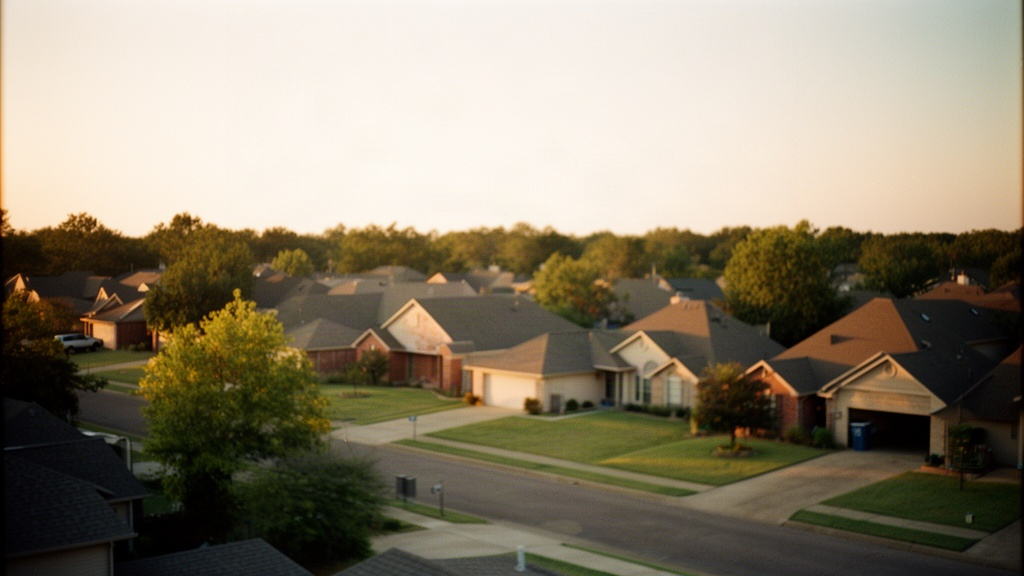
Palestine's different areas each offer a distinct physical character, price range, and type of housing. Understanding what is physically in each part of the city helps buyers narrow their search before they ever set foot in a property, and helps sellers understand how their home compares to nearby listings.
The Historic Downtown Core
The blocks immediately surrounding downtown Palestine along Spring Street, Sycamore Street, and the adjacent residential streets contain some of the oldest and most architecturally detailed homes in all of East Texas. Many of these properties were built between the 1880s and the 1930s, during the period when Palestine was a significant railroad hub and the Anderson County seat was growing rapidly. You will find Queen Anne Victorian cottages, Craftsman bungalows, two-story Colonial Revivals, and foursquares on lots that are often larger than what newer subdivisions offer.
The downtown core is walkable to the Palestine Civic Center, the Anderson County Courthouse, the Palestine Community Forest, and the shops and restaurants along the main commercial strip. Homes here range widely in condition, from fully restored showpieces to properties that need significant renovation work, which means prices also range widely. A move-in-ready restored Victorian in this area can list anywhere from $175,000 to well above $300,000 depending on size and finish level, while a fixer-upper on the same block might open below $100,000.
The Avenues and Midtown Blocks
Moving outward from the historic core, the midtown avenues of Palestine include streets like Avenue A through Avenue H and the numbered cross streets that form a grid between downtown and the older residential neighborhoods to the north and south. The housing stock here transitions from the ornate Victorian-era homes to more modest Craftsman cottages, mid-century ranch homes, and some brick construction from the 1950s through the 1970s. Lot sizes in this part of the city typically run from 6,000 to 10,000 square feet, and the homes themselves average between 1,100 and 1,800 square feet of living space.
Prices in the midtown avenues tend to cluster between $120,000 and $185,000 for updated or well-maintained properties. This part of Palestine has seen steady interest from buyers who want proximity to downtown amenities without paying the premium that comes with a fully restored historic home. The Davey Dogwood Park, one of Palestine's most recognized landmarks and the site of the annual Texas Dogwood Trails celebration, is accessible from this part of the city.
East Palestine and the Highway 79 Corridor
East Palestine along Highway 79 heading toward Elkhart includes a mix of commercial development and residential pockets that offer newer construction alongside older ranch-style homes on larger lots. This corridor is also the primary route toward Tyler, which sits about 45 miles to the northeast. Buyers who work in Tyler or need regular access to its medical facilities, shopping, and employment centers often look at properties in this part of Palestine for the commute convenience. For more detail on that drive, the article on the Palestine to Tyler commute on Highway 79 covers distances and drive times in detail.
West Palestine and the Loop 256 Area
The western side of Palestine along and inside Loop 256 contains some of the city's newer subdivision development from the 1990s through the 2010s. Homes here are generally brick construction, three and four bedroom layouts, with attached garages and standard suburban lot sizes between 8,000 and 15,000 square feet. Palestine Regional Medical Center sits in this general part of the city, and the proximity to medical services and the loop's access to US-287 makes this area practical for residents who commute toward Corsicana or Waco to the west.
Prices in the Loop 256 and west Palestine subdivisions generally fall between $150,000 and $230,000 for standard three-bedroom brick homes, with larger or updated properties pushing higher. New construction in this part of Palestine is limited but not absent; a handful of builders have been active on infill lots and small subdivision extensions in recent years.
3. Price Ranges by Property Type and Location
Palestine's price landscape is more varied than a single median number suggests. Knowing which price tier corresponds to which type of property helps buyers set realistic expectations and helps sellers understand where their home fits in the current market.
Entry-Level and Starter Homes
Homes priced below $130,000 in Palestine are typically older properties in need of cosmetic or mechanical updating, smaller cottages under 1,000 square feet, or properties on the outskirts of the city on county roads. This tier also includes some historic homes in the downtown core that have deferred maintenance or need roof, plumbing, or electrical work. Buyers in this range should budget for renovation costs and should have a contractor walk the property before closing. For a full picture of what buying in Palestine involves from contract to close, the article on buying a home in Palestine, Texas covers the process, costs, and timeline in detail.
Mid-Range and Move-Up Homes
The $130,000 to $220,000 range is the most active segment of the Palestine market right now. This tier includes updated ranch homes, brick three-bedroom properties in the Loop 256 subdivisions, Craftsman bungalows in the midtown avenues that have been renovated, and some larger historic properties that have had major systems updated. Square footage in this range typically runs from 1,200 to 2,200 square feet. Most buyers using conventional financing or FHA loans are competing in this segment.
Historic and Larger Properties
Homes priced above $220,000 in Palestine are generally fully restored historic properties, larger homes over 2,500 square feet, properties with acreage, or newer construction. The upper end of the Palestine market tops out around $400,000 to $500,000 for exceptional historic restorations or rural properties with significant acreage, though these listings are relatively rare. Buyers at this price point are often relocating from larger Texas metros where these prices would buy a fraction of the space and character.
4. Timing the Market: When to Buy or Sell in Palestine
Timing in a smaller market like Palestine follows some of the same seasonal rhythms as larger Texas cities, but with less volatility. The swings between a hot spring and a quiet August are less dramatic here than in Houston or DFW, which means buyers and sellers have a bit more flexibility in when they act.
Seasonal Patterns in Anderson County
Spring, from March through May, is historically the most active listing season in Palestine. The Texas Dogwood Trails festival in late March and early April draws visitors to the area every year, and some of those visitors become buyers who decide they want to live here. New listings tend to cluster in the March through June window, which means buyers have the most selection during those months but also face the most competition.
Late summer and fall, including September through November, tend to see slower listing activity and somewhat more motivated sellers. Buyers who search during this window often find that sellers who listed in spring and have not yet sold are more willing to negotiate on price or terms. The trade-off is fewer total options on the market. Winter, from December through February, is the quietest period, with the lowest inventory but also the least buyer competition.
What Mortgage Rates Are Doing to Buyer Demand
Mortgage rates in 2026 have remained elevated compared to the historic lows of 2020 and 2021, which has dampened demand at the upper end of the Palestine price range more than at the entry level. At Palestine's price points, even a rate in the mid-to-upper 6 percent range keeps monthly payments manageable for buyers who would face far higher payments on comparable homes in larger metros. This relative affordability has kept Palestine's buyer pool active even as higher rates have frozen some buyers in pricier Texas markets.
Seller Timing Considerations
Sellers in Palestine who are considering listing should understand that the current market rewards preparation and accurate pricing more than it rewards timing alone. Homes that are priced within 3 to 5 percent of their true market value and presented well are still moving in a reasonable timeframe. Homes that are priced optimistically are sitting, sometimes for 90 days or more, and then requiring price reductions that ultimately net the seller less than a correct initial price would have. The article on how long it takes to sell a house in Palestine in 2026 has specific data on average days on market by price tier.
5. What Buyers and Sellers Should Know Before Making a Move
The Palestine market has a few characteristics that are specific enough to affect your transaction in ways that general real estate advice will not cover. Knowing these ahead of time prevents surprises.
Due Diligence Points Specific to Palestine
Historic homes in the downtown core require extra attention during inspection. Knob-and-tube wiring, cast iron plumbing, pier-and-beam foundations, and original single-pane windows are common in pre-1950 Palestine homes, and each of these can affect insurance costs and loan eligibility. Buyers should ask their inspector specifically about these systems and should verify insurability before going under contract.
Properties outside the city limits in Anderson County may rely on private wells and septic systems rather than city water and sewer. Well water testing and septic inspections are separate from a standard home inspection and should be ordered independently. Rural properties may also have deed restrictions or easements related to oil and gas rights, which is worth reviewing with a title company before closing.
Commute and Regional Context
Palestine sits at the intersection of US-287, Highway 79, and Highway 19, which gives residents reasonable access to several larger Texas cities without being adjacent to any of them. Tyler is approximately 45 miles northeast on Highway 79, a drive that typically takes 45 to 55 minutes depending on traffic through Elkhart. Dallas is about 115 miles northwest via US-287, a drive of roughly two hours. Waco is approximately 130 miles west on US-287, also around two hours. Buyers who are relocating from a major metro should factor these distances into their daily and weekly routines.
Palestine itself has a Walmart Supercenter, Palestine Regional Medical Center, several local and regional grocery options, and a downtown commercial district with locally owned restaurants and shops. For specialized medical care, larger retail, or major airport access, most Palestine residents plan trips to Tyler or Dallas. This is a practical reality of small-city East Texas living that buyers should think through before committing.
Working With a Local Expert
The Palestine market is small enough that local knowledge makes a real difference in both buying and selling outcomes. An agent who knows which streets have drainage issues, which historic blocks have active restoration activity, which neighborhoods are seeing more investor purchases, and what comparable sales actually looked like on the inside will give you a significant advantage over working with someone who covers a broad East Texas territory and visits Palestine occasionally.
Charli Hill of Landmark Realty has focused her practice on Palestine and Anderson County, which means she has transaction history in the specific streets and price ranges that matter to local buyers and sellers. If you want to understand how your home compares to recent sales, or if you are relocating and need honest guidance on which part of Palestine fits your priorities, the article on what to look for in a top-rated real estate agent in Palestine explains how to evaluate local expertise before you hire.
FAQ
What is the average home price in downtown Palestine, Texas right now?
As of September 2026, the median sale price for residential homes in the Palestine area runs roughly between $160,000 and $195,000, though downtown and historic core properties vary widely based on condition and restoration level. A fully restored Victorian in the historic district can list above $250,000, while a fixer-upper on the same block may open below $100,000. Price per square foot for most of the city's standard residential stock falls between $90 and $130. The best way to get an accurate current value for a specific property or neighborhood is to request a comparative market analysis from a local agent who has recent transaction data in that exact area.
Is it a good time to buy a home in Palestine, Texas in 2026?
The Palestine market in September 2026 leans toward buyers, with inventory higher than it was in 2022 and 2023 and sellers more willing to negotiate than they were during the peak demand years. Mortgage rates remain elevated compared to historic lows, but Palestine's price points keep monthly payments more manageable than in larger Texas metros. Buyers who are financially prepared and have realistic expectations about the local inventory can find genuine value, particularly in the mid-range $130,000 to $220,000 segment. The article on whether the Palestine housing market is favorable for buyers in 2026 covers this question in more depth with current data.
What should I know about Palestine's historic homes before buying one?
Historic homes in the Palestine downtown core, many built between the 1880s and 1930s, often have original systems that require extra inspection attention: knob-and-tube wiring, cast iron or galvanized plumbing, pier-and-beam foundations, and original single-pane windows are common. These features can affect homeowner's insurance availability and cost, and some lenders have requirements about electrical and plumbing systems that must be met before they will fund a loan. Buyers should hire an inspector with specific experience in older homes, order a separate insurance quote before going under contract, and budget for potential system upgrades even on properties that appear move-in ready. Working with a local agent who knows the downtown Palestine inventory and can flag known issues before you make an offer is particularly valuable in this segment.