
← Back to Blog
Market Trends
Caldwell, New Jersey Has the Strongest Local Reputation Real Estate Market Guide: Prices, Neighborhoods and Timing
By Cristina Munoz
September 17, 2026 · 10 min read
Caldwell, New Jersey has the strongest local reputation for holding its value through shifting market cycles, and understanding exactly why requires a close look at current prices, neighborhood character, and seasonal timing. This guide breaks down what the Caldwell real estate market looks like in September 2026, what distinguishes each part of the borough, and how to read the calendar so you move at the right moment. Whether you are buying, selling, or relocating, every number and detail here is specific to Caldwell.
1. Why Caldwell Holds Its Value: The Fundamentals Behind the Reputation
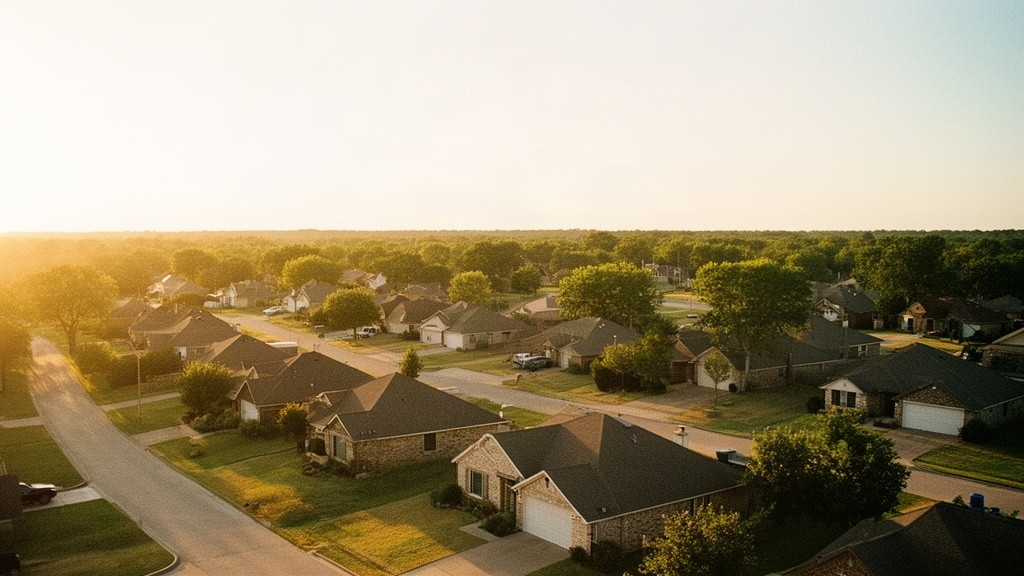
Caldwell holds its value because demand is structural, not speculative. The borough sits roughly 20 miles west of Midtown Manhattan inside Essex County, close enough to draw commuters who want a walkable downtown but far enough to offer detached homes, mature trees, and quarter-acre lots at prices that remain below what you would pay in Montclair or South Orange for comparable square footage.
A Compact Borough With Consistent Demand
Caldwell covers roughly 1.3 square miles, which means there is a hard ceiling on how many homes can ever come to market. That geographic constraint keeps supply tight even in slower economic environments. The downtown core along Bloomfield Avenue offers independent restaurants, coffee shops, a weekly farmers market that runs from May through November, and the Caldwell Public Library, all within a few blocks of each other. That walkability is not replicated in the surrounding townships, which makes the borough itself a specific draw rather than simply one option among many.
What the Housing Stock Actually Looks Like
The dominant housing type in Caldwell is the single-family colonial or Tudor built between 1920 and 1960, usually on lots ranging from 5,000 to 10,000 square feet. You will also find Victorian-era homes closer to the center of town, a smaller number of mid-century ranches on the outer residential streets, and a modest supply of two-family homes that attract both investors and owner-occupants. Condominiums and townhouses represent a smaller share of the market but have grown as a category since several conversion and infill projects completed between 2018 and 2024.
For buyers considering new construction alongside resale options, the New Developments in Caldwell NJ 2026 guide on this site covers what has been built recently and what is still in the pipeline, which is worth reading before you narrow your search.
2. Caldwell Real Estate Prices Right Now: September 2026 Numbers
The Caldwell market in September 2026 is competitive but not frenzied. Median sale prices for single-family homes are running in the $620,000 to $680,000 range depending on condition, lot size, and proximity to the train station. That figure represents meaningful appreciation from the $540,000 to $580,000 range seen in late 2023 and early 2024, reflecting both broader Essex County trends and Caldwell-specific demand. Condos and townhouses are trading in a tighter band, roughly $350,000 to $450,000, with updated units in walkable locations commanding the higher end.
Median Sale Price and Price Per Square Foot
Price per square foot for single-family homes in Caldwell currently sits between $320 and $380, with renovated kitchens, updated mechanicals, and finished basements pushing individual properties toward the upper end of that range. Homes priced accurately and presented well are still receiving multiple offers within the first two weeks. Overpriced listings, on the other hand, are sitting longer than they did in 2021 and 2022, which tells buyers that the market rewards patience when a seller has misjudged their position.
For broader Essex County context, NJ Realtors monthly housing market statistics publish median price, days on market, and closed sales figures each month, which is a useful benchmark to set alongside the Caldwell-specific numbers your agent pulls from the MLS.
How Inventory Levels Are Shaping Offers
Active inventory in Caldwell remains low by historical standards. At any given point in September 2026, the borough typically has between 15 and 30 active single-family listings, a number that reflects both the small geographic footprint and the reluctance of existing owners to sell into a mortgage rate environment that would require them to give up lower rates locked in before 2022. That lock-in effect compresses supply and keeps competition elevated even though buyer demand has moderated somewhat from the peak years.
Days on market for well-priced homes is averaging 18 to 28 days in September 2026. Homes that need significant work or are priced above $800,000 without clear justification are sitting closer to 45 to 60 days. The list-to-sale price ratio for homes that do sell is running at approximately 100 to 103 percent, meaning buyers should expect to pay at or slightly above asking on desirable properties.
3. Neighborhood Breakdown: What You Get in Each Part of Caldwell
Caldwell does not have formally named sub-neighborhoods, but buyers and agents consistently talk about distinct pockets that differ in housing type, lot size, price point, and proximity to downtown or transit. Understanding those distinctions helps you filter your search before you ever step inside a house.
The Train Station Corridor and Bloomfield Avenue
The streets within a half-mile of the Caldwell NJ Transit station on the Morris and Essex Line are among the most sought-after in the borough. Properties here tend to be older Colonials and Tudors on narrower lots, and the walkability to both the train and Bloomfield Avenue retail makes them price at a premium. Expect to pay $650,000 to $750,000 for a three-bedroom Colonial in good condition in this zone. The station itself provides direct service to Newark Penn Station, where riders connect to New Jersey Transit trains, the PATH, and Amtrak, putting Midtown Manhattan roughly 50 to 60 minutes away by rail.
The full picture of what the train station area means for property values and buyer strategy is covered in detail in the Caldwell Train Station Area Real Estate Market Guide on this site, which is worth reading if transit access is a priority for your household.
The Residential Streets North and South of Roseland Avenue
Move a few blocks off Bloomfield Avenue in either direction and the character shifts. Streets like Forest Avenue, Park Avenue, and the blocks running toward the borough's northern and southern borders feature larger lots, more varied architectural styles, and slightly longer walks to the train. These properties often offer more square footage for the same price as a train-corridor home, and the trade-off is a five to ten minute drive or a 15-minute walk to the station rather than a five-minute walk.
Homes in this zone typically fall in the $580,000 to $680,000 range for three and four-bedroom single-family properties. Lot sizes here more commonly reach 8,000 to 12,000 square feet, which gives buyers more outdoor space and, in some cases, room for additions or accessory structures subject to local zoning approvals.
The Edges: Where Caldwell Meets West Caldwell and North Caldwell
Caldwell shares borders with West Caldwell to the west and south, and with North Caldwell and Verona to the north. Properties near these borders sometimes offer a blend of Caldwell's walkable reputation and the slightly larger lots more typical of the surrounding townships. Buyers who find themselves priced out of central Caldwell sometimes look at homes just across the border in West Caldwell, where the median price for a single-family home runs roughly $50,000 to $80,000 lower and lot sizes are generally more generous.
It is worth noting that municipal boundaries affect property tax rates and municipal services separately from school district enrollment, so buyers comparing a Caldwell address to a West Caldwell address should confirm which district each specific property falls within directly with the respective municipality before making decisions based on assumed enrollment.
4. Timing the Caldwell Market: When to Buy and When to Sell
Timing in Caldwell follows New Jersey seasonal patterns but with some local nuances worth knowing. The borough's small inventory means that seasonal shifts are more pronounced here than in larger markets: a slow month in Caldwell might mean only eight or ten new listings, while a busy month might bring 25 to 30. That volatility makes timing decisions more consequential than they would be in a township with 200 active listings at any given moment.
The Spring Surge and What It Means for Buyers
March through June is the most competitive window for buyers in Caldwell. New listings peak, but so does buyer activity, which means multiple-offer situations are most common during this stretch. Buyers who enter the spring market pre-approved, with a clear sense of their non-negotiables, and willing to move quickly on well-priced homes tend to fare better than those still gathering information in April and May.
For sellers, listing in late February or early March means you are catching the largest pool of motivated buyers before they have made offers elsewhere. A home that comes to market in the first two weeks of March in Caldwell will typically see more showings and stronger offers than the same home listed in late April, when buyer attention has already been partly absorbed by earlier listings.
Fall and Winter Windows for Sellers and Buyers
September and October represent a second, smaller wave of activity in Caldwell. Buyers who did not find a home in the spring re-enter the market, and sellers who want to close before the end of the calendar year list in early fall. Right now, in September 2026, this secondary season is underway, and buyers who were outbid in the spring may find slightly less competition on homes that have been sitting since July or August.
November through January is the quietest stretch. Inventory drops sharply, but so does competition. Buyers active in this window are typically highly motivated, which can create negotiating room on price or contingencies that simply does not exist in March. Sellers who list in this period should price precisely: a home that sits through December without an offer will be perceived as stale when spring buyers arrive in February.
If you are weighing when to list and want a deeper look at the process from pricing through closing, the Selling a Home in Caldwell, New Jersey guide on this site walks through each stage in practical terms.
5. What Relocating Buyers Need to Know Before They Search
Buyers relocating from outside New Jersey often underestimate two things: the commute reality from Caldwell and the property tax structure. Getting both right before you set a budget prevents surprises after you are already under contract.
Commute Reality from Caldwell to Midtown Manhattan
The NJ Transit Morris and Essex Line serves the Caldwell station with trains running to Newark Penn Station, where riders transfer to the Midtown Direct or PATH service. Door-to-door travel time from a home near the Caldwell station to a Midtown Manhattan office building runs approximately 55 to 70 minutes depending on the time of day and the transfer. Driving to Newark Penn or to the Montclair-Boonton Line at Montclair State University station are alternatives some Caldwell residents use to access different rail options.
Driving to Midtown during peak hours takes 45 to 75 minutes depending on traffic and tunnel or bridge choice. Many Caldwell residents who work in Newark, the Meadowlands, or Parsippany drive rather than take the train, and those commutes run 20 to 35 minutes under normal conditions. The full commute breakdown, including bus options and parking logistics, is covered in the Caldwell NJ to NYC Commute guide on this site.
Property Taxes and What They Cover
New Jersey property taxes are among the highest in the country, and Caldwell is no exception. Annual property taxes on a single-family home assessed in the $600,000 to $700,000 range typically run between $14,000 and $18,000 per year in Caldwell, depending on the specific assessment and the current tax rate set by the borough and Essex County. Buyers relocating from states with lower property tax burdens should factor this into their monthly payment calculations from the start, as the tax component of a mortgage escrow in Caldwell can add $1,200 to $1,500 per month to the effective housing cost.
Those taxes fund municipal services including the Caldwell Police Department, public works, the library, and the Caldwell-West Caldwell school district. Buyers who want to understand how the district is structured and what campuses serve Caldwell addresses can review publicly available information through the New Jersey Department of Education or visit the Public Schools in Caldwell NJ District Guide on this site, which points to the official sources you should consult directly.
Out-of-state buyers often benefit from working with a local agent who can walk them through the specific tax history on a property, explain how assessments are calculated in Essex County, and flag any pending reassessments before they become surprises at closing. Cristina Munoz works with relocating buyers regularly and can explain exactly what to expect from the Caldwell tax structure as part of your initial conversation.
FAQ
What is the current median home price in Caldwell, New Jersey in September 2026?
Single-family homes in Caldwell are selling in the $620,000 to $680,000 range as of September 2026, depending on condition, lot size, and proximity to the train station and downtown Bloomfield Avenue. Condominiums and townhouses are trading between $350,000 and $450,000, with updated units in walkable locations at the higher end. Price per square foot for single-family homes is running between $320 and $380. Homes priced accurately are receiving offers within 18 to 28 days, and the list-to-sale price ratio is approximately 100 to 103 percent on competitive properties. You can track ongoing trends through resources like the Redfin Caldwell housing market page, which publishes updated sales data regularly.
Is September a good time to buy a home in Caldwell, NJ?
September is a legitimate window for buyers in Caldwell because it falls within the borough's secondary selling season, when some spring listings that did not sell are still available and motivated sellers are more open to negotiation. Competition is lower than it was in March through June, which means buyers who were outbid in the spring may find more room to negotiate on price, contingencies, or closing timelines. Inventory is still limited, so well-priced homes in good condition will still move quickly. Buyers who are pre-approved and ready to act have an advantage over those still in the research phase. If you are planning to buy before the end of 2026, September and October represent a practical window before the holiday slowdown reduces available inventory further.
How does Caldwell's real estate market compare to surrounding towns in Essex County?
Caldwell sits at a price point that is generally below Montclair and South Orange for comparable single-family homes, while offering similar rail access and a walkable downtown. The borough's small geographic footprint of roughly 1.3 square miles keeps supply consistently tight, which supports prices even when broader county trends soften. West Caldwell, which borders Caldwell to the west, tends to offer lower median prices and larger lots but a different tax rate and municipal structure. North Caldwell, to the north, skews toward larger homes on bigger lots at higher price points. Buyers comparing Caldwell to neighboring towns should request a current comparative market analysis from a local agent rather than relying solely on aggregated county data, since the differences between adjacent municipalities can be significant at the street level.