← Back to Blog
Market Trends
Cabot Arkansas Real Estate Market Guide: Prices, Neighborhoods, Timing
By Erika Sisson, Principal Broker
SB Realty & Property Management
September 1, 2026 · 11 min read
This Cabot, Arkansas real estate market guide covers everything you need to know before buying, selling, or relocating here: current price ranges, what different parts of the city look like on the ground, how the market has shifted in 2026, and how to time your move strategically. Cabot sits about 25 miles northeast of Little Rock along U.S. Highway 67/167, and its combination of newer suburban construction, reasonable property taxes, and direct commuter access to the state capital has kept buyer demand steady even as interest rates have fluctuated. Read through each section to get a clear, numbers-grounded picture of where the market stands right now.
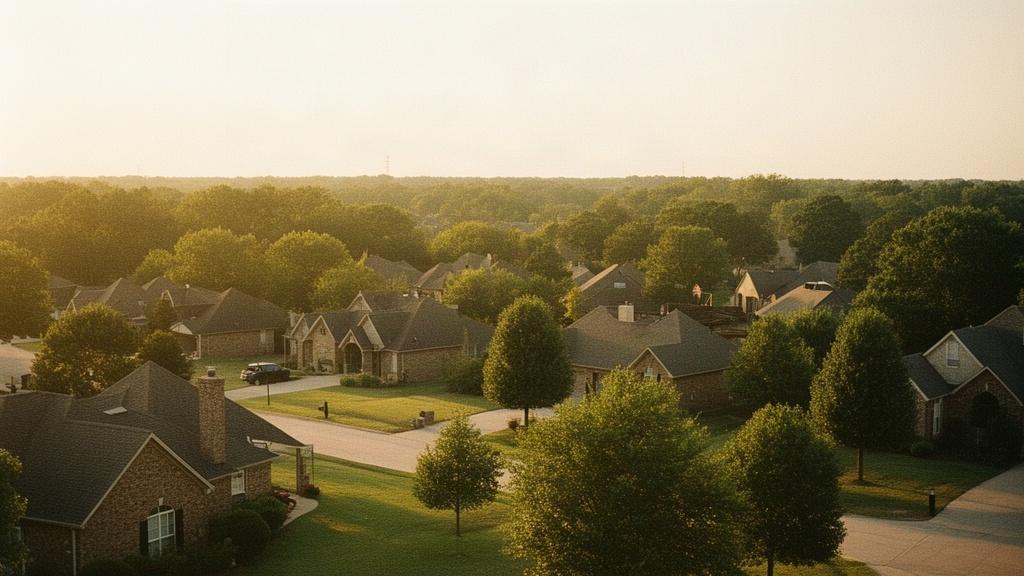
1. What Cabot's Housing Market Looks Like Right Now
Cabot's housing market in September 2026 is neither a runaway seller's market nor a buyer's paradise. It sits in a more balanced position than it did during the peak activity of 2021 through 2023, but demand has not evaporated. Homes priced correctly and presented well are still moving, while overpriced listings are sitting longer than sellers expect.
Current Price Ranges
The median home price in Cabot currently sits in the low-to-mid $200,000s, though the range across the city is wide. Entry-level homes, typically older ranch-style properties built in the 1970s and 1980s on smaller lots, can be found starting around $150,000 to $175,000. Mid-range homes in established subdivisions generally fall between $220,000 and $310,000. Newer construction in the larger planned communities north and east of the city center often starts around $280,000 and climbs past $400,000 for four-bedroom homes with premium finishes and larger lot sizes.
For up-to-date figures you can track month to month, Redfin's Cabot housing market page publishes median sale prices, price-per-square-foot trends, and average days on market on a rolling basis. Cross-referencing that data with what you see on active listings will give you a realistic anchor before you make an offer or set a list price.
How Inventory Has Shifted
Inventory in Cabot has loosened compared to the tight conditions of 2022, but it has not flooded the market. As of September 2026, buyers generally have more options than they did two years ago, particularly in the $250,000 to $350,000 range where new construction has added supply. Below $200,000, inventory remains thin because fewer sellers are willing to list at those price points given what they paid for construction materials and what they owe on their mortgages.
Days on Market and List-to-Sale Ratios
Homes in Cabot are averaging roughly 30 to 50 days on market right now, depending on price point and condition. Well-maintained homes priced at or slightly below market value in the $200,000 to $280,000 range tend to go under contract in two to three weeks. Homes above $350,000 are averaging longer, sometimes 60 days or more, because the buyer pool at that price point in Lonoke County is smaller. List-to-sale price ratios are running close to 97 to 99 percent for accurately priced homes, meaning sellers are not giving away large concessions but buyers do have some negotiating room.
2. A Snapshot of Cabot's Major Neighborhoods and Price Zones
Cabot is not a single-neighborhood city. It covers roughly 40 square miles and contains a mix of older in-town blocks, mid-century ranch subdivisions, and newer planned communities that have grown outward from the Highway 67/167 corridor. Each area has a distinct housing stock, lot size pattern, and price range. For a more detailed breakdown of what each part of the city physically looks like, the Cabot neighborhoods guide on this site goes deeper into individual subdivisions.
Established Subdivisions Along the Western Edge
The western portions of Cabot, closer to the intersection of Highway 321 and the older parts of the city grid, contain the bulk of Cabot's 1970s through 1990s housing stock. These are predominantly brick ranch homes and traditional two-stories on lots ranging from about a quarter acre to half an acre. Prices in this zone typically fall between $160,000 and $240,000. The homes are older, so buyers should budget for updates to HVAC systems, roofing, and kitchens, but the lot sizes and mature tree canopy are features that newer subdivisions cannot replicate.
Newer Construction Corridors to the North and East
The most active development in Cabot over the past decade has pushed north along Highway 89 and east toward the Lonoke County line. Subdivisions in this corridor feature homes built from roughly 2010 onward, with open floor plans, attached two-car garages, and subdivision amenities such as walking trails, community ponds, and common green spaces. Lot sizes here tend to be smaller than the older western sections, often between 0.15 and 0.30 acres, but the homes themselves are larger in square footage. Prices in this corridor range from the high $200,000s to the low $400,000s depending on builder, finish level, and whether the home is resale or new construction.
Buyers considering new construction should understand that builder incentives in this corridor fluctuate. In September 2026, several active builders in Cabot are offering rate buydown programs and closing cost contributions to move standing inventory. Those incentives are negotiable and worth asking about directly, since they are not always advertised on the listing page.
Infill and Older Stock Near Downtown Cabot
The blocks surrounding downtown Cabot along Main Street and the streets branching off Second and Third contain the city's oldest residential properties, some dating to the 1940s and 1950s. These are smaller homes, often 1,000 to 1,500 square feet, on compact city lots. Prices here can start below $130,000 for properties needing significant renovation work. There is also a small but active infill construction market in this zone, where builders are putting up new homes on vacant lots at prices between $200,000 and $260,000. The proximity to Cabot's downtown retail corridor on Main Street, the Cabot Performing Arts Complex, and the Cabot Community Center makes this area walkable by Arkansas suburban standards.
3. What Drives Cabot's Real Estate Market
Understanding why prices move in Cabot requires looking at three forces: commuter demand from Little Rock, new construction supply, and how Lonoke County buyers respond to interest rate changes. These three factors interact constantly, and knowing which one is dominant at any given moment tells you a lot about whether to expect price appreciation or softening.
The Little Rock Commuter Effect
Cabot's single largest demand driver is its position as a commuter city for Little Rock. The drive from central Cabot to downtown Little Rock via I-440 or Highway 67/167 runs approximately 25 to 30 miles and takes between 30 and 40 minutes under normal traffic conditions. That commute time is comparable to many suburban markets around larger cities, and Cabot's price-per-square-foot remains significantly lower than Little Rock's more established western suburbs such as Chenal Valley or West Little Rock. That gap is the core reason buyers keep coming to Cabot.
When employment in the Little Rock metro is strong, Cabot benefits directly. Major employers within commuting distance include the Arkansas Children's Hospital system, the University of Arkansas for Medical Sciences, Dillard's corporate headquarters, and several state government agencies. Remote and hybrid work arrangements have also allowed some buyers to look further out, which has sustained interest in Cabot even during periods when in-office commuting slowed.
New Construction's Role in Pricing
New construction in Cabot acts as a price ceiling on the resale market in the mid-range. When a buyer can purchase a brand-new 2,000-square-foot home with a builder warranty for $295,000, a resale home of similar size built in 2005 needs to be priced competitively to attract attention. This dynamic keeps sellers of mid-2000s homes honest about pricing and creates real opportunities for buyers who are willing to do minor cosmetic updates in exchange for a lower price point.
Interest Rate Sensitivity in Lonoke County
Cabot buyers are more rate-sensitive than buyers in higher-income markets because the buyer pool skews toward first-time buyers and move-up buyers with tighter monthly budgets. A half-point move in the 30-year fixed rate noticeably affects how many qualified buyers are actively searching. As of September 2026, Arkansas mortgage rates are tracking close to national averages. You can check current Arkansas rate benchmarks through Forbes Advisor's Arkansas mortgage rate page before locking in a rate or timing a listing.
4. Timing Your Purchase or Sale in Cabot
Timing matters in Cabot, but it matters differently depending on whether you are buying or selling. The seasonal rhythm here follows a pattern common to Southern suburban markets: activity builds from late winter through spring, peaks in May and June, softens in the heat of July and August, and then sees a secondary bump in September and October before slowing through the winter holidays. Understanding that rhythm helps you position yourself strategically rather than just listing or offering whenever you happen to be ready.
Best Windows for Buyers
Buyers tend to find the most negotiating room in Cabot between November and February, when overall activity drops and sellers who listed in the fall are often more motivated. Homes that have been sitting on the market since September or October are worth revisiting in December and January, because sellers who have not accepted offers after 90-plus days are typically ready to negotiate on price, closing costs, or repair credits. The trade-off is a smaller selection of homes, since fewer people list in winter.
If selection matters more than negotiating leverage, late summer and early fall, meaning right now in September 2026, can be a solid window. The frenzied spring competition has passed, some homes that did not sell in peak season are being repriced, and new listings are still coming to market before sellers pull back for the holidays. For more on reading the current buyer-versus-seller balance, the Cabot housing market buyers or sellers article on this site breaks that down in detail.
Best Windows for Sellers
Sellers in Cabot consistently see the strongest results when they list between late February and mid-May. Buyer activity picks up as the school year winds toward its end and families want to be settled before August. Homes listed in March and April in move-in-ready condition routinely attract multiple showings in the first week and occasionally multiple offers. Pricing correctly at the outset is critical: homes that launch too high in spring and require a price reduction lose the momentum that the early-listing window creates.
If spring has passed and you are wondering whether to list now or wait, the good time to sell in Cabot article on this site walks through the specific factors to weigh for a September or fall listing versus holding until next spring.
What Seasonal Patterns Look Like Here
Arkansas summers push peak showing activity earlier than in northern markets. July and August in Cabot see noticeably fewer showings than June, partly because temperatures regularly exceed 95 degrees and buyers are less inclined to tour homes in the heat. This makes the late spring window even more valuable for sellers. It also means that a home listed in mid-August that sits for a few weeks should not be interpreted as a pricing failure; it may simply be waiting for the September activity uptick that typically follows the back-to-school period.
Lonoke County property tax assessments and any related exemption deadlines also influence seller timing. Homestead exemptions in Arkansas require the property to be owner-occupied on January 1 of the tax year, so sellers who close before year-end and buyers who close before January 1 should each confirm how that affects their tax situation with a local title company or tax advisor.
5. Key Numbers to Know Before You Act in the Cabot, Arkansas Real Estate Market
Having the right benchmarks in hand before you make an offer or set a list price is the difference between moving confidently and second-guessing yourself at the table. Below are the core figures that matter most in Cabot's market as of September 2026. These are working estimates based on current market activity; always verify current figures with a local agent who has access to live MLS data.
- Median home price: Low-to-mid $200,000s as of September 2026, with the full active listing range running from approximately $130,000 to over $450,000.
- Price per square foot: Resale homes in Cabot are generally trading between $110 and $145 per square foot depending on age, condition, and location within the city.
- Average days on market: Approximately 30 to 50 days for correctly priced homes; longer for properties above $350,000 or those needing significant updates.
- List-to-sale price ratio: Running close to 97 to 99 percent on well-priced homes, meaning buyers are getting modest concessions but not large discounts.
- New construction starting price: Roughly $280,000 for a standard three-bedroom new build in the northern and eastern development corridors, with four-bedroom homes with upgrades reaching $400,000 and above.
- Commute to Little Rock: Approximately 25 to 30 miles and 30 to 40 minutes via Highway 67/167 under normal conditions.
- Lonoke County property tax rate: Among the lower rates in the Little Rock metro area; verify the current millage rate with the Lonoke County Assessor's office before closing.
For historical ownership rates, housing tenure data, and additional market metrics, NeighborhoodScout's Cabot, AR profile provides a useful data layer that complements what you see on active listing sites.
If you are still building your search strategy, the Cabot real estate listings guide on this site explains how to read MLS data, interpret listing photos, and evaluate what you see before scheduling a showing.
FAQ
What is the average home price in Cabot, Arkansas right now?
As of September 2026, the median home price in Cabot sits in the low-to-mid $200,000s, though the active market spans from around $130,000 for older homes needing renovation up to $450,000 or more for larger new construction. Price per square foot on resale homes generally runs between $110 and $145 depending on the age of the home, its condition, and which part of the city it is in. New construction in the northern and eastern corridors starts around $280,000 for a standard three-bedroom layout. These figures reflect current market conditions and should be verified against live MLS data before you make a financial decision.
Is Cabot, Arkansas a buyer's market or a seller's market in 2026?
The Cabot market in September 2026 is closer to balanced than it has been in recent years, though it leans slightly toward sellers in the most active price range of $200,000 to $280,000 where inventory remains relatively tight. Above $350,000, buyers have more leverage because the pool of qualified buyers at that price point in Lonoke County is smaller and homes are sitting longer. Below $200,000, very little inventory exists, which keeps competition high for the few homes that do come to market in that range. Tracking days on market and list-to-sale ratios on a neighborhood-by-neighborhood basis gives you the clearest read on where the balance sits at any given moment.
What should I know about timing if I want to sell my home in Cabot?
The strongest selling window in Cabot historically runs from late February through mid-May, when buyer activity peaks ahead of the summer and families are actively looking to move before the next school year begins. July and August tend to slow down because of Arkansas summer heat, though September brings a secondary wave of activity as the back-to-school period wraps up. Sellers who miss the spring window are not necessarily in a bad position in fall, but they should price competitively from day one because buyers in September and October have more options than they did in April. Overpricing at launch and then reducing in November is the most common mistake Cabot sellers make, and it almost always results in a lower final sale price than a correct launch price would have achieved.