
← Back to Blog
Market Trends
Cabot, Arkansas Today Real Estate Market Guide: Prices, Neighborhoods and Timing
By Erika Sisson, Principal Broker
SB Realty & Property Management
October 3, 2026 · 10 min read
If you are trying to make sense of the Cabot, Arkansas today real estate market, you need more than a single median price number. This guide covers what homes are actually selling for right now, how inventory and mortgage rates are shaping decisions in September 2026, what different parts of Cabot look like from a housing-stock perspective, and how to read the timing signals so you can move with confidence whether you are buying, selling, or relocating.
1. Where Cabot Home Prices Stand Right Now
Cabot home prices in September 2026 are holding in a range that reflects steady demand without the runaway appreciation seen in larger Arkansas metros. The median sale price for a single-family home in Cabot sits in the mid-to-upper $200,000s, with entry-level homes starting closer to $180,000 and larger new-construction homes in established subdivisions pushing past $350,000. That spread gives buyers at multiple budget levels a realistic path into the market.
Median Sale Price and Price-Per-Square-Foot
Price per square foot in Cabot currently runs roughly $120 to $155 depending on the age and finish level of the home. Older ranch-style homes built in the 1980s and 1990s tend to come in at the lower end of that range, while homes built after 2015 with open floor plans, granite countertops, and three-car garages cluster toward the upper end. Knowing this metric helps buyers compare homes of different sizes on equal footing rather than getting distracted by list price alone.
For deeper historical appreciation data, NeighborhoodScout's Cabot real estate appreciation page tracks long-term price growth and compares Cabot's trajectory against state and national averages. It is a useful baseline before you sit down with a local agent to discuss current conditions.
How Cabot Compares Within Lonoke County
Cabot is the largest city in Lonoke County and generally carries higher median prices than smaller nearby towns like Lonoke, Carlisle, and England. That premium reflects Cabot's larger commercial base along Highway 67/167, its proximity to the Little Rock metro, and the volume of new residential construction that has kept housing stock relatively modern. Buyers who want more land for a lower dollar amount sometimes look at properties just outside the Cabot city limits, where lot sizes increase and price per acre drops noticeably.
Price Trends Since Early 2026
Through the first eight months of 2026, Cabot prices have appreciated modestly, in the low single-digit percentage range year over year. That is a more measured pace than the sharp gains of 2021 and 2022, which is actually healthier for long-term market stability. Sellers are still achieving close-to-list prices on well-prepared homes, and buyers are not facing the same frenzied multiple-offer environment that defined the post-pandemic years. The market has found a more sustainable rhythm.
2. A Snapshot of Cabot's Housing Stock and Neighborhoods
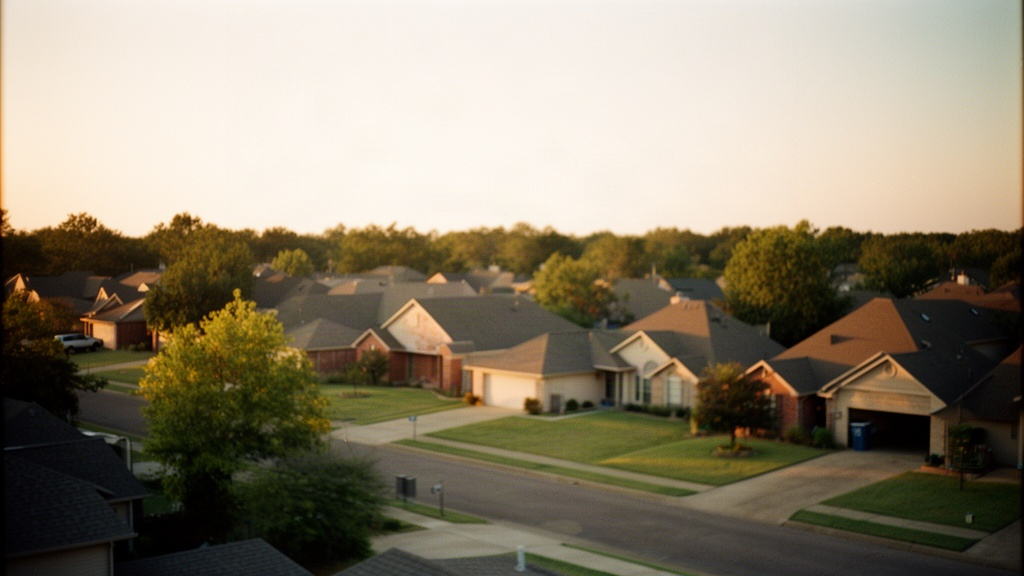
Cabot's residential landscape is genuinely varied, from compact brick homes on quarter-acre lots near downtown to sprawling new builds on half-acre lots in subdivisions off Remy Road and Republican Road. Understanding the physical character of each part of town helps you know what you are actually buying before you ever schedule a showing. For a detailed breakdown of specific subdivisions and what they look like on the ground, the Cabot, Arkansas neighborhoods guide on this site goes deeper into individual areas.
Established Subdivisions Inside the City Limits
Older subdivisions closer to the center of Cabot, particularly those built between the late 1970s and early 2000s, tend to feature brick construction, mature trees, and larger interior square footage relative to lot size. Homes in these areas often run 1,400 to 2,200 square feet with three or four bedrooms and sit on lots of roughly one-quarter to one-third of an acre. Prices in these pockets generally range from the low $180,000s up to around $260,000 depending on updates and condition.
Proximity to Cabot's commercial corridor along Highway 67/167 means residents have quick access to grocery stores, restaurants, and retail without a long drive. The tradeoff is that some of these homes need cosmetic or mechanical updates, which is why inspection contingencies matter so much in this price band.
Newer Construction Corridors
The most active new-construction activity in Cabot right now is concentrated on the city's northern and western edges, where developers have been platting subdivisions with wider streets, community amenities like walking trails and ponds, and homes that start around $270,000. Many of these builds feature open-concept layouts, LVP flooring, energy-efficient windows, and two-car or three-car garages. Lot sizes in these newer sections typically run from 0.2 to 0.5 acres. Builders in this part of Cabot have been offering rate buydowns and closing cost incentives through much of 2026, which is worth factoring into your total cost comparison against resale homes.
Rural Acreage at Cabot's Edges
Lonoke County's flat, open terrain means that once you move a few miles outside Cabot's city limits, one- to five-acre parcels become common, and some properties run to ten or twenty acres with ponds, outbuildings, and agricultural history. These rural properties often carry Cabot mailing addresses and Cabot school district zoning while offering a quieter, more spread-out setting. Prices vary widely based on acreage, well and septic condition, and road frontage, so comparable sales analysis is especially important in this segment.
3. Inventory, Days on Market, and What They Mean for You
Inventory and days on market are the two numbers that tell you the most about the real balance of power between buyers and sellers in any local market. In Cabot right now, active listings have increased compared to September 2025, giving buyers more choices than they had a year ago. That shift has pulled average days on market up modestly, which means sellers need to be more intentional about pricing and presentation than they did in the tighter market of 2022 and 2023.
How Much Supply Is Out There
Cabot's active listing count in September 2026 sits in a range that suggests a market trending toward balance rather than a clear seller's or buyer's market. Months of supply, which measures how long it would take to sell all current listings at the current sales pace, is hovering between two and three months for most price bands. Anything below three months historically favors sellers; anything above six months historically favors buyers. Cabot is currently in the middle ground, which means both sides have some negotiating room.
What Days-on-Market Tells a Buyer
When a Cabot home has been sitting on the market for 30 days or more without a price reduction, that is a signal worth investigating. It may mean the home was overpriced at launch, has a condition issue that showed up in showings, or is simply in a price band where demand has softened. Buyers who understand this can approach those listings with a more informed offer rather than assuming something is wrong. Sometimes the only issue is an unrealistic initial list price, and the seller is now ready to negotiate.
What Days-on-Market Tells a Seller
Sellers in Cabot whose homes are priced correctly and presented well are still going under contract within one to three weeks in most price ranges. The homes that linger tend to be those that launched above comparable sales, skipped professional photography, or have deferred maintenance that buyers can see in photos before they even schedule a tour. If your home is not generating showing activity in the first ten days, that is a clear signal to revisit pricing or presentation before more time passes. For a fuller picture of what the selling process looks like from start to finish, see the Cabot seller's guide on pricing and timeline on this site.
4. Mortgage Rates, Affordability, and the Arkansas Context
Mortgage rates remain the single biggest variable shaping buyer behavior in Cabot right now, and the rate environment in September 2026 is meaningfully different from the historic lows of 2020 and 2021. Rates on a 30-year conventional loan are currently in the mid-to-upper 6% range nationally, with some variation depending on credit score, loan type, and lender. That is a significant monthly payment difference compared to the sub-3% rates buyers locked in five years ago, and it is why affordability calculations matter more than ever.
Rate Environment in September 2026
On a $250,000 home with 10% down and a 6.75% rate, a principal and interest payment runs approximately $1,460 per month before taxes and insurance. Arkansas's relatively low property tax rates soften the total monthly burden compared to many other states. Lonoke County property taxes on a $250,000 home typically add $200 to $350 per month depending on the millage rate for that specific address, which is considerably lower than what buyers face in Texas, Tennessee, or the Midwest at similar price points.
For a broader view of how Arkansas stacks up as a housing market in 2026, Norada Real Estate's Arkansas housing market forecast covers statewide trends in inventory, price appreciation, and demand drivers that provide useful context for what is happening at the local Cabot level.
Cabot's Affordability Relative to the State
Compared to Little Rock, Fayetteville, and Bentonville, Cabot offers noticeably lower median prices for similar square footage. A buyer priced out of a three-bedroom home in west Little Rock at $320,000 can often find a comparable or larger home in Cabot for $240,000 to $270,000. The commute from Cabot to downtown Little Rock runs approximately 30 to 40 minutes via Interstate 67/167 depending on traffic, which many buyers consider a worthwhile trade for the price differential. USDA Rural Development loan eligibility is also worth checking for properties outside Cabot's core, as some addresses in Lonoke County still qualify for zero-down financing.
5. Timing the Cabot Market: When to Buy and When to Sell
Timing in real estate is rarely about finding a perfect moment; it is about understanding the conditions you are operating in and making a decision that fits your personal situation. That said, Cabot does have genuine seasonal patterns and current market signals that are worth knowing before you list or make an offer.
Seasonal Patterns in Cabot
Like most of central Arkansas, Cabot's busiest selling season runs from late February through early July, when longer days, school-year transitions, and tax refund season combine to push buyer activity higher. Listings that hit the market in March and April tend to see the most showings and the strongest offers. Activity slows through August, picks back up modestly in September and October as summer heat breaks, then drops again from Thanksgiving through January. Sellers who list in the fall often face a smaller buyer pool but also less competition from other listings, which can balance out.
Signals That Favor Acting Now
For buyers, September 2026 offers more choices than the market provided a year ago, and sellers are showing more willingness to negotiate on price, closing costs, and repairs. If you have been waiting for the frenzied multiple-offer environment to calm down, it largely has in Cabot's mid-range price bands. Buyers who are pre-approved and ready to move can take time to evaluate homes carefully rather than writing offers sight-unseen.
For sellers, homes that are priced at or slightly below current comparable sales are still moving within two to three weeks. If you need to sell before the end of the year for job, life, or financial reasons, acting in September and October keeps you ahead of the holiday slowdown. Waiting until spring means more competition from other sellers who will list at the same time.
Signals That Favor Waiting
Buyers who are not yet pre-approved or who have not settled on a price range should take the time to get those fundamentals in place before engaging seriously with the market. Submitting an offer without a pre-approval letter in Cabot's current market is unlikely to be taken seriously by sellers. Similarly, sellers who do not need to move and who are hoping for a significant price jump in the next six months should be realistic: modest appreciation is the more likely scenario, not a sharp spike. If your home needs significant repairs, completing those before listing will almost always net you a better outcome than selling as-is at a discount.
If you are still weighing whether now is the right moment to list, the dedicated article on whether it is a good time to sell your Cabot home walks through the decision in more detail. And if you are on the buying side and want to understand how the market currently tilts, the piece on whether Cabot's market currently favors buyers or sellers gives a direct answer.
FAQ
What is the average home price in Cabot, Arkansas right now?
In September 2026, the median sale price for a single-family home in Cabot sits in the mid-to-upper $200,000s, with entry-level homes starting around $180,000 and larger or newer builds reaching $350,000 and above. Price per square foot currently runs roughly $120 to $155 depending on the age and finish level of the home. These figures represent a modest year-over-year increase from September 2025, consistent with the low single-digit appreciation pace seen across most of central Arkansas. A local agent with access to live MLS data can pull a more precise comparable sales report for the specific price range and area you are targeting.
How long does it take to sell a home in Cabot, Arkansas?
Well-priced, well-presented homes in Cabot are currently going under contract within one to three weeks of listing. Homes that are overpriced at launch or that have visible deferred maintenance tend to sit longer, often 30 days or more, and frequently require price reductions before attracting offers. The fall selling season, which includes September and October, sees somewhat less buyer traffic than the spring peak but also fewer competing listings, so the net result for sellers is often similar. Correct pricing from day one remains the single most important factor in reducing time on market in Cabot.
Is Cabot, Arkansas a good place to buy a home compared to other parts of the Little Rock metro?
Cabot offers lower median home prices than most of the Little Rock metro's western suburbs, with comparable or larger square footage available for less money. The commute from Cabot to downtown Little Rock runs approximately 30 to 40 minutes via Interstate 67/167, which many buyers find acceptable given the price difference. Cabot also has its own commercial corridor along Highway 67/167 with grocery stores, restaurants, healthcare, and retail, so residents do not need to drive to Little Rock for everyday needs. What makes Cabot the right choice depends entirely on your priorities around commute time, lot size, home age, and budget, and those are decisions worth working through with a local agent who knows both the city and the surrounding market well.