← Back to Blog
Buying
Investment Property Guide for Imperial, Missouri: What Every Buyer Needs to Know
By Heather Smith, REALTOR®
EpiqueRealty
September 9, 2026 · 11 min read
This investment property guide for Imperial, Missouri breaks down everything you need to know before putting your money into real estate in this Jefferson County community. From typical price ranges and property types to rental demand, carrying costs, and financing basics, this article covers the practical details that matter most to buyers considering Imperial as a place to build long-term wealth through real estate.
1. Why Imperial, Missouri Attracts Real Estate Investors
Imperial draws investor interest for a straightforward reason: it sits at the intersection of affordability and accessibility. Properties here cost significantly less than comparable homes in St. Louis County, yet the community sits roughly 20 to 25 miles south of downtown St. Louis along Interstate 55. That combination creates a pool of renters who want suburban space without suburban St. Louis prices.
Location and Commute Access
Imperial sits in Jefferson County along the I-55 corridor, giving residents a direct highway route north toward St. Louis and south toward Festus and Crystal City. The MetroLink light rail does not extend to Imperial, so most residents commute by car. Rush-hour drive times to downtown St. Louis typically run 35 to 50 minutes depending on traffic and the specific destination. That commute range is manageable for many workers, which supports steady rental demand from people who work in the city but prefer Jefferson County living costs.
Imperial also sits close to Arnold, Barnhart, and Pevely, all of which share the same Jefferson County market dynamics. Investors who focus on Imperial often end up tracking listings in those neighboring communities as well, since the rental profiles and price points are comparable. Understanding the broader Jefferson County submarket, not just Imperial's boundaries, gives investors more options and better context for evaluating any single deal.
Housing Stock That Works for Investors
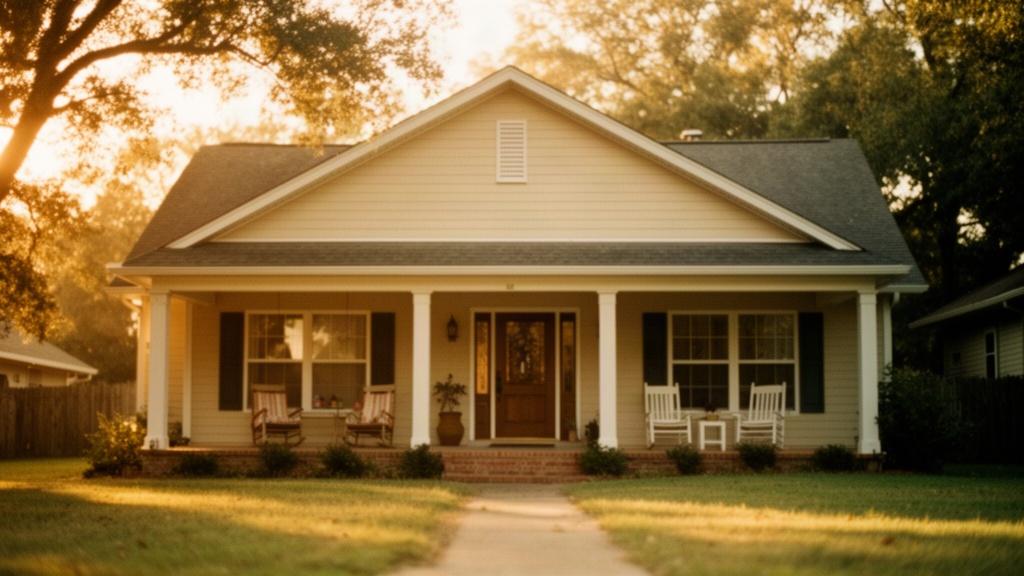
The housing stock in Imperial is dominated by single-family homes, most of them built between the 1960s and the early 2000s. Ranch-style homes on quarter-acre to half-acre lots are common, and split-levels show up throughout older subdivisions. Brick construction is prevalent in the older sections, while vinyl-sided frame homes are more common in subdivisions developed after 1990. This variety means investors can find properties at multiple price points, from entry-level rentals under $200,000 to larger homes that command higher monthly rents.
For more context on what the overall Imperial housing market looks like right now, the Imperial, Missouri Real Estate Market Guide covers current inventory levels, price trends, and timing considerations in detail.
2. Types of Investment Properties Available in Imperial
Imperial's inventory is primarily single-family, but investors have more than one path here. The right property type depends on your capital, your tolerance for management complexity, and your return expectations. Each category below has a distinct profile in this market.
Single-Family Rentals
Single-family rentals are the most common investment vehicle in Imperial. A three-bedroom, one-bath ranch in a subdivision like Seckman Estates or near the Seckman Road corridor typically lists in the $190,000 to $260,000 range as of September 2026. Larger homes with updated kitchens and two-car garages can push toward $290,000 to $330,000. These homes attract long-term tenants who want yard space, garage parking, and room for a household, which tends to reduce turnover compared to apartment-style rentals.
The single-family rental market in Imperial benefits from the same dynamics that make owner-occupied buying competitive: limited new construction, relatively low inventory, and consistent demand from people relocating into Jefferson County. Investors who buy and hold single-family homes here have historically seen steady appreciation, though past performance in any market does not guarantee future results.
Multifamily and Small Apartment Buildings
True multifamily inventory is limited in Imperial compared to a city like Arnold or Festus. Duplexes and small apartment buildings do appear on the market periodically, but they are not as common as single-family homes. When they do come up, they tend to move quickly because investors recognize the scarcity. If multifamily is your target, you may need to expand your search radius to nearby Jefferson County communities or be prepared to move fast when something appears in Imperial proper.
Fixer-Uppers and Value-Add Opportunities
Imperial's older housing stock, particularly homes built in the 1960s through 1980s, creates a pipeline of value-add opportunities for investors willing to renovate. A dated ranch that needs a kitchen update, new flooring, and fresh paint might list in the $150,000 to $185,000 range. After $30,000 to $50,000 in targeted renovations, the same home can rent for meaningfully more per month or resell at a profit. The key is accurate scope estimation before you close, not after.
Estate sales, probate listings, and properties that have sat on the market for 60 or more days are worth examining closely. These often have deferred maintenance that scared off owner-occupant buyers but that an investor with contractor relationships can address efficiently. A local agent with active knowledge of Imperial's inventory can flag these situations before they hit the broader market.
3. Price Ranges, Rental Income, and What the Numbers Look Like
Understanding the relationship between purchase price and achievable rent is the foundation of any investment property guide for Imperial, Missouri. The numbers below reflect current market conditions as of September 2026 and should be verified with a local agent before you make any offer.
Purchase Price Benchmarks
The median home price in Imperial as of September 2026 sits in the low-to-mid $200,000s for a standard three-bedroom home. Entry-level investor purchases, typically smaller ranches or homes needing cosmetic work, can be found below $200,000. Move-in-ready homes with updates command $240,000 to $300,000. Larger homes with four bedrooms, finished basements, or significant lot size push above $300,000, though those are less common investment targets unless you are pursuing a specific rental niche.
For a detailed look at current home prices across Imperial, the article What Are Home Prices in Imperial Missouri Right Now in September 2026 walks through price data by bedroom count and condition.
Estimated Rental Income Ranges
Rental rates in Imperial and the surrounding Jefferson County area generally run between $1,100 and $1,600 per month for a three-bedroom single-family home as of September 2026. Updated homes with two bathrooms and a garage tend to land at the higher end of that range. Smaller homes or those with dated interiors typically rent in the $1,100 to $1,300 range. Two-bedroom homes, which are less common in this market, can rent for $950 to $1,200 depending on condition and location within the community.
These figures are estimates based on comparable rental activity in Jefferson County. Actual achievable rent depends on the specific property, its condition, the lease terms you offer, and market conditions at the time you list it. A local property manager or agent with rental market knowledge can pull comparable rental data for any specific address you are evaluating.
Understanding Gross Rent Multiplier in This Market
The gross rent multiplier, or GRM, is a quick screening tool: divide the purchase price by the annual gross rent to get a ratio. A home purchased at $230,000 that rents for $1,350 per month produces $16,200 in annual gross rent, giving you a GRM of roughly 14.2. In the St. Louis metro suburban market, GRMs in the 12 to 16 range are typical for single-family rentals. A GRM below 12 in Imperial would signal an unusually strong cash-flow opportunity worth investigating. GRM does not account for expenses, so it is a starting filter, not a final answer.
The National Association of Realtors offers a helpful starting point for investors new to evaluating rental returns. Their consumer guide on investment readiness walks through the core questions every buyer should answer before committing to a rental property purchase.
4. Carrying Costs Every Imperial Investor Should Budget For
Gross rent is not net income. The gap between what a tenant pays and what you keep depends entirely on how accurately you estimate your carrying costs before you buy. In Imperial and Jefferson County, there are several cost categories that investors consistently underestimate.
Property Taxes in Jefferson County
Jefferson County's property tax rates are generally lower than those in St. Louis County, which is one of the structural advantages of investing in this area. On a home assessed at $230,000, annual property taxes in Imperial typically run between $2,200 and $3,000 depending on the specific tax levies applied to that parcel. Missouri assesses residential property at 19 percent of appraised value, so the assessed value on a $230,000 home would be approximately $43,700, and the tax bill is calculated from that figure multiplied by the applicable levy rate.
Always pull the actual tax bill for any property you are evaluating, not just the listing's estimate. Jefferson County's assessor records are publicly accessible online, and the specific levy can vary by the location of the parcel within the county. Your agent can help you find the exact figure for any address.
Insurance, Maintenance, and Vacancy
Landlord insurance on a single-family home in Jefferson County typically costs between $900 and $1,400 per year, depending on the home's age, construction type, and coverage limits. Brick homes from the 1960s and 1970s often carry lower premiums than frame homes, but older plumbing and electrical systems can offset that advantage. Budget for a professional inspection before you close so you know exactly what you are inheriting.
A standard maintenance reserve for a single-family rental is 1 percent of the purchase price per year. On a $230,000 home, that is $2,300 annually set aside for repairs, appliance replacements, HVAC service, and landscaping. Vacancy is another cost that new investors often ignore: even in a healthy rental market, plan for one month of vacancy per year, or roughly 8 percent of gross annual rent, to account for tenant turnover and time between leases.
Financing Costs and Loan Types
Investment property loans are priced differently than owner-occupied mortgages. As of September 2026, conventional investment property loans typically carry interest rates 0.5 to 0.75 percentage points higher than primary residence rates, and most lenders require a minimum 20 to 25 percent down payment. On a $230,000 purchase, that means bringing $46,000 to $57,500 to the table before closing costs. Some investors use a cash-out refinance on an existing property to fund the down payment, which changes the effective cost of capital.
DSCR loans, which qualify based on the rental income of the property rather than the borrower's personal income, have become more common in the Jefferson County market. These can work well for self-employed investors or those with complex income situations. A mortgage broker with experience in investment property financing is worth consulting early in your search, before you are under contract and time-pressured.
5. How to Evaluate an Investment Property in Imperial
Evaluating a rental property in Imperial requires the same discipline as any investment: you need to run the numbers on the specific property, not on the neighborhood average. Two homes on the same street can have very different investment profiles depending on their condition, lot size, age of systems, and current lease status.
Running the Numbers Before You Offer
Before making an offer, build a simple pro forma that accounts for gross rent, vacancy, property taxes, insurance, maintenance reserve, and mortgage payment. If the resulting net operating income covers your debt service with room to spare, the deal warrants deeper investigation. If the numbers are thin at the asking price, decide in advance what price makes the deal work and offer accordingly. Overpaying for a rental property because you fell in love with it is a common and costly mistake.
Also factor in whether the property is currently tenant-occupied. A tenant-occupied property comes with immediate rental income but also comes with the existing lease terms, which may be below market. An empty property lets you set market rent immediately but means you carry costs from day one without income. Both situations have trade-offs worth understanding before you close.
Working With a Local Agent Who Knows the Market
An agent with active knowledge of Imperial's rental market can tell you things a spreadsheet cannot. Which subdivisions have the highest tenant turnover? Which streets see the most investor activity? Which listing has been sitting because of a structural issue versus a pricing issue? That kind of local intelligence shortens your learning curve and helps you avoid expensive mistakes. Heather Smith works with buyers across Imperial and the surrounding Jefferson County area and understands the specific dynamics of this investment market.
If you are also thinking about the buying process more broadly, the article on buying a home in the Seckman area of Imperial covers the process, costs, and timeline for one of Imperial's most active submarkets.
Due Diligence Steps Specific to Jefferson County
Jefferson County has its own permit records, zoning rules, and utility districts that affect investment properties. Before closing, verify that any additions or finished basement space was permitted properly. Unpermitted work can create problems when you sell or when a tenant files a habitability complaint. Check whether the property is on city water and sewer or on a private well and septic system, since septic systems in older Jefferson County homes require periodic inspection and can be a significant repair expense.
Also confirm whether the property falls within any homeowner association boundaries. Some Imperial subdivisions have HOAs with rules that restrict or regulate rental use. An HOA that prohibits short-term rentals or requires owner-occupancy for a period after purchase can materially change your investment plan. Your agent and title company can pull this information during the due diligence period.
For a broader look at what day-to-day life looks like in Imperial, which informs what tenants are actually looking for in a rental, the article What Is It Actually Like to Live in Imperial Missouri Day to Day gives a grounded picture of the community from a resident's perspective.
FAQ
Is Imperial, Missouri a good market for rental properties?
Imperial offers a combination of relatively affordable purchase prices and steady rental demand driven by its location along the I-55 corridor in Jefferson County. Single-family homes in the $190,000 to $270,000 range can achieve monthly rents of $1,100 to $1,500 depending on size and condition, which produces gross rent multipliers in a range that many investors find workable. The market is not a high-growth urban core, so investors should approach it as a long-term hold strategy rather than a quick appreciation play. Consulting a local agent who tracks both sales and rental activity in Imperial will give you the most accurate picture of current conditions.
How much down payment do I need to buy an investment property in Imperial?
Most conventional lenders require 20 to 25 percent down for an investment property purchase, which on a $230,000 home in Imperial means bringing $46,000 to $57,500 before closing costs. Some portfolio lenders and DSCR loan products have different requirements, and a few investors use equity from an existing property to fund the down payment through a cash-out refinance. Investment property loans also carry higher interest rates than primary residence mortgages, typically 0.5 to 0.75 percentage points above the owner-occupant rate as of September 2026. Speaking with a mortgage broker who handles investment property loans in Missouri will give you the most accurate current terms.
What should I watch out for when buying an older home as a rental in Imperial?
Imperial's housing stock includes many homes built between the 1960s and 1980s, and these properties can carry deferred maintenance that is not visible during a casual walkthrough. Key items to investigate include the age and condition of the HVAC system, the type of plumbing (older galvanized pipes can fail), the electrical panel capacity, and whether any basement finishing or additions were permitted through Jefferson County. Septic systems are present on some properties outside of municipal sewer service areas and require inspection and periodic pumping. A thorough home inspection by a licensed inspector with experience in older Jefferson County homes is essential before you commit to any purchase.