← Back to Blog
Buying
Investment Property Guide for Mountain Home, Arkansas
By Heather Hendricks
ERA Doty Real Estate
September 7, 2026 · 10 min read
This investment property guide for Mountain Home, Arkansas covers everything you need to evaluate before you buy, from local price ranges and rental demand to financing options and the specific property types that make sense in Baxter County. Mountain Home sits at the intersection of two major lakes and a growing year-round population, which creates a real estate investment landscape that looks different from most small Arkansas cities.
1. Why Mountain Home, Arkansas Attracts Real Estate Investors
Mountain Home draws investor interest for a straightforward reason: the local economy and geography create multiple rental demand streams at once. You have a year-round resident population, a steady flow of retirees relocating from larger metro areas, and a seasonal tourism market tied directly to Bull Shoals Lake and Norfork Lake. Few small cities in Arkansas offer that combination.
Two Lakes, One Market
Bull Shoals Lake and Norfork Lake both sit within a short drive of downtown Mountain Home. Bull Shoals covers roughly 45,000 acres and stretches into Missouri; Norfork Lake covers about 22,000 acres and is known for its clear water and trout fishing below the dam. Both lakes draw anglers, boaters, and outdoor recreation visitors from across the Midwest and South, and that visitor traffic translates directly into short-term rental demand for properties near the water.
If you want a deeper look at the lakefront segment specifically, the Waterfront or Lake Properties Real Estate Market Guide for Mountain Home covers pricing, seasonal patterns, and what to look for when evaluating a waterfront purchase.
A Growing Year-Round Population
Mountain Home's population has grown steadily over the past decade, with Baxter County now home to roughly 42,000 residents. The area's hospitals, including Baxter Health on Medical Center Drive, anchor a healthcare employment base that supports consistent demand for long-term rentals. Retirees relocating from Illinois, Missouri, and Texas have been a significant driver of both home purchases and rental demand, and that trend has continued into 2026.
Low Property Tax Environment
Arkansas property taxes are among the lowest in the country, and Baxter County reflects that. Annual property taxes on a $200,000 investment property in Mountain Home typically run between $1,200 and $1,800 depending on the exact assessment and any applicable exemptions. That low carrying cost improves cash flow margins compared to markets in Texas, Tennessee, or Florida where investors often face tax bills two to four times higher on comparable properties.
2. Investment Property Types Available in Mountain Home
Mountain Home's housing stock is diverse enough to support several different investment strategies. The right property type depends on your capital, your tolerance for management complexity, and whether you want short-term cash flow, long-term appreciation, or a combination of both.
Single-Family Rentals
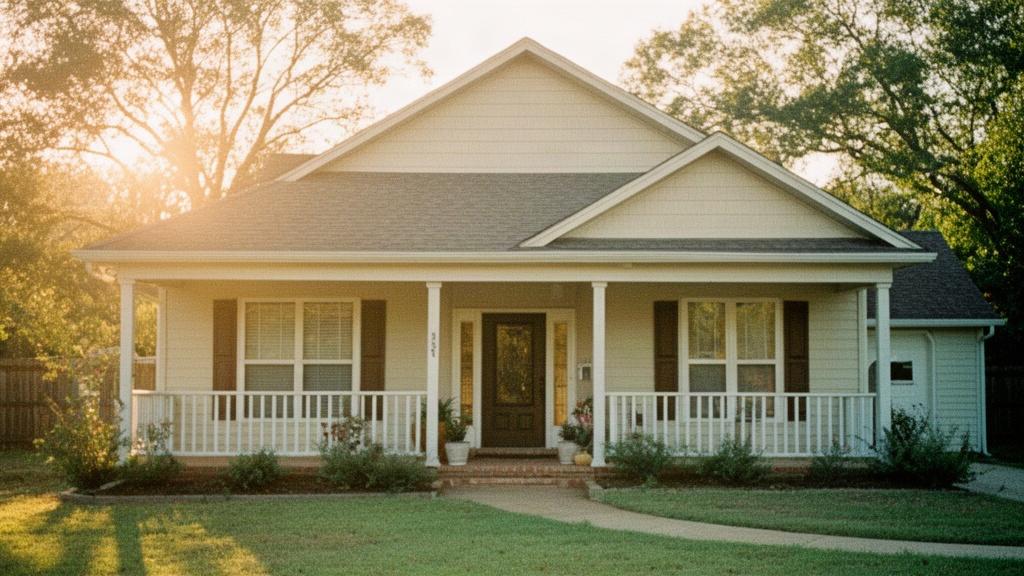
Single-family homes make up the majority of Mountain Home's housing stock. You will find brick ranch homes from the 1970s and 1980s on quarter-acre to half-acre lots throughout established neighborhoods near Highway 62 and Highway 5. These properties are typically priced between $130,000 and $220,000, they tend to attract stable long-term tenants, and maintenance costs are relatively predictable. A well-maintained three-bedroom, two-bath brick ranch near town can rent for $950 to $1,300 per month in the current market.
Lakefront and Waterfront Properties
Lakefront properties on Bull Shoals and Norfork command a significant price premium, but they also command premium rental rates. A cabin or home with direct lake access and a dock can generate $2,500 to $5,000 or more per week during peak summer months. The trade-off is a higher acquisition cost, typically $350,000 to $700,000 or above for true waterfront with dock access, and more intensive management if you are running short-term rentals.
For specifics on working with a specialist in this segment, see the guide to lakefront real estate agents in Mountain Home, Arkansas, which outlines what to look for when evaluating an agent's waterfront experience.
Short-Term Vacation Rentals
Short-term vacation rentals are not limited to lakefront properties in Mountain Home. Cabins and cottages within a few miles of the lakes, or properties near the White River access points south of town, attract fishing and outdoor recreation visitors who book by the night or week. Baxter County does not currently impose a local short-term rental licensing ordinance as complex as those in larger Arkansas cities, but you should verify current county and city regulations before purchasing, as these rules can change.
Small Multifamily Properties
Duplexes and small fourplexes exist in Mountain Home, though they are less common than single-family homes. When they come to market, they typically price between $180,000 and $320,000 depending on condition and unit configuration. These properties appeal to investors who want to spread vacancy risk across multiple units while keeping management under one roof. Inventory in this category is limited, so buyers who want a multifamily property need to be ready to move quickly when one becomes available.
3. Current Price Ranges and What Your Budget Gets You
As of September 2026, Mountain Home's median home price sits in the range of $215,000 to $240,000 for non-waterfront properties. That figure has climbed from the low $170,000s seen in 2021 and 2022, reflecting both national price appreciation and the continued in-migration of buyers from higher-cost states. Inventory remains tighter than historical norms, which supports prices but also means investors need to underwrite deals carefully rather than assuming deep discounts.
For a broader look at current conditions across Baxter County, the Mountain Home, Arkansas Real Estate Market Guide covers pricing trends, days on market, and timing considerations in more detail.
Entry-Level Investment Properties
Under $150,000 in Mountain Home, you are generally looking at older homes that need cosmetic updates or mechanical work. Properties in this range are often 1,000 to 1,400 square feet, built between 1960 and 1990, and located on streets off Highway 62 East or in older sections of town near the courthouse square. They can work as rentals after renovation, but investors should budget $20,000 to $50,000 for updates depending on condition, and factor that into the total acquisition cost.
Mid-Range Properties
The $150,000 to $280,000 range represents the core of Mountain Home's investment-grade single-family inventory. At this price point you can find three-bedroom, two-bath homes in move-in condition, often with updated kitchens and bathrooms, on lots with mature trees and established landscaping. These properties rent consistently and attract tenants who plan to stay for multiple years, which keeps turnover costs manageable.
Lakefront and Premium Inventory
Above $350,000, the Mountain Home market shifts toward lakefront homes, newer construction, and larger acreage properties. True Bull Shoals or Norfork lakefront with a private dock typically starts at $400,000 and can exceed $1 million for newer builds with high-end finishes and deep-water access. Properties in this tier require more capital and carry higher insurance costs due to their proximity to water, but they also generate the highest short-term rental income per night of any category in the local market.
4. Rental Demand and Income Potential in Baxter County
Rental demand in Mountain Home is supported by two distinct tenant pools: long-term residents and short-term visitors. Understanding which pool your property will draw from, and when, is the foundation of any realistic income projection. The NAR's consumer guide on whether you're ready to invest in real estate is a useful starting point for thinking through your personal financial readiness before you start evaluating specific properties.
Long-Term Rental Market
The long-term rental market in Mountain Home is driven by healthcare workers, retirees who are not yet ready to purchase, and workers in the local retail and service economy. Vacancy rates for well-maintained single-family rentals have remained low, with most landlords reporting vacancies of 30 days or less between tenants in the current market. Monthly rents for a three-bedroom home range from roughly $900 to $1,400 depending on location, condition, and whether the property includes a garage or additional storage.
Gross rent multipliers in Mountain Home for long-term rentals generally fall in the 120 to 160 range, meaning a property renting for $1,100 per month might trade for $132,000 to $176,000. That is a favorable ratio compared to many larger Arkansas markets like Little Rock or Fayetteville, where prices have outpaced rents more significantly.
Short-Term and Vacation Rental Demand
Peak short-term rental season in Mountain Home runs from late April through September, with a secondary bump during fall foliage season in October. The White River below Bull Shoals Dam is one of the most productive trout fisheries in the United States, and that fishery draws visitors year-round, including during winter months when long-term rental demand would otherwise be the only income source. A lakefront cabin with consistent bookings can realistically gross $30,000 to $60,000 annually, though operating expenses including platform fees, cleaning, and maintenance typically run 35 to 50 percent of gross income.
Key Numbers to Run Before You Commit
Every investment property analysis should start with the same core calculations. You need to know your gross rent estimate, your vacancy allowance (typically 8 to 10 percent for long-term rentals in this market), your operating expenses including insurance, taxes, maintenance, and management, and your net operating income after those costs. From there, divide net operating income by your purchase price to get your cap rate. In Mountain Home, cap rates on stabilized long-term rental properties currently run in the 5 to 7 percent range for well-priced acquisitions.
5. Financing, Due Diligence, and Local Considerations
Investment property financing works differently from owner-occupied financing, and those differences affect your numbers from day one. Knowing what lenders require and what local due diligence looks like in Baxter County will help you move faster and avoid surprises when you find the right property.
Financing an Investment Property in Arkansas
Conventional investment property loans in Arkansas typically require a minimum 20 to 25 percent down payment. Lenders will also scrutinize your debt-to-income ratio more carefully than they would for a primary residence, and they will want to see reserves equal to several months of mortgage payments. Interest rates on investment property loans run roughly 0.5 to 0.75 percentage points higher than comparable owner-occupied rates. If you are purchasing a property you plan to occupy as a second home for part of the year, you may qualify for more favorable second-home financing terms, though the property must genuinely be used that way.
Some investors in Mountain Home use DSCR loans, which are underwritten based on the property's rental income rather than the borrower's personal income. These products are widely available from portfolio lenders and can be a practical option for investors who are self-employed or who already carry multiple investment properties on their personal tax returns.
What to Inspect and Verify Locally
Mountain Home's housing stock includes a significant number of homes built in the 1970s and 1980s, and those properties carry specific inspection priorities. HVAC systems, roofs, and plumbing are the most common sources of deferred maintenance in this era of construction. For lakefront properties, you also need to verify the dock permit status with the Army Corps of Engineers, confirm the property's flood zone designation with FEMA's flood map service, and check whether the property has a functioning septic system or is connected to a municipal sewer line, since many rural Baxter County properties rely on septic.
If you are purchasing from out of state, the guide on who to hire when relocating to Mountain Home from out of state covers the professional team you need in place before you close, including inspectors, attorneys, and title companies familiar with Baxter County transactions.
Working With a Local Agent Who Knows the Market
Investment property decisions in a market like Mountain Home benefit significantly from local knowledge that does not show up in online data. Which streets near the lake have reliable cell service for managing short-term rental bookings? Which subdivisions have HOA restrictions that prohibit short-term rentals? Which areas are served by city water versus a well? These are the questions that affect your operating costs and your income potential, and they are questions a local agent can answer from experience rather than from a database.
Heather Hendricks of ERA Doty Real Estate has worked with investors across the Mountain Home and Baxter County market. She understands the nuances of lakefront transactions, the local rental landscape, and what separates a property that performs from one that looks good on paper but underdelivers in practice. If you are putting together your investment property analysis and want a local perspective on specific addresses or areas, she is a direct resource.
FAQ
Is Mountain Home, Arkansas a good market for short-term vacation rentals?
Mountain Home has genuine short-term rental demand driven by two major lakes and the White River trout fishery, which draws visitors in every season. Peak demand runs from late April through September, with a secondary season in October during fall foliage. Properties with direct lake access and dock facilities generate the highest nightly rates. Before purchasing any property for short-term rental use, verify current Baxter County and City of Mountain Home regulations, confirm whether any HOA covenants restrict short-term rentals, and factor platform fees and cleaning costs into your income projections, since operating expenses typically consume 35 to 50 percent of gross rental income.
What down payment do I need to buy an investment property in Mountain Home, Arkansas?
Most conventional lenders require 20 to 25 percent down for a non-owner-occupied investment property in Arkansas. On a $200,000 purchase, that means $40,000 to $50,000 at closing before factoring in closing costs, which typically add another 2 to 4 percent of the purchase price. Investors who want to use the property as a second home and occupy it for a portion of the year may qualify for second-home financing with a lower down payment requirement, though lenders will verify the intended use. DSCR loans, which underwrite based on rental income rather than personal income, are another option available through portfolio lenders and can work well for investors who are self-employed or already carry multiple financed properties.
How do I evaluate whether an investment property in Mountain Home will cash flow?
Start with a realistic gross rent estimate based on comparable rentals currently listed or recently leased in Mountain Home, not the highest possible figure. From that number, subtract a vacancy allowance of 8 to 10 percent for long-term rentals, then subtract operating expenses including property taxes, insurance, maintenance reserves (typically 1 percent of property value per year), and any property management fees, which commonly run 8 to 12 percent of collected rent in this market. The resulting net operating income divided by your total acquisition cost gives you your cap rate. In Mountain Home, stabilized long-term rental properties are currently trading at cap rates in the 5 to 7 percent range. If the numbers do not work at the asking price, your offer price or your rental income assumptions need to change, not your expense estimates.