← Back to Blog
Buying
Investment Property Guide for Oklahoma City: Buyers
By Jeanine Martin
Lime realty
September 14, 2026 · 10 min read
This investment property guide for Oklahoma City, Oklahoma covers everything a serious buyer needs before committing capital: current price ranges, rental demand drivers, neighborhood characteristics, financing realities, and the numbers that actually matter when evaluating a deal in the OKC market right now.
1. Why Oklahoma City Draws Real Estate Investors in 2026
Oklahoma City offers lower purchase prices relative to rental income than most major metros in the South or Midwest. That gap between what you pay to acquire a property and what a tenant will pay to rent it is the core reason investors keep looking at OKC when coastal markets have compressed yields to thin margins.
Median Home Prices Keep Entry Costs Manageable
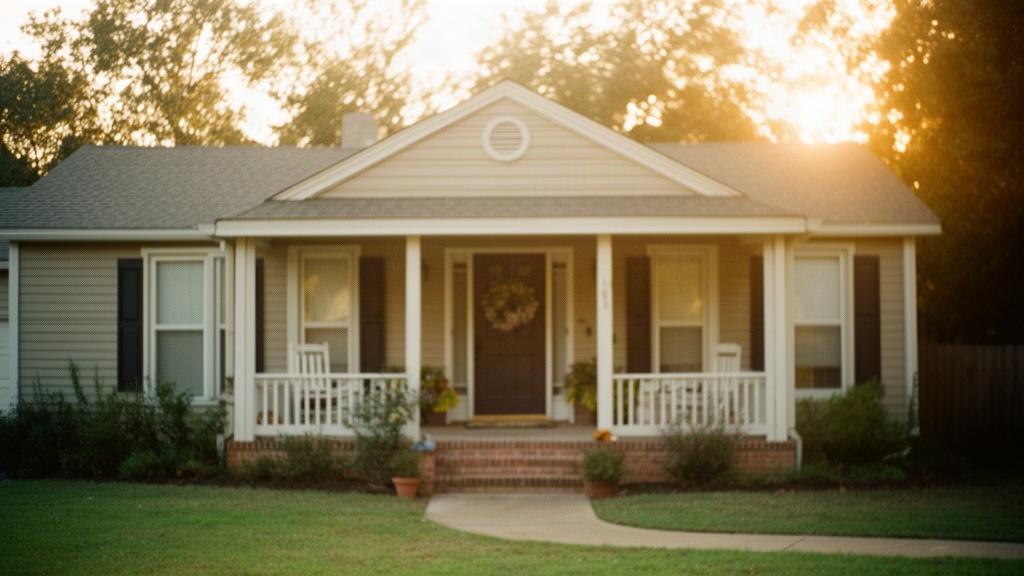
As of September 2026, the median sale price for a single-family home in Oklahoma City sits in the low-to-mid $200,000s, depending on the submarket. Entry-level investment properties, typically three-bedroom, one-bath homes built between 1950 and 1980, regularly trade in the $130,000 to $175,000 range in areas like Del City, Midwest City, and the older sections of southwest OKC. Mid-tier rentals closer to Midtown or the Paseo District run $200,000 to $320,000 and tend to attract tenants who can support higher rents.
For context on where the broader market sits right now, Norada Real Estate's Oklahoma City market analysis tracks median prices, inventory levels, and year-over-year appreciation trends that are useful when stress-testing your assumptions before you make an offer.
A Broad Employment Base Supports Rental Demand
Oklahoma City's economy is not a single-industry town. The energy sector remains significant, but Tinker Air Force Base employs roughly 27,000 people on the east side of the metro, making it one of the largest single-site employers in the state. The University of Oklahoma Health Sciences Center, SSM Health, Integris, and OU Health anchor a large healthcare and life sciences employment cluster in the central city. Amazon, Boeing, and a growing logistics sector add further stability.
That employment diversity matters for investors because it means rental demand does not spike and collapse with oil prices the way it once did. Workers at Tinker, at the health campuses, and in the logistics corridors along I-40 and I-35 all need housing, and many of them rent.
2. Oklahoma City Neighborhoods Worth Studying for Investment
No two submarkets in OKC behave the same way. Price points, tenant profiles, property ages, and renovation costs vary enough that an investor who buys without understanding the specific submarket is making decisions with incomplete information. The areas below each have distinct characteristics worth knowing.
Midtown and Mesta Park
Midtown sits roughly two miles north of downtown OKC and is characterized by bungalows, Tudor-style homes, and two-story craftsman houses built primarily between 1910 and 1940. Lot sizes tend to run 50 to 75 feet wide on established tree-lined streets. Purchase prices for investment-grade properties here range from about $220,000 for a smaller bungalow needing cosmetic work to $400,000 or more for a fully renovated larger home. The proximity to the Oklahoma Health Center employment cluster and the walkable restaurant and retail corridor along NW 10th and Classen makes this area consistently attractive to renters who want urban character without downtown density.
If you want a deeper look at the buying process specific to this submarket, the article on buying a home in Midtown Oklahoma City walks through process, costs, and typical timelines in detail.
The Paseo and Plaza Districts
The Paseo Arts District, centered on NW 28th Street, contains a mix of Spanish Colonial Revival architecture, small apartment buildings from the 1930s and 1940s, and converted commercial spaces. Single-family homes here are smaller on average, often 900 to 1,400 square feet, and trade in the $180,000 to $280,000 range. The Plaza District along NW 16th has seen significant commercial reinvestment over the past several years, which has pulled residential rents upward in the surrounding blocks. Investors who bought in this corridor before that commercial activity matured have seen solid appreciation.
Yukon, Mustang, and the Western Suburbs
Yukon sits about 15 miles west of downtown OKC along I-40 and has grown considerably over the past decade with new residential subdivisions and commercial development along Garth Brooks Boulevard and Czech Hall Road. Homes built between 2000 and 2015 in Yukon and neighboring Mustang tend to be three-bedroom, two-bath ranch or two-story layouts on quarter-acre lots, priced between $190,000 and $290,000. These properties attract tenants who work in the western industrial corridors or commute into central OKC, and they typically require less immediate maintenance than the older housing stock found closer to downtown.
Del City and Midwest City
These two incorporated cities sit directly east of OKC proper and share a border with Tinker Air Force Base. That proximity to Tinker creates a reliable tenant pool of military personnel, contractors, and base employees. Homes here are predominantly post-World War II construction: brick ranch houses with two to three bedrooms, one to two baths, and 900 to 1,500 square feet. Purchase prices for investment properties in Del City and Midwest City frequently fall in the $120,000 to $185,000 range, making them among the most accessible entry points in the metro for investors working with limited initial capital.
3. Understanding the Numbers: Rents, Returns, and Operating Costs
The numbers on paper have to survive contact with reality. Too many investors in any market run optimistic projections and discover the actual cash flow is far thinner once vacancy, maintenance, management fees, and taxes are accounted for. Oklahoma City rewards investors who do the math carefully.
What Rents Are Doing Right Now
As of September 2026, a typical three-bedroom, one-bath rental home in Del City or Midwest City commands roughly $1,050 to $1,250 per month. Three-bedroom homes in Yukon or Mustang with more recent construction and two full baths rent in the $1,300 to $1,600 range. Renovated properties in Midtown or the Paseo with updated kitchens and bathrooms can achieve $1,500 to $2,000 per month, though purchase prices in those areas are correspondingly higher. Two-bedroom apartments and duplexes in central OKC generally rent between $900 and $1,400 depending on condition and location.
Estimating Your Net Operating Income
Net operating income (NOI) is gross rent minus vacancy and all operating expenses, before debt service. A reasonable vacancy assumption for OKC single-family rentals in 2026 is five to eight percent annually. Operating expenses including property management (typically eight to ten percent of collected rent), maintenance reserves, insurance, and property taxes will consume another 35 to 45 percent of gross rent on an older home. Run these numbers before you fall in love with a property, not after.
Property Taxes and Insurance in Oklahoma County
Oklahoma's effective property tax rate is among the lower ones in the nation, which helps investor cash flow. Oklahoma County's average effective rate runs roughly 0.85 to 1.0 percent of assessed value, and Oklahoma assesses residential property at eleven percent of market value, meaning the taxable base is significantly lower than the sale price. On a $175,000 rental home, annual property taxes might run $1,400 to $1,800. Homeowners insurance for an investment property in OKC, however, runs higher than the national average because Oklahoma sits in a high-wind and hail zone; budget $1,800 to $3,000 per year depending on the age and construction of the home.
4. Financing an Investment Property in Oklahoma City
Financing is where many first-time investors get surprised. Investment property loans carry different requirements than primary residence mortgages, and understanding your options before you start touring properties will save you time and prevent deals from falling apart at the financing stage.
Conventional Investment Loans
A conventional loan for a non-owner-occupied investment property typically requires a minimum 20 to 25 percent down payment, a credit score of 680 or higher, and documented reserves of at least six months of PITI (principal, interest, taxes, and insurance). Interest rates on investment property loans run roughly 0.5 to 0.75 percentage points higher than equivalent owner-occupied loans. On a $200,000 purchase with 25 percent down, you are financing $150,000, which at current rates produces a monthly principal and interest payment in the range of $950 to $1,050 depending on the rate you lock.
DSCR Loans and Portfolio Lenders
Debt service coverage ratio (DSCR) loans qualify you based on the property's rental income rather than your personal income, which makes them useful for self-employed investors or those with multiple properties already on their tax returns. A DSCR of 1.0 means the property's rent exactly covers the mortgage payment; most DSCR lenders want 1.1 to 1.25. On a $175,000 OKC rental generating $1,200 per month, the math often works. Several community banks and credit unions in the OKC metro also offer portfolio loans with more flexible underwriting for established local investors.
House Hacking as an Entry Strategy
House hacking means purchasing a small multifamily property, living in one unit, and renting the others. Oklahoma City has a reasonable inventory of duplexes and small fourplexes in areas like Capitol Hill, Classen-Ten-Penn, and parts of the Paseo. Because you occupy one unit, you can use owner-occupied financing, which means three to five percent down instead of 20 to 25 percent. The rental income from the other units offsets your housing cost while you build equity and learn the landlord business with lower stakes.
5. Due Diligence Checklist Before You Close
Skipping or rushing due diligence is the most common and most costly mistake investors make in any market, including OKC. Oklahoma's housing stock includes a large share of homes built before 1970, and those properties carry specific risks that a thorough inspection process needs to surface before you commit.
Inspection Priorities for Oklahoma Homes
Oklahoma's clay-heavy soil expands and contracts with moisture, which puts significant stress on foundations. Foundation movement is common in older OKC homes and ranges from minor cosmetic cracking to structural issues that cost $10,000 to $40,000 or more to remediate. Always hire a structural engineer separately from your general home inspector if the inspector notes any foundation concerns. Also prioritize: roof age and hail damage history, HVAC condition (Oklahoma summers are brutal on aging systems), plumbing material in pre-1970 homes (cast iron drain lines are common and fail), and electrical panel adequacy.
Zoning, Short-Term Rental Rules, and HOAs
Oklahoma City has a short-term rental ordinance that requires registration and compliance with specific operational standards if you plan to list a property on platforms like Airbnb or Vrbo. Confirm zoning and any HOA restrictions before assuming a property can be used as a short-term rental. Some neighborhoods and subdivisions prohibit them outright. For long-term rentals, Oklahoma City does not currently require a landlord license, but properties must meet minimum housing standards enforced by the city's code enforcement division.
Property Management or Self-Manage?
Out-of-state investors and those with full-time jobs typically benefit from hiring a local property manager, even though the fee (usually eight to ten percent of monthly rent) reduces cash flow. A competent OKC property manager handles tenant screening, lease execution, maintenance coordination, and legal compliance, which is significant given Oklahoma's specific landlord-tenant statutes. Self-managing works well for investors who live locally and have the time and temperament for it, but underestimate neither the time commitment nor the importance of knowing Oklahoma's eviction process before you need it.
For a broader look at how OKC's overall real estate market is performing right now, the Oklahoma City real estate market guide for buyers and sellers covers current inventory levels, price trends, and timing considerations that also affect investment decisions.
If you are also evaluating the Edmond submarket north of OKC, which has a distinct price range and housing stock, the Edmond area real estate market guide provides submarket-specific detail worth reading before you compare properties across the metro.
FAQ
Is Oklahoma City a good market for rental property investment in 2026?
Oklahoma City continues to offer purchase prices that are low enough relative to achievable rents to produce positive cash flow on many properties, which is increasingly difficult to find in larger metros. The metro's diversified employment base, anchored by Tinker Air Force Base, the healthcare sector, energy companies, and growing logistics operations, supports consistent rental demand. Vacancy rates for single-family rentals in OKC have remained in a healthy range through 2026. That said, every individual property still needs to be underwritten carefully; a favorable market does not make every deal a good deal. For a detailed look at current rental market conditions, the analysis at RealWealth's Oklahoma City investing page provides useful context.
How much money do I need to buy an investment property in Oklahoma City?
For a conventional investment property loan, plan on 20 to 25 percent down plus closing costs of roughly two to four percent of the purchase price. On a $175,000 property, that means approximately $38,000 to $47,000 in total cash to close, plus reserves. DSCR loans and portfolio lenders sometimes allow slightly lower down payments but typically carry higher interest rates. House hacking with an owner-occupied loan on a small multifamily property can reduce the down payment requirement to three to five percent, which is the lowest-capital entry point available in this market. You will also want a maintenance reserve of at least $5,000 to $10,000 set aside separately before your first tenant moves in.
What are the biggest risks of buying investment property in Oklahoma City?
Foundation issues caused by Oklahoma's expansive clay soils are the most common and expensive surprise for investors who skip thorough structural inspections. Hail and wind damage is frequent enough that insurance costs are a meaningful line item, and some older properties are difficult to insure at all. Investors who underestimate operating expenses, particularly maintenance on pre-1970 housing stock, often find cash flow is thinner than their initial projections suggested. Tenant turnover and vacancy are also real costs that optimistic models tend to minimize. Working with a local agent who knows which specific streets and blocks carry higher risk can prevent expensive mistakes that a spreadsheet alone will not catch.