← Back to Blog
Neighborhoods
Relocating to Oklahoma City: Neighborhoods, Costs and Timelines
By Jeanine Martin
Lime realty
September 11, 2026 · 11 min read
Relocating to Oklahoma City involves more decisions than just picking a zip code. This guide covers the neighborhoods people most commonly consider, what housing actually costs in September 2026, and a realistic timeline from your first search to closing day so you can plan your move without surprises.
1. What It Actually Costs to Live in Oklahoma City Right Now
Oklahoma City consistently ranks among the more affordable large metros in the country. As of September 2026, the median home price in the OKC metro sits around $245,000, which puts it well below the national median. That number shifts meaningfully depending on which part of the city you focus on, so it helps to understand the full range before you set a budget.
Housing Prices Across the Metro
Entry-level homes in the broader OKC metro, particularly in areas like Yukon, Mustang and southeast Oklahoma City, generally start in the $160,000 to $210,000 range for a three-bedroom home built in the 1980s or 1990s. Mid-range homes in established neighborhoods like Edmond or the northwest corridor typically run $280,000 to $420,000. Nichols Hills, which sits inside OKC proper and is known for its brick Tudor and Colonial homes on larger lots, carries a median price closer to $500,000 to $650,000, with custom builds and renovated properties going higher.
New construction is active throughout the metro. Builders in Edmond, Yukon and the Deer Creek corridor are delivering homes in the $320,000 to $480,000 range with modern floor plans, open kitchens and three-car garages. If you are relocating from a coastal market, the square footage you get per dollar in OKC tends to be a genuine surprise.
For a full picture of how prices break down across OKC neighborhoods, the Forbes Advisor cost of living calculator for Oklahoma City lets you plug in your current city and compare housing, groceries, healthcare and transportation costs side by side.
Beyond the Mortgage: Taxes, Insurance and Utilities
Oklahoma's effective property tax rate is roughly 0.85 to 0.90 percent of assessed value, which is below the national average. On a $300,000 home, that translates to approximately $2,550 to $2,700 per year. Oklahoma City does not have a city income tax beyond the state rate, and Oklahoma's state income tax tops out at 4.75 percent.
Homeowners insurance is a real line item here. Oklahoma sits in Tornado Alley, and insurers price that risk into premiums. Budget roughly $2,000 to $3,500 per year for a standard policy depending on your home's age, construction and location. Some older homes in central OKC carry higher premiums if they have original roofing. Utilities in OKC run moderate: average monthly electricity bills for a 2,000-square-foot home fall around $130 to $160 in spring and fall, higher in July and August when air conditioning runs constantly.
2. Oklahoma City Neighborhoods: What Each Area Offers
Oklahoma City covers over 620 square miles, which makes it one of the largest cities by land area in the country. That size means the neighborhoods feel genuinely distinct from one another in terms of housing stock, lot sizes, price points and proximity to employment centers. Here is a practical breakdown of the areas people most commonly consider when relocating to Oklahoma City.
Midtown and Mesta Park
Midtown sits roughly two miles northwest of downtown and contains some of OKC's most architecturally distinctive housing. The Mesta Park neighborhood, a historic district within Midtown, features bungalows, Craftsman homes and two-story colonials built primarily between 1910 and 1940, on lots that typically run 50 to 75 feet wide. Prices here range from about $280,000 for a smaller bungalow needing updates to over $600,000 for a fully renovated four-bedroom on a double lot.
The walkability factor in Midtown is notable by OKC standards. Residents are within a short walk or bike ride of the Paseo Arts District, the 23rd Street corridor with its restaurants and coffee shops, and the OKC Streetcar line. If you want urban character with older architecture and proximity to downtown employment, Midtown is worth a close look. You can read more about the buying process there in the guide to buying a home in Midtown Oklahoma City.
Nichols Hills and Northwest OKC
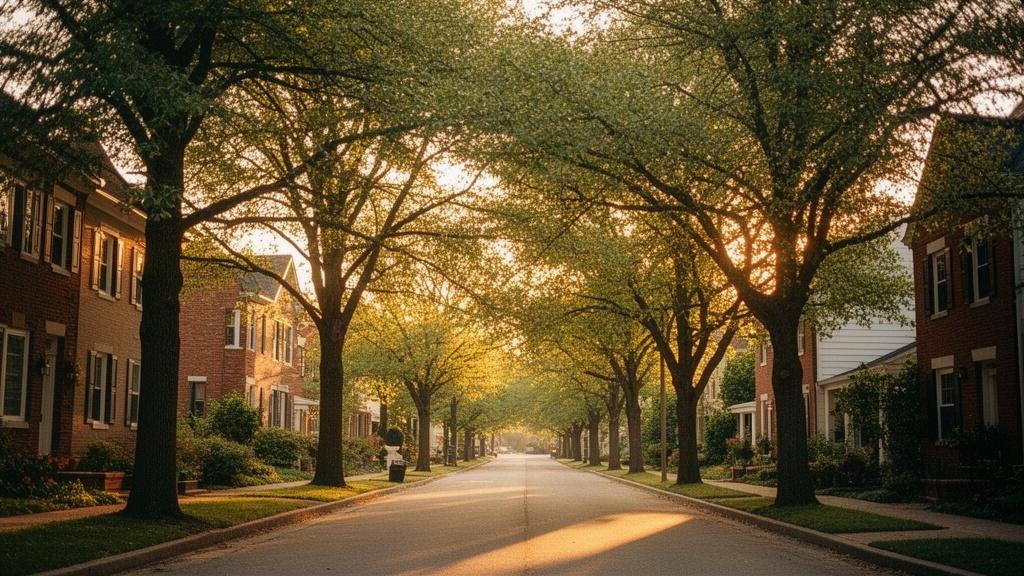
Nichols Hills is an incorporated municipality surrounded by Oklahoma City, located just north of NW 63rd Street between Western Avenue and Pennsylvania Avenue. The housing stock is predominantly brick construction from the 1930s through the 1960s, with lot sizes ranging from a quarter acre to over half an acre. The streets are tree-lined and the neighborhood borders the Nichols Hills Plaza retail area and the Penn Square Mall corridor.
Northwest OKC, stretching from NW 63rd up toward Britton Road and beyond, offers a mix of ranch homes from the 1960s and 1970s alongside newer infill construction. Prices in this corridor generally run $220,000 to $380,000, with larger lots and mature trees common on the established streets.
Edmond
Edmond is a city of roughly 100,000 people that borders Oklahoma City to the north, with its southern edge starting around Danforth Road. It functions as a suburb with its own downtown, its own municipal services and a dense concentration of newer residential development. Home prices in Edmond range from about $260,000 for an older three-bedroom near downtown Edmond to $700,000 or more for newer construction in master-planned communities like Coltrane Crossing or along the Coffee Creek corridor.
Edmond is home to the University of Central Oklahoma and has a walkable historic downtown along Broadway. The area has seen significant retail and restaurant growth along I-35 and Covell Road over the past several years. For a detailed look at pricing and timing specific to Edmond, the Edmond area real estate market guide covers it thoroughly.
Yukon and Mustang
Yukon sits about 15 miles west of downtown OKC along I-40, and Mustang is roughly 12 miles southwest. Both communities have grown substantially over the past decade and offer newer subdivisions with larger lots than you typically find in the urban core. Yukon's median home price is currently around $230,000 to $270,000, while Mustang runs slightly lower at $200,000 to $250,000.
Both communities have their own main street corridors, local parks and recreation facilities. Yukon's Czech Hall and Heritage Trail reflect the area's Czech immigrant history. Mustang has seen a wave of new construction in developments off SW 59th Street and Sara Road, making it one of the more active new-build corridors in the metro right now.
Moore and Norman
Moore is directly south of OKC along I-35 and functions as a bedroom community with a mix of older ranch homes and newer construction. Home prices in Moore currently range from about $185,000 to $310,000. Norman, about 20 miles south of downtown OKC, is home to the University of Oklahoma and has a distinct college-town character with a walkable campus area, a lively Main Street district and housing that ranges from $180,000 starter homes to $500,000 custom builds in the southeast Norman area.
Bricktown and Downtown Adjacent
Downtown OKC and the Bricktown entertainment district have seen significant condo and townhome development over the past decade. The Bricktown Canal, Paycom Center, Scissortail Park and the Oklahoma City Thunder's arena all sit within walking distance of this area. Condos in the downtown core range from about $200,000 for a one-bedroom in an older conversion building to $600,000 or more for a newer high-rise unit with views of the skyline.
The Film Row and Automobile Alley corridors, just northwest of Bricktown, have added restaurants, boutiques and adaptive reuse office space that make the urban core more livable than it was even five years ago. If walkability and proximity to downtown employment are priorities, this area warrants a look alongside Midtown.
3. Commutes, Infrastructure and Getting Around OKC
Oklahoma City is primarily a driving city, and most residents commute by car. Understanding drive times from the neighborhoods you are considering to your workplace is one of the most practical steps in narrowing down where to live.
Drive Times Across the Metro
From Edmond's southern edge to downtown OKC, the drive along I-35 or Broadway Extension takes roughly 20 to 30 minutes in normal traffic. From Yukon to downtown via I-40, expect 20 to 25 minutes. Norman to downtown OKC runs about 25 to 35 minutes on I-35. Moore to downtown is closer to 15 to 20 minutes. Nichols Hills to downtown is about 10 to 15 minutes depending on the route.
Traffic congestion in OKC is moderate compared to larger metros. The I-40 and I-35 interchange, known locally as the Crossroads, can back up during morning and evening rush hours, particularly between 7:30 and 8:30 a.m. and 4:30 and 6:00 p.m. The Broadway Extension (US-77) north toward Edmond sees similar peak-hour slowdowns. Outside those windows, most cross-metro trips take under 30 minutes.
EMBARK Transit and the Streetcar
EMBARK is OKC's public transit system, operating bus routes across the metro and the OKC Streetcar, which runs a 4.9-mile loop through downtown, Midtown and Bricktown. The Streetcar is free to ride and connects several of the city's most active districts. Bus service extends to major employment corridors, though the system is designed as a supplement to car travel rather than a replacement for most residents.
4. Your Relocation Timeline: From Decision to Move-In Day
A realistic OKC relocation takes roughly 10 to 16 weeks from the moment you start seriously researching to the day you get keys. That timeline compresses or stretches depending on how quickly you can get pre-approved, how competitive the specific price range you are targeting is, and whether you are buying new construction or an existing home.
Weeks 1 Through 4: Research and Pre-Approval
Use the first two to four weeks to research neighborhoods, set your budget and get a mortgage pre-approval letter in hand. Oklahoma lenders can typically issue a pre-approval within three to five business days if you have your documents ready: two years of tax returns, recent pay stubs, two months of bank statements and a government-issued ID. Getting pre-approved before you tour homes is not optional in the current market; sellers expect it.
This is also the stage to connect with a local buyer's agent. An agent who knows OKC well can tell you which neighborhoods have the most active inventory in your price range, flag upcoming listings before they hit public portals and help you understand what a competitive offer looks like in each area. The guide on choosing a Realtor to buy a home in Oklahoma City walks through what to look for.
Weeks 5 Through 10: Active Search and Offer
With pre-approval in hand, you move into active touring. In OKC's current market, well-priced homes in the $220,000 to $380,000 range often receive multiple offers within the first week of listing. Homes priced above $450,000 tend to sit longer, sometimes two to four weeks, giving buyers more room to negotiate.
Plan to tour homes in person if at all possible, even if you are relocating from out of state. OKC's neighborhoods have real physical differences in lot sizes, street character and proximity to commercial corridors that photos do not convey. If an in-person trip is not possible before making an offer, video tours with your agent walking the property and surrounding streets are a reasonable substitute.
Weeks 11 Through 16: Contract to Close
Once you have an accepted offer, the Oklahoma standard contract allows for a 10-business-day inspection period. Use it. Oklahoma homes are subject to hail damage, foundation movement from the clay-heavy soil and HVAC systems that work hard in summer heat. A thorough inspection by a licensed Oklahoma inspector is worth every dollar.
Closing in Oklahoma typically takes 30 to 45 days from contract execution for a financed purchase, or as few as 10 to 14 days for a cash buyer. Closing costs for buyers in Oklahoma generally run 2 to 3 percent of the purchase price, covering lender fees, title insurance, the appraisal and prepaid items like homeowners insurance and property tax escrow.
5. What to Know About the OKC Market Before You Buy
The OKC housing market in September 2026 is more balanced than it was in 2021 and 2022, when inventory was historically tight and multiple-offer situations were common across all price points. Buyers today have more negotiating room, particularly above the $400,000 mark, while the sub-$300,000 segment remains competitive.
Inventory and Pricing Trends in September 2026
Active listings in the OKC metro are running higher than they were in September 2025, giving buyers more options and more time to make decisions. Days on market for homes priced $300,000 to $450,000 currently average around 25 to 35 days, compared to under 10 days during the peak of 2022. Price reductions are more common than they were two years ago, particularly on homes that were initially listed above comparable sales.
For a deeper look at how current conditions affect your buying strategy, the Oklahoma City real estate market guide for buyers and sellers has current data on pricing, absorption rates and what to expect at the negotiating table.
What Buyers Are Competing For Right Now
Move-in-ready homes with updated kitchens and bathrooms in the $220,000 to $320,000 range still attract multiple offers within days of listing. Homes needing cosmetic updates in that same price range are sitting longer, which creates opportunity for buyers willing to do some work. New construction in Edmond and Yukon is absorbing demand at the $350,000 to $500,000 level, which is partly why existing homes in that range are seeing more price negotiation.
Oklahoma's energy sector, healthcare industry anchored by OU Health and Integris, and a growing aerospace and defense presence at Tinker Air Force Base all contribute to stable employment that supports housing demand. Relocating to Oklahoma City means entering a market that is not driven by speculative investment to the degree that coastal metros are, which tends to make prices more predictable over time.
Industry observers have noted that current conditions are giving OKC buyers more leverage than they have had in several years. You can read more about that shift in this HousingWire analysis of the OKC housing market.
FAQ
How long does it take to buy a home in Oklahoma City when relocating from out of state?
Most out-of-state buyers complete the process in 10 to 16 weeks from initial research to closing day. The biggest variable is how quickly you can get mortgage pre-approval and how competitive your target price range is. In the sub-$300,000 segment, well-priced homes move fast and you may need to make an offer during a single trip to OKC or via video tour. Above $400,000, you generally have more time. Building in at least one in-person visit before making an offer is advisable, as OKC neighborhoods vary significantly in character and the photos on listing portals rarely capture the full picture.
What are the biggest ongoing costs to budget for when relocating to Oklahoma City?
Beyond your mortgage payment, the two costs that most surprise people relocating to OKC are homeowners insurance and summer electricity bills. Oklahoma's tornado and hail exposure means insurance premiums are meaningfully higher than the national average, often running $2,000 to $3,500 per year. Summer electricity costs can run $150 to $200 per month or more during July and August when temperatures regularly exceed 95 degrees. Property taxes are below the national average, and there is no local city income tax beyond the state rate, which helps offset those other costs. Groceries and healthcare costs in OKC are also below national averages, which contributes to the overall affordability picture.
Do I need to visit Oklahoma City in person before buying, or can I buy remotely?
Buying remotely is possible and some out-of-state buyers do it, particularly when relocating for a job with a fixed start date. However, OKC's neighborhoods have real physical differences that listing photos do not capture well: lot sizes, street character, proximity to commercial strips and the condition of neighboring properties all matter. If an in-person trip is not possible, ask your agent to do a thorough video walkthrough of both the home and the surrounding block. Review aerial and street-level imagery carefully. The inspection period after your offer is accepted gives you another opportunity to visit before you are fully committed, so some buyers make their first in-person visit during the inspection window.