← Back to Blog
Market Trends
Katy, Texas Real Estate Market Guide: Prices, Neighborhoods and Timing
By Jennifer Taylor
EXP Realty
September 1, 2026 · 12 min read
This Katy, Texas real estate market guide covers everything buyers, sellers, and relocating households need to understand the local market in September 2026: where prices stand, how the major subdivisions compare on features and price points, what commute times look like, and how to time your move. Whether you are shopping for your first home in Cinco Ranch or preparing to list a property in Firethorne, the details below will help you make a confident, informed decision.
1. Where Katy Home Prices Stand Right Now
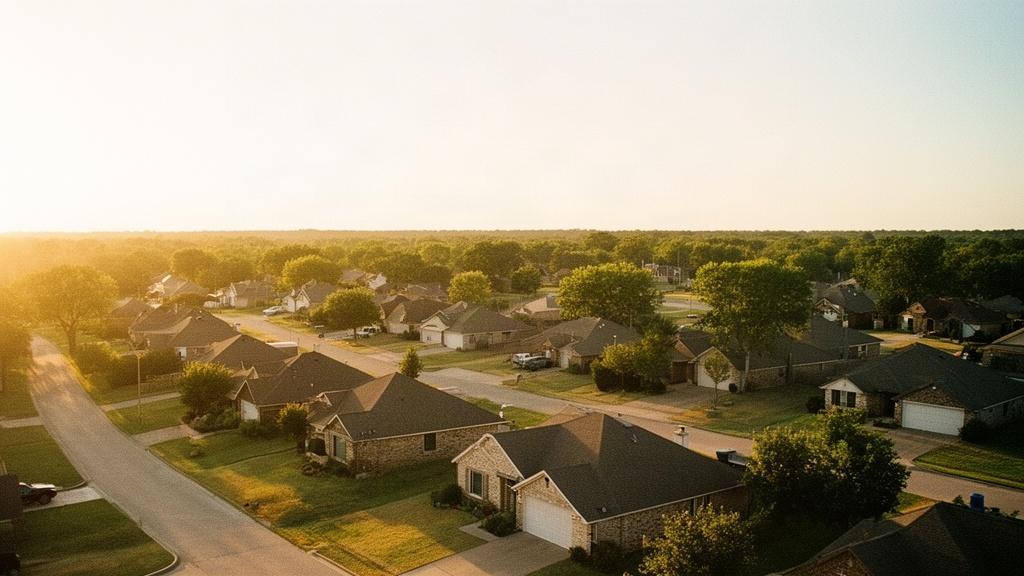
Katy's median home price sits in the low-to-mid $300,000s as of September 2026, with the broader range spanning from the upper $200,000s for smaller resale homes in established sections to well above $600,000 for larger new construction on the western edge of the market. That spread reflects how much ground the Katy market actually covers, from mature 1990s subdivisions close to I-10 and the Grand Parkway all the way out to master-planned communities still actively building in Fort Bend and Waller counties.
Median Price and Price Per Square Foot
Price per square foot is one of the most useful numbers to track in Katy because homes vary so widely in size. Resale homes in the 77450 and 77494 ZIP codes generally run between $140 and $175 per square foot depending on age, condition, and lot size. New construction in communities like Elyson and Cross Creek Ranch tends to price closer to $175 to $210 per square foot once upgrades are factored in. Watching price per square foot lets you compare a 2,200-square-foot resale in Cinco Ranch against a 2,600-square-foot new build in Elyson on the same footing.
For a deeper look at how those numbers have shifted month over month, the Houston Association of Realtors publishes detailed local data. You can review the most recent figures in the 2026 Katy, Texas housing market overview from HAR, which tracks median sale price, active listings, and days on market for the Katy area specifically.
How Katy Compares Within the Greater Houston Area
Katy consistently prices below the Inner Loop and the Galleria corridor, where comparable square footage often runs $250 to $350 per square foot or higher. For buyers relocating from higher-cost metros, that difference is significant: a household moving from Austin or Dallas can often step up in size and lot while staying within a similar budget. The trade-off is distance from central Houston, which is worth understanding before you commit to a specific neighborhood.
If you want context on how Katy fits into broader Texas housing trends heading into late 2026, HousingWire's Texas market analysis provides useful statewide perspective on inventory levels, builder activity, and rate sensitivity across the major Texas metros.
2. Katy's Major Subdivisions: Features, Price Ranges and What to Expect
Katy is not one neighborhood; it is a collection of master-planned communities, older established subdivisions, and new build sections that each carry a distinct price point, architectural character, and set of amenities. Knowing the differences before you start touring saves a lot of time.
Cinco Ranch
Cinco Ranch is one of the largest master-planned communities in the country by acreage, stretching across portions of ZIP codes 77494 and 77450. Homes here were built primarily between the mid-1990s and the mid-2010s, so buyers find a wide range of sizes and floor plans, from 1,600-square-foot patio homes to 4,500-square-foot two-story houses on larger lots. Prices in Cinco Ranch currently range from roughly $280,000 for a smaller resale to over $550,000 for a fully updated larger home near one of the community's lakes.
The community is anchored by the Cinco Ranch Waterpark and Recreation Center, a network of trails connecting multiple lakes, and a town center along Cinco Ranch Boulevard with grocery, dining, and retail. The Grand Parkway (TX-99) runs along its eastern edge, making access to both I-10 and the Westpark Tollway straightforward.
Firethorne and Cross Creek Ranch
Firethorne sits just west of the Grand Parkway in the 77494 ZIP code and features homes built largely from the mid-2000s through the mid-2010s, with lot sizes that tend to be more generous than those in the older sections of Cinco Ranch. Prices in Firethorne generally run from the mid-$300,000s to the low $500,000s. The community has its own clubhouse, pool, and trail system, and it sits close to LaCenterra at Cinco Ranch, an open-air shopping and dining district that serves as one of the main commercial hubs for western Katy.
Cross Creek Ranch, which straddles the Fort Bend and Harris county line along FM 1463, is a newer master-planned community where construction is still active. Buyers here can choose between resale homes and new builds from several national and regional builders. Prices start around $350,000 and climb past $700,000 for larger homes on premium lots. The community features a lagoon-style pool, kayak launch, and an extensive trail network connecting to natural green space.
Seven Meadows and Kelliwood
Seven Meadows and Kelliwood are established communities closer to the core of Katy, generally east of the Grand Parkway and north of I-10. Homes in Seven Meadows were built mostly between 2000 and 2010, with prices currently ranging from the low $300,000s to the mid-$400,000s. Kelliwood, which includes sections like Kelliwood Greens and Kelliwood Gables, features larger lots and homes built from the 1980s through the early 2000s, with prices spanning from the mid-$300,000s to over $500,000 depending on updates and lot position. Both communities offer mature tree canopy, which is a feature that newer western Katy developments are still growing into.
Elyson and Upcoming West Katy Communities
Elyson is one of the most active new-construction communities in the Katy market right now, located along FM 529 in Waller County. Prices start around $330,000 for smaller floor plans and reach into the $600,000s for larger homes on premium lots. The community's amenities include a resort-style pool, fitness center, and miles of hike-and-bike trails. Because Elyson is still building out, buyers have the option to purchase a spec home for a faster close or to contract on a to-be-built home and make structural and design selections.
Further west along the I-10 corridor, communities like Cane Island and Sunterra are drawing buyers who want newer construction at prices that can be slightly lower per square foot than established Katy ZIP codes. Cane Island in particular offers larger lot sizes and a European-inspired town center design. These western communities do sit farther from the Grand Parkway interchange, so commute time is a real factor to evaluate.
3. Commute Times, Infrastructure and Day-to-Day Life in Katy
Commute time is one of the most practical factors in choosing where to live in Katy, and it varies meaningfully depending on which community you choose and where you work in the Houston metro.
Getting to Houston and the Energy Corridor
From the eastern sections of Katy near I-10 and the Barker Cypress area, the Energy Corridor is roughly 15 to 20 miles away, translating to 25 to 40 minutes in typical morning traffic. From communities like Elyson or Cane Island, that same trip runs closer to 35 to 55 minutes depending on the time of day and whether you use the Westpark Tollway or stay on I-10. Downtown Houston is approximately 30 miles from central Katy, a drive that can take 40 to 60 minutes during peak hours.
The Grand Parkway (TX-99) is the key north-south artery for Katy residents, connecting I-10 to the Westpark Tollway and giving access to Sugar Land to the south and Cypress to the north without going through the city. For households with one person working in the Energy Corridor and another in Sugar Land or Pearland, Katy's position along the Grand Parkway makes the commute math work in a way that other Houston suburbs cannot match.
Local Amenities, Parks and Retail
Katy has built out its retail and dining infrastructure significantly over the past decade. Katy Mills Mall on the north side of I-10 anchors a large retail corridor that includes major box stores, restaurants, and a cinema. LaCenterra at Cinco Ranch offers a walkable open-air format with local restaurants, national chains, a hotel, and a weekly farmers market. For outdoor space, Mary Jo Peckham Park in the city center features a fishing pond, disc golf course, and event pavilions. Buffalo Bayou's upstream sections and Barker Reservoir provide additional green space and trail access for residents in the eastern portions of the Katy market.
Houston Methodist West Hospital and Memorial Hermann Katy Hospital both serve the area, giving residents access to major medical systems without driving into the Medical Center. That level of local healthcare infrastructure is something relocating households, particularly those coming from smaller markets, often notice right away.
4. Timing the Katy Market: When to Buy and When to Sell
Timing matters in Katy real estate, but it matters differently depending on whether you are buying or selling, and which segment of the market you are targeting. Here is what the data and seasonal patterns tell us heading into fall 2026.
Seasonal Patterns in Katy Real Estate
The Katy market follows a predictable seasonal rhythm. Listing activity peaks between March and June, when buyers with school-age children are actively searching to close before the new school year. Inventory typically tightens from July through August as fewer new listings come on and buyers who missed the spring window step back. September through November represents a secondary active period, often with less competition among buyers than the spring rush, and sellers who list in this window tend to be motivated to close before the holidays.
For buyers, September 2026 is a window worth taking seriously. You are entering after the peak demand of summer, which means sellers are often more willing to negotiate on price, closing costs, or repairs than they were in April or May.
Current Inventory and Days on Market
Katy's inventory has been gradually increasing through 2026, moving the market closer to a balanced position after several years of tight supply. Days on market for well-priced homes in established communities like Cinco Ranch and Seven Meadows currently runs between 25 and 45 days. Homes that are overpriced relative to recent comparable sales are sitting longer, sometimes 60 to 90 days, before sellers adjust. New construction inventory in communities like Elyson and Cross Creek Ranch adds additional options for buyers who have flexibility on their timeline.
For a more detailed breakdown of how prices have moved and whether now is the right moment to act, the article on Katy's housing market prices and direction on this site covers the price trend data in depth.
Interest Rate Context for September 2026
Mortgage rates in September 2026 remain a central factor in affordability calculations for Katy buyers. Rates have moderated compared to their 2023 peaks, but they remain elevated enough that monthly payment differences between a $320,000 and a $370,000 purchase are meaningful. Buyers who get pre-approved early and lock a rate strategically are in a much stronger negotiating position than those who shop without financing clarity. Sellers should also understand that rate sensitivity is shaping buyer behavior: overpricing by even 5 percent can push a listing into a payment range that eliminates a significant portion of qualified buyers.
If you are still weighing whether to buy now or hold off, the Katy market timing guide on this site walks through the buy-now versus wait decision with specific local data.
5. What Buyers and Sellers Should Know Before Making a Move
Whether you are buying or selling in Katy, the steps you take before going active in the market have a direct impact on your outcome. Here is what matters most in this specific market.
Key Due Diligence Steps for Buyers
Flood zone status is the single most important due diligence item for any Katy buyer. The Katy area includes portions of the Addicks and Barker reservoir flood pools, which experienced significant flooding during Hurricane Harvey in 2017. FEMA flood maps have been updated since then, and many lenders now require flood insurance on properties that previously did not carry it. Before making an offer on any Katy home, verify the current FEMA flood zone designation and request the seller's disclosure for any history of flooding or water intrusion.
HOA fees and MUD (Municipal Utility District) tax rates are two additional line items that vary significantly across Katy communities and affect your true monthly cost of ownership. MUD tax rates in newer western Katy communities can add $0.50 to $1.20 per $100 of assessed value on top of the standard property tax rate. On a $400,000 home, that difference can be $2,000 to $4,800 per year. Always ask for the full tax rate breakdown, not just the base rate, before finalizing your budget.
For research on school districts, which is a common question among relocating buyers, the Texas Education Agency publishes campus-level accountability data at tea.texas.gov. That is the primary source to consult, and the decision of which district or campus works best for your household is one to make based on your own research and priorities.
If you are weighing whether to work with a buyer's agent, the article on the value of hiring a buyer's agent in Katy explains exactly what that representation covers and how it works in a Texas transaction.
Pricing and Preparation Tips for Sellers
In the current Katy market, accurate pricing from day one is more important than it has been in several years. With inventory rising and buyers more rate-sensitive, homes priced above the range supported by recent comparable sales tend to sit, accumulate days on market, and ultimately sell for less than they would have if priced correctly at launch. A comparative market analysis from an agent who tracks closed sales in your specific subdivision, not just the broader Katy ZIP code, gives you the most reliable starting point.
Pre-listing preparation also pays off in Katy's current environment. Buyers touring homes in Cinco Ranch or Firethorne are seeing well-presented properties alongside listings that have deferred maintenance, and the contrast is stark. Addressing visible items like worn carpet, dated fixtures, and exterior paint before listing consistently produces stronger offers. Professional photography is now the baseline expectation, not a premium add-on.
For a full breakdown of what to look for when choosing representation for your sale, the article on selecting a Katy listing agent covers the criteria that matter most in this market.
FAQ
What is the average home price in Katy, Texas right now?
As of September 2026, the median home price in Katy sits in the low-to-mid $300,000s, though the range is wide. Smaller resale homes in established communities like Seven Meadows or older sections of Cinco Ranch can be found in the upper $200,000s, while larger new construction homes in Cross Creek Ranch, Elyson, or Cane Island can exceed $600,000 to $700,000. Price per square foot is the most useful metric for comparing homes across different communities, and it currently runs from roughly $140 in older resale sections to $210 or more for upgraded new construction. Your specific budget will determine which communities and home sizes are realistic to tour.
Is Katy, Texas a good place to buy a home in 2026?
Katy offers a large and diverse housing inventory, a well-developed retail and medical infrastructure, and access to the Houston metro via I-10 and the Grand Parkway, all at price points that remain below Inner Loop and Galleria-area comparables. Whether it is the right choice depends on your specific priorities: commute destination, desired lot size, preference for new construction versus resale, and flood risk tolerance. Before making a decision, verify the FEMA flood zone status of any property you are considering, research MUD tax rates for the community, and review school district data through the Texas Education Agency. A local agent who knows the specific subdivisions can help you weigh those variables against your budget.
Which Katy neighborhoods have the newest homes?
Elyson, Cross Creek Ranch, Cane Island, and Sunterra are among the most active new-construction communities in the Katy market as of September 2026. Elyson is located along FM 529 in Waller County and features multiple builders with homes starting around $330,000. Cross Creek Ranch straddles the Fort Bend and Harris county line along FM 1463, with active building from the mid-$300,000s to over $700,000. Cane Island, located along I-10 west of the Grand Parkway, offers larger lots and a distinct architectural character. Each of these communities has different MUD tax rates, HOA structures, and distances from major employment corridors, so comparing the total cost of ownership, not just the purchase price, is essential.