← Back to Blog
Market Trends
Lafayette, Indiana Has the Best Reputation Real Estate Market Guide: Prices, Neighborhoods and Timing
By Karina Hernandez
Trueblood Real Estate
September 3, 2026 · 11 min read
Lafayette, Indiana has built a strong reputation as one of the Midwest's more accessible and active real estate markets, and understanding the details behind that reputation matters whether you are buying, selling, or relocating here. This guide covers current prices, the physical character of Lafayette's distinct neighborhoods, commute realities, and the seasonal timing patterns that shape every transaction. If you want the full picture before making a move, this is the place to start.
1. What Makes Lafayette's Real Estate Market Distinct
Lafayette's market is shaped by forces you will not find in most mid-size Indiana cities. Purdue University sits directly across the Wabash River in West Lafayette, and its presence drives demand from faculty, staff, graduate students, and the businesses that cluster around a major research institution. That demand does not behave like a typical residential market, and understanding it is the first step toward reading prices and timing correctly.
Purdue University's Influence on the Market
Purdue employs roughly 14,000 people and enrolls around 50,000 students each academic year. That creates a rolling wave of people who need housing on a predictable annual calendar. Incoming faculty and staff typically begin their home searches between April and July, which compresses competition into a narrower window than you would see in a city without a university anchor. Rental demand also stays elevated year-round, which affects how investors price properties and how quickly entry-level homes move.
Beyond Purdue, the broader Tippecanoe County economy includes manufacturing, healthcare anchored by IU Health Arnett Hospital, and a growing tech sector tied to Purdue's research output. That employment diversity means demand does not collapse when one sector slows, which has historically kept Lafayette's prices more stable than markets that depend on a single industry.
How Lafayette and West Lafayette Differ in Housing Stock
Lafayette proper sits on the east bank of the Wabash and contains the majority of the region's older housing stock, including Craftsman bungalows, two-story foursquares, and mid-century ranch homes on established lots. West Lafayette, by contrast, has a higher concentration of newer construction and townhomes built closer to campus, along with larger single-family homes in its northern and western subdivisions. The two cities share a metro area but operate under separate municipal governments, separate tax rates, and separate school corporations, so buyers should research each independently.
If you are weighing the differences between the two cities in detail, the guide on homes for sale in West Lafayette covers the West Lafayette side specifically, including price ranges and what to expect from the buying process there.
2. Current Prices and Market Conditions in September 2026
Lafayette's median sale price currently sits in the low-to-mid $200,000s for the city proper, with West Lafayette running notably higher due to proximity to campus and newer construction. These figures shift by neighborhood and by property type, so a broad median only tells part of the story. Entry-level homes under 1,400 square feet in established Lafayette neighborhoods have been moving in the $160,000 to $200,000 range, while updated four-bedroom homes on the south and west sides of the city have been closing closer to $270,000 to $320,000.
Median Sale Prices Right Now
According to current market data tracked by Redfin's Lafayette housing market page, Lafayette has seen steady price appreciation over the past several years, with the market remaining more affordable than Indianapolis while still posting consistent year-over-year gains. As of September 2026, the median in Lafayette proper is meaningfully below the Indiana statewide median for comparable metros, which continues to draw relocation buyers from higher-cost markets.
New construction in the outer subdivisions, particularly along the State Road 26 corridor east of the city, is pricing in the $280,000 to $380,000 range for three and four-bedroom homes. Condos and townhomes, concentrated near downtown and in West Lafayette, are typically ranging from $140,000 to $230,000 depending on size and updates.
Days on Market and Inventory Levels
Well-priced homes in Lafayette are currently going under contract in roughly 10 to 20 days. Homes that are overpriced relative to their condition or location are sitting longer, sometimes 45 to 60 days, which is creating a visible split in the market between listings that move quickly and those that stagnate. Buyers who have been waiting for more negotiating room are finding it on the slower-moving properties.
Active inventory in Tippecanoe County has been gradually increasing through 2026, giving buyers more choices than they had in 2023 and 2024. That said, the sub-$220,000 segment remains competitive, with multiple offers still appearing on move-in-ready homes priced correctly from day one.
How Lafayette Compares to Indiana Statewide Trends
Indiana's housing market has been outperforming many national benchmarks, and Lafayette has been part of that broader story. A detailed look at how Indiana's market has held up relative to national trends is available through this HousingWire analysis of Indiana's market performance, which provides useful context for understanding why Tippecanoe County has continued to attract buyers even as affordability has tightened in other parts of the country.
3. A Neighborhood-by-Neighborhood Look at Lafayette's Housing Stock
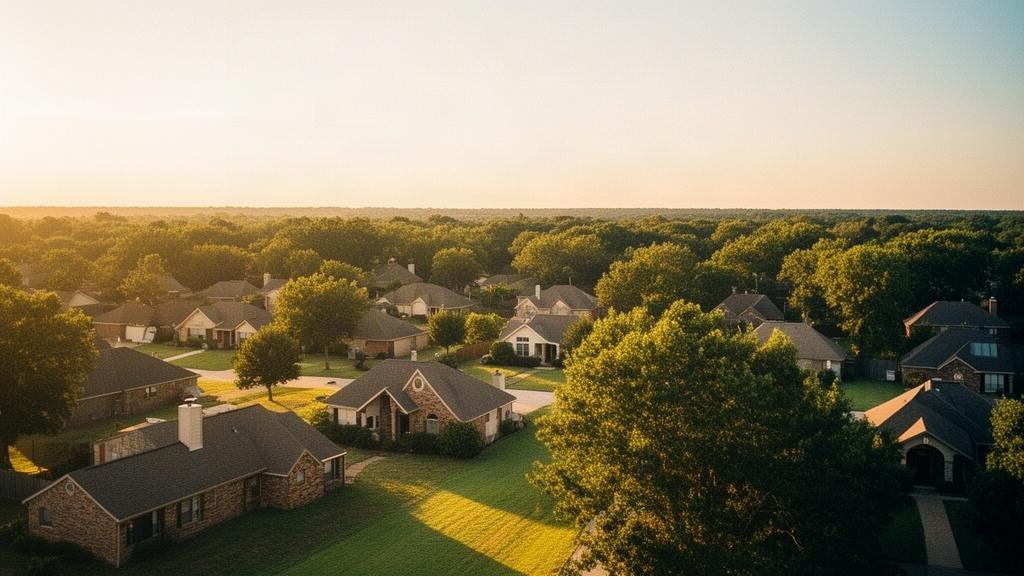
Lafayette's neighborhoods each have a distinct physical character, price range, and lot pattern. Knowing what is actually there, including the age of the homes, the lot sizes, the street grid, and what is nearby, gives you a much clearer basis for comparing listings than any ranking system could. Every area described here is presented on its own terms so you can decide what fits your priorities.
Downtown Lafayette and the Near Northside
Downtown Lafayette centers on the Tippecanoe County Courthouse and the Main Street corridor, with restaurants, the Long Center for the Performing Arts, and the Wabash River Heritage Corridor trail system within walking distance. Housing here skews toward older two-story homes, some dating to the late 1800s and early 1900s, with narrow lots and detached garages. Prices for renovated homes in this pocket tend to run from the upper $150,000s to the low $250,000s. Unrenovated properties can be found below $130,000, though they typically require meaningful investment.
The Near Northside, roughly the area between downtown and the Ninth Street corridor, has a mix of Craftsman bungalows and two-family homes on tree-lined streets. Lot sizes here are typically 40 to 60 feet wide, and many homes have original woodwork and front porches. Buyers who want walkable access to downtown while staying in the sub-$200,000 range often look here first.
Happy Hollow and Columbian Park Area
The Happy Hollow neighborhood wraps around Columbian Park, which sits along the Wabash River and includes a public zoo, a pool complex, athletic fields, and picnic shelters. Homes in this area are predominantly mid-century ranches and split-levels, built between the 1950s and 1970s, on lots that typically run 70 to 90 feet wide. Prices here range from the low $180,000s for smaller ranches needing updates to the mid-$280,000s for larger, renovated properties with garages and finished basements.
Access to the Wabash Heritage Trail from this area is a draw for buyers who want outdoor recreation close to home. The trail runs along the river and connects to the bridge crossing into West Lafayette, making it possible to reach the Purdue campus by bike in under 20 minutes.
Murdock Park and the Southside Corridors
South Lafayette, including the areas around Murdock Park and along South 18th Street, contains a higher concentration of newer construction relative to the older core of the city. Subdivisions built in the 1990s and 2000s feature three and four-bedroom homes with attached two-car garages, larger lots in the quarter-acre range, and cul-de-sac street layouts. Prices in these subdivisions currently range from roughly $210,000 to $310,000 depending on square footage and updates.
Murdock Park itself offers tennis courts, a disc golf course, and open green space, and the area is within a short drive of the Sagamore Parkway commercial corridor for everyday errands. Interstate 65 access from the south side of Lafayette puts Indianapolis roughly 65 miles and about an hour's drive to the south, which matters for buyers who travel or commute regionally.
West Lafayette: Chauncey Hill to Happy Acres
West Lafayette's Chauncey Hill area, immediately adjacent to the Purdue campus on State Street, is dense with apartments, restaurants, and retail, but single-family homes are found within a few blocks in the surrounding residential streets. These homes tend to be smaller and older, with prices starting around $200,000 for a two-bedroom and climbing to $350,000 or more for larger updated properties. The Happy Acres neighborhood, on the north side of West Lafayette, has larger lots, more mature tree canopy, and homes built primarily in the 1960s through 1980s, with prices typically ranging from $260,000 to $420,000.
4. Commute Times, Infrastructure, and What That Means for Home Values
Commute distance and drive time are among the most practical factors that shape where buyers choose to focus their search in Lafayette. Because the metro area is relatively compact, most buyers can reach their workplace within 15 to 25 minutes from nearly any neighborhood, but the specific route matters when roads like US-52, State Road 26, and Sagamore Parkway experience congestion during morning and evening peaks.
Getting Around the Twin Cities
The Wabash River divides Lafayette from West Lafayette, and the main crossings are the bridges on State Street, South Street, and the US-52 bypass. State Street is the most heavily used and can back up during Purdue's class change hours and major event days. Buyers who need to cross the river daily should factor in which bridge they will use and at what time. The CityBus public transit system connects both cities and runs routes to Purdue, downtown Lafayette, and the Sagamore Parkway commercial areas, which is relevant for buyers who prefer not to drive.
Proximity to Major Employers
IU Health Arnett Hospital is located on the north side of Lafayette off US-52, making neighborhoods on the north and northwest sides of the city particularly convenient for healthcare workers. Subaru of Indiana Automotive, one of the county's largest private employers with roughly 6,500 workers, is located in Lafayette off State Road 38. Buyers employed there often look at homes on the north and east sides of the city to minimize their daily drive. Wabash National, another major manufacturer, operates on the south side of Lafayette near I-65, which makes the southside subdivisions practical for workers there.
Home values within a 10-minute drive of major employers have historically held their value well in Lafayette, because demand from workers provides a consistent baseline even when the broader market softens. That pattern is worth keeping in mind when evaluating a home's long-term resale potential.
5. Timing the Lafayette Market: When to Buy and When to Sell
Lafayette's seasonal market patterns are real and measurable, and knowing them can save buyers money and help sellers maximize their return. The university calendar layered on top of the standard spring-summer real estate cycle creates a market that peaks earlier and more sharply than most Indiana cities of comparable size.
Spring and Summer Surge
March through July is the most active stretch of the Lafayette market each year. New listings come on in volume starting in late February and early March, and buyer competition peaks between April and June when incoming Purdue faculty and staff are actively searching alongside traditional spring buyers. Sellers who list in this window typically see the most showings, the fastest offers, and the strongest prices. Buyers in this window face the most competition and should be pre-approved and ready to move quickly.
Fall and Winter Opportunities
August through February is when buyer competition cools and negotiating room opens up. Sellers who list in the fall are often more motivated, and homes that have been sitting since the spring surge are sometimes repriced, creating genuine value for patient buyers. This is the window where buyers with flexibility can find homes that have had price reductions, negotiate seller-paid closing costs, or take more time to do thorough inspections without worrying about being outbid overnight.
Inventory does shrink in winter, so the tradeoff is fewer choices. But for buyers who know exactly what they want and can act when the right property appears, September through January can be a productive time to be in the market in Lafayette.
What Timing Means for Your Offer Strategy
Timing is not just about the calendar; it is about where a specific property sits in its own listing cycle. A home that has been on the market for 30 days in April is a different negotiating situation than the same home listed fresh in November. Understanding days-on-market data, price history, and how a listing's timeline aligns with the broader seasonal pattern is the kind of local intelligence that makes a real difference in what you pay or accept.
For a deeper look at whether right now is a good moment to act, the article on whether it is a good time to buy in Lafayette walks through the current interest rate environment, inventory levels, and what waiting typically costs buyers in this market.
Sellers planning their timeline should also review the detailed breakdown in the guide on selling a home in Lafayette, Indiana, which covers pricing strategy, how long the process typically takes, and what to expect at each stage.
FAQ
What is the current median home price in Lafayette, Indiana?
As of September 2026, the median sale price in Lafayette proper is in the low-to-mid $200,000s, with significant variation by neighborhood and property type. Entry-level homes under 1,400 square feet in established areas are trading in the $160,000 to $200,000 range, while updated four-bedroom homes on the south and west sides of the city are closing closer to $270,000 to $320,000. New construction in outer subdivisions is priced higher, typically from $280,000 to $380,000. West Lafayette runs above these figures due to its proximity to Purdue University and a higher share of newer construction. Checking current listings and recent sold data with a local agent gives the most accurate picture for any specific neighborhood.
How long does it take to sell a home in Lafayette, Indiana?
Well-priced, move-in-ready homes in Lafayette are currently going under contract in roughly 10 to 20 days. Homes that are priced above market value or need significant updates are sitting longer, sometimes 45 to 60 days or more. The time of year also matters: listings that come to market between March and June typically move the fastest because buyer demand peaks during that window, driven by both the standard spring market and incoming Purdue faculty and staff. Sellers who list in the fall or winter may see a slower pace but often deal with more motivated buyers. Pricing accurately from day one is the single biggest factor in how quickly a home sells.
Is Lafayette, Indiana a good market for relocation buyers?
Lafayette attracts a steady stream of relocation buyers because of Purdue University, major employers like Subaru of Indiana Automotive, Wabash National, and IU Health Arnett Hospital, and a price point that is meaningfully below what comparable homes cost in Indianapolis or Chicago. The metro area is compact enough that most addresses are within 15 to 25 minutes of the major employment centers, and the Wabash Heritage Trail, Columbian Park, and the downtown Long Center for the Performing Arts provide recreational and cultural options that many buyers from larger cities appreciate. Relocation buyers should factor in the university calendar when timing their search, since the April through June window is the most competitive. Working with a local agent who knows the specific neighborhoods and current inventory is especially valuable for buyers who are not yet familiar with the area.