← Back to Blog
Buying
Buying a Home in Monroe, Louisiana: Process, Costs and Timeline
By Kristen LeDent
Keller Williams Parishwide Partners
September 24, 2026 · 11 min read
Buying a home in Monroe, Louisiana involves more moving parts than most first-timers expect, from lender pre-approval and Louisiana-specific contract requirements to closing costs that often catch buyers off guard. This guide walks through the full process, the real numbers behind it, and how long each stage typically takes in the Monroe market right now.
1. What to Do Before You Start Shopping
The preparation stage is the most important part of buying a home in Monroe, Louisiana. Buyers who skip it spend weeks looking at homes they cannot qualify for, then scramble when they find one they love. Getting your finances and paperwork in order before you ever walk through a front door saves you time and negotiating power.
Get Your Finances in Order First
Pull your credit reports from all three bureaus before you contact a lender. In Monroe's current market, most conventional loan programs want to see a credit score of at least 620, though FHA loans allow scores down to 580 with a 3.5 percent down payment. If your score is below those thresholds, a local lender can help you map out a 60 to 90 day plan to improve it before you apply.
Gather two years of tax returns, your two most recent pay stubs, two months of bank statements, and any documentation of other income sources before your first lender meeting. Lenders in the Monroe area will ask for all of this, and having it ready speeds up the pre-approval process from several days to sometimes just 24 hours.
Understand Your Loan Options in Louisiana
Louisiana has several programs worth knowing about before you choose a loan. The Louisiana Housing Corporation offers the Mortgage Revenue Bond program, which provides below-market interest rates and down payment assistance to qualifying buyers. Income and purchase price limits apply, and Monroe's Ouachita Parish falls within the program's eligible areas. USDA Rural Development loans are also worth exploring for properties in the outer edges of the parish, where eligible zones can include areas closer to the city than buyers typically expect.
VA loans are widely used in Monroe given the proximity to Barksdale Air Force Base in Bossier City, about 90 miles west on I-20. If you are an eligible veteran or active-duty service member, a VA loan requires no down payment and no private mortgage insurance, which meaningfully reduces your monthly payment compared to a conventional loan at the same purchase price.
2. The Home Search Process in Monroe
Monroe's housing market offers a wide range of price points and architectural styles across a relatively compact city. Understanding how that inventory is organized helps you focus your search from the start rather than wasting weekends on homes that do not fit your priorities.
How Monroe's Housing Stock Is Organized
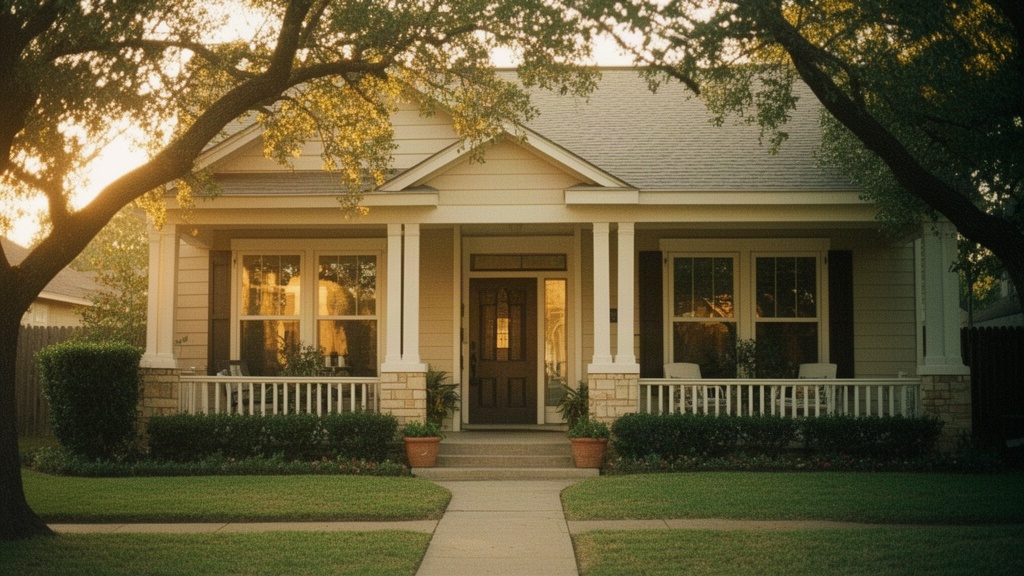
Monroe's established neighborhoods sit mostly between the Ouachita River to the west and Bayou DeSiard to the east, with Forsythe Avenue serving as a central spine through much of the older residential fabric. The Garden District, which runs along South Grand Street and the surrounding blocks, features brick cottages, craftsman bungalows, and larger two-story homes built primarily between the 1920s and 1950s. Lot sizes in that area typically run from about 6,000 to 10,000 square feet, and prices in September 2026 generally range from the low $200,000s to the mid $400,000s depending on size and condition.
The areas along Bayou DeSiard, including parts of the Bon Aire and Riverside neighborhoods, tend to carry higher price tags, with waterfront and water-view properties often listing above $400,000 and ranging well into the $700,000s for larger estates. If you want more detail on that corridor specifically, the guide on buying a home in Bayou DeSiard covers the process and price ranges there in depth.
Newer construction is concentrated in the northeastern and southern parts of the city, particularly around the Louisville Avenue corridor and out toward Cypress Street. Those subdivisions feature ranch-style and traditional homes built from the 1980s through the present, with larger lots and attached garages more common than in the older core neighborhoods. The Monroe real estate market guide has a broader breakdown of price ranges by area if you are still narrowing down where to focus.
Working With a Buyer's Agent After the NAR Settlement
The real estate industry changed in mid-2024 when the National Association of Realtors reached a settlement that altered how buyer's agent compensation works. Buyers now sign a written agreement with their agent before touring homes, and that agreement spells out the compensation structure upfront. In practice, many Monroe sellers still offer to cover the buyer's agent fee as part of the transaction, but it is no longer automatic. The HousingWire analysis of the NAR settlement explains the mechanics clearly if you want to understand the full picture before signing anything.
For buyers in Monroe, this means one conversation you should have with your agent before you tour your first property: how is their compensation structured, and what happens if the seller does not offer to cover it. Most experienced local agents will walk you through this clearly. It is a straightforward conversation, and understanding it puts you in a much stronger position at the negotiating table.
3. Making an Offer and Navigating the Contract
Once you find the right home, the offer and contract stage moves quickly in Monroe's current market. Knowing what goes into a Louisiana purchase agreement and what your inspection rights look like helps you make decisions with confidence rather than anxiety.
What Goes Into a Louisiana Purchase Agreement
Louisiana uses its own standard purchase agreement form developed through the Louisiana Realtors association, and it differs from contracts used in many other states. Key elements include the purchase price, earnest money deposit amount, financing contingency terms, inspection period length, and the closing date. Earnest money deposits in Monroe typically run between 1 and 2 percent of the purchase price. On a $250,000 home, that means $2,500 to $5,000 deposited into escrow within a few days of acceptance.
Louisiana is a community property state, which has implications for married buyers. Both spouses generally need to sign the purchase agreement and the closing documents, even if only one spouse is on the mortgage. Your agent and closing attorney will flag this early so it does not cause delays at the table.
Inspection and Due Diligence in Monroe
The inspection period in a typical Monroe contract runs 10 to 15 days from acceptance. During that window, you have the right to hire a licensed home inspector and, if needed, specialists for foundation, electrical, plumbing, or roof issues. General home inspections in Monroe run between $300 and $500 depending on the size and age of the home. Older homes in the Garden District or Forsythe Avenue corridor sometimes warrant additional inspections for knob-and-tube wiring or cast iron drain lines, which can add $150 to $300 per specialist.
Louisiana's disclosure law requires sellers to complete a Property Disclosure document covering known defects, but the state uses a caveat emptor framework for certain as-is sales. This makes the inspection period especially important. Do not waive it to compete on price unless you have done a thorough walkthrough with a contractor and understand exactly what you are accepting.
4. The Real Costs of Buying a Home in Monroe, Louisiana
The purchase price is only part of what you will spend when buying a home in Monroe, Louisiana. Buyers consistently underestimate the upfront and closing costs, which can add 3 to 5 percent to the total outlay beyond the down payment. Planning for these numbers in advance prevents the kind of last-minute scramble that derails closings.
Upfront Costs Before Closing
Before you reach the closing table, you will spend money on several items that are not refundable if the deal falls through outside of your contingency windows. The appraisal, ordered by your lender, typically costs $450 to $600 in the Monroe area. The home inspection runs $300 to $500. If you are purchasing a home with a well or septic system, those inspections add another $200 to $400. Earnest money is also paid upfront, though it applies toward your closing costs if the deal closes.
What to Expect at the Closing Table
Closing costs for buyers in Monroe generally run between 2 and 4 percent of the loan amount. On a $250,000 purchase with a $237,500 loan, that translates to roughly $4,750 to $9,500 in closing costs. Those costs include lender origination fees, title search and title insurance, the closing attorney fee, prepaid homeowners insurance, prepaid property taxes, and mortgage interest from the closing date to the end of the month.
Louisiana requires that real estate closings be handled by a licensed closing attorney, not a title company acting alone as in some other states. Attorney fees in Monroe typically run $500 to $900. Title insurance, which protects you against defects in the chain of title, generally costs $700 to $1,200 on a $250,000 purchase. Both are standard and worth every dollar given Louisiana's complex property law history.
Property taxes in Ouachita Parish are assessed at a rate that makes Monroe one of the more affordable ownership markets in the state. Louisiana's homestead exemption removes the first $75,000 of assessed value from taxation for a primary residence, which meaningfully reduces the annual tax bill. At closing, you will prepay a prorated portion of the current year's taxes into escrow. For a full breakdown of what property taxes look like on specific price points, the dedicated article on average closing costs for Monroe buyers walks through each line item in detail.
Homeowners insurance is another cost to budget carefully. Louisiana's insurance market has tightened significantly since 2020, and Monroe buyers should expect annual premiums of $1,800 to $3,500 on a typical single-family home depending on the age of the roof, construction type, and coverage limits. Your lender will require proof of insurance before closing, so shop for quotes as soon as you are under contract.
5. How Long the Buying Process Takes in Monroe
From the day you start your pre-approval to the day you get your keys, buying a home in Monroe typically takes 60 to 90 days for most buyers. That window can compress to 45 days for cash buyers or expand to 120 days or more if you encounter financing complications, title issues, or a slow seller. Understanding the stages helps you set realistic expectations from the start.
Typical Timeline From Pre-Approval to Keys
Pre-approval takes 1 to 5 business days once you submit a complete application with all required documents. The home search phase varies widely. According to the NAR's 2024 Profile of Home Buyers and Sellers, the typical buyer searches for about 10 weeks and tours a median of 7 homes. In Monroe's market right now, active inventory has stabilized enough that most buyers find a home they want to offer on within 4 to 8 weeks of starting their search.
Once you are under contract, the closing timeline is largely driven by your lender. Conventional loans in Monroe typically close in 30 to 45 days from contract acceptance. FHA and VA loans can take 35 to 50 days. USDA loans sometimes run 45 to 60 days because of the additional government review layer. Cash purchases can close in as few as 10 to 14 days if the title search comes back clean.
The inspection period, repair negotiation, and appraisal all happen within that closing window. If you request repairs after the inspection and the seller agrees, the work needs to be completed before closing and typically verified by a re-inspection or walk-through. Budget an extra 5 to 10 days in your mental timeline for that back-and-forth.
What Can Slow Things Down Locally
A few Monroe-specific factors can extend your closing timeline if you are not prepared for them. Title searches on older properties in established neighborhoods like South Monroe or the Garden District occasionally surface issues such as unresolved successions, which is Louisiana's term for the legal process of transferring property after a death. If a prior owner passed away and the property was never formally transferred through the courts, it has to be resolved before the title can be insured. This can add 2 to 6 weeks to a closing in the worst cases.
Flood zone determination is another step that sometimes surprises buyers new to Louisiana. Monroe sits along the Ouachita River, and portions of the city fall within FEMA-designated flood zones. If the property you are buying is in a Special Flood Hazard Area, your lender will require flood insurance in addition to standard homeowners insurance. Flood insurance through the National Flood Insurance Program can add $800 to $2,500 per year depending on the elevation certificate and coverage level. Your agent should flag flood zone status early in the search so it does not blindside you after you are under contract.
If you are also weighing whether the timing of your purchase matters, the article on buying in fall 2026 versus waiting until spring covers how Monroe's seasonal market patterns affect inventory and negotiating leverage.
FAQ
Do I need a lawyer to buy a home in Monroe, Louisiana?
Yes, Louisiana law requires that a licensed closing attorney handle the final closing on a real estate transaction, which differs from many other states where a title company can close independently. The attorney prepares the act of sale, reviews the title, and oversees the signing of all documents. In Monroe, closing attorney fees typically run $500 to $900 and are paid at closing. You do not need to hire your own separate attorney as a buyer, though you may choose to if you want independent legal counsel reviewing your contract before you sign.
How much do I need for a down payment to buy a home in Monroe?
The amount depends on your loan type. FHA loans require 3.5 percent down for buyers with a credit score of 580 or higher, which means $8,750 on a $250,000 home. Conventional loans can go as low as 3 percent down for first-time buyers, though putting down less than 20 percent adds private mortgage insurance to your monthly payment. VA and USDA loans require no down payment for eligible buyers. Louisiana Housing Corporation programs also offer down payment assistance that can cover part or all of the required down payment for qualifying income levels, so it is worth asking your lender about those options before you assume you need to save a large lump sum.
Is Monroe a buyer's market or a seller's market right now?
As of September 2026, Monroe is operating in a relatively balanced market with pockets of stronger seller activity in the most in-demand price ranges, particularly homes priced between $180,000 and $280,000 that are move-in ready. Inventory has grown compared to the ultra-low supply years of 2021 and 2022, giving buyers more options and more room to negotiate on price and repairs than they had a few years ago. Homes that are priced accurately and in good condition still move within the first two to three weeks on market. Overpriced or deferred-maintenance properties are sitting longer, which creates opportunity for buyers willing to look past cosmetic issues. The article on which Monroe zip codes have homes selling fastest right now has current data on where competition is tightest.