← Back to Blog
Local Living
Is Santa Clarita a Good Place to Live? What You Actually Need to Know Before Moving Here
By Larry Fleischman
REMAX of Santa Clarita · DRE# 01352901
September 17, 2026 · 12 min read
If you are asking whether Santa Clarita is a good place to live, the short answer is that it offers a distinctive combination of suburban space, outdoor access, and relative proximity to Los Angeles that is hard to find at the same price point anywhere else in Southern California. This guide covers what life here looks like day to day: housing costs, commute realities, parks and recreation, schools, local economy, and the trade-offs worth knowing before you commit.
1. What Santa Clarita Is and Where It Sits
Santa Clarita is a city of roughly 230,000 people located in the northwestern corner of Los Angeles County, about 30 miles north of downtown Los Angeles. It sits at the southern end of the Santa Clarita Valley, surrounded by the San Gabriel Mountains to the east, the Santa Susana Mountains to the west, and the Angeles National Forest to the north. That geography is not incidental; it shapes daily life here in a way that is immediately noticeable when you arrive.
The city was incorporated in 1987 and is one of the largest cities in Los Angeles County by land area, covering about 53 square miles. Because it was built largely in the post-war and modern suburban era, the street grid is wide, parking is plentiful, and the housing stock skews newer than what you find in the San Fernando Valley or on the Westside. That newness has both advantages and limitations, which this guide will get into.
Geography and Layout
The Santa Clarita Valley is a broad, relatively flat basin interrupted by low hills and canyon corridors. The two main freeways, Interstate 5 and State Route 14, intersect near the center of the city, making it easy to move around the valley itself. The I-5 runs south toward the San Fernando Valley and north toward Ventura County; the SR-14 cuts northeast toward the Antelope Valley. Most residents commute via one of these two corridors.
The Four Main Communities
Santa Clarita is made up of four main communities: Valencia, Saugus, Canyon Country, and Newhall. Valencia is the most planned of the four, built around a paseo system of pedestrian paths and greenbelts that connect neighborhoods to parks and shopping. Saugus sits to the east of Valencia and includes a mix of tract homes, hillside properties, and newer master-planned communities. Canyon Country occupies the eastern end of the valley and tends to offer larger lots and more varied terrain. Newhall is the oldest area of the city, with a historic Old Town district, walkable streets, and a concentration of arts venues and locally owned restaurants.
Each community has its own character and price range. If you want a deeper look at what day-to-day life looks like in one specific part of the city, the article on living in the Valencia neighborhood of Santa Clarita goes into the paseo system, local amenities, and what buyers find when they shop that submarket.
2. Housing Costs and What Your Money Gets You
Housing in Santa Clarita runs significantly less expensive than the Westside of Los Angeles or the beach cities, while still offering newer construction, larger floor plans, and more outdoor space per dollar. As of September 2026, the median single-family home price in Santa Clarita sits in the mid-to-upper $800,000 range, depending on the community and the specific street. Condos and townhomes start considerably lower, with entry-level attached units available in the $450,000 to $550,000 range in some parts of Valencia and Canyon Country.
Current Price Ranges
Newhall tends to offer the lowest entry points for detached homes, with smaller older houses sometimes available in the $650,000 to $750,000 range. Valencia and Saugus command a premium, particularly in newer master-planned communities where homes built in the last ten to fifteen years come with open floor plans, two- and three-car garages, and HOA-maintained common areas. Canyon Country sits somewhere in between, with larger lots compensating for homes that may be older or further from the freeway.
At the upper end, Santa Clarita has a meaningful luxury segment. Custom homes and newer construction in gated communities in Stevenson Ranch, West Hills adjacent areas, and parts of Valencia's Westridge development can reach $1.5 million to $2.5 million and above. The luxury home market in Santa Clarita has its own dynamics and buyer pool, separate from the broader mid-market.
Housing Types Across the City
The dominant housing type in Santa Clarita is the detached single-family home, typically built between 1985 and 2015, with two to four bedrooms and a private yard. Lot sizes vary considerably. In older parts of Newhall and Canyon Country, lots of 6,000 to 9,000 square feet are common. In newer planned communities, builders often squeezed homes closer together, so you may find lots of 4,000 to 5,500 square feet with more interior square footage instead.
Condos and townhomes are concentrated in Valencia and parts of Saugus, often within walking distance of shopping centers and the paseo trail network. These attached units are popular with first-time buyers and those relocating from higher-cost coastal markets who want to build equity without stretching their budget. New construction is also active in Santa Clarita right now, with several master-planned communities adding inventory in 2026 across multiple price points.
3. Outdoor Space, Parks, and Daily Amenities
Outdoor access is one of the most concrete advantages of living in Santa Clarita, and it is not something you have to drive far to reach. The city maintains over 70 parks and more than 100 miles of maintained multi-use trails that connect neighborhoods, open space, and regional destinations. That trail infrastructure is built into the fabric of the city, not an afterthought.
Trails and Open Space
The Santa Clara River Trail runs through the valley floor and connects to regional trail systems extending into the Angeles National Forest. Placerita Canyon State Park sits just east of Newhall and offers shaded canyon hiking with oak woodland habitat. Towsley Canyon and Ed Davis Park in Towsley Canyon, both within the Santa Monica Mountains National Recreation Area at the southern edge of the valley, provide more rugged terrain with canyon views. Vasquez Rocks Natural Area, about 20 minutes northeast on the SR-14, is a distinct geological landmark used for hiking, photography, and film production for decades.
Valencia's paseo system deserves specific mention because it is genuinely unusual for a Southern California suburb. These pedestrian greenbelts run behind homes and through parks, allowing residents to walk or bike from their neighborhoods to shopping centers, schools, and community parks without crossing a major street. The system covers much of western Valencia and is one of the features that distinguishes that community from comparable-priced suburbs elsewhere in the county.
Shopping, Dining, and Entertainment
Daily errands are straightforward in Santa Clarita. The Westfield Valencia Town Center is the primary regional mall, anchored by major department stores and surrounded by a large concentration of chain restaurants, movie theaters, and retail. The Promenade at Westfield and the surrounding commercial corridors on McBean Parkway and Valencia Boulevard handle most of the everyday shopping needs for the western part of the city.
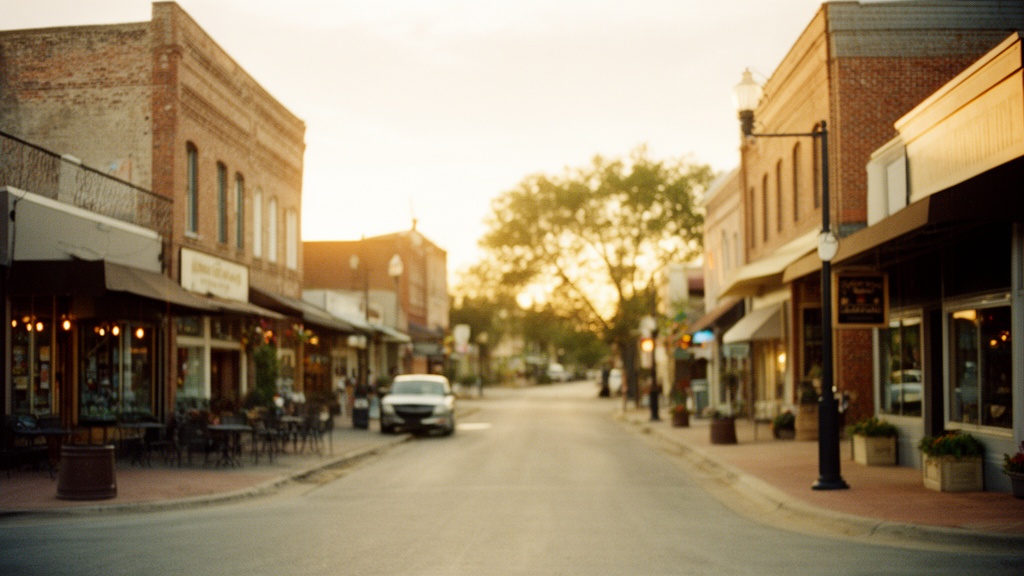
Old Town Newhall has developed into the city's most concentrated walkable dining and arts district over the past decade. The stretch of Main Street through Old Town includes independent restaurants, wine bars, a performing arts center, and the Canyon Theatre Guild, one of the valley's longest-running community theater organizations. The Laemmle Newhall, a local art-house cinema, screens independent and foreign films alongside mainstream releases. Six Flags Magic Mountain and Hurricane Harbor sit at the southern edge of the city near the I-5, making them accessible for residents in a way that visitors from elsewhere in LA do not experience.
Healthcare infrastructure in Santa Clarita is substantial for a city its size. Henry Mayo Newhall Hospital is a full-service acute care facility with over 350 beds, located in Valencia near the freeway interchange. Several urgent care centers and specialty medical offices are distributed across the valley, reducing the need to travel into the San Fernando Valley or Los Angeles for routine care.
4. Commuting Out of Santa Clarita
The commute question is the one most people ask first when considering whether Santa Clarita is a good place to live, and it deserves an honest answer. If you work locally within the Santa Clarita Valley, commuting is generally straightforward. If you commute to Los Angeles, the experience depends heavily on your destination, your schedule, and your tolerance for traffic.
The I-5 and SR-14 Reality
Driving south on the I-5 from Santa Clarita toward the San Fernando Valley during peak morning hours means navigating the Newhall Pass, a bottleneck where the freeway narrows and traffic regularly backs up. From Valencia to the 405 interchange in the Valley, the drive is roughly 20 to 25 miles and can take anywhere from 30 minutes at off-peak times to 60 to 75 minutes during heavy congestion. From there, reaching downtown Los Angeles, Burbank, or the Westside adds additional time depending on direction.
The SR-14 provides an alternative route for those heading toward Burbank, Glendale, or the eastern San Fernando Valley. It connects to the I-210 freeway, which can be faster than the I-5 corridor for certain destinations. Many Santa Clarita residents who work in Burbank or at the studios find the SR-14 to I-210 route more manageable than the I-5 south. For a full breakdown of commute options and realistic time estimates, the article on commuting from Santa Clarita to downtown Los Angeles covers each route in detail.
Metrolink and Alternative Options
Metrolink's Antelope Valley Line runs through Santa Clarita with stations in Newhall, Valencia/Santa Clarita, and Via Princessa. The train connects to Union Station in downtown Los Angeles, with scheduled runs that take approximately 55 to 65 minutes depending on the departure station and stops. For commuters whose offices are near Union Station or accessible from it, Metrolink is a viable daily option that sidesteps the freeway entirely.
Santa Clarita Transit operates local bus service within the valley, and the city has invested in park-and-ride facilities near the Metrolink stations. Remote and hybrid work arrangements have changed how many Santa Clarita residents think about the commute. For households where one or both earners work from home two or more days per week, the distance from Los Angeles becomes much less of a daily concern.
5. Schools, Economy, and Practical Considerations
Understanding the full picture of what it means to live in Santa Clarita requires looking at the school district, the local job market, and the practical trade-offs that come with any suburban location of this type. These are areas where doing your own research matters, and this section points you toward the right sources.
School District Overview
Most of Santa Clarita is served by the William S. Hart Union High School District at the secondary level, and by the Saugus Union, Newhall, and William S. Hart elementary districts at the primary level, depending on the specific address. Because school assignment is address-specific, buyers should verify which school serves a particular property directly through the relevant district's enrollment office. For objective data on school performance and programs, the California Department of Education's School Dashboard at cde.ca.gov is the authoritative source. Decisions about schools are personal, and researching them directly through official channels gives you the most accurate picture.
College of the Canyons, a community college with campuses in Valencia and Canyon Country, serves the valley and offers a range of degree and certificate programs. California Institute of the Arts, known as CalArts, is located in Valencia and draws students and faculty from across the country and internationally, contributing to the arts and cultural presence in the area.
Local Jobs and Economy
Santa Clarita has a diversified local economy that has grown significantly since the city's incorporation. The industrial and business park areas along the I-5 corridor, particularly in the Valencia Commerce Center and surrounding zones, house a mix of manufacturing, logistics, aerospace suppliers, and technology companies. Princess Cruises has its headquarters in Santa Clarita. The entertainment industry has a presence through Sable Ranch and other production facilities that take advantage of the valley's varied terrain and proximity to Hollywood.
Healthcare, education, and retail are also significant local employers. Henry Mayo Newhall Hospital, the William S. Hart Union High School District, and College of the Canyons together employ thousands of valley residents. For buyers who can work locally, the commute equation changes entirely, and the quality-of-life argument for Santa Clarita becomes considerably stronger.
Trade-Offs Worth Knowing
No city is without trade-offs, and Santa Clarita is no exception. The valley sits in a fire-adjacent zone. Parts of the city, particularly hillside areas in Saugus, Canyon Country, and the edges of Stevenson Ranch, carry wildfire risk that buyers should evaluate carefully. California's FAIR Plan and private fire insurance markets are a real consideration for homes in high-hazard zones, and insurance costs have increased meaningfully across the region in recent years. Buyers should obtain insurance quotes before removing contingencies on any hillside or brush-adjacent property.
Summer temperatures in the Santa Clarita Valley run hotter than coastal Los Angeles. July and August highs regularly reach the high 90s to low 100s Fahrenheit, and the valley does not benefit from the marine layer that moderates temperatures near the coast. Air conditioning is not optional; it is a baseline necessity, and utility costs during summer months reflect that. Winters are mild, with temperatures rarely dropping below freezing in the valley floor, and the surrounding mountains occasionally receive snow, which is visible from the city without requiring a drive.
Property taxes in Santa Clarita follow California's Proposition 13 framework, with a base rate of 1% of assessed value plus additional Mello-Roos and special assessment levies that vary by community and development. Newer communities in particular often carry Mello-Roos assessments that add several thousand dollars per year to the effective tax burden. Understanding the full tax picture before making an offer is important, and the article on property taxes in Santa Clarita breaks down how these are calculated and what to look for in a disclosure.
For people considering a move here from outside California, the article on relocating to Santa Clarita from out of state covers the practical logistics of the process, including timelines, cost-of-living comparisons, and neighborhood considerations for buyers who are navigating the move from a distance.
Independent sources have weighed in on the question of whether Santa Clarita is a good place to live. U.S. News Real Estate has included Santa Clarita among its national rankings of places to live, citing its mix of outdoor access, housing options, and proximity to Los Angeles. You can read their full analysis at U.S. News Real Estate's Santa Clarita profile for a data-driven overview of how the city compares on various livability metrics.
FAQ
Is Santa Clarita a good place to live if I work in Los Angeles?
It depends on where in Los Angeles you work and how often you need to be there in person. For people who commute to downtown LA via Metrolink, the train takes roughly 55 to 65 minutes from the Santa Clarita stations and avoids the freeway entirely. For drivers heading to the Westside or Century City, the commute can be 60 to 90 minutes each way during peak hours, which is a meaningful daily commitment. Many Santa Clarita residents who work in LA have shifted to hybrid schedules, which makes the distance much more manageable. The value you get in housing space and outdoor access per dollar spent is the trade-off most residents say makes it worthwhile.
How much does it cost to buy a home in Santa Clarita in 2026?
As of September 2026, the median price for a single-family home in Santa Clarita is in the mid-to-upper $800,000 range, with variation across the four main communities. Newhall tends to offer lower entry points, sometimes in the $650,000 to $750,000 range for older detached homes. Valencia and Saugus command higher prices, particularly in newer master-planned developments. Condos and townhomes start in the $450,000 to $550,000 range in some parts of the city, making them a common entry point for first-time buyers. Buyers in newer communities should also factor in Mello-Roos assessments, which can add several thousand dollars annually to the effective cost of ownership.
What are the main things to consider before moving to Santa Clarita?
The commute to Los Angeles is the first thing to evaluate honestly, particularly if you drive daily. Wildfire risk is a genuine consideration for hillside and brush-adjacent properties, and insurance costs in those zones have increased significantly in recent years. Summer heat is real, with valley temperatures regularly reaching the high 90s to low 100s in July and August, so utility costs are higher than in coastal communities. Mello-Roos assessments in newer developments can add substantially to the annual cost of ownership beyond the base property tax rate. On the other side of the ledger, the city offers over 100 miles of trails, a large regional park system, a walkable historic district in Old Town Newhall, and housing stock that is generally newer and more spacious than comparable-priced options closer to the coast.