
← Back to Blog
Market Trends
Rogers, Arkansas Real Estate Market Guide: Why Local Realtors Refer Their Clients Here and What You Need to Know About Prices, Neighborhoods and Timing
By Laura Maxwell
The Sudar Group
September 30, 2026 · 11 min read
If you have heard that local realtors across Northwest Arkansas refer their clients to Rogers, Arkansas, there is a straightforward reason: the Rogers real estate market consistently delivers a range of housing options, price points, and infrastructure that few other cities in the region can match. This guide covers what you actually need to know about current prices, distinct neighborhoods, and the timing considerations that shape every buying and selling decision here.
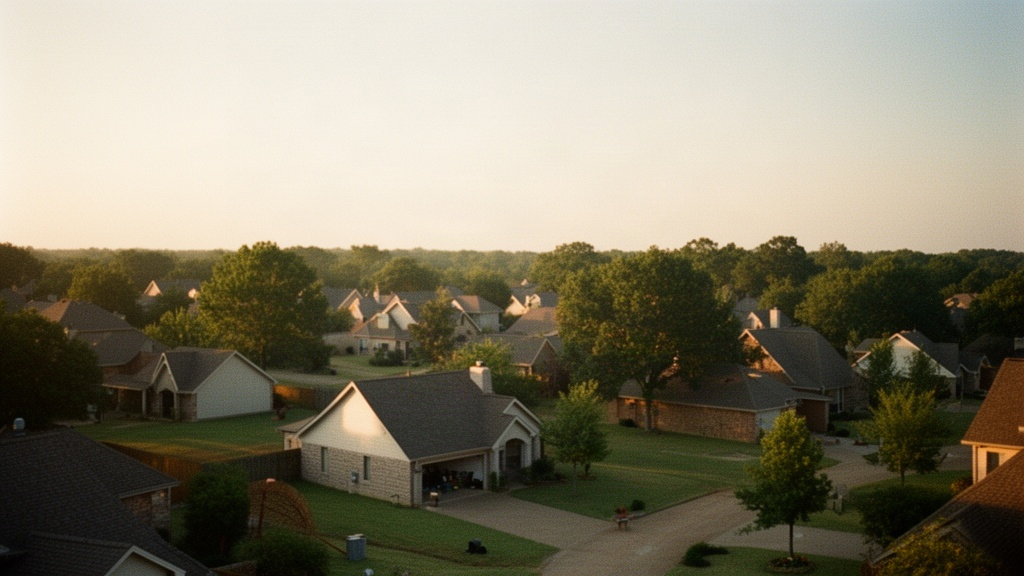
1. Why Rogers, Arkansas Draws Referrals from Local Realtors
Rogers, Arkansas is a referral destination because it offers something genuinely rare: a functioning city with its own economic base, diverse housing stock across a wide price spectrum, and physical access to the broader Northwest Arkansas metro. When agents in Bentonville, Fayetteville, or Springdale have clients who cannot find what they need locally, Rogers is often the next call.
What Makes Rogers a Referral Destination
The city sits at the center of the Northwest Arkansas metro. Bentonville is roughly 12 miles north via I-49, Fayetteville is about 25 miles south, and Springdale sits in between. That geography means a buyer who works at the Walmart Home Office in Bentonville, a distribution center in Springdale, or a hospital in Fayetteville can all reasonably commute from Rogers without living on the outer fringe of the metro.
Rogers also has its own employment base. The Walmart AMP outdoor amphitheater on South 52nd Street draws large events and supports local hospitality employment. The Pinnacle Hills commercial corridor along Highway 49 hosts major retailers, restaurants, and medical offices. Arvest Ballpark on South 56th Street anchors a sports and entertainment district. These local anchors mean the city is not purely a bedroom community; it has its own economic activity that supports long-term housing demand.
Infrastructure and Amenities That Support the Market
Lake Leatherwood City Park covers more than 1,600 acres inside the Rogers city limits, offering mountain bike trails, equestrian paths, and camping. Beaver Lake, a 28,000-acre Corps of Engineers reservoir, sits just east of the city and provides boating, fishing, and waterfront real estate options that no other Northwest Arkansas city can match at that scale. The Railyard district near downtown connects to the Razorback Greenway, a 38-mile paved trail system linking Rogers to Bentonville and Fayetteville.
These physical features translate directly into buyer demand. Clients who want outdoor access, lake proximity, or trail connectivity find Rogers difficult to replicate elsewhere in the metro, which is exactly why agents across Northwest Arkansas send their clients here.
2. Current Home Prices in Rogers, Arkansas
The Rogers market is active and competitive as of September 2026. Median sale prices have climbed steadily over the past several years, driven by persistent in-migration to Northwest Arkansas from larger metro areas and continued employer growth in the region. You can review current trend data directly on Redfin's Rogers housing market page, which is updated regularly with median prices, days on market, and sale-to-list ratios.
What the Numbers Look Like in September 2026
Median home prices in Rogers currently sit in the low-to-mid $300,000s for the overall city, though that figure spans a wide range depending on location, size, and condition. Entry-level attached townhomes and older ranch-style homes in parts of south Rogers can be found in the $220,000 to $270,000 range. Mid-range single-family homes in established subdivisions typically land between $300,000 and $450,000. Larger homes in the Pinnacle Hills area and newer construction communities north of Pleasant Grove Road frequently price from $450,000 into the $700,000s and beyond.
Days on market for well-priced homes in Rogers have remained relatively short. Homes priced accurately for their condition and location are still moving in under 30 days in most cases, though overpriced listings are sitting longer than they did during the peak years of 2021 and 2022. Sellers who price correctly from the start continue to see strong results; you can read more about how pricing strategy affects your final number in this article on getting the highest sale price in Rogers.
Price Ranges by Housing Type
Condos and townhomes: These make up a smaller share of the Rogers inventory compared to single-family homes, but they exist primarily along the Pinnacle Hills corridor and near the downtown area. Prices generally range from the high $100,000s to the low $300,000s depending on finish level and location.
Single-family resale homes: This is the dominant housing type in Rogers. The city has substantial inventory of homes built between the 1970s and early 2000s, particularly in south and central Rogers, where lot sizes tend to be larger and prices per square foot are lower than newer construction areas.
New construction: Several active subdivisions are currently under construction in Rogers, particularly in the northwest quadrant of the city near the Benton County line. Base prices for new builds start around $350,000 and move well above $600,000 for larger floor plans with premium lots. For a full breakdown of what is currently being built, see this guide to new construction subdivisions in Rogers in 2026.
3. Rogers Neighborhoods: What Each Area Actually Offers
Rogers covers more than 40 square miles and contains a variety of distinct areas, each with different housing stock, price points, lot sizes, and proximity to amenities. Understanding what each part of the city physically offers is the most useful starting point for any buyer or relocating household.
Pinnacle Hills and the Highway 49 Corridor
The Pinnacle Hills area in west Rogers is the city's most commercially developed zone. The Pinnacle Hills Promenade mall, a dense concentration of restaurants along Promenade Boulevard, and multiple medical facilities are all within a short drive of the residential neighborhoods that surround the corridor. Homes here tend to be newer construction, built primarily from the late 1990s through the 2010s, with prices generally starting in the mid $300,000s and climbing well above $700,000 for larger homes on premium lots.
Lot sizes in Pinnacle Hills subdivisions are typically smaller than in older Rogers neighborhoods, ranging from about 0.15 to 0.35 acres for most homes. HOA communities are common in this area; fees and what they cover vary considerably by subdivision. For specifics on what Rogers HOA fees typically include, this article on HOA fees in Rogers neighborhoods covers the details.
Downtown and Old Town Rogers
Downtown Rogers along First Street and the surrounding blocks contains one of the more architecturally distinct housing stocks in the metro. Craftsman bungalows, two-story foursquares, and early 20th-century cottages are common here, many of them sitting on lots of 0.10 to 0.25 acres with mature tree canopy. Prices for renovated homes in the Old Town area typically range from the mid $200,000s to the low $400,000s, while unrenovated properties can still be found below $200,000 in some cases.
The Railyard district connects this area to the Razorback Greenway trail system, and the concentration of locally owned restaurants, coffee shops, and small retail along First Street gives the neighborhood a walkable character that is uncommon elsewhere in Rogers. The Rogers Farmers Market operates here seasonally, and the historic Daisy Airgun Museum is a short walk from the main commercial strip.
North Rogers and Newer Subdivisions
North of Pleasant Grove Road and extending toward the Benton County line, Rogers transitions into newer residential development. Subdivisions in this area were largely built from 2010 onward, with many still actively under construction in 2026. Homes here tend to offer larger square footage, open floor plans, and more energy-efficient construction than older parts of the city. Prices generally start in the mid $300,000s for production builds and climb from there based on lot size and finish level.
This part of Rogers is also closest to the Bentonville city limits, which makes it a practical option for buyers who work in Bentonville but prefer the Rogers address and price point. The drive from north Rogers to the Walmart Home Office campus is typically 15 to 20 minutes depending on the specific subdivision and time of day.
The Dixieland Road Corridor
The Dixieland Road area in south Rogers is one of the more actively changing parts of the city right now. Commercial redevelopment along this corridor is bringing new retail and mixed-use projects that are reshaping what has historically been a more utilitarian part of Rogers. Residential options here include older single-family homes with larger lots, some manufactured housing, and a growing number of newer townhome and attached-unit developments. For a detailed look at what is changing along this corridor, see this article on Dixieland Road development in Rogers.
4. Timing the Rogers Market: When to Buy and When to Sell
Timing in the Rogers market follows recognizable seasonal patterns, though those patterns have been compressed by the intensity of demand that has characterized Northwest Arkansas over the past several years. Understanding the rhythm of the market helps both buyers and sellers make better decisions about when to act.
Seasonal Patterns in Rogers
Spring, specifically March through June, is historically the most active listing season in Rogers. More homes come to market, more buyers are actively searching, and sale prices tend to reach their seasonal peak during this window. Sellers who list in March or April typically benefit from the largest pool of competing buyers.
Fall, which is where the market sits right now in September 2026, brings a secondary wave of activity. Buyers who did not find a home in the spring often return to the market in August and September. Inventory tends to be lower than spring, which can work in a seller's favor on well-priced homes. For a more detailed read on whether right now is a good moment to list, this article on fall 2026 market conditions for Rogers sellers breaks it down specifically.
Winter, from November through February, is the slowest period for both listings and sales in Rogers. Buyers who search during this window face less competition for available homes, which can translate into more negotiating room on price and terms. Sellers who list in winter typically see fewer showings but often attract more serious buyers.
What Inventory Levels Are Doing Right Now
Inventory in Rogers has increased modestly compared to the extremely tight conditions of 2021 and 2022, but the market has not shifted into buyer's territory. As of September 2026, well-priced homes in the $300,000 to $450,000 range are still moving quickly, while homes above $600,000 are sitting on the market longer as that segment has more supply relative to demand. The entry-level segment below $275,000 remains highly competitive because supply at that price point is genuinely limited in Rogers.
For buyers, the current environment means preparation matters more than it did a few years ago. Getting pre-approved before you start touring homes, understanding your must-haves versus your nice-to-haves, and working with an agent who knows which neighborhoods have the most coming-soon inventory are all practical advantages in this market.
5. Key Costs and Considerations Before You Move
The purchase price is only one number in a Rogers real estate transaction. Property taxes, HOA fees, closing costs, and the choice between new construction and resale all affect your total cost of ownership in ways that are worth understanding before you make an offer.
Property Taxes, HOA Fees and Closing Costs
Arkansas has some of the lowest effective property tax rates in the country. In Benton County, where Rogers is located, the effective rate on a $400,000 home typically produces an annual tax bill in the range of $2,000 to $2,800 depending on the specific millage district and any applicable exemptions. For a precise breakdown of what property taxes look like on a $400,000 Rogers home, this article on property taxes in Rogers covers the calculation in detail.
Closing costs for buyers in Rogers typically run between 2% and 3.5% of the purchase price, covering lender fees, title insurance, prepaid taxes and insurance, and recording fees. On a $350,000 purchase, that means budgeting roughly $7,000 to $12,250 in addition to your down payment. Sellers in Rogers generally pay between 5% and 6% of the sale price in total commissions, plus any negotiated concessions and their share of closing costs.
New Construction vs. Resale
New construction in Rogers offers modern floor plans, builder warranties, and energy-efficient systems, but it comes with longer timelines and less room for price negotiation in many cases. Resale homes offer established landscaping, larger lots in many neighborhoods, and the ability to see exactly what you are buying before you commit. The trade-off is that older homes may need updates to HVAC systems, roofing, or kitchens that add to your total investment.
One important nuance in Rogers: new construction builders in this market vary considerably in their responsiveness, upgrade pricing, and contract terms. Having a buyer's agent who regularly works with the active builders in Rogers gives you a meaningful advantage when evaluating what a builder is offering versus what comparable resale homes are selling for in the same area.
For broader context on how the Rogers market fits into the regional commercial and residential landscape, the NAR Fayetteville-Springdale-Rogers metro market report provides useful historical context on how this metro has grown and how Rogers fits within it.
FAQ
Why do realtors in Bentonville and Fayetteville refer clients to Rogers, Arkansas?
Rogers offers a combination of price points, housing variety, and geographic access that makes it a practical alternative when buyers cannot find what they need in neighboring cities. The city has entry-level attached homes in the low $200,000s, mid-range single-family neighborhoods in the $300,000 to $450,000 range, and luxury options above $600,000, all within commuting distance of major employers in Bentonville, Springdale, and Fayetteville. Rogers also has unique physical assets like Beaver Lake and Lake Leatherwood that no other city in the metro can replicate. Agents who serve the broader Northwest Arkansas market regularly recommend Rogers when their clients need more space, a specific price point, or lake access. Laura Maxwell works with buyers relocating from across the metro and can walk you through exactly how Rogers compares to other cities for your specific situation.
What is the current median home price in Rogers, Arkansas as of September 2026?
The median home price in Rogers currently sits in the low-to-mid $300,000s for the city overall, though this figure covers a wide range of housing types and locations. Entry-level homes and older resale properties in south and central Rogers can be found in the $220,000 to $270,000 range, while newer construction and Pinnacle Hills area homes routinely price from $450,000 into the $700,000s. Waterfront and lake-adjacent properties near Beaver Lake can push well above that depending on lot and home size. For the most current figures, Redfin's Rogers housing market page is updated regularly with median prices and days-on-market data. Your best source for hyper-local pricing by neighborhood is a local agent who is actively writing and reviewing offers in Rogers right now.
Is fall 2026 a good time to buy or sell a home in Rogers, Arkansas?
Fall is historically a secondary active season in the Rogers market, sitting behind the spring peak but ahead of the slower winter months. For sellers, September and October can be productive because motivated buyers who did not find a home in spring are still actively searching, and inventory is typically lower than it was in spring, which reduces competition among listings. For buyers, fall offers a slightly less frenzied environment than spring, with more room to negotiate on homes that have been sitting for more than 30 days. The entry-level segment below $275,000 remains competitive year-round due to limited supply. Working with a local agent who tracks active and coming-soon inventory in real time gives both buyers and sellers the clearest picture of where the market stands in any given week.