← Back to Blog
Buying
Buying a Home in East Austin, Texas: Process, Costs and Timeline
By Leila Showery
Compass RE · DRE# 760085
September 27, 2026 · 12 min read
Buying a home in East Austin, Texas is one of the most specific real estate decisions you can make in the Austin metro, because this corridor has its own price points, housing stock, and pace of activity that differ meaningfully from other parts of the city. This guide walks you through the full process, from financing to closing, with real numbers, local context, and a realistic timeline so you know exactly what to expect.
1. What East Austin Actually Looks Like as a Housing Market
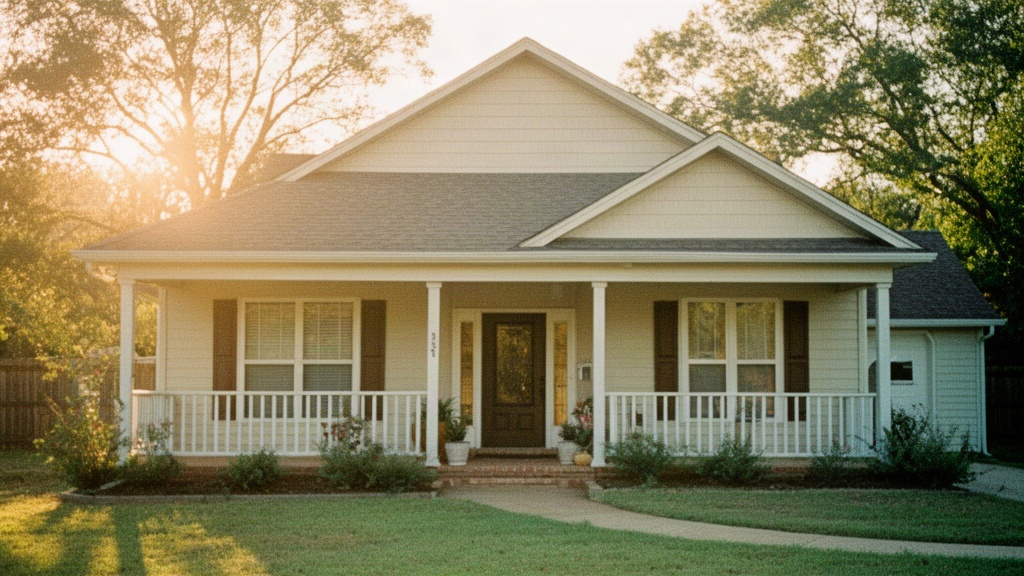
East Austin is one of the most varied housing corridors in the city. Within a few blocks of each other you can find a 1940s bungalow on a 6,250-square-foot lot, a new-construction townhome with rooftop deck, a converted duplex, and a single-story ranch house with a detached garage. That variety is part of what draws buyers here, but it also means you need to be specific about what you are looking for before you start touring.
The Housing Stock
Most of the older single-family homes in East Austin were built between 1940 and 1980, and many sit on standard city lots of roughly 5,000 to 7,500 square feet. Square footage on these homes typically runs from about 900 to 1,800 square feet, with three-bedroom layouts being the most common. Newer construction, which became prevalent after 2010, tends toward two-story detached homes or attached townhomes on narrower lots, often in the 1,600 to 2,400 square foot range.
Condos and small multi-unit buildings are scattered throughout, particularly along the major commercial corridors like East 6th Street, East Cesar Chavez, and Manor Road. If you are open to a condo or townhome, your price ceiling stretches further here than it would for a detached single-family home on a similar budget.
Price Ranges in September 2026
As of September 2026, median home prices in East Austin zip codes, primarily 78702 and 78721, are running in the range of $575,000 to $650,000 for detached single-family homes. Entry-level detached homes, typically older bungalows that need updating, can be found starting around $450,000, though inventory at that price point is thin. Fully renovated or new-construction detached homes regularly list in the $700,000 to $950,000 range, and architect-designed new builds on larger lots can exceed $1.1 million.
Condos and townhomes in East Austin currently start around $350,000 for a one-bedroom unit and run to about $600,000 for a larger two-story townhome with private outdoor space. Prices have stabilized compared to the peak years of 2021 and 2022, and the market is currently giving buyers more room to negotiate than was possible during that period. For a broader look at where the Austin market stands right now, see the article on whether Austin is currently favoring buyers or sellers.
How East Austin Compares to the Broader Austin Market
East Austin sits closer to downtown than most Austin submarkets, with the eastern edge of downtown Austin roughly one to two miles from the heart of 78702. That proximity is reflected in the price per square foot, which tends to run higher here than in outer-ring areas like Pflugerville or Manor. However, East Austin also offers more character and architectural variety than many newer master-planned communities in the suburbs. Buyers comparing East Austin to other central neighborhoods like South Congress or Tarrytown will find East Austin generally more accessible on price while still offering walkable access to coffee shops, restaurants, and Boggy Creek Greenbelt.
If you are also evaluating other central Austin corridors, the guides on buying a home in South Congress and buying a home in Tarrytown offer parallel breakdowns that make the comparison straightforward.
2. The Step-by-Step Process for Buying a Home in East Austin
The process of buying a home in East Austin, Texas follows the same legal framework as any Texas home purchase, but the local market conditions shape how each step actually plays out. Understanding the sequence before you start saves time and prevents costly mistakes.
Getting Pre-Approved
Pre-approval is not optional in East Austin. Even with inventory higher than it was a few years ago, well-priced homes in 78702 still attract multiple offers within the first week. Sellers and their agents will not take an offer seriously without a lender letter, and in some cases they will ask for a fully underwritten pre-approval rather than a standard pre-qualification. Plan to gather two years of tax returns, recent pay stubs, two months of bank statements, and your most recent W-2s before you contact a lender.
Conventional loans are the most common financing type in this price range. FHA loans are used less frequently on East Austin properties priced above $650,000 because they bump against loan limits. VA loans are fully viable for eligible buyers and carry no down payment requirement, which can be a meaningful advantage in this price range.
Finding the Right Property
East Austin's inventory turns over at a moderate pace right now. In September 2026, active listings in 78702 typically number in the range of 80 to 130 at any given time, depending on price tier. New listings appear throughout the week rather than clustering on a single day, so setting up automated MLS alerts is worth doing from the start of your search rather than checking manually.
Touring in person matters more in East Austin than in many other submarkets because the condition of older homes varies enormously from the outside. A bungalow that photographs beautifully may have foundation issues, outdated electrical panels, or no insulation in the attic. Conversely, a home that looks unremarkable in listing photos may have been fully gut-renovated with high-quality finishes. Plan to tour rather than filter by photos alone.
Making an Offer in East Austin
Offer strategy in East Austin depends heavily on how long a property has been on the market. Homes listed within the past seven days and priced correctly often receive offers at or slightly above list price. Homes with 30 or more days on market are frequently seeing accepted offers of two to five percent below list, sometimes more. According to recent reporting on Austin housing trends, the Austin market broadly has been relying on price cuts as homes sit longer, and East Austin is not immune to that dynamic.
Texas residential contracts use the TREC One to Four Family Residential Contract form. Key terms to negotiate include the option period length and fee, the earnest money amount, the closing date, and any repairs or seller concessions. In East Austin, earnest money of one percent of the purchase price is standard, though competitive offers sometimes go higher.
Inspection, Option Period, and Due Diligence
Texas uses an option period, typically five to ten days, during which you pay a small fee (usually $100 to $500) for the unrestricted right to terminate the contract for any reason. This is your window to complete inspections. For older East Austin homes, budget for a general home inspection ($400 to $600), a foundation inspection ($200 to $400) since pier-and-beam and slab foundations in this area can have movement issues, and potentially a sewer scope ($150 to $250) if the home was built before 1980 and has not had its lines replaced.
After inspections, you can negotiate repairs or a price reduction, or simply proceed. If the inspection reveals something you cannot accept, you can terminate during the option period and receive your earnest money back. Once the option period expires, your earnest money is at risk if you walk away without a contract-defined reason.
3. What It Costs to Buy a Home in East Austin
The total cost of buying a home in East Austin, Texas goes beyond the purchase price. Buyers need to account for the down payment, closing costs, inspection fees, prepaid items, and ongoing ownership costs from day one.
Purchase Price and Down Payment
On a $600,000 purchase, a conventional loan with five percent down requires $30,000 at closing for the down payment alone. A ten percent down payment brings that to $60,000, and twenty percent, which eliminates private mortgage insurance, requires $120,000. Most buyers in East Austin put down somewhere between five and twenty percent depending on their savings and how aggressively they want to compete. A larger down payment can also make your offer more attractive to sellers in a multiple-offer situation.
Closing Costs
Closing costs for buyers in Texas typically run two to three percent of the purchase price. On a $600,000 home, that is $12,000 to $18,000 on top of your down payment. These costs include lender origination fees, title insurance, escrow fees, prepaid homeowners insurance, prepaid property taxes, and prepaid mortgage interest. Texas does not have a state income tax, but it does have relatively high property taxes, and the prepaid portion at closing can be a meaningful line item. For a detailed breakdown of what goes into closing costs, see the full guide on closing costs for Austin home buyers.
In some transactions, buyers negotiate seller concessions toward closing costs. In the current East Austin market, where homes are sitting longer, this is more achievable than it was in 2021 or 2022. A seller concession of one to two percent on a longer-days-on-market listing is a reasonable ask and can meaningfully reduce your out-of-pocket at the table.
Ongoing Ownership Costs to Budget For
Property taxes in Travis County run approximately 1.8 to 2.1 percent of assessed value annually, depending on the specific taxing entities that cover your property. On a home assessed at $600,000, that is roughly $10,800 to $12,600 per year before any exemptions. Homeowners who occupy the property as their primary residence can apply for a homestead exemption, which reduces the taxable value and caps annual assessment increases at ten percent. For a full explanation of how that works, see the article on homestead exemptions in Austin.
Homeowners insurance in Central Austin runs roughly $1,800 to $3,000 per year for a standard single-family home, with older homes sometimes costing more to insure due to roof age and electrical systems. HOA fees apply to some condos and townhomes in East Austin, typically ranging from $150 to $400 per month depending on the complex and amenities. Detached single-family homes in East Austin are generally not in HOAs.
4. Realistic Timeline: How Long Does It Take?
From the day you start seriously searching to the day you get keys, buying a home in East Austin typically takes two to five months. The range is wide because the search phase varies more than any other part of the process.
From Search to Contract
Buyers who are clear on their criteria and budget often go under contract within four to eight weeks of beginning their active search. Buyers who are still narrowing down their priorities, comparing East Austin to other parts of the city, or waiting for a very specific type of property can spend three to six months in the search phase. The current inventory level in East Austin gives buyers more time to deliberate than in previous years, but well-priced homes in the $500,000 to $700,000 range still move within two to three weeks.
From Contract to Close
Once you are under contract, the timeline to closing is more predictable. Most conventional loan transactions in Austin close in 21 to 30 days. Some lenders offer 14-day closings for fully underwritten pre-approvals, which can be a competitive advantage. Cash transactions can close in as few as seven to ten days. FHA and VA loans typically take 30 to 45 days due to additional appraisal requirements.
The appraisal is ordered by your lender after the option period ends and typically takes five to ten business days to complete. If the home appraises below the contract price, you have several options: renegotiate the price, make up the difference in cash, or, if you included an appraisal contingency, terminate. In East Austin, appraisal gaps were common during the 2021 peak; in September 2026, appraisals are generally coming in closer to contract price.
What Can Slow Things Down
Title issues are the most common source of delays in East Austin specifically, because many of the older properties have been subdivided, had additions built without permits, or have unclear chain-of-title records. A good title company will catch these early, but resolving them can add one to three weeks. Lender delays, particularly around document requests, are the second most common cause. Staying responsive during underwriting and submitting documents within 24 hours of any request keeps things on track.
5. East Austin Micro-Areas Worth Understanding Before You Search
East Austin is not a single uniform market. The area spans several distinct pockets, each with different housing stock, lot sizes, walkability, and price points. Knowing the differences before you start searching saves time and helps you set realistic expectations.
Holly and Govalle
Holly sits roughly between Cesar Chavez and the Colorado River, east of Pleasant Valley Road. It has a mix of original 1950s and 1960s homes alongside newer infill construction. Lot sizes here tend to be slightly larger than in the blocks closer to downtown, and the neighborhood borders Govalle Park, a 50-acre city park with athletic fields, a playground, and access to the Boggy Creek Greenbelt trail system. Median prices in Holly and Govalle currently run somewhat lower than the 78702 zip code average, making this pocket a starting point for buyers whose budget tops out around $500,000 to $575,000.
Chestnut and Cherrywood
Cherrywood is one of the most architecturally cohesive sections of East Austin, with a concentration of craftsman bungalows and cottage-style homes built in the 1930s through 1950s. Many of these have been renovated while retaining original character details like wood floors, front porches, and decorative molding. The area is within walking distance of the French Legation Museum, Cherrywood Coffeehouse, and the Manor Road restaurant corridor. Prices here reflect the demand for that character; renovated bungalows in Cherrywood regularly list in the $650,000 to $850,000 range.
Chestnut, just north of Cherrywood, has a similar vintage housing stock but with more variability in renovation level, which creates more entry points for buyers willing to take on a project. A cosmetically dated but structurally sound bungalow in Chestnut can still be found in the $480,000 to $560,000 range, though these homes move quickly when priced correctly.
MLK and Airport Boulevard Corridor
The blocks around Martin Luther King Jr. Boulevard and Airport Boulevard represent the northern edge of what most buyers consider East Austin proper. This corridor has seen significant new construction over the past decade, with a mix of detached new builds, townhome clusters, and a handful of small condo developments. The area is close to Mueller, which sits just to the north and offers Bartholomew Park, the HEB on Manor Road, and the Alamo Drafthouse Cinema. For a detailed look at the Mueller market specifically, see the guide on buying a home in Mueller.
New construction along this corridor typically prices from $550,000 to $800,000 for a detached home. Commute times to downtown Austin from this area run about ten to fifteen minutes by car outside of peak hours, and the area has Capital Metro bus access for those who prefer not to drive.
FAQ
Is East Austin a good place to buy right now, in September 2026?
East Austin is currently in a more balanced market than it was during the 2021 to 2022 peak. Inventory is higher, homes are sitting on the market longer, and sellers are more willing to negotiate on price and concessions. Buyers have more time to conduct due diligence and are less likely to face the extreme bidding wars of prior years. Whether it is the right time for you specifically depends on your financial situation, how long you plan to stay, and what you are looking for in a home. A local agent with current data can help you evaluate specific properties against recent comparable sales.
What is the minimum budget needed to buy a home in East Austin?
In September 2026, the realistic minimum for a detached single-family home in East Austin is approximately $450,000 to $480,000, and properties at that price point are typically older homes in need of cosmetic or functional updates. Condos and townhomes start lower, around $350,000 for a one-bedroom unit. You also need to budget for your down payment, closing costs of roughly two to three percent of the purchase price, inspection fees, and prepaid expenses at closing. On a $500,000 purchase with five percent down, plan to bring approximately $35,000 to $50,000 total to the closing table depending on your loan terms and any seller concessions you negotiate.
How do I find out which school district covers a specific East Austin address?
Most of East Austin falls within Austin Independent School District (AISD), but school attendance boundaries change periodically and a specific address may be zoned to a different campus than a neighboring street. The most reliable way to verify which campus serves a specific property is to enter the address directly into the AISD website's school locator tool or contact the district's enrollment office. Texas Education Agency also maintains public data on district boundaries. Because school zoning is a personal research decision and boundaries can change, always verify the current assignment for any specific address before making it a factor in your purchase.